

Monk's hood
Monk's hood
Couldn't load pickup availability
The Most Striking Star Cactus for Phoenix Desert Gardens
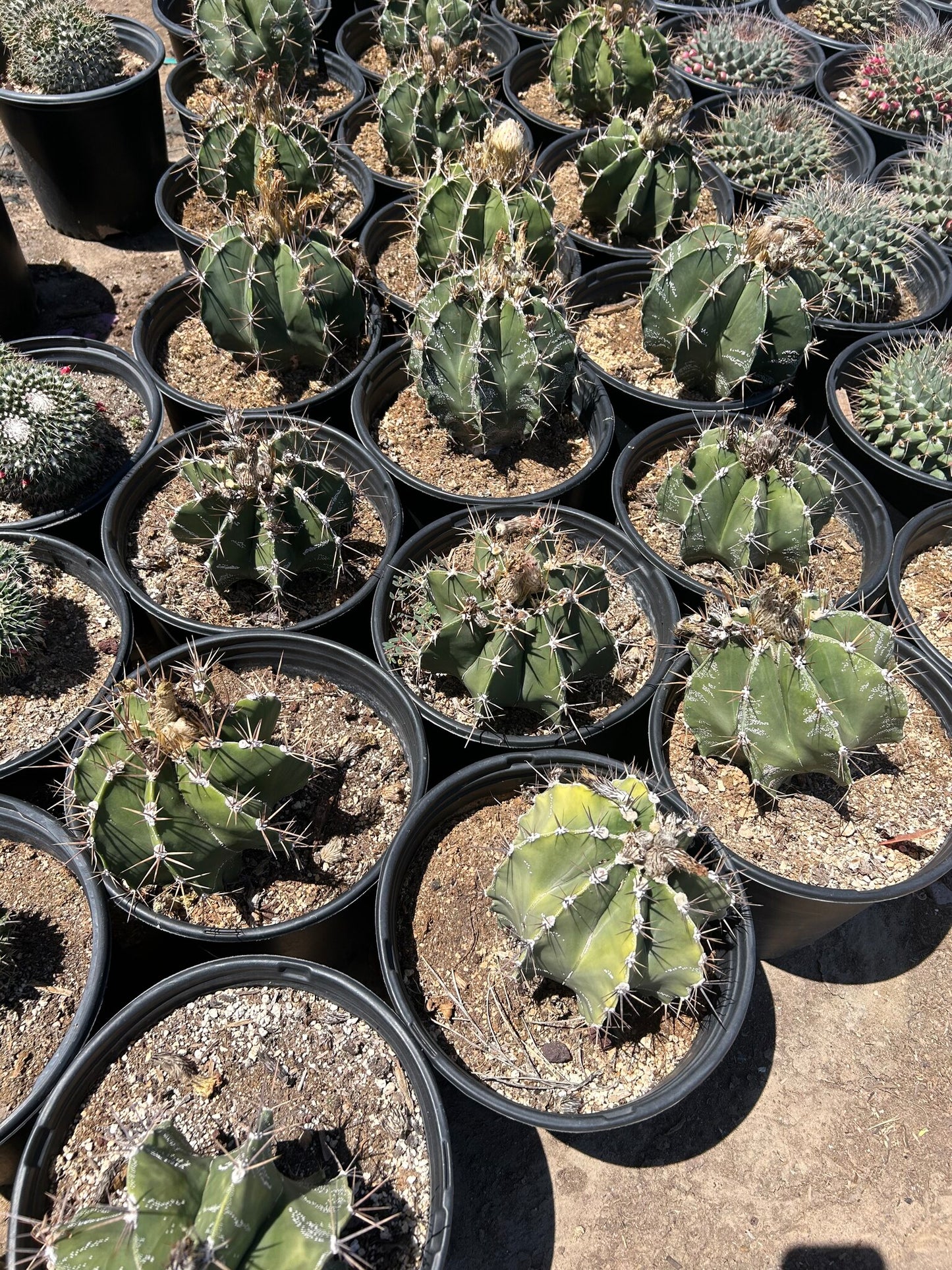
Monk’s Hood Cactus (Astrophytum ornatum) is the tallest and most majestic member of the famous Astrophytum star cactus family. Its perfectly ribbed, columnar body is decorated with silvery-white flecks and crowned with bright yellow flowers that appear at the top each summer. This is a collector’s cactus that also happens to be one of the most photogenic plants you can grow in the Phoenix Valley. Whether you’re creating a curated cactus collection in Scottsdale, adding a sculptural focal point to a Chandler courtyard, or designing a modern desert entry in Mesa — Monk’s Hood delivers stunning geometry and effortless elegance.
Monk’s Hood Cactus Plant Details
| Attribute | Detail |
|---|---|
| Scientific Name | Astrophytum ornatum |
| Common Names | Monk’s Hood, Bishop’s Cap, Star Cactus, Ornamental Star Cactus |
| Mature Height | 12–24 inches (up to 36 inches with age) |
| Mature Width | 6–12 inches |
| Growth Rate | Slow — 1–2 inches per year in Phoenix |
| Sun | Full sun (6+ hrs). Handles reflected heat from walls. |
| Water | Very low once established. Highly drought-tolerant. |
| USDA Zones | 9–11 (Phoenix is Zone 9b–10a) |
| Soil | Well-draining sandy or rocky mix. Adapts to Arizona caliche soils with added pumice. |
| Foliage | Evergreen — silvery-flecked green body year-round |
| Bloom Color | Bright yellow flowers at the crown in summer |
Monk’s Hood Cactus Uses in Phoenix Landscapes
Collector’s Specimen & Focal Point
Astrophytum ornatum is one of the most prized cacti among collectors worldwide. Its perfectly symmetrical ribs, white flecking pattern, and columnar form make it a living sculpture. Place a single specimen in a prominent spot — near a front door, on a patio pedestal, or as the centerpiece of a curated cactus garden. No two plants have identical fleck patterns, making each one unique.
Modern Desert Container
Monk’s Hood is an exceptional container cactus. Its slow growth and compact form mean it stays proportioned in a pot for years. Use a simple ceramic or concrete planter to let the plant’s natural geometry take center stage. Perfect for Scottsdale patios, Tempe balconies, and Gilbert courtyards.
Rock Garden Accent
Plant Monk’s Hood among boulders and decomposed granite where its star-shaped profile and silvery markings catch the light. It pairs beautifully with Golden Barrel, Blue Barrel, and other round cacti — the columnar form provides vertical contrast in a landscape of globes and mounds.
Curated Cactus Collection
Combine Monk’s Hood with other Astrophytum species or pair it with Gymnocalycium, Notocactus, and Mammillaria varieties for a world-class cactus display. Group them in a raised bed with premium drainage for a low-maintenance collection that impresses year-round in Peoria, Glendale, or Paradise Valley.
Best Time to Plant Monk’s Hood Cactus in Phoenix
Fall (October–November) is ideal — warm soil encourages root establishment while cooler air reduces transplant stress. The cactus gets 6–8 months to settle before its first Phoenix summer. Spring (February–April) is the second-best window. Avoid summer planting — Astrophytum species are sensitive to root disturbance in extreme heat.
How to Plant Monk’s Hood Cactus
- Dig wide, not deep — 2–3x the root ball width, same depth as the nursery container.
- Check for caliche — break through any hardpan layer. Astrophytum will rot quickly in standing water.
- Backfill with a premium mix — 50% native soil, 30% pumice, 20% coarse sand for excellent drainage.
- Spacing — 12–18 inches from neighboring plants to showcase its form.
- Keep the crown high — plant slightly above grade to prevent moisture collecting at the base.
- Mulch with gravel — 2–3 inches of light-colored decomposed granite to reflect heat and keep the root zone dry.
Watering Monk’s Hood Cactus in Phoenix
First Year Watering Schedule
- Weeks 1–2: Water deeply every 7–10 days to settle roots
- Month 1–3: Every 14–21 days
- Month 3–6: Every 3–4 weeks (every 14–21 days in peak summer)
- After Year 1: Monthly in summer; every 6–8 weeks in winter
Drip Irrigation
Place a single 0.5 GPH emitter 6 inches from the base. Run for 15–20 minutes per session. Astrophytum ornatum is very rot-prone — always err on the side of less water. Let soil dry completely between waterings.
How fast does Monk’s Hood grow in Phoenix?
Slowly — expect 1–2 inches of height per year. This is a long-lived cactus that rewards patience. A 1 gallon starter is a small gem; a 10–15 gallon specimen is a mature showpiece that took years to reach that size.
Is Monk’s Hood drought tolerant?
Extremely. Once established, it needs very little water — monthly deep watering in summer and almost nothing in winter. Overwatering is the #1 killer of Astrophytum species. When in doubt, don’t water.
What are the white spots on my Monk’s Hood?
Those are natural! The silvery-white flecks are trichomes — tiny hair-like structures unique to Astrophytum species. They help reflect sunlight and reduce water loss. The flecking pattern is what makes each plant unique and highly collectible.
Can Monk’s Hood handle Phoenix summer heat?
Yes, with proper drainage. It handles full sun and reflected heat as long as the soil drains perfectly. In extreme heat above 115°F, the white flecks actually help by reflecting excess light. Avoid overhead watering in summer to prevent sunburn spots.
You May Also Like
- Golden Ball Cactus — Glowing golden spines and bright yellow flowers
- Blue Barrel Cactus — Dramatic blue-green barrel with striking form
- Notocactus magnificus — Another collector’s favorite with golden ribs
- Gymnocalycium multiflorum — Pink-flowering chin cactus with unique texture
- Golden Barrel — Classic desert globe that complements any Astrophytum
How Many Monk's Hood Cactus Do I Need?
Monk's Hood is a slow, collectible specimen (6 to 12 inches wide at maturity), grown for its star-shaped geometry and silvery flecks rather than for coverage. Use it as a single focal point or in a small grouping where each plant's form stays distinct.
| Look | Spacing | Plants needed |
|---|---|---|
| Single focal point in a pot or bed | 12 to 18 in of clearance | 1 |
| Collector grouping in a raised bed | 12 to 18 in apart | 3 to 5 |
Monk's Hood Cactus Season-by-Season in Phoenix
- Spring (Feb to Apr): Slow new growth resumes as soil warms. The best second window to plant, since Astrophytum dislikes root disturbance in extreme heat.
- Summer (May to Sep): Bright yellow flowers open at the crown. Handles full sun and reflected heat above 115 degrees, where the silvery flecks help reflect excess light. Water sparingly and avoid overhead watering; protect from standing monsoon water, since it rots easily.
- Fall (Oct to Nov): Prime planting season, giving roots months to settle before winter.
- Winter (Dec to Jan): Evergreen flecked body holds all winter. Keep it nearly dry. It handles typical Valley winters, but in an open frost pocket a light cover on the coldest nights prevents cosmetic spotting.
At a Glance
✔ Heat-Loving (Reflected-Heat Tolerant) ✔ Drought-Tolerant ✔ Pollinator-Friendly ✔ Evergreen ✔ Low-Maintenance ✔ Deer & Rabbit-Resistant
Plant It With
- Golden Ball: a glowing golden globe that contrasts the tall flecked column.
- Blue Barrel: a blue-green barrel that adds cool color among the globes and columns.
- Gymnocalycium multiflorum: a pink-flowering chin cactus for a varied collector bed.
- Golden Barrel: the classic desert globe that complements any Astrophytum.
Is Monk's Hood Cactus Right for Your Yard?
Yes if you want a refined, long-lived collector cactus for full sun and exceptional drainage (amend caliche with pumice and coarse sand), grown as a focal point in a pot, raised bed, or rock garden. Not a fit if your soil holds water or you tend to overwater, since Astrophytum is one of the most rot-prone cacti when its roots stay wet.
Customer Reviews
Share