

Mammillaria melanocentra
Mammillaria melanocentra
Couldn't load pickup availability
The Most Dramatic Dark-Spined Mammillaria for Phoenix Collections
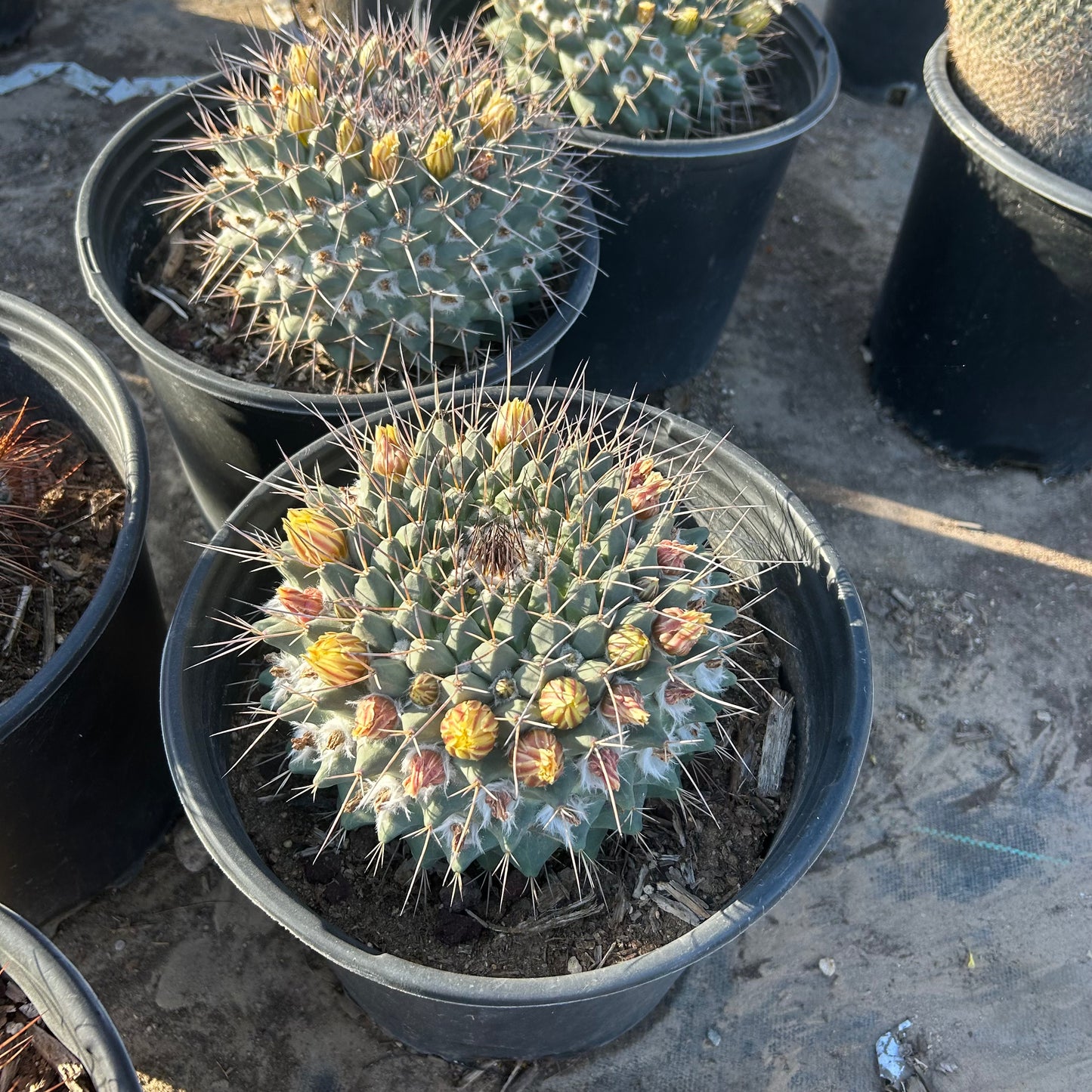
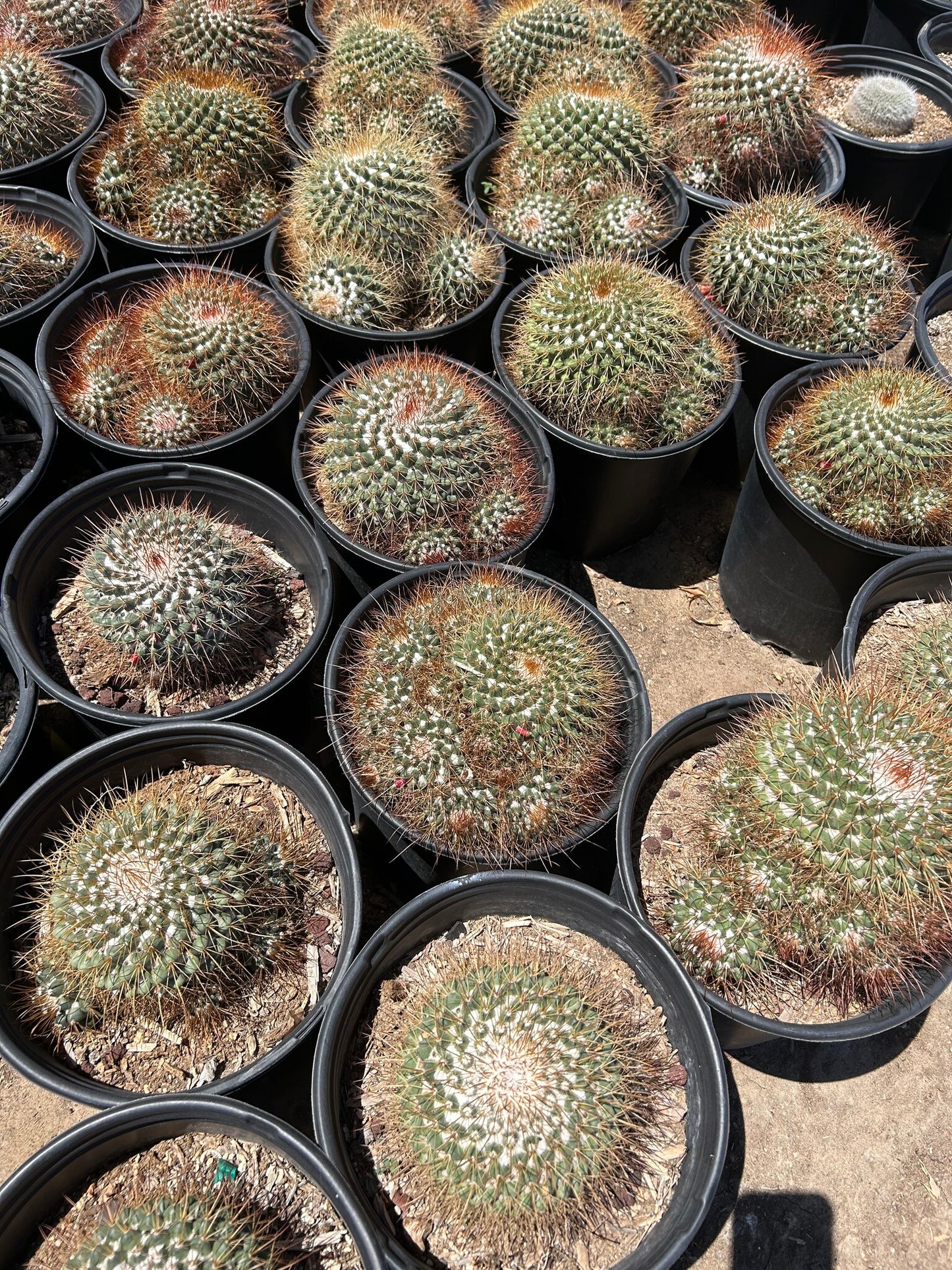
Mammillaria melanocentra is a compact collector’s cactus prized for its striking dark central spines that contrast beautifully against a pale body of white radial spines. Each spring, a crown of deep magenta flowers rings the top, creating one of the most dramatic color combinations in the Mammillaria family. This tough little cactus thrives in the Phoenix Valley heat with almost no care. Whether you’re adding to a Scottsdale cactus collection, creating a textural container display in Chandler, or designing a low-water accent garden in Mesa — Mammillaria melanocentra delivers bold contrast and seasonal color in a tiny footprint.
Mammillaria melanocentra Plant Details
| Attribute | Detail |
|---|---|
| Scientific Name | Mammillaria melanocentra |
| Common Names | Mammillaria melanocentra, Black-Centered Mammillaria |
| Mature Height | 4–6 inches (up to 8 inches with age) |
| Mature Width | 6–10 inches (expands through offsets) |
| Growth Rate | Slow to moderate — 1–3 offsets per year in Phoenix |
| Sun | Full sun to bright partial shade. Handles reflected heat from walls. |
| Water | Very low once established. Highly drought-tolerant. |
| USDA Zones | 9–11 (Phoenix is Zone 9b–10a) |
| Soil | Well-draining sandy or rocky mix. Adapts to Arizona caliche soils with added pumice. |
| Foliage | Evergreen — white radials with dark central spines year-round |
| Bloom Color | Deep magenta to pink flower crowns in spring |
Mammillaria melanocentra Uses in Phoenix Landscapes
Collector’s Display Piece
The dramatic dark-on-light spine contrast makes Mammillaria melanocentra a standout in any cactus collection. Display it in a prominent spot where visitors can appreciate the intricate spination pattern up close. It pairs beautifully with lighter-colored Mammillaria like White Owl’s Eyes and White Clumping for maximum visual impact.
Container & Patio Gem
This compact species is ideal for container growing on Scottsdale patios, Tempe balconies, and Gilbert courtyards. Use a shallow, wide pot with excellent drainage and a top dressing of light-colored gravel to highlight the dark spines. The spring flower crown adds a seasonal burst of magenta that’s impossible to miss.
Rock Garden Accent
Plant Mammillaria melanocentra in a raised rock garden bed among boulders and decomposed granite. Its small stature makes it perfect for the front edge of a desert garden where its unique spination can be seen up close. Group 3–5 plants spaced 8–10 inches apart for a striking cluster.
Mixed Mammillaria Bed
Create a dedicated Mammillaria garden bed showcasing the incredible diversity within the genus. Combine melanocentra’s dark spines with the golden tones of Mammillaria pringlii, the twisted spines of mystax Green, and the silvery sheen of White Clumping. A raised bed with premium drainage in Peoria or Paradise Valley is perfect for this display.
Best Time to Plant Mammillaria melanocentra in Phoenix
Fall (October–November) is ideal — warm soil encourages root establishment while cooler air reduces transplant stress. The cactus gets 6–8 months to settle before its first Phoenix summer. Spring (February–April) is the second-best window. Avoid summer planting when possible.
How to Plant Mammillaria melanocentra
- Dig wide, not deep — 2–3x the root ball width, same depth as the nursery container.
- Check for caliche — break through any hardpan layer. Mammillaria species rot in standing water.
- Backfill with native soil — mix in 20–30% pumice or coarse sand for extra drainage.
- Spacing — 8–10 inches apart for mass plantings; 12 inches for individual specimens.
- Keep the crown high — plant at the same depth as the nursery pot. Never bury lower tubercles.
- Mulch with light gravel — 2–3 inches of light-colored DG to showcase the dark spines and prevent crown rot.
Watering Mammillaria melanocentra in Phoenix
First Year Watering Schedule
- Weeks 1–2: Water deeply every 5–7 days to settle roots
- Month 1–3: Every 10–14 days
- Month 3–6: Every 14–21 days (every 10–14 days in peak summer)
- After Year 1: Every 3–4 weeks in summer; monthly or less in winter
Drip Irrigation
Place a single 0.5–1 GPH emitter 6 inches from the base. Run for 15–20 minutes per session. Established plants are very drought-tolerant and need minimal supplemental water in the Phoenix Valley.
How fast does Mammillaria melanocentra grow?
Slowly to moderately — expect 1–3 new offsets per year. A 1 gallon plant is a charming small specimen. The 10–15 gallon size is a mature, multi-headed cluster that took years to develop — an instant collection piece.
What makes the dark spines special?
The dark brown to black central spines (melanocentra means “black center”) create a dramatic contrast against the white radial spines that’s unique among Mammillaria species. This two-tone spination pattern makes every plant visually striking, even when not in bloom.
Can it handle Phoenix summer heat?
Yes. It handles full sun and reflected heat from walls and concrete. In extreme south-facing positions, light afternoon shade during the hottest weeks can help, but it’s generally very heat-tolerant once established.
Is Mammillaria melanocentra good for beginners?
It’s one of the easier collector cacti to grow in Phoenix. As long as you provide excellent drainage and avoid overwatering, it’s quite forgiving. The main rule: when in doubt, don’t water.
You May Also Like
- White Owl’s Eyes — Silvery Mammillaria with pink blooms for light contrast
- Mammillaria mystax Green — Twisted spines and magenta crowns
- Gold Mammillaria — Golden-spined variety with dense clustering
- White Clumping — Snowy white spines that shimmer in sunlight
- Notocactus magnificus — Golden-ribbed globe cactus for collector gardens
How Many Mammillaria melanocentra Do I Need?
This is a small clumping cactus that reaches about 6 to 10 inches wide through offsets, so it shines at the front edge of a bed, in a rock pocket, or in a wide shallow container. Space plants 8 to 10 inches on center for a tight cluster, or feature a single multi-headed specimen in a pot.
| Area to cover | Plants needed (9 in centers) |
|---|---|
| 1 sq ft (rock pocket) | 2 plants |
| 2 sq ft | 4 plants |
| 4 sq ft front edge | 7 plants |
| Wide container feature | 1 multi-headed specimen |
Mammillaria melanocentra Season-by-Season in Phoenix
- Spring (Feb to Apr): A crown of deep magenta to pink flowers rings the top, drawing bees. Growth and offsetting resume. Best second window to plant.
- Summer (May to Sep): Tolerates full sun and reflected heat, though in hot south or west exposures a little afternoon shade in the worst weeks keeps the body from scorching. Very low water; let the soil dry fully between drinks through the monsoon.
- Fall (Oct to Nov): Prime planting season, giving 6 to 8 months to settle before next summer.
- Winter (Dec to Jan): Evergreen two-tone spination holds through winter in a dry rest. Keep it dry and protect with frost cloth on hard-freeze nights, especially container plants.
At a Glance
✔ Heat-Loving (Reflected-Heat Tolerant) ✔ Drought-Tolerant ✔ Pollinator-Friendly ✔ Evergreen ✔ Low-Maintenance ✔ Deer & Rabbit-Resistant
Plant It With
- Mammillaria mystax - Green: twisted spines and magenta crowns for a coordinated Mammillaria bed.
- Gold - Mammillaria pringlii: golden-spined clumper for warm-tone contrast against the dark centers.
- Gymnocalycium saglionis: low globe chin cactus that adds a larger form to the small-cactus grouping.
- Golden Barrel: classic golden globe to anchor the back of a mixed collection bed.
Is Mammillaria melanocentra Right for Your Yard?
It thrives in full sun to bright part shade, very fast-draining sandy or rocky soil amended with pumice, and a front-of-bed, rock-garden, or container spot where the dark-on-light spines can be seen up close. It is heat-tolerant, very low-water, and easy for beginners. Not a fit for low, poorly drained ground or a spot that stays wet, since the roots rot quickly in standing water.
Customer Reviews
Share