

Gymnocalycium saglionis
Gymnocalycium saglionis
Couldn't load pickup availability
The Largest & Most Dramatic Chin Cactus for Phoenix Rock Gardens
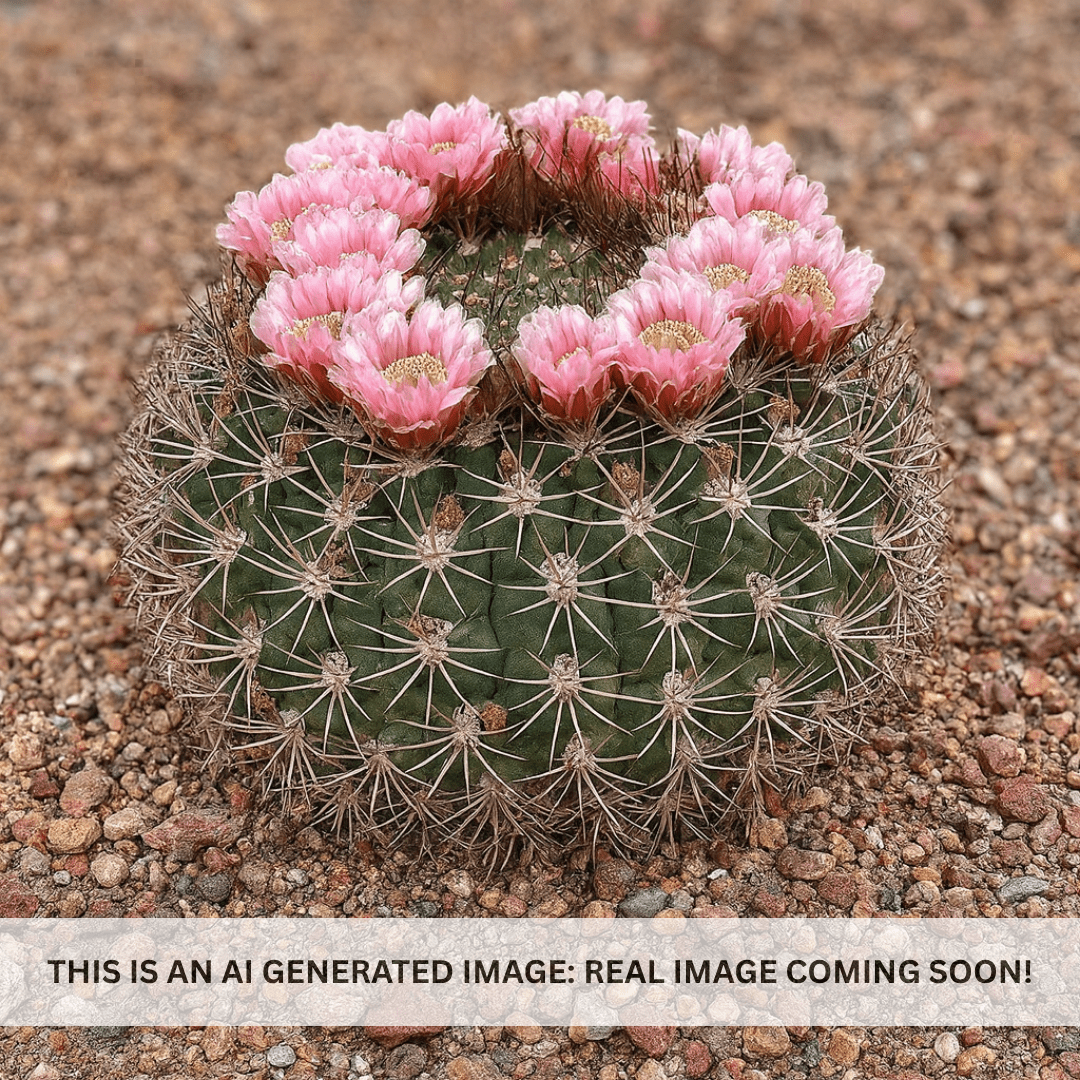
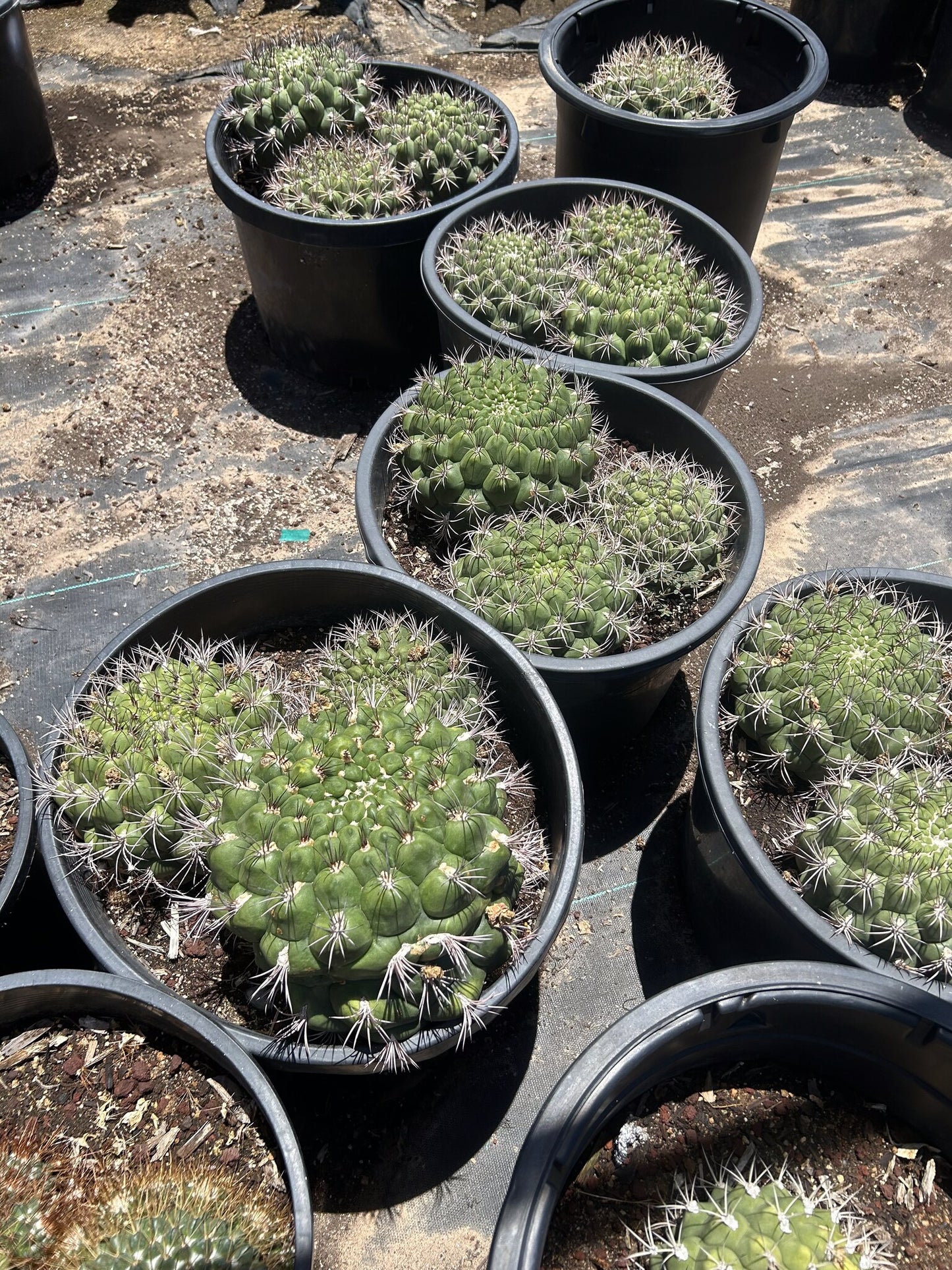
Gymnocalycium saglionis, commonly known as the Giant Chin Cactus, is a showstopping globular cactus that combines impressive size with elegant pink-and-white flowers. Growing up to 12–18 inches across — far larger than most Gymnocalycium species — this South American beauty produces a flattened, ribbed globe covered in thick, curving spines that give it a rugged, architectural presence year-round. The pale pink to white flowers with magenta throats appear in spring and summer, emerging from the crown in a ring-like pattern. Drought-tolerant, easy to grow, and perfectly suited to Phoenix's heat, G. saglionis is a standout choice for rock gardens, xeriscape beds, and curated cactus collections in Scottsdale, Mesa, Gilbert, and across the Valley.
Gymnocalycium saglionis Plant Details
| Attribute | Detail |
|---|---|
| Scientific Name | Gymnocalycium saglionis |
| Common Names | Giant Chin Cactus, Giant Gymnocalycium |
| Mature Height | 6–12 inches (up to 18 inches with age) |
| Mature Width | 6–12 inches |
| Growth Rate | Slow to moderate |
| Sun | Full sun to partial shade. Tolerates afternoon shade well. |
| Water | Low once established. Drought-tolerant. |
| USDA Zones | 9–11 (Phoenix is Zone 9b–10a) |
| Soil | Well-draining. Adapts to Arizona caliche soils with drainage amendment. |
| Foliage | Evergreen — dark green ribbed globe with thick curving spines |
| Bloom | Pale pink to white flowers with magenta throats, spring–summer |
Gymnocalycium saglionis Uses in Phoenix Landscapes
Rock Garden Showpiece
The broad, flattened globe of G. saglionis makes it a natural centerpiece in rock gardens. Plant it among desert boulders and decomposed granite in Scottsdale or Paradise Valley where its sculptural form and dramatic spines can be fully appreciated. Underplant with small trailing succulents for added texture at the base.
Xeriscape Bed & Border Accent
Use Gymnocalycium saglionis as a repeating accent along the front of xeriscape beds. Its low, wide profile fills the foreground beautifully without blocking taller plants behind it. Works well alongside Golden Barrel, Agave, and Desert Spoon in Chandler, Gilbert, and Tempe landscapes.
Container & Patio Display
This cactus thrives in wide, shallow containers on patios and courtyards. The dense spination and symmetrical form create an elegant living sculpture in a glazed ceramic pot. Excellent for covered patios where it gets bright light with some afternoon shade protection.
Cactus & Succulent Collections
Collectors value G. saglionis as the largest species in the popular Gymnocalycium genus. Its size, reliable blooms, and architectural form make it a must-have anchor plant for display gardens and curated collections across the Phoenix Valley.
Best Time to Plant Gymnocalycium saglionis in Phoenix
Fall (October–November) is ideal. Warm soil promotes root growth while cooler air reduces transplant stress. Spring (March–April) is the second-best window. Avoid planting in peak summer — while this cactus handles heat, fresh transplants establish best in moderate conditions.
How to Plant Gymnocalycium saglionis
- Dig wide, not deep — 2x the root ball width, same depth as the container.
- Check for caliche — break through any hardpan layer. Excellent drainage is critical.
- Backfill with native soil — add 30% pumice or perlite for drainage in heavy clay.
- Spacing — 12–18 inches apart for groupings; 2 feet for standalone specimens.
- Water basin — build a small ring around the base to direct water to roots.
- Mulch — 1–2 inches of fine gravel mulch (avoid bark mulch).
Watering Gymnocalycium saglionis in Phoenix
First Year Watering Schedule
- Weeks 1–2: Every 5–7 days, light and thorough
- Month 1–2: Every 7–10 days
- Month 3–6: Every 10–14 days (7–10 days in peak summer)
- After Year 1: Every 14–21 days summer; monthly or less in winter
Drip Irrigation
Place one 0.5–1 GPH emitter 6–8 inches from the base. Allow soil to dry completely between waterings. Overwatering causes rot, especially in winter — reduce or stop irrigation from November through February.
How big does Gymnocalycium saglionis get?
It's one of the largest Gymnocalycium species — mature plants reach 6–12 inches across and up to 18 inches in exceptional specimens. Growth is slow, so it takes several years to reach full size, but the wait is worth it.
When does it bloom?
Pale pink to white flowers with striking magenta throats appear in spring and summer (March–June in Phoenix). Flowers emerge from the crown in a ring pattern and last several days each. Mature plants produce multiple blooms per season.
Does it need full sun?
It handles full sun in Phoenix but actually appreciates some afternoon shade during the hottest months. Light shade produces slightly greener growth; full sun produces more compact, heavily spined plants.
Is it cold hardy?
Hardy to about 20–25°F, which covers most Phoenix winters. In rare hard freeze events, a frost cloth provides adequate protection. The thick body stores enough water to buffer against brief cold snaps.
You May Also Like
- Gymnocalycium multiflorum — a related species with abundant pink flowers for a Gymnocalycium pairing.
- Golden Barrel — the classic golden-spined barrel cactus, a natural companion in rock gardens.
- Monk's Hood — another architectural globular cactus with striking form.
- Blue Barrel — blue-skinned barrel cactus that contrasts beautifully with the dark green of G. saglionis.
- Golden Ball — compact golden globular cactus for a warm-toned accent alongside.
How Many Gymnocalycium saglionis Do I Need?
The Giant Chin Cactus is a low, wide globe maturing around 6 to 12 inches across (up to 18 with age), so it works as a single rock-garden showpiece or a repeating front-of-bed accent. Space plants 18 inches on center for a grouping, or give a standalone specimen about 2 feet of clear space. Its broad, low profile fills the foreground without hiding taller plants behind it.
| Bed area | Plants needed (18 in centers) |
|---|---|
| Single showpiece | 1 specimen |
| 9 sq ft foreground group | 4 plants |
| 16 sq ft accent run | 7 plants |
| 25 sq ft rock-garden sweep | 11 plants |
Gymnocalycium saglionis Season-by-Season in Phoenix
- Spring (Feb-Apr): Bloom begins. Pale pink to white flowers with magenta throats ring the crown from March onward. Growth wakes up and this is a strong second planting window.
- Summer (May-Sep): Flowering continues into early summer. The thick spiny body takes full sun, though light afternoon shade keeps it greener in peak heat. Let soil dry fully between waterings during the monsoon.
- Fall (Oct-Nov): Prime planting season. Warm soil and cooling air give the slow root system its best start.
- Winter (Dec-Jan): Evergreen ribbed globe holds all winter. Hardy to about 20 to 25F, covering most Valley winters. Stop irrigation November through February and cover with frost cloth only in a rare hard freeze.
At a Glance
✔ Heat-Loving (Reflected-Heat Tolerant) ✔ Drought-Tolerant ✔ Evergreen ✔ Low-Maintenance ✔ Pollinator-Friendly ✔ Deer & Rabbit-Resistant ✔ Cold-Hardy to 20°F
Plant It With
- Gymnocalycium multiflorum: a smaller free-flowering chin cactus for a matched Gymnocalycium pairing.
- Golden Barrel: classic golden-spined barrel that pairs naturally in the same rock garden.
- Monk's Hood: another architectural globular cactus with striking ribbed form.
- Blue Barrel: blue-skinned barrel that contrasts the dark green globe.
Is Gymnocalycium saglionis Right for Your Yard?
The Giant Chin Cactus thrives in full sun to light afternoon shade, in fast-draining gritty soil that dries fully between waterings, as a low foreground anchor in rock gardens, xeriscape beds, or wide patio containers. It is not a fit for damp or heavily shaded beds, and it rewards patience: growth is slow, so buy the size you want to display now.
Customer Reviews
Share