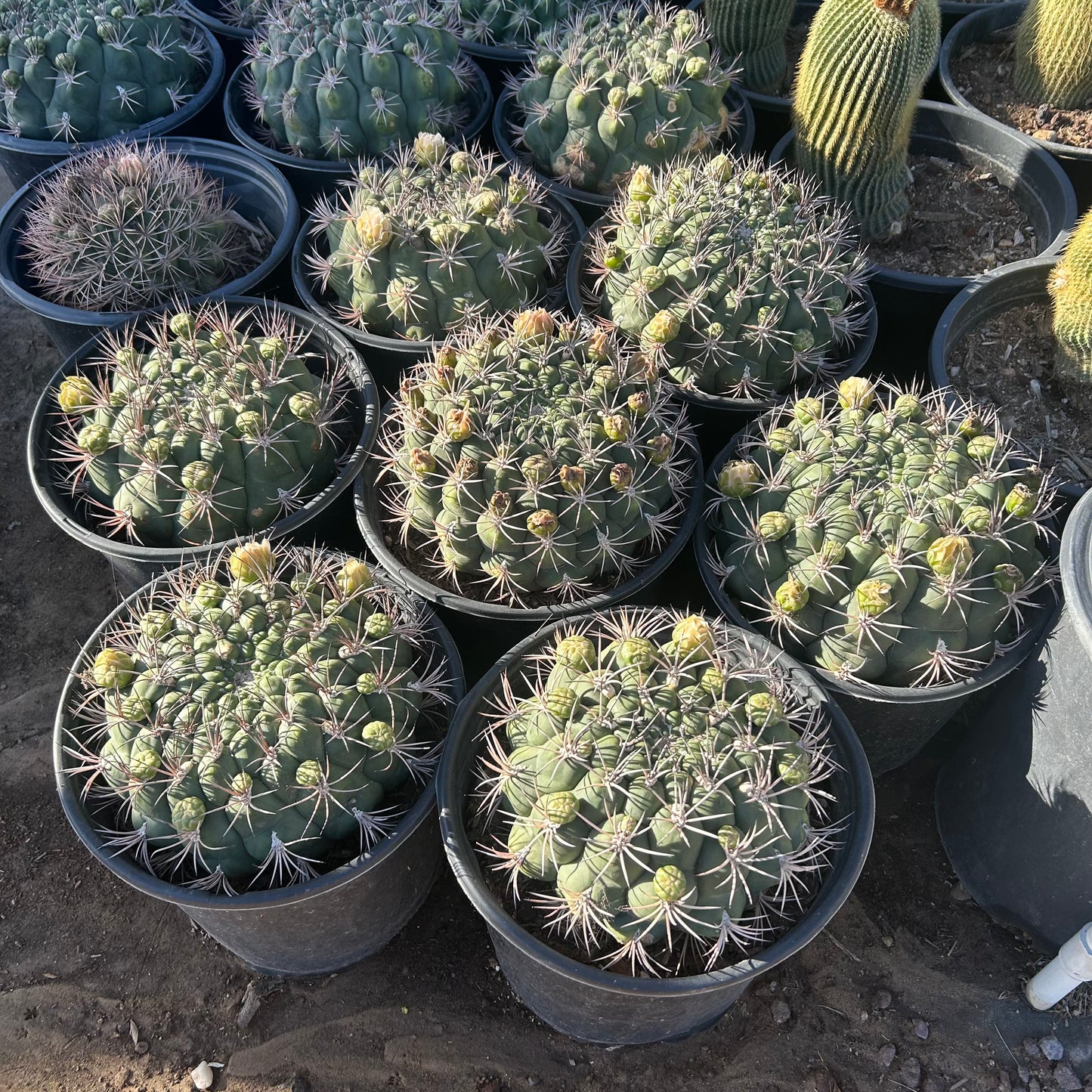

Gymnocalycium multiflorum
Gymnocalycium multiflorum
Couldn't load pickup availability
The Best Free-Flowering Chin Cactus for Phoenix Gardens
Gymnocalycium multiflorum (Many-Flowered Chin Cactus) is a compact, prolific bloomer that adds elegance to any Phoenix-area cactus collection. Its flattened globe shape, clean ribs with distinctive "chin" bumps below each areole, and abundant white-to-pink flowers make it a standout in rock gardens and container plantings. This low-maintenance species thrives in the Phoenix Valley's heat with minimal water. Whether you're building a collector's cactus display in Scottsdale, adding color to a Chandler patio, or filling a rock garden pocket in Gilbert — Gymnocalycium multiflorum delivers beauty and blooms without the fuss.
Gymnocalycium multiflorum Plant Details
| Attribute | Detail |
|---|---|
| Scientific Name | Gymnocalycium multiflorum |
| Common Names | Many-Flowered Chin Cactus, Multiflower Gymnocalycium |
| Mature Height | 4–6 inches |
| Mature Width | 4–6 inches |
| Growth Rate | Slow — 0.5–1 inch per year in Phoenix |
| Sun | Full sun to partial shade. Benefits from light afternoon shade in peak summer. |
| Water | Low once established. Drought-tolerant. |
| USDA Zones | 9–11 (Phoenix is Zone 9b–10a) |
| Soil | Well-draining. Adapts to Arizona caliche soils with added pumice or perlite. |
| Foliage | Evergreen — dark green body with neat ribs year-round |
| Bloom Color | White, pink, or pale lavender flowers (spring–summer) |
Gymnocalycium multiflorum Uses in Phoenix Landscapes
Collector's Cactus Garden Feature
Gymnocalycium multiflorum is a must-have for cactus enthusiasts. Its clean geometric form and prolific blooming habit make it one of the most rewarding small cacti to grow. Plant it alongside other Gymnocalycium species, Mammillaria, and small Notocactus for a diverse, flower-filled collection garden. Elevate specimens in raised beds or on rock shelves so their details can be appreciated up close.
Container & Windowsill Plant
This compact cactus is ideal for decorative pots on patios, courtyards, and covered porches. A shallow ceramic or concrete bowl with good drainage makes the perfect home. Group several Gymnocalycium species together in a single wide container for a miniature desert garden that blooms prolifically in spring and summer.
Rock Garden Pocket Planting
Tuck Gymnocalycium multiflorum into crevices and pockets in rock gardens where its compact form fills small spaces perfectly. It pairs well with decomposed granite mulch and native stone. The flowers emerge right at the top of the plant and are large relative to its body size, creating a surprisingly showy display from a tiny cactus.
Mixed Succulent Border Accent
Use Gymnocalycium multiflorum as a foreground accent in mixed succulent and cactus borders. Its low profile and tidy form complement taller plants behind it like Agave, Desert Spoon, and columnar cacti. The abundant blooms add seasonal color to otherwise green-dominated plantings.
Best Time to Plant Gymnocalycium multiflorum in Phoenix
Fall (October–November) is ideal. Warm soil promotes root establishment while cooler air reduces stress. Spring (February–April) is the second-best window. This species appreciates some protection from the most intense summer afternoon sun, so choose a spot with morning sun and filtered afternoon light for the happiest plants.
How to Plant Gymnocalycium multiflorum
- Dig wide, not deep — excavate a hole 2–3x the root ball width, same depth.
- Check for caliche — break through any hardpan layer for drainage. This species is very sensitive to wet feet.
- Backfill with native soil — mix in 30–40% pumice or perlite for excellent drainage.
- Spacing — 8–12 inches apart for grouped displays; works beautifully as a single specimen too.
- Water basin — build a shallow 2-inch soil ring to direct water to the root zone.
- Mulch — apply 1–2 inches of fine gravel or decomposed granite around the base.
Watering Gymnocalycium multiflorum in Phoenix
First Year Watering Schedule
- Weeks 1–2: Every 5–7 days, light and careful
- Month 1–3: Every 10–14 days
- Month 3–12: Every 2–3 weeks (every 10 days in peak summer)
- After Year 1: Every 3–4 weeks in summer; no water in winter
Drip Irrigation
Place a single 0.5-GPH emitter 4–6 inches from the base. Run for 15–20 minutes per session. This is a small cactus — less water is more. Ensure soil dries completely between waterings to prevent root rot.
How often does Gymnocalycium multiflorum bloom?
True to its name, this is one of the most prolific-blooming Gymnocalycium species. Expect multiple flushes of flowers from spring through summer, with individual blooms lasting several days. Well-established plants in good sun can produce dozens of flowers per season.
Is Gymnocalycium multiflorum cold hardy in Phoenix?
Yes. It handles Phoenix winters easily, tolerating temperatures into the mid-20s°F. Phoenix's Zone 9b–10a climate is well within its comfort range. Brief frost events won't harm established plants.
Does it need full sun or shade?
Gymnocalycium multiflorum performs best with morning sun and light afternoon shade during Phoenix's hottest months. In cooler months (October–April), full sun is fine. Too much intense summer afternoon sun can cause sunburn on the body, showing as white or brown scarring.
How big does Gymnocalycium multiflorum get?
This is a compact species — individual heads reach about 4–6 inches in diameter. Over time, plants may produce offsets and form small clusters. It's one of the best cacti for small spaces, containers, and detailed garden vignettes.
You May Also Like
- Gymnocalycium saglionis — the much larger "Giant Chin Cactus" for bold rock garden focal points.
- Easter Lily Cactus — another compact bloomer with large, showy flowers.
- Notocactus magnificus — sculptural blue-green globe cactus with golden spines.
- Mammillaria mystax — compact clumping cactus with delicate pink flowers.
- Golden Ball Cactus — columnar form with soft golden spines for sunny garden spots.
How Many Gymnocalycium multiflorum Do I Need?
This is a small 4 to 6 inch globe, so it shines in containers, rock-garden pockets, and front-of-bed groupings rather than as a hedge. Space plants about 10 inches on center for a tidy massed display, or set one as a single jewel-box specimen. Because it likes light afternoon shade in summer, tuck groupings where a taller plant or rock casts midday relief.
| Display area | Plants needed (10 in centers) |
|---|---|
| Single specimen or small pot | 1 plant |
| 1.5 sq ft rock pocket | 3 plants |
| 4 sq ft front-of-bed cluster | 6 plants |
| 9 sq ft collector grouping | 13 plants |
Gymnocalycium multiflorum Season-by-Season in Phoenix
- Spring (Feb-Apr): Bloom season begins. Expect the first flush of white, pink, or pale lavender flowers at the crown. Good second planting window, and full sun is fine while temperatures are mild.
- Summer (May-Sep): Repeat flushes of bloom continue through the heat. Give morning sun with light afternoon shade to prevent body scarring, and let the soil dry fully between waterings during the monsoon.
- Fall (Oct-Nov): Prime planting season. Warm soil and cool air settle new plants in, and full sun is welcome again.
- Winter (Dec-Jan): Evergreen ribbed globe holds all winter. Hardy into the mid-20s F, so brief Valley frosts do not harm established plants. Withhold water until spring.
At a Glance
✔ Heat-Loving (Reflected-Heat Tolerant) ✔ Drought-Tolerant ✔ Evergreen ✔ Low-Maintenance ✔ Pollinator-Friendly ✔ Deer & Rabbit-Resistant ✔ Cold-Hardy to 25°F
Plant It With
- Gymnocalycium saglionis: the much larger Giant Chin Cactus for a bold focal point in the same bed.
- Easter Lily Cactus: another compact bloomer with large showy trumpet flowers.
- Mammillaria mystax: a compact clumping cactus with delicate pink flower rings.
- Golden Ball: soft golden spines and a rounded form for the same collector grouping.
Is Gymnocalycium multiflorum Right for Your Yard?
This chin cactus thrives in a bright spot with morning sun and light afternoon shade, in very fast-draining gritty soil that dries fully between waterings, in containers or rock-garden pockets where its small size and steady bloom can be seen up close. It is not a fit for a full all-day west exposure, which can scar the body, or for beds that stay damp, which invite rot.
Customer Reviews
Share