

Ghost Aloe
Ghost Aloe
Couldn't load pickup availability
The Silvery-Blue Aloe That Glows in the Desert Sun
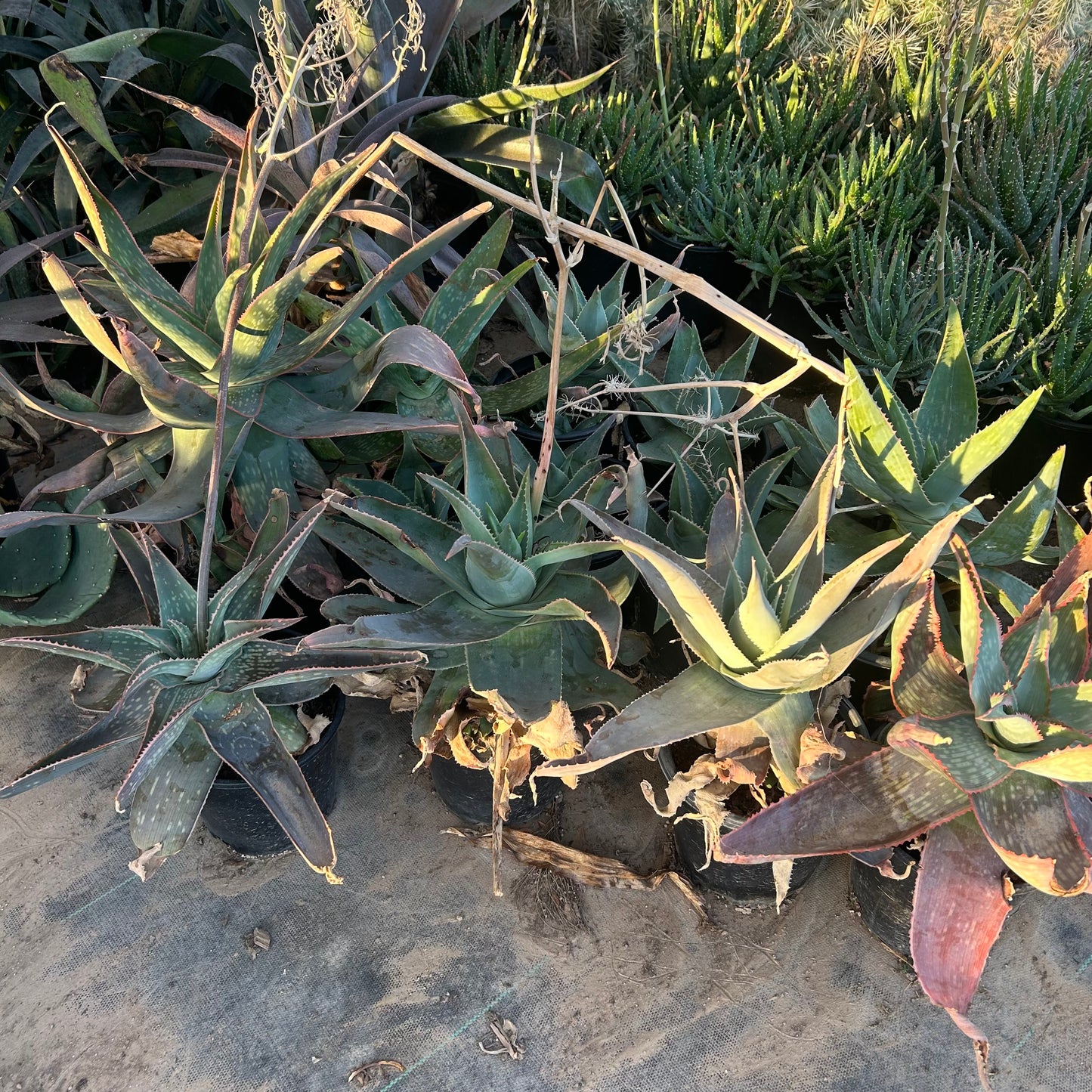
Ghost Aloe (Aloe 'Ghost Aloe', a hybrid of Aloe striata) is a mesmerizing succulent with smooth, ghost-gray to silvery-blue rosettes that seem to glow in the desert light. This refined hybrid produces vivid orange flower spikes that create a dramatic contrast against its pale foliage — a combination that stops visitors in their tracks. Low-growing, drought-tolerant, and virtually maintenance-free, Ghost Aloe is a designer favorite for modern desert landscapes across Scottsdale, Paradise Valley, Chandler, Mesa, and Tempe.
Ghost Aloe Plant Details
| Attribute | Detail |
|---|---|
| Scientific Name | Aloe 'Ghost Aloe' (Aloe striata hybrid) |
| Common Names | Ghost Aloe, Silver Ghost Aloe |
| Mature Height | 6–8 inches (foliage); flower spikes to 18+ inches |
| Mature Width | 12–18 inches |
| Growth Rate | Moderate — fills in steadily with offsets |
| Sun | Full sun to partial shade. Handles reflected heat. |
| Water | Low once established. Very drought-tolerant. |
| USDA Zones | 9–11 (Phoenix is Zone 9b–10a) |
| Soil | Well-draining. Adapts to Arizona caliche soils. |
| Foliage | Evergreen — smooth, tooth-free silvery-blue rosettes year-round |
| Bloom Color | Vivid orange flower spikes |
Ghost Aloe Uses in Phoenix Landscapes
Modern Desert Design Accent
Ghost Aloe's silvery-blue color palette is a natural fit for contemporary desert landscapes. The smooth, tooth-free rosettes create a clean, refined look that complements modern architecture, polished concrete, and minimalist hardscaping. Plant individual specimens or small groupings against dark-colored walls, dark gravel, or black river rock for maximum contrast in Scottsdale and Paradise Valley homes.
Moonlight Garden Plant
The pale, ghostly foliage reflects moonlight and landscape lighting beautifully, making Ghost Aloe an excellent choice for gardens designed to be enjoyed at night. Position near pathway lights, uplighting, or pool lighting where the silvery rosettes create an ethereal glow. A row of Ghost Aloe along a lit walkway is stunning after dark.
Container Showcase Specimen
Ghost Aloe is one of the most photogenic container succulents available. Its smooth silvery rosettes look striking in dark-colored ceramic or concrete planters. Place on patio tables, entryway shelves, or outdoor dining areas for a living centerpiece. Pair with darker-leaved succulents like Chocolate Drops or Black Rose Aeonium for dramatic contrast in Mesa, Gilbert, and Tempe homes.
Best Time to Plant Ghost Aloe in Phoenix
Fall (October–November) is ideal: warm soil promotes root establishment while cooler air reduces transplant stress. Spring (February–April) is the second-best window. Ghost Aloe is somewhat sensitive to extreme summer heat when newly planted, so avoid transplanting June through September.
How to Plant Ghost Aloe
- Dig wide, not deep — excavate 2× the root ball width at the same depth as the container.
- Check for caliche — break through any hardpan layer for proper drainage.
- Backfill with native soil — mix in 20% pumice or perlite for excellent drainage.
- Spacing — 12–18 inches apart for groundcover; 18–24 inches for individual accent plantings.
- Water basin — build a small berm ring to direct water to roots during establishment.
- Mulch — 1–2 inches of fine gravel or decomposed granite around the base.
Watering Ghost Aloe in Phoenix
First Year Watering Schedule
- Weeks 1–2: Every 2–3 days, light watering
- Month 1–3: Every 4–5 days
- Month 3–6: Every 7–10 days (every 5–7 days in peak summer)
- After Year 1: Every 10–14 days in summer; monthly in winter
Drip Irrigation
Place one 0.5-GPH emitter per plant, 4–6 inches from the center. Ghost Aloe is drought-tolerant once established but appreciates occasional deep watering during the hottest summer months. Avoid overhead irrigation — water on the rosette can cause sunburn marks.
Why is it called Ghost Aloe?
The common name comes from the pale, ghostly silvery-blue color of the foliage. In bright sunlight, the smooth rosettes appear to glow with an ethereal quality that sets this hybrid apart from green-leaved aloes.
Does Ghost Aloe have teeth or thorns?
No — one of Ghost Aloe's best features is its completely smooth, tooth-free leaf margins. This makes it safe for planting near walkways, play areas, and high-traffic spots where thorny plants would be a problem.
When does Ghost Aloe bloom?
Ghost Aloe produces vivid orange flower spikes typically in late winter through spring in Phoenix. The bright orange blooms against the silvery foliage create one of the most striking color combinations in the succulent world.
Can Ghost Aloe handle full Phoenix sun?
Yes, though it may develop attractive pink-lavender stress coloring in intense summer sun. If you prefer the pure silvery-blue color, afternoon shade (east-facing exposure) keeps the foliage its palest.
You May Also Like
- Blue Elf Aloe — another blue-toned compact aloe for cohesive cool-toned plantings.
- Pink Blush Aloe — pink-tinged rosettes that complement Ghost Aloe's silver tones.
- Gold Tooth Aloe — golden-edged rosettes for warm-cool contrast.
- Candy Corn Aloe — colorful warm-toned aloe for variety in mixed plantings.
- Ponytail Palm — an architectural specimen that pairs beautifully with low-growing aloes.
How Many Ghost Aloe Do I Need?
Ghost Aloe stays low at 12 to 18 inches wide, so it reads as a glowing groundcover or mass when planted on roughly 15-inch centers. Use this guide to estimate plant counts by area:
| Area to Cover | Plants Needed (15-inch spacing) |
|---|---|
| 25 sq ft | 16 plants |
| 50 sq ft | 32 plants |
| 100 sq ft | 64 plants |
For accent use, plant single rosettes or odd-numbered groups of 3 to 5 spaced 18 to 24 inches apart so each silvery rosette stands clear against dark gravel or a dark wall.
Ghost Aloe Season-by-Season in Phoenix
- Spring (Feb-Apr): Peak bloom. Vivid orange spikes rise above the silvery rosettes and draw hummingbirds, and new offsets fill in around the parent. A strong second planting window.
- Summer (May-Sep): Takes full sun and reflected heat once established, though intense west exposure can bring on pink-lavender stress color. Give occasional deep water in the hottest stretch, and a little afternoon shade if you want the palest silver-blue tone. Avoid summer transplanting.
- Fall (Oct-Nov): Prime planting season. Warm soil and cooling air let roots establish with little stress.
- Winter (Dec-Jan): Evergreen and structural. Hardy to about 25F. In a hard Valley frost below the mid-20s, cover young or container plants overnight to protect the smooth foliage from leaf-tip burn.
At a Glance
✔ Hummingbird-Friendly ✔ Pollinator-Friendly ✔ Heat-Loving (Reflected-Heat Tolerant) ✔ Drought-Tolerant ✔ Pool-Friendly (Low-Litter) ✔ Evergreen ✔ Low-Maintenance ✔ Spineless ✔ Deer & Rabbit-Resistant ✔ Cold-Hardy to 25°F
Plant It With
- Blue Elf Aloe: another cool blue-toned compact aloe for a cohesive, low-water grouping.
- Aloe 'Pink Blush': pink-blushing rosettes that play off Ghost Aloe's silver foliage.
- Gold Tooth Aloe: golden-edged rosettes for warm-against-cool contrast.
- Candy Corn Aloe: bright bicolor winter spikes to extend the bloom show.
Is Ghost Aloe Right for Your Yard?
Ghost Aloe thrives in full sun to part shade with fast-draining soil, including amended caliche, and it shrugs off reflected heat and drought once rooted. The smooth, tooth-free margins make it safe along walkways, pool decks, and play areas. It is not a fit if you have a low spot that stays wet, since soggy soil leads to rot.
Customer Reviews
Share