

Desert Cassia
Desert Cassia
Couldn't load pickup availability
Desert Cassia — Native Yellow Wildflower Shrub for Phoenix Landscapes
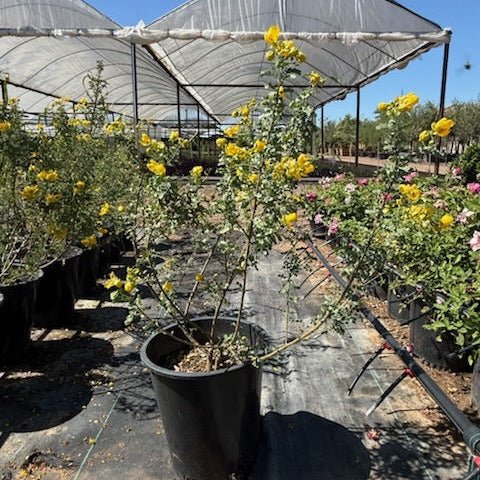
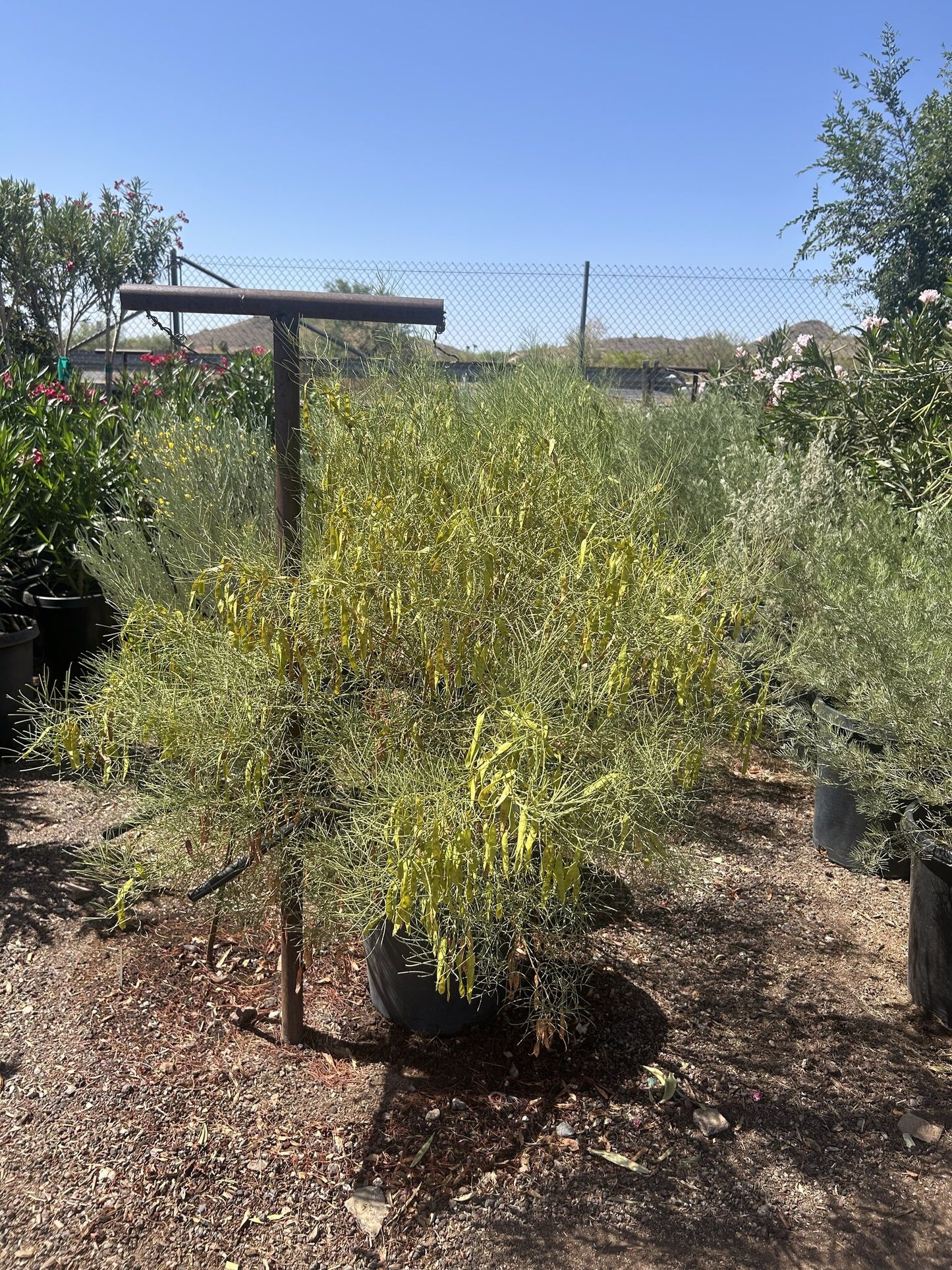
Desert Cassia (Senna wislizeni) is a tough, native Southwestern shrub that brings bright golden-yellow flowers to Phoenix landscapes with virtually zero care. This deciduous-to-semi-evergreen shrub grows naturally across Arizona, New Mexico, and Texas — making it one of the most habitat-appropriate flowering plants you can choose for a desert garden. With cheerful yellow blooms that emerge in summer and fall, fine-textured foliage, and extreme drought tolerance, Desert Cassia is a go-to choice for water-wise gardeners in Phoenix, Scottsdale, and Mesa who want authentic desert character without sacrificing seasonal color.
| Common Name | Desert Cassia, Shrubby Senna |
|---|---|
| Scientific Name | Senna wislizeni |
| Plant Type | Deciduous to semi-evergreen shrub |
| Mature Height | 3–6 feet |
| Mature Spread | 3–5 feet |
| Flower Color | Bright golden yellow |
| Bloom Season | Summer through fall (June–October) |
| Sun Exposure | Full sun |
| Water Needs | Very low — highly drought tolerant once established |
| USDA Hardiness Zone | Zone 7b–10b (ideal for Zone 9b–10a) |
| Soil Tolerance | Rocky, sandy, caliche — excellent drainage required |
| Native Range | Arizona, New Mexico, Texas (Chihuahuan Desert) |
| Growth Rate | Moderate |
Why Desert Cassia Thrives in the Phoenix Valley
As a native of the Chihuahuan Desert, Desert Cassia is evolutionarily adapted to Phoenix's climate in ways that non-native plants simply can't match. It flowers in summer — precisely when most other landscape shrubs stop blooming — providing critical nectar for native pollinators including bees and butterflies when other food sources are scarce. The plant's seasonal cycle syncs naturally with Phoenix's monsoon pattern: its flowering peak coincides with the monsoon's arrival in July, and it enters its most dormant phase during the cool, dry winter. Gardens in Tempe, Gilbert, and Chandler that feature Desert Cassia truly reflect the character and ecology of the Sonoran Desert region.
Landscape Uses
Desert Cassia works beautifully as a naturalistic flowering accent in xeriscape and native plant gardens. Its open, airy structure pairs well with boulders, decomposed granite, and gravel mulches. Use it as a mid-border accent, a wildlife-attracting feature plant, or a colorful companion to other native plants like fairy duster, brittlebush, and globe mallow. Its summer-to-fall bloom cycle fills a color gap in the native plant garden when few other shrubs are blooming.
Planting Density Guide
For naturalistic plantings, space Desert Cassia 4–5 feet on center to allow for its full mature spread. In wildlife garden designs, groupings of 3–5 plants spaced 4 feet apart create a dense pollinator hub. As a specimen shrub, allow 4–5 feet of clearance on all sides.
Best Time to Plant
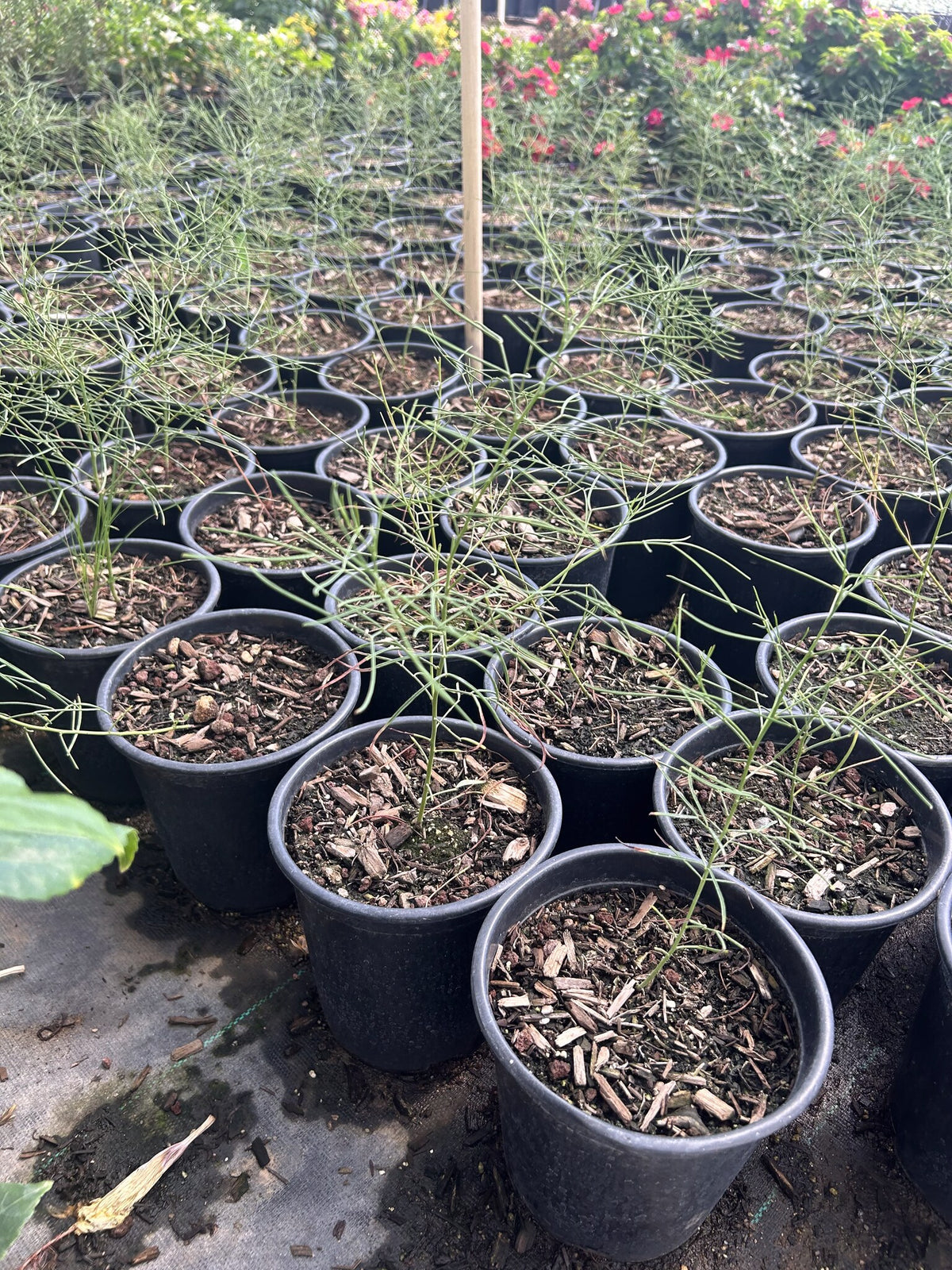
Plant Desert Cassia in fall (October–November) or early spring (February–March). Fall planting gives roots the entire cool season to establish before summer heat and flowering demands. Container plants from Three Timbers can be planted spring through fall with appropriate establishment irrigation.
How to Plant Desert Cassia
- Select a full-sun location with good drainage — this native shrub evolved in rocky, fast-draining desert soils.
- Dig a hole twice the width of the container and the same depth as the root ball.
- If a hard caliche layer is present, break through it to improve drainage.
- Remove the plant from its container; gently loosen circling roots.
- Set the crown at or slightly above grade.
- Backfill with native soil — no amendments needed for this desert-adapted native.
- Water deeply immediately after planting.
- Apply 2–3 inches of decomposed granite mulch, keeping it away from the base of the stems.
Watering Guide
Watering Schedule
During the first 60–90 days, water every 10–14 days with a deep, slow soak. Once established (typically one growing season), Desert Cassia thrives on Phoenix's natural monsoon rainfall with minimal supplemental irrigation. Mature plants are among the most drought-tolerant native shrubs available — they may require no supplemental watering at all once fully established in a low desert garden.
Drip Irrigation Setup
Place a 1 GPH emitter 12 inches from the base of the plant. Run drip for 45–60 minutes every 10–14 days during establishment. Once established, reduce to once monthly during summer and eliminate irrigation during monsoon season (July–September). Overwatering in winter when the plant is dormant should be avoided entirely.
Frequently Asked Questions
Is Desert Cassia truly native to Arizona?
Yes. Senna wislizeni is native to the Chihuahuan Desert region, including southern Arizona, New Mexico, and Texas. It's one of the most ecologically appropriate flowering shrubs you can plant in the Phoenix Valley for supporting local pollinators and wildlife.
When does it bloom?
Desert Cassia blooms from summer through fall — typically June or July through October. Its summer bloom coincides with the arrival of the monsoon season, making it one of the most valuable native plants for mid-summer color in Phoenix landscapes.
Does it attract pollinators?
Yes — its bright yellow flowers are highly attractive to native bees, butterflies, and other pollinators. Desert Cassia plays an important ecological role by providing nectar during the summer months when few other plants are blooming.
Will it lose its leaves in winter?
Desert Cassia is semi-deciduous — it may lose most or all of its leaves during cool, dry winters in Phoenix. This is normal and part of its natural seasonal cycle. New growth emerges readily in spring.
Does it need pruning?
Light shaping can be done after flowering to maintain a tidy form. In early spring, prune back any winter-damaged stems to encourage fresh growth. Avoid heavy pruning in summer during the active bloom cycle.
You May Also Like
Explore these complementary native and low-water plants at Three Timbers: Chuparosa Yellow for a hummingbird-magnet with similar yellow blooms, Autumn Sage Furman's Red for a contrasting warm red flowering accent, and Brake Lights Hesperaloe for a bold coral-red companion that blooms alongside Desert Cassia in summer.
How Many Desert Cassia Do I Need?
Desert Cassia matures around 3 to 5 feet wide, so space plants about 4 feet apart for a naturalistic mass or pollinator drift. Use this table to estimate counts:
| Run Length | Plants Needed (4 ft spacing) |
|---|---|
| 10 ft | 3 plants |
| 20 ft | 5 to 6 plants |
| 30 ft | 8 plants |
| 40 ft | 10 to 11 plants |
For a dense pollinator hub, plant in odd-numbered groups of 3 to 5 spaced 4 feet apart. As a single specimen, give it 4 to 5 feet of clearance on all sides.
Desert Cassia Season-by-Season in Phoenix
- Spring (Feb to Apr): Fresh foliage emerges as the weather warms. A good second planting window, and time to prune out any winter-damaged stems.
- Summer (May to Sep): Peak bloom. Bright golden flowers open right as the monsoon arrives in July, feeding native bees and butterflies when little else is flowering. Loves the heat and reflected heat.
- Fall (Oct to Nov): Bloom continues into October and this is the prime planting season for strong root establishment.
- Winter (Dec to Jan): Semi-deciduous, often dropping most leaves in cool, dry winters. This is normal. Hardy down toward 5 degrees F (Zone 7b), so it easily clears Valley frost and leafs back out in spring.
At a Glance
✔ Arizona Native ✔ Pollinator-Friendly ✔ Heat-Loving (Reflected-Heat Tolerant) ✔ Drought-Tolerant ✔ Low-Maintenance ✔ Cold-Hardy to 5°F
Plant It With
- Chuparosa - Yellow: a hummingbird magnet with matching yellow blooms for a native color theme.
- Autumn Sage Furman's Red: warm red flowers that contrast with the golden cassia bloom.
- Brittlebush: a Sonoran native with yellow daisies for an all-native pollinator planting.
- Desert Bird of Paradise: a taller yellow bloomer that anchors the back of a low-water bed.
Is Desert Cassia Right for Your Yard?
It is a great fit for native and xeriscape gardens that want summer color in full sun with almost no water once established. It needs fast-draining soil with caliche broken through, and rewards a hands-off approach. Not a fit if you want a dense evergreen shrub year-round, since it thins out and may drop its leaves through a cool, dry winter.
Customer Reviews
Share