

Chilean Mesquite
Chilean Mesquite
Couldn't load pickup availability
Phoenix's Fast-Growing Desert Shade Classic — Chilean Mesquite
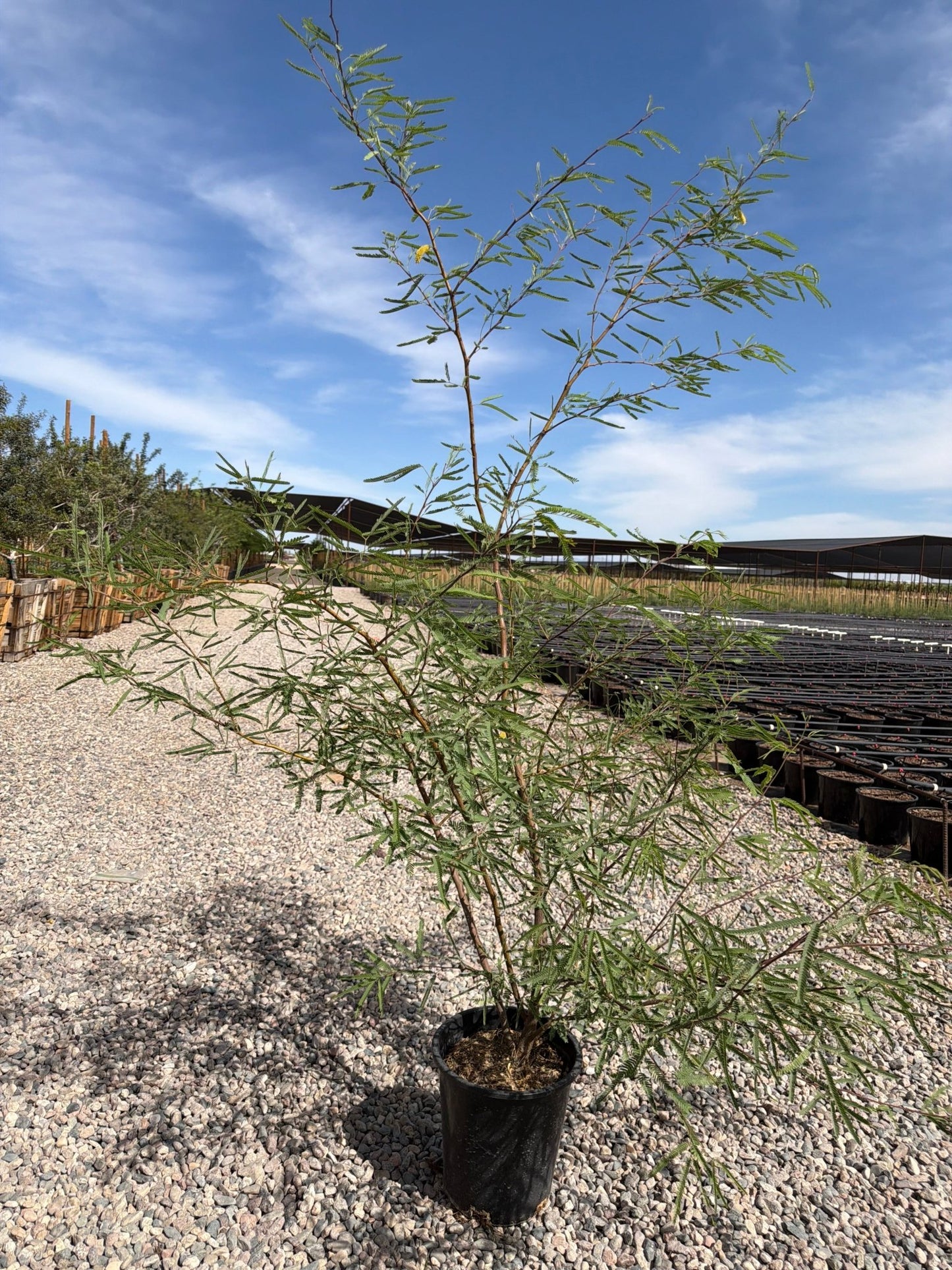
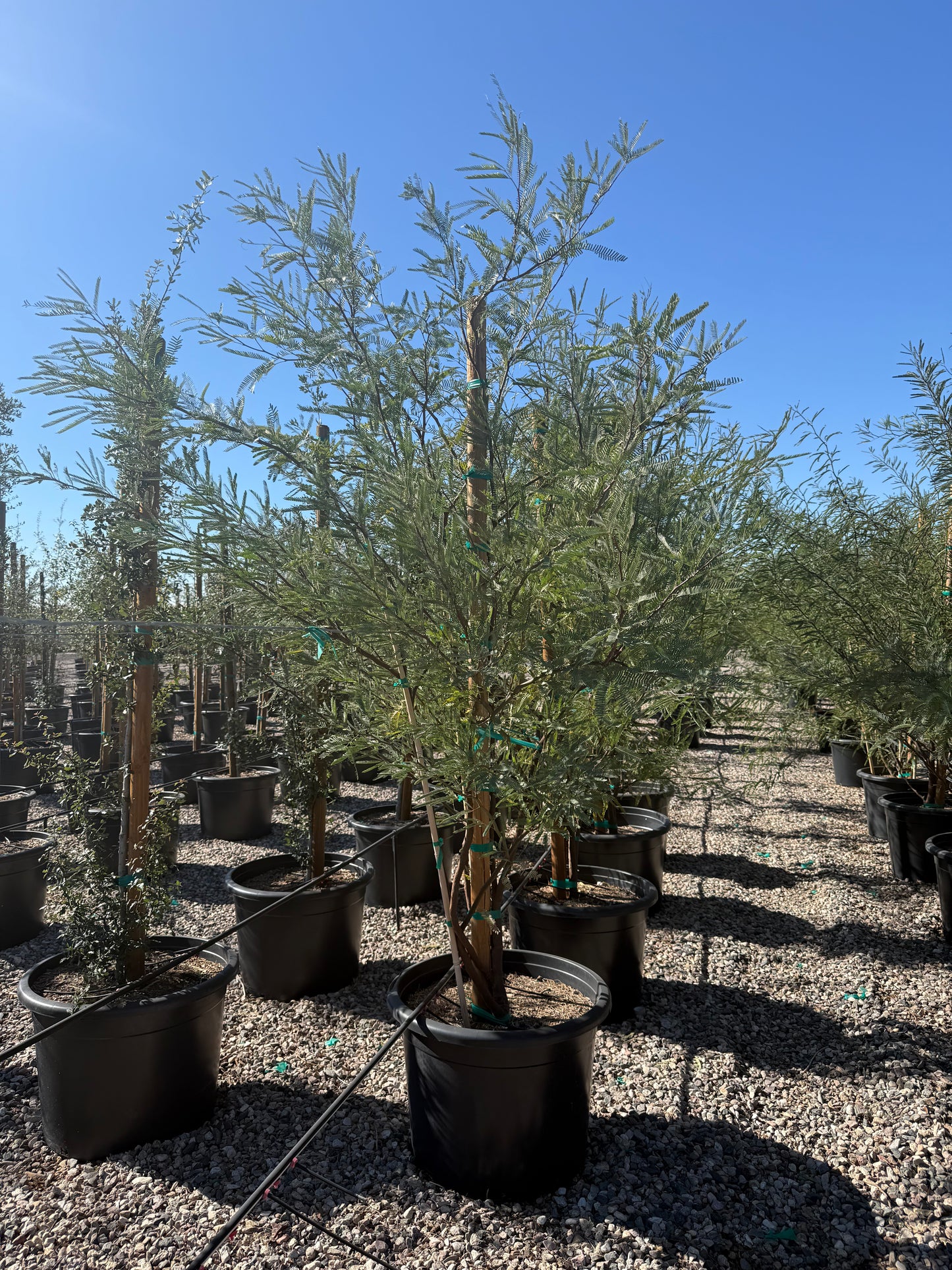
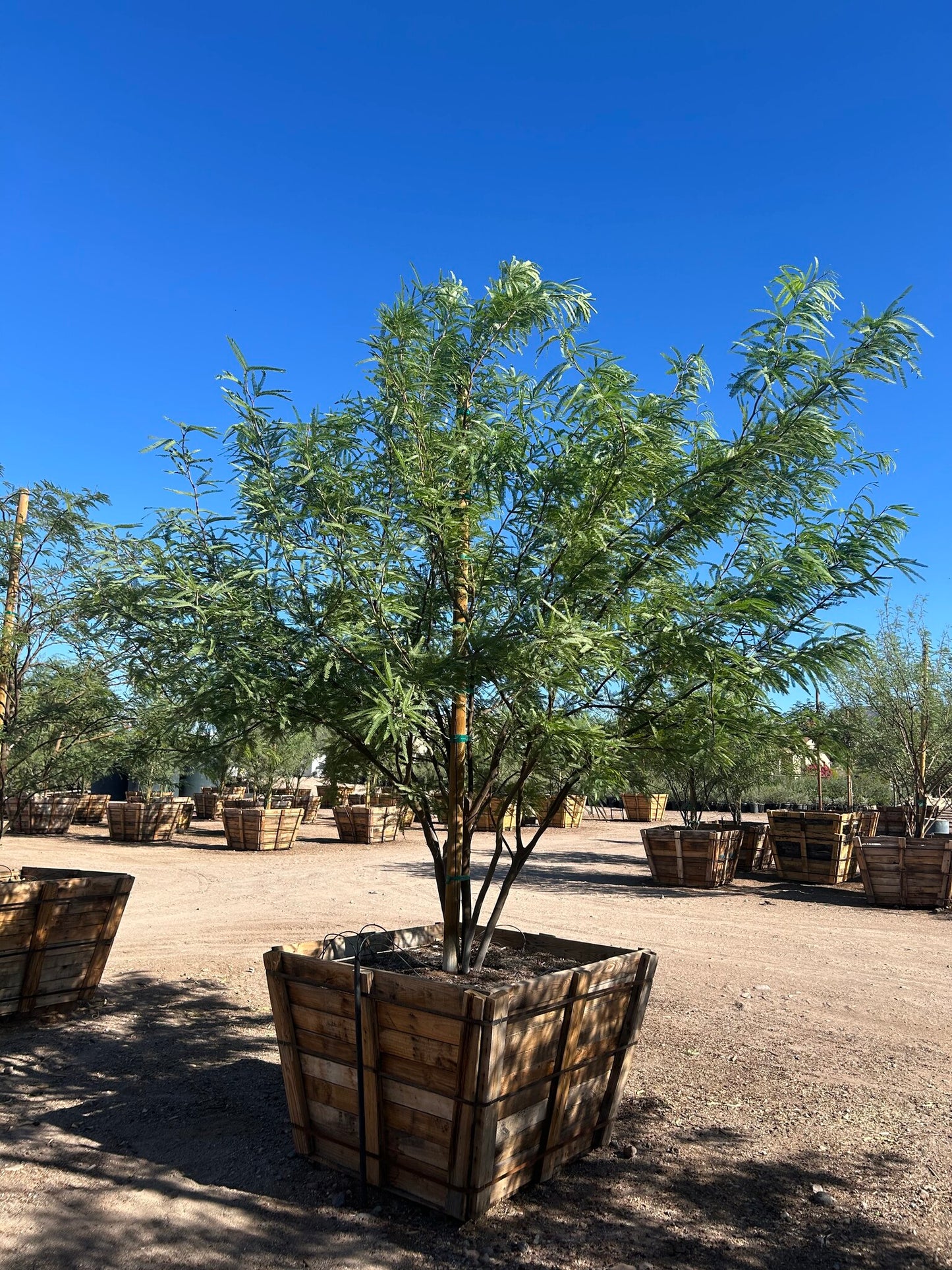
Chilean Mesquite (Prosopis chilensis) is one of the most widely planted and beloved shade trees across the Phoenix Valley — and for good reason. This elegant, fast-growing tree produces a broad, weeping canopy of fine-textured, bright green foliage that delivers exceptional dappled shade while remaining perfectly adapted to Arizona's extreme heat, drought, and alkaline soils. With fragrant spring blooms, sculptural branching, and a graceful silhouette, Chilean Mesquite brings natural desert beauty to landscapes in Scottsdale, Chandler, Mesa, Gilbert, and Glendale.
Chilean Mesquite Plant Details
| Attribute | Detail |
|---|---|
| Scientific Name | Prosopis chilensis |
| Common Names | Chilean Mesquite, South American Mesquite |
| Mature Height | 25–35 feet |
| Mature Width | 25–35 feet |
| Growth Rate | Fast — 4–6 feet per year in Phoenix with establishment watering |
| Sun | Full sun (6+ hrs). Handles intense reflected heat from walls and hardscape. |
| Water | Very low once established. Extremely drought-tolerant. |
| USDA Zones | 9–11 (Phoenix is Zone 9b–10a) |
| Soil | Well-draining. Adapts readily to Arizona's alkaline and caliche soils. |
| Foliage | Deciduous — drops leaves in winter, leafs out vigorously in early spring |
| Bloom | Fragrant yellowish-white catkins in spring, February–April |
| Canopy Style | Wide, weeping, open — classic airy desert shade canopy |
Chilean Mesquite Uses in Phoenix Landscapes
Premium Backyard Shade Tree
Chilean Mesquite's wide, weeping canopy — up to 25–35 feet across at maturity — delivers some of the finest dappled shade available from any desert tree in the Phoenix Valley. Its feathery green foliage sways gently in the desert breeze, cooling patios, seating areas, and lawn spaces in Scottsdale, Paradise Valley, and Chandler. Plant on the west or southwest side of the home for maximum afternoon shade benefit and potential energy savings during Phoenix's intense summer months.
Pool-Adjacent Shade Tree
Chilean Mesquite is among the most popular pool-area trees in the Phoenix Valley due to its delicate compound leaflets, which are small and sink quickly rather than clogging pool filters. Its open, filtered canopy provides excellent shade over pool decks and lounge areas without blocking all sunlight from the water. Plant 15–20 feet from the pool edge to keep roots well clear of the shell while still delivering substantial overhead shade.
Xeriscape Statement Tree
The graceful, weeping form of the Chilean Mesquite makes it a natural focal point in any xeriscape design. Its sculptural branching structure adds winter interest even after leaf drop, and its bright green spring canopy re-emerges in February — one of the first trees to leaf out after winter dormancy. Pair with Desert Spoon, Palo Verde, Texas Sage, and Red Bird of Paradise for a layered, resort-quality low-water landscape throughout Gilbert, Peoria, and Tempe.
Spacing guide: For a shade canopy over a walkway or patio — plant 25–30 feet apart. For a grove or multi-tree property screen — plant 30+ feet apart to allow full canopy expression.
Street and Commercial Landscape Tree
The Chilean Mesquite is widely used in commercial and municipal streetscapes across the Phoenix Valley due to its fast establishment, reliable shade production, and drought tolerance once established. Its refined, weeping canopy fits well in medians, commercial entries, and parking lot islands without the aggressive thorning or invasive seeding of native wild mesquites.
Best Time to Plant Chilean Mesquite in Phoenix
Fall planting (October–November) is ideal in the Phoenix Valley. Warm soil temperatures help the root system establish quickly while cooler air reduces transplant stress — giving the tree 6–8 months to root before facing its first Phoenix summer. Spring planting (February–April) is the second-best window. Avoid planting during summer if possible, as new transplants require intensive irrigation management during triple-digit heat.
How to Plant Chilean Mesquite
- Dig wide, not deep — excavate a hole 2–3x the root ball width and the same depth. Chilean Mesquite develops an extensive lateral root system.
- Check for caliche — probe the hole bottom for hard caliche layers and break through any hardpan to allow drainage and taproot growth.
- Backfill with native soil — use the excavated desert soil. An optional 20% compost amendment is fine.
- Spacing — plant 25–30 feet from structures and other large trees; 15–20 feet from pools.
- Build a water basin — create a 3–4 inch earthen berm around the drip line to direct irrigation water to the root zone.
- Mulch — apply 2–3 inches of bark mulch or decomposed granite to conserve moisture and moderate soil temperature.
Watering Chilean Mesquite in Phoenix
First Year Watering Schedule
Consistent deep watering during the first growing season is essential for establishment. Water slowly and deeply — 20–30 minutes per session — to encourage the taproot to grow down and the root system to expand.
- Weeks 1–2: Every 1–2 days
- Months 1–2: Every 3–4 days
- Months 3–6: Every 7–10 days (every 5–7 days in peak summer heat)
- After Year 1: Every 10–14 days in summer; every 3–4 weeks in winter
Drip Irrigation
Place emitters 18–24 inches from the trunk, at the canopy drip line. Use 1–2 GPH emitters running 60–90 minutes per session during the first growing season. Once established, Chilean Mesquite is highly drought-tolerant and requires minimal supplemental irrigation throughout the Phoenix Valley.
How fast does Chilean Mesquite grow in Phoenix?
Chilean Mesquite is one of the fastest-growing shade trees in Phoenix — expect 4–6 feet of new growth per year during establishment. Trees can reach 15–20 feet within 2–3 seasons with proper irrigation and fall planting timing.
Is Chilean Mesquite drought tolerant?
Yes — once established after year 2, Chilean Mesquite requires very little supplemental irrigation and can thrive on Phoenix's natural rainfall patterns alone in most Valley soils. It's one of the most water-efficient large shade trees available for Arizona landscapes.
What's the difference between Chilean Mesquite and Chilean Fuente Mesquite?
Both are forms of Prosopis chilensis, but Chilean Fuente Mesquite is a specific premium CCF cultivar selected for its especially elegant weeping canopy, exceptional growth rate, and more consistent thornless character. The standard Chilean Mesquite is the classic species and widely available in a full range of sizes from 3-gallon to 48-inch box.
Does it have thorns?
Chilean Mesquite may have some thorns, though typically less aggressive than wild desert mesquites. If a completely thornless variety is required, consider the Chilean Fuente Mesquite or Thornless Texas Honey Mesquite.
Can Chilean Mesquite handle Phoenix summers?
Absolutely — Chilean Mesquite evolved in South American desert and semi-arid conditions and is fully adapted to Phoenix's triple-digit summers, extreme aridity, and alkaline soils. It thrives where many other shade trees struggle.
You May Also Like
- Chilean Fuente Mesquite — The premium CCF cultivar of Chilean Mesquite, with an especially graceful weeping canopy and consistently fast growth.
- Leslie Roy Mesquite — A top-rated hybrid mesquite cultivar known for its exceptional large, symmetrical canopy — great for maximum shade coverage.
- Thornless Texas Honey Mesquite — A completely thornless mesquite variety perfect for family yards, patios, and pool areas.
- Desert Museum Palo Verde — Phoenix's most popular flowering desert tree with brilliant yellow spring blooms and similar drought tolerance.
- Cooperi Mesquite — A refined, compact hybrid mesquite cultivar, ideal where a more proportional mid-size shade tree is desired.
How Many Chilean Mesquite Do I Need?
Chilean Mesquite is a large specimen shade tree (25 to 35 feet wide at maturity), so it is planted singly or in widely spaced groves rather than as a hedge. Use this guide to estimate how many trees cover a given run or shade target:
| Goal | Spacing | Trees needed |
|---|---|---|
| Single backyard focal / patio shade | n/a | 1, set on the west or southwest side |
| Matched pair flanking a drive or entry | 30 ft apart | 2 |
| Shade grove or loose property screen, 60 ft run | 30 ft on center | 2 to 3 |
| Shade grove or loose property screen, 120 ft run | 30 ft on center | 4 to 5 |
Give each tree at least 25 to 30 feet of clearance from structures, walls, and other large canopies so the weeping form can develop fully.
Chilean Mesquite Season-by-Season in Phoenix
- Spring (Feb–Apr): One of the first desert trees to leaf out. Bright green canopy re-emerges in February, followed by fragrant yellowish catkins that draw bees. Prime second planting window.
- Summer (May–Sep): Peak shade season. Thrives in triple-digit heat and reflected heat off walls and hardscape, and pushes vigorous growth with monsoon rain (Jul–Sep). Stake young trees, since fast top growth in monsoon wind can outpace root anchorage.
- Fall (Oct–Nov): Best planting season in the Valley. Canopy stays full and green well into late fall.
- Winter (Dec–Jan): Drops its leaves and shows its sculptural branching. Hardy to about 15°F, so established trees shrug off normal Valley frost. Protect only newly planted trees during a hard freeze.
At a Glance
✔ Pollinator-Friendly ✔ Heat-Loving (Reflected-Heat Tolerant) ✔ Drought-Tolerant ✔ Low-Maintenance ✔ Shade-Providing ✔ Cold-Hardy to 15°F
Plant It With
- Chilean Fuente Mesquite: the premium near-thornless CCF form of the same species, ideal where a matched but cleaner canopy is wanted.
- Leslie Roy Mesquite: a hybrid mesquite with a large symmetrical canopy for maximum shade coverage.
- Desert Museum Palo Verde: thornless yellow-flowering desert tree with matching drought tolerance for a layered canopy.
- Cooperi Mesquite: a compact mid-size mesquite for spots that cannot take a full 35-foot canopy.
Is Chilean Mesquite Right for Your Yard?
Chilean Mesquite thrives in full sun and reflected heat, in well-drained alkaline or caliche soil with room for a 25 to 35 foot weeping canopy and an equally wide lateral root system. It is fast, water-thrifty once established, and frost-hardy to about 15°F. Not a fit if: your space is tight or close to a pool shell or foundation, or you need a thornless tree, since the straight species can carry variable thorns (choose the Chilean Fuente or a thornless mesquite instead). Stake young trees and thin the canopy every few years to reduce monsoon wind-throw.
Customer Reviews
Share