
Blue Nolina
Blue Nolina
Couldn't load pickup availability
Phoenix's Most Striking Blue Desert Accent Plant — Blue Nolina
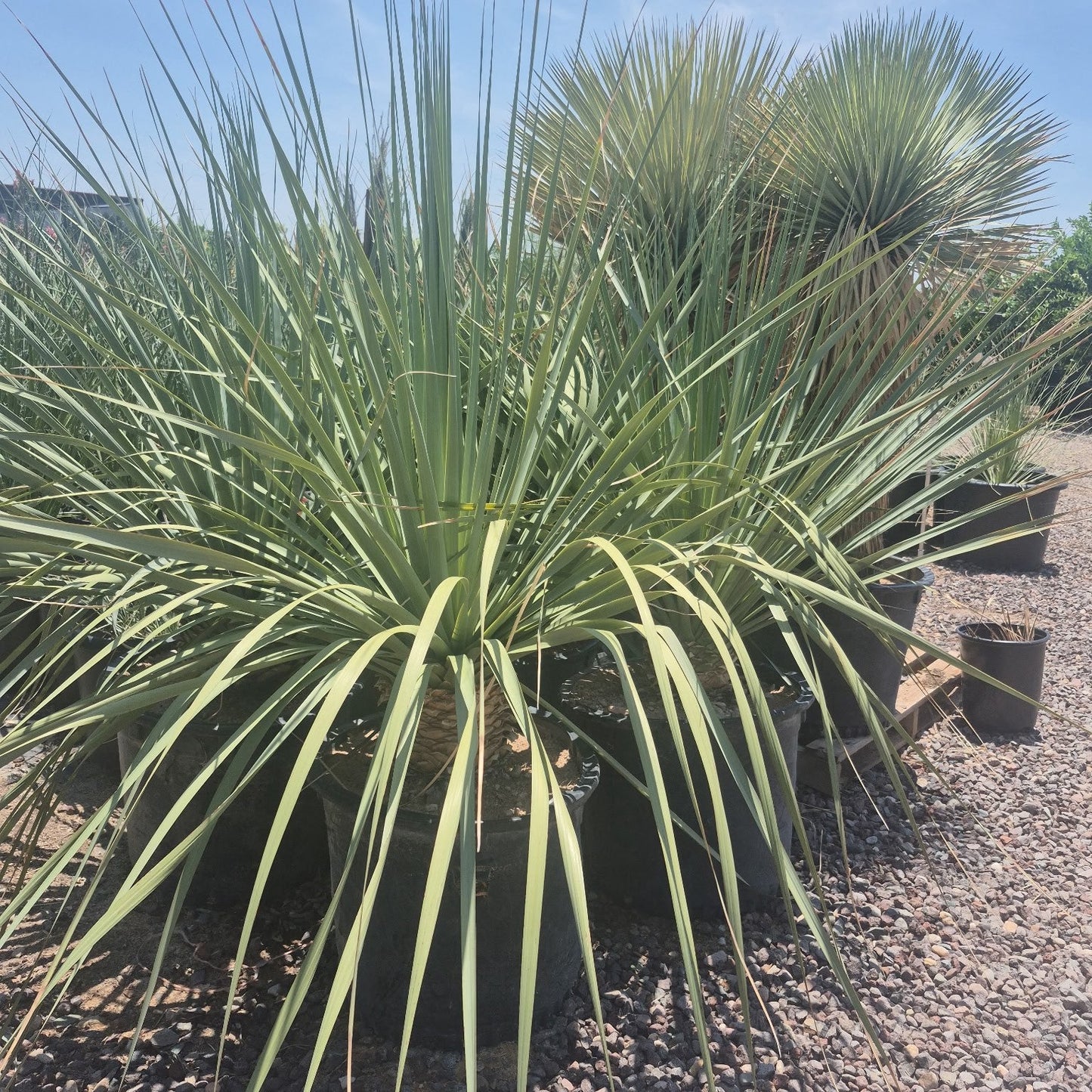
Blue Nolina (Nolina nelsonii) is the most dramatic blue-gray accent plant in the Sonoran Desert landscape. With its bold, upright form, steel-blue foliage, and virtually zero water needs once established, it's the ultimate statement plant for Phoenix desert-modern landscapes. Growing slowly into a commanding 5–8 foot specimen, Blue Nolina's striking color sets it apart from every other accent plant in the Valley. Whether you're designing a bold focal point in Scottsdale, adding blue-toned structure in Paradise Valley, or creating a low-water accent garden in Chandler — Blue Nolina is the plant that stops visitors in their tracks.
Blue Nolina Plant Details
| Attribute | Detail |
|---|---|
| Scientific Name | Nolina nelsonii |
| Common Names | Blue Nolina, Nelson's Beargrass, Blue Bear Grass |
| Mature Height | 5–8 feet (foliage); bloom spikes 10–12 feet |
| Mature Width | 4–6 feet |
| Growth Rate | Slow — 6–10 inches per year in Phoenix |
| Sun | Full sun (6+ hrs). Handles reflected heat from walls. |
| Water | Very low once established. Survives on rainfall alone. |
| USDA Zones | 8–11 (Phoenix is Zone 9b–10a) |
| Soil | Well-draining. Tolerates Arizona caliche soils. |
| Foliage | Evergreen — striking steel-blue, upright blades year-round |
| Native Status | Native to northeastern Mexico (Tamaulipas, Nuevo León) |
Blue Nolina Uses in Phoenix Landscapes
Bold Focal Point & Specimen Planting
Blue Nolina's steel-blue color is unlike anything else in a Phoenix landscape. It creates an immediate focal point in entry courts, garden beds, and courtyard designs. Its upright, architectural form reads as intentional and modern from across the yard. Plant as a solo specimen in decomposed granite or pair with Tree Bear Grass and Smooth Edged Desert Spoon for a dramatic all-native trio.
Desert-Modern & Contemporary Design
No plant captures the Phoenix desert-modern aesthetic better than Blue Nolina. The blue-gray foliage contrasts beautifully against warm desert tones — terracotta walls, tan decomposed granite, rust-colored boulders, and black steel edging. It's the go-to plant for landscape architects designing high-end Scottsdale and Paradise Valley projects.
Waterwise & Native-Style Gardens
As an extreme drought-tolerant native of northeastern Mexico, Blue Nolina is perfectly suited for Phoenix's low-water landscape requirements. Once established after year one, it typically survives on rainfall alone throughout the year. Pair with Brittlebush, Desert Marigold, and Desert Willow for a stunning, near-zero-water landscape in Mesa, Tempe, or Gilbert.
Screening & Visual Privacy
While not a traditional privacy hedge, mature Blue Nolina specimens create effective visual separation when planted in groups of 3–5 spaced 4–5 feet apart. The upright, dense foliage blocks sightlines at ground level while adding dramatic blue-toned color. Combine with taller Tree Bear Grass behind for a layered privacy planting.
Best Time to Plant Blue Nolina in Phoenix
Fall (October–November) is ideal — warm soil promotes root development while cooler air reduces transplant stress. Spring (February–April) is the second-best window. Avoid summer planting if possible; like all accent plants, Blue Nolina benefits from a gentle establishment period before facing its first Phoenix summer.
How to Plant Blue Nolina
- Dig wide, not deep — 2–3x the root ball width, same depth as the container.
- Check for caliche — break through any hardpan layer for essential deep drainage.
- Backfill with native soil — Blue Nolina prefers lean, fast-draining soil; avoid heavy organic amendments.
- Spacing — 4–5 ft apart for grouped plantings; 6–8 ft for individual specimens.
- Water basin — build a 3–4 inch earthen ring to direct water deep into the root zone.
- Mulch — gravel mulch is ideal; it maintains the natural desert aesthetic and improves drainage.
Watering Blue Nolina in Phoenix
First Year Watering Schedule
- Weeks 1–2: Every 2–3 days, deep and slow (20–30 min drip)
- Months 1–2: Every 5–7 days
- Months 3–6: Every 10–14 days (every 7–10 days in peak summer)
- After Year 1: Once or twice per month in summer; rainfall alone in winter
Drip Irrigation
A single 1 GPH emitter 12–18 inches from the base is sufficient during establishment. Once mature, Blue Nolina is one of the most drought-adapted plants in the Phoenix landscape palette — it may need zero supplemental irrigation during cooler months after year two.
How fast does Blue Nolina grow in Phoenix?
Slowly — expect 6–10 inches of growth per year. This is a plant to invest in for the long term. Purchasing larger gallon sizes from Three Timbers gives you immediate visual impact while the plant establishes. The steel-blue color is present from day one at any size.
Is Blue Nolina truly drought tolerant in Phoenix?
Yes — exceptionally so. Blue Nolina is adapted to the harsh, dry conditions of northeastern Mexico and thrives with minimal water in Phoenix. After establishment, most mature specimens receive no supplemental irrigation and look their best during the dry season.
How does Blue Nolina differ from Tree Bear Grass or Bear Grass?
Blue Nolina (Nolina nelsonii) is distinguished by its striking steel-blue foliage color — the most visually distinctive of all the Nolinas. Tree Bear Grass (Nolina matapensis) grows taller with a tree form, while Bear Grass (Nolina microcarpa) stays lower and clumping. Blue Nolina is the color star of the group.
Can Blue Nolina handle Phoenix reflected heat?
Absolutely. Blue Nolina thrives in full sun, extreme heat, and rocky, poor soils. South- and west-facing exposures, block walls, and concrete surrounds are ideal conditions for this plant. Heat is never a problem.
Does Blue Nolina bloom?
Yes — mature plants send up dramatic cream-colored flower spikes 10–12 feet tall. Blooming typically occurs in late spring to early summer. It's a spectacular event when it happens and adds seasonal interest to what is already a year-round showstopper.
You May Also Like
- Tree Bear Grass — A taller, tree-forming Nolina that pairs beautifully with Blue Nolina in layered desert accent plantings.
- Bear Grass — A lower-growing, clumping Nolina perfect as a border plant around Blue Nolina specimens.
- Smooth Edged Desert Spoon — A silvery-green architectural accent that creates stunning contrast with Blue Nolina's steel-blue foliage.
- Purple Hopseed — A fast-growing evergreen shrub that provides privacy screening while Blue Nolina matures as a focal point.
- Arizona Rosewood — A native evergreen with fragrant white flowers that complements Blue Nolina in all-native low-water designs.
How Many Blue Nolina Do I Need?
Blue Nolina is an architectural specimen, so let its steel-blue form stand clear rather than packing it into a hedge. Plant a single rosette as a focal point in decomposed granite, or set an odd-numbered group of 3 to 5 spaced 4 to 5 feet apart so each crown reads on its own. For a true solo statement near an entry or courtyard, give it 6 to 8 feet of open space all around. Keep the foliage at least 3 to 4 feet back from walkways so the long blades and tall bloom spike have room.
Blue Nolina Season-by-Season in Phoenix
- Spring (Feb to Apr): Steel-blue blades push fresh growth as nights warm. Strong second window to plant. Mature plants may begin sending up a dramatic cream bloom spike.
- Summer (May to Sep): Thrives in full sun and reflected heat off block walls and pavement. Established plants need only a deep soak once or twice a month. Bloom spikes finish in early summer.
- Fall (Oct to Nov): Best planting season. Warm soil and mild air let the slow-growing roots settle before winter.
- Winter (Dec to Jan): Holds its blue evergreen structure with no frost worry in the Valley. It is genuinely cold-hardy to about 15°F, well below typical Phoenix lows, so no cover is needed.
At a Glance
✔ Evergreen ✔ Drought-Tolerant ✔ Heat-Loving (Reflected-Heat Tolerant) ✔ Low-Maintenance ✔ Spineless ✔ Cold-Hardy to 15°F
Plant It With
- Purple Hopseed: a fast evergreen screen that gives the slow Blue Nolina a backdrop while it matures.
- Desert Spoon: a silvery rosette that echoes the architectural form in a warmer tone.
- Red Yucca: low coral bloom spikes that play off the steel-blue blades.
- Texas Sage: a soft silver-leafed shrub with purple bloom flushes for color contrast at the base.
Is Blue Nolina Right for Your Yard?
It is ideal for full-sun focal spots, desert-modern beds, reflected-heat exposures, and lean, fast-draining or caliche soils where you want a bold blue accent with almost no upkeep. It is not a fit if you want fast results or a soft, lush look: it grows slowly and its stiff architectural form reads sculptural, not billowy.
Customer Reviews
Share