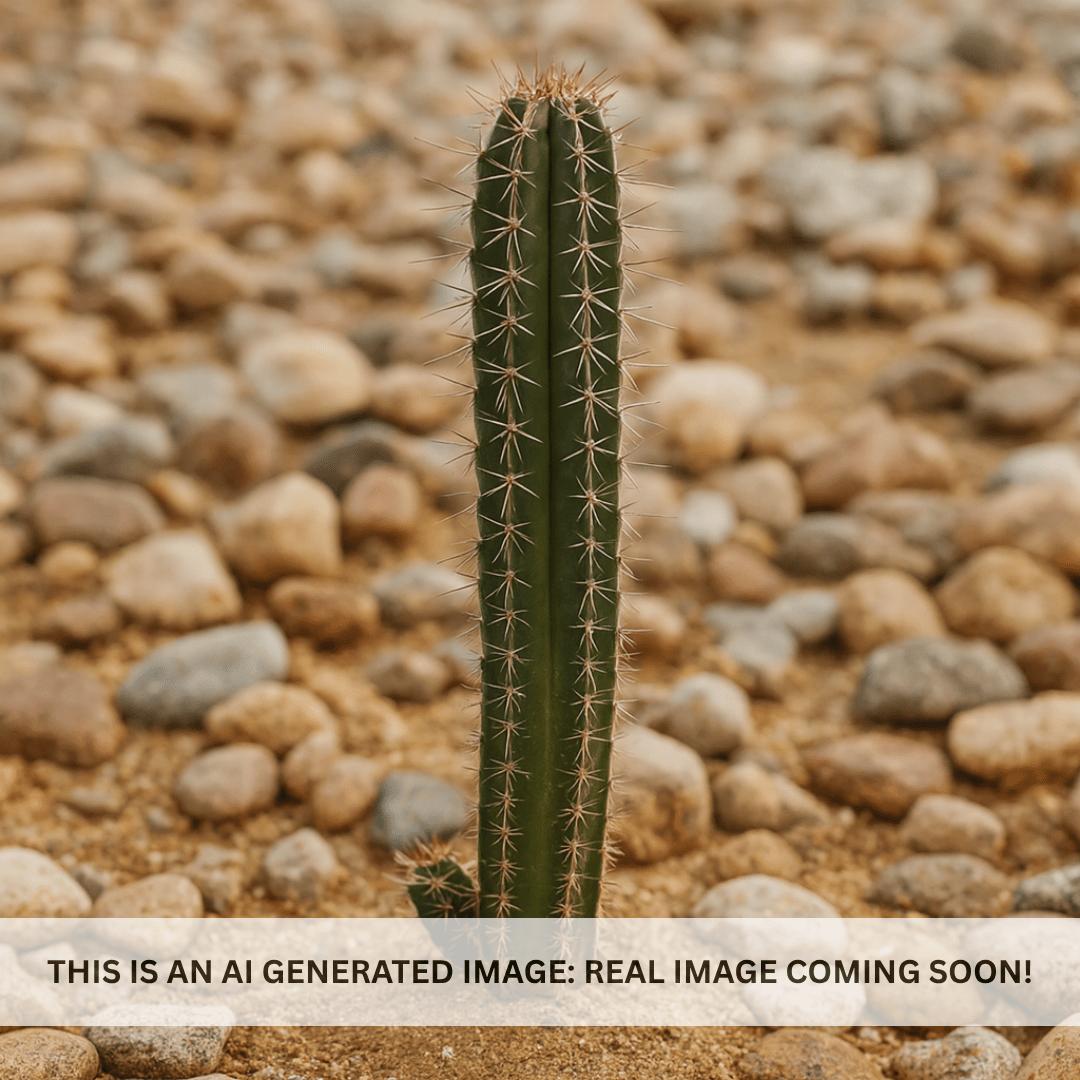

Polaskia chichipe
Polaskia chichipe
Couldn't load pickup availability
Arizona's Most Striking Columnar Cactus for Modern Desert Landscapes
Polaskia chichipe is a sculptural columnar cactus native to the semi-arid valleys of central Mexico. Its tall, branching form creates dramatic vertical interest that anchors any desert landscape design. Reaching 10–20 feet at maturity with a narrow 4–6 foot spread, this cactus delivers massive visual impact with virtually zero maintenance. Whether you're building a modern courtyard in Scottsdale, adding vertical drama to a Mesa xeriscape, or creating a statement planting in Chandler — Polaskia chichipe is the architectural centerpiece your landscape needs.
Polaskia chichipe Plant Details
| Attribute | Detail |
|---|---|
| Scientific Name | Polaskia chichipe |
| Common Names | Polaskia chichipe, Chichipe Cactus |
| Mature Height | 10–20 feet (up to 25 feet at full maturity) |
| Mature Width | 4–6 feet |
| Growth Rate | Slow to moderate — 6–12 inches per year in Phoenix |
| Sun | Full sun (6+ hrs). Handles reflected heat from walls. |
| Water | Very low once established. Extremely drought-tolerant. |
| USDA Zones | 9–11 (Phoenix is Zone 9b–10a) |
| Soil | Well-draining. Adapts to Arizona caliche soils with good drainage. |
| Foliage | Evergreen — columnar blue-green stems year-round |
| Bloom Season | Spring — creamy white to pale green flowers |
Polaskia chichipe Uses in Phoenix Landscapes
Architectural Focal Point
Polaskia chichipe's tall, branching columnar form makes it a natural focal point in modern desert landscapes. Plant a single specimen near an entry, courtyard, or pool wall for instant sculptural drama. The blue-green stems contrast beautifully against stucco walls, steel planters, and gravel hardscapes common in Phoenix and Scottsdale contemporary design.
Xeriscape & Drought-Tolerant Gardens
As one of the most drought-tolerant cacti available, Polaskia chichipe is perfect for zero-water and low-water landscape designs. Once established, it thrives on rainfall alone in most Phoenix winters and needs only occasional deep soaks in peak summer. Group with other columnar cacti like Mexican Fence Post or Totem Pole for a striking desert column garden.
Privacy & Screening
Mature Polaskia chichipe plants develop multiple branches that create a natural screen when planted 3–4 feet apart. For a 20-foot fence line, use 5–7 plants to create a living wall of columnar cactus that provides privacy without the maintenance of a traditional hedge.
Best Time to Plant Polaskia chichipe in Phoenix
Spring (March–May) is the ideal planting window for columnar cacti in Phoenix. Warm soil temperatures encourage root establishment, and the plant has a full growing season to settle in before winter dormancy. Fall (October–November) is the second-best window. Avoid planting in the hottest summer months or during winter cold snaps.
How to Plant Polaskia chichipe
- Dig wide, not deep — 2–3x the root ball width, same depth
- Check for caliche — break through any hardpan layer to ensure drainage (critical for cacti)
- Backfill with native soil mixed with pumice or decomposed granite for extra drainage
- Spacing — 4–5 ft apart for grouped plantings; 6+ ft for individual specimens
- Do not water for the first 7–10 days after planting to let cut roots callus
- Top dress with gravel or decomposed granite — no organic mulch touching the base
Watering Polaskia chichipe in Phoenix
First Year Watering Schedule
Weeks 1–2: No water (let roots callus). Month 1–3: Every 10–14 days, deep and slow. Month 3–6: Every 2–3 weeks. After Year 1: Every 3–4 weeks in summer; no supplemental water needed in winter.
Drip Irrigation
Place one 2 GPH emitter 18–24 inches from the base. Established plants are extremely drought-tolerant and may need watering only once a month in summer. Overwatering is the primary cause of root rot in columnar cacti — when in doubt, skip a watering.
How fast does Polaskia chichipe grow in Phoenix?
Polaskia chichipe grows about 6–12 inches per year in Phoenix. It's a slow-to-moderate grower, but larger nursery sizes (10–25 gallon) give you instant height and branching for immediate landscape impact.
Is Polaskia chichipe cold hardy in Phoenix?
Yes. Polaskia chichipe handles temperatures down to about 25°F, which is well within the typical Phoenix winter range. It may show minor frost damage at the tips during rare hard freezes but recovers quickly in spring.
Can Polaskia chichipe handle reflected heat?
Absolutely. This cactus thrives in full sun and handles the intense reflected heat from block walls, concrete, and south-facing exposures that are common throughout Phoenix and Scottsdale properties.
What's the difference between Polaskia chichipe and Mexican Fence Post?
Both are columnar cacti, but Polaskia chichipe has a more branching, tree-like form with slightly wider columns, while Mexican Fence Post (Pachycereus marginatus) grows in tighter, more upright clusters with distinct white-margined ribs. Both are excellent for Phoenix landscapes.
You May Also Like
Mexican Fence Post — A classic columnar cactus with clean vertical lines, perfect for desert screening and modern design.
Totem Pole Cactus — A smooth, spineless columnar cactus with a unique sculptural texture.
Blue Myrtle Cactus — A striking blue-skinned columnar cactus that adds bold color contrast to desert gardens.
Desert Spoon — A dramatic rosette-forming succulent that pairs beautifully with columnar cacti for layered desert design.
How Many Polaskia chichipe Do I Need?
This is a tall, branching columnar cactus (4 to 6 ft wide) that works as a single architectural specimen or as a living screen. As a focal point, plant one near an entry, pool wall, or courtyard. For a screen, space columns about 4 ft on center so branches knit into a wall over time:
| Screen Length | Plants at 4 ft Centers |
|---|---|
| 12 ft | 3–4 |
| 20 ft | 5–6 |
| 40 ft | 10–11 |
Set columns at least 4 ft back from walkways and pool edges so the spiny ribs stay clear of foot traffic.
Polaskia chichipe Season-by-Season in Phoenix
- Spring (Mar–May): Best planting window and bloom time, with creamy white to pale green flowers along the upper stems. New growth flushes as soil warms.
- Summer (May–Sep): Thrives in full sun and reflected heat with almost no care. Needs only occasional deep soaks, and good drainage matters most during monsoon downpours.
- Fall (Oct–Nov): Strong second planting window. Cooler air and warm soil let roots settle before winter.
- Winter (Dec–Jan): Evergreen and largely dormant. Hardy to about 25°F, with only minor tip frost in rare hard freezes that recovers in spring.
At a Glance
✔ Heat-Loving (Reflected-Heat Tolerant) ✔ Drought-Tolerant ✔ Evergreen ✔ Low-Maintenance ✔ Deer & Rabbit-Resistant ✔ Cold-Hardy to 25°F
Plant It With
- Mexican Fence Post: tight upright columns that build out a desert column garden alongside the branching chichipe.
- Totem Pole Cactus: a smooth, knobby column that adds sculptural texture contrast.
- Blue Myrtle Cactus: bold blue skin that plays off the blue-green chichipe stems.
- Desert Spoon: a low silvery rosette that grounds the tall columns with softer texture.
Is Polaskia chichipe Right for Your Yard?
It thrives in full sun and reflected heat with fast-draining soil, making it a low-water choice for modern courtyards, xeriscapes, and screens. Break through caliche and add pumice or decomposed granite so roots never sit wet. It is not a fit for small, enclosed beds or shaded spots, since it grows tall and branching and needs sun and room to develop its sculptural form.
Customer Reviews
Share