

Ocotillo - Bareroot
Ocotillo - Bareroot
Couldn't load pickup availability
Arizona's Iconic Desert Sculpture — Bareroot Ocotillo for Instant Landscape Drama
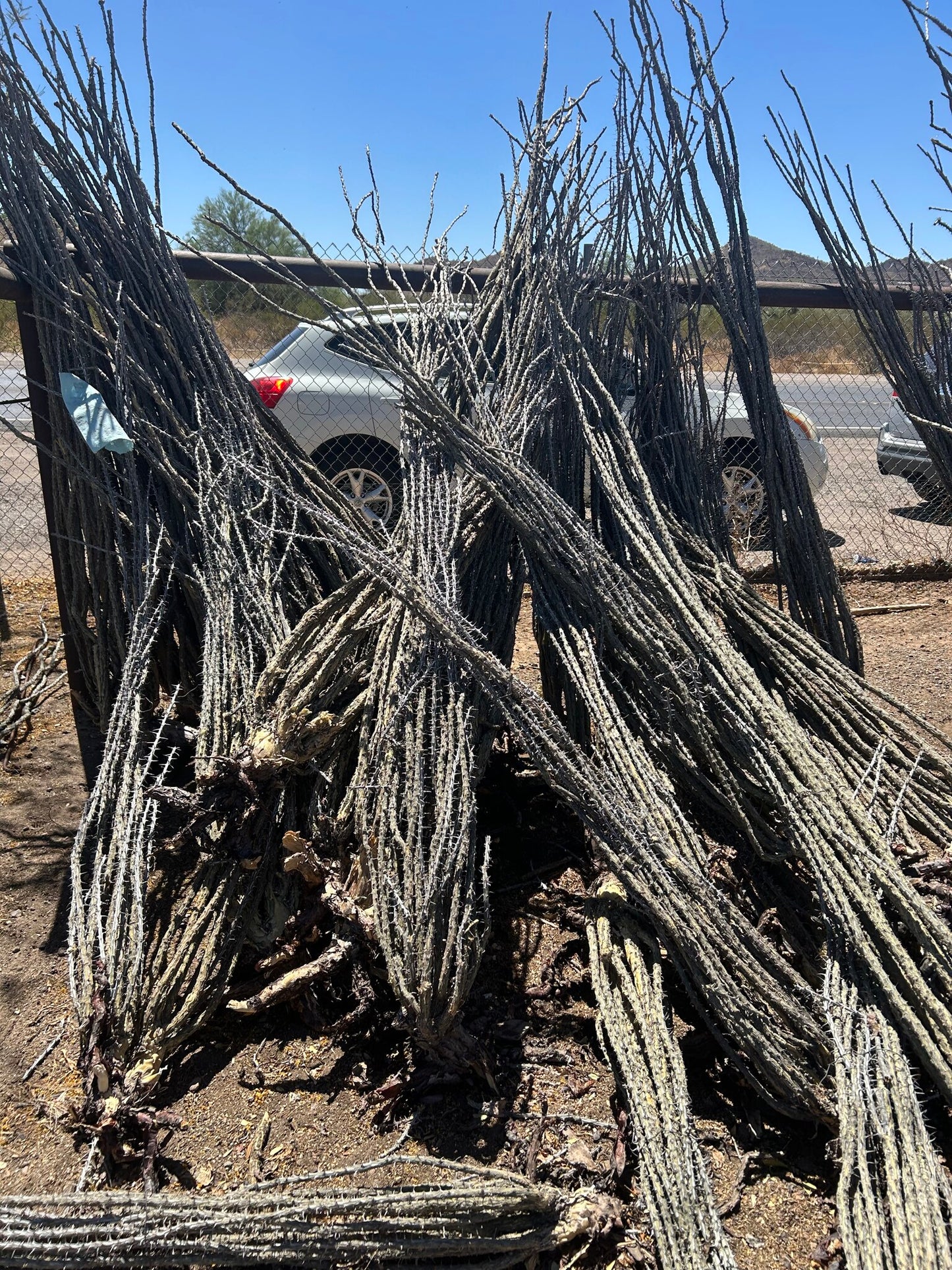
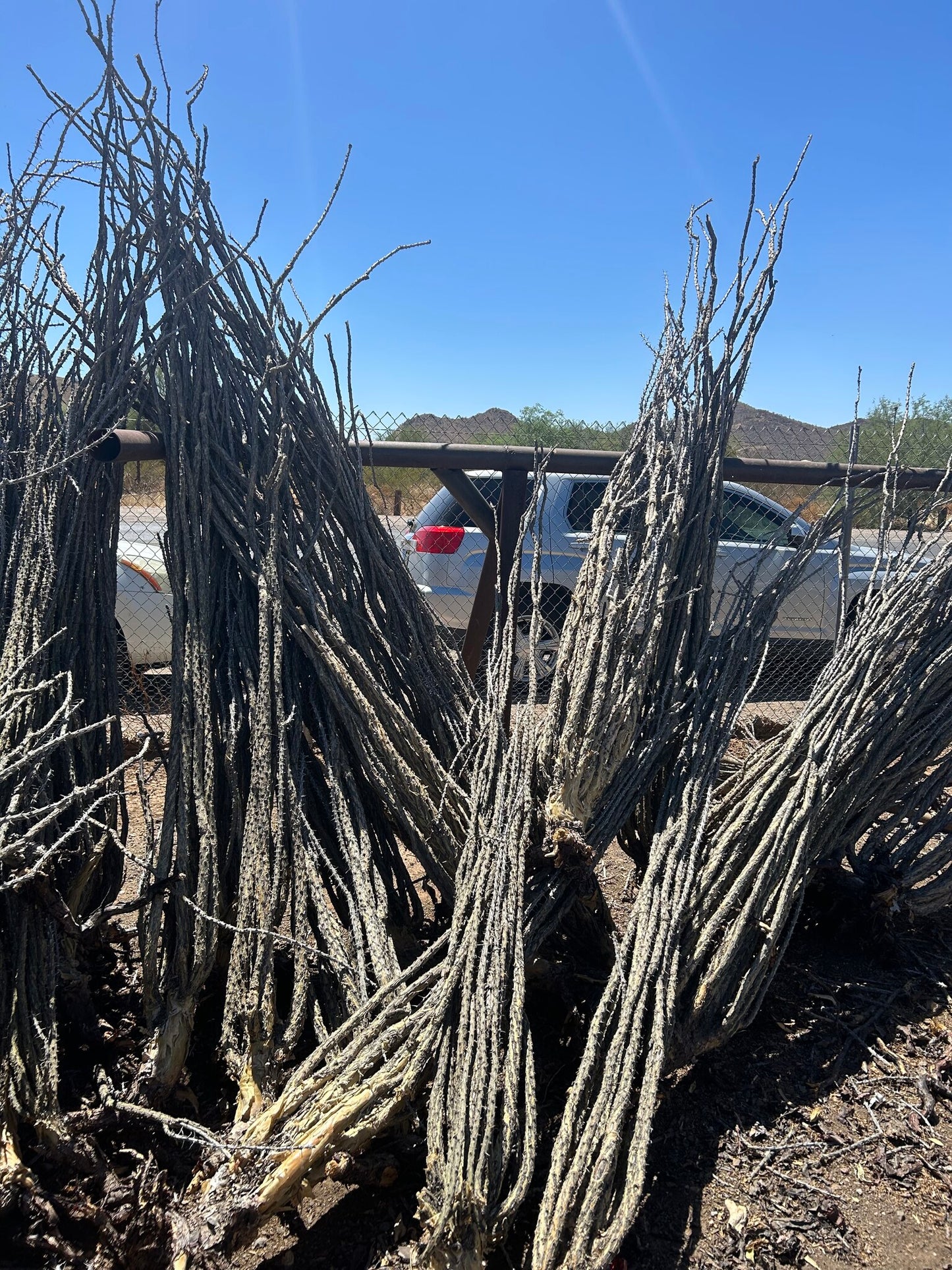
Bareroot Ocotillo (Fouquieria splendens) is the fastest, most affordable way to add the Sonoran Desert's signature silhouette to your Phoenix landscape. These field-harvested specimens arrive dormant with exposed roots, ready to plant directly into native soil — no heavy pot to wrestle. Ocotillo's whip-like canes reach 10–20 feet tall, erupting with brilliant red-orange blooms each spring that draw hummingbirds from across the Valley. Whether you're creating a dramatic entryway statement in Scottsdale, building a living fence line in Cave Creek, or anchoring a xeriscape courtyard in Chandler — bareroot Ocotillo establishes quickly and thrives on almost zero supplemental water once rooted.
Bareroot Ocotillo Plant Details
| Attribute | Detail |
|---|---|
| Scientific Name | Fouquieria splendens |
| Common Names | Ocotillo, Coachwhip, Desert Coral, Jacob's Staff |
| Mature Height | 10–20 feet |
| Mature Width | 6–12 feet |
| Growth Rate | Moderate — canes extend 1–2 feet per year once established |
| Sun | Full sun (6+ hrs). Handles reflected heat from walls and pavement. |
| Water | Very low once established. Extremely drought-tolerant native. |
| USDA Zones | 8–11 (Phoenix is Zone 9b–10a) |
| Soil | Well-draining required. Thrives in rocky, sandy Arizona soils and caliche. |
| Foliage | Drought-deciduous — leafs out after rain, drops leaves in dry spells |
| Bloom Season | Spring (March–May), often reblooms after summer monsoons |
| Format | Bareroot — dormant, field-harvested with exposed root system |
Bareroot Ocotillo Uses in Phoenix Landscapes
Living Fence & Property Border
Ocotillo's spiny upright canes create a stunning natural boundary that's both beautiful and functional. Plant bareroot Ocotillo 2–3 feet apart in a line for a dense living fence along property edges in Cave Creek, Fountain Hills, or North Scottsdale. A 20-foot fence line needs roughly 8–10 plants. The thorny stems deter foot traffic while the seasonal green leaves and red spring blooms add year-round interest that no block wall can match.
Architectural Focal Point
A single large Ocotillo commands attention in any front yard, courtyard, or commercial entry. The fan-shaped silhouette of bare canes against a desert sky is one of the most photographed forms in Southwest landscaping. Plant a Large or XXL bareroot specimen in a prominent gravel bed in Scottsdale, Paradise Valley, or Gilbert for instant desert-modern curb appeal. Pair with Golden Barrel cactus or Blue Agave at the base for a layered desert composition.
Xeriscape & Native Desert Gardens
Bareroot Ocotillo is a cornerstone plant for authentic Sonoran Desert gardens in Mesa, Tempe, and Chandler. Once established, it survives entirely on rainfall — the ultimate zero-water landscape plant. Group 3–5 at varied heights among Palo Verde trees, Brittlebush, and Prickly Pear for a natural desert wash aesthetic that looks like it's always been there.
Hummingbird & Pollinator Attraction
The bright tubular red-orange flowers at the tips of each cane are a top nectar source for migrating hummingbirds in the Phoenix Valley during March through May. Planting Ocotillo alongside Chuparosa and Penstemon creates a hummingbird corridor that keeps them visiting from early spring through fall.
Best Time to Plant Bareroot Ocotillo in Phoenix
Fall (October–November) is the ideal window for bareroot Ocotillo. Cool air reduces transplant stress while warm soil encourages root development over winter, giving the plant a strong foundation before the first Phoenix summer. Spring (February–March) is the second-best option — plant early enough for roots to establish before June heat arrives. Avoid planting bareroot Ocotillo in summer; the combination of extreme heat and no root system is too stressful.
How to Plant Bareroot Ocotillo
- Dig a wide, shallow hole — 2–3x the spread of the root system, same depth. Ocotillo roots grow laterally, not deep.
- Check for caliche — break through any hardpan layer to ensure drainage. Standing water kills Ocotillo fast.
- Position the plant — set the root crown at or slightly above soil grade. Do not bury the base of the canes.
- Backfill with native soil — no amendments needed. Rocky, sandy desert soil is exactly what Ocotillo wants.
- Stake for support — bareroot Ocotillo needs temporary support. Use 2–3 T-posts with soft ties for the first 6–12 months until roots anchor.
- Gravel mulch — 2–3 inches of decomposed granite or gravel around the base. Avoid organic mulch that holds moisture.
Watering Bareroot Ocotillo in Phoenix
First Year Watering Schedule
- Weeks 1–4: Mist canes 2–3 times per week (this encourages the plant to leaf out and signal root growth). Water the root zone lightly every 5–7 days.
- Months 2–3: Reduce misting to 1–2 times per week. Water roots every 7–10 days.
- Months 4–6: Stop misting. Water roots every 10–14 days (every 7 days in peak summer).
- After Year 1: Every 3–4 weeks in summer; rely on rainfall in winter.
Drip Irrigation
Place 2 emitters (2 GPH each) 18–24 inches from the base on opposite sides. The key to bareroot Ocotillo success is misting the canes — this triggers leaf growth, which signals the plant to push new roots. A simple hose-end mister on a timer for the first few months dramatically improves establishment rates. Once leafed out and growing, Ocotillo needs almost no supplemental water.
How fast does bareroot Ocotillo establish in Phoenix?
Most bareroot Ocotillo will leaf out within 4–8 weeks of planting if the canes are misted regularly. Full root establishment takes 6–12 months. Expect new cane growth and blooming by the second spring after planting.
What's the difference between bareroot and potted Ocotillo?
Bareroot Ocotillo is field-harvested from approved sites with roots exposed — it's lighter, easier to transport, and significantly more affordable than container-grown specimens. Potted Ocotillo has an established root ball and leafs out faster, but costs more. Both establish well in Phoenix when planted correctly.
Do I need a permit to plant Ocotillo in Arizona?
You don't need a permit to plant Ocotillo on your property. However, harvesting wild Ocotillo from Arizona state land requires a permit from the Arizona Department of Agriculture. All Three Timbers bareroot Ocotillo comes from legally harvested, permitted sources.
Can bareroot Ocotillo survive a Phoenix summer right after planting?
It can if planted in early fall or early spring, giving it months to root before summer. Avoid planting bareroot Ocotillo in June–August. If you must plant in warm months, choose a potted Ocotillo instead for a better survival rate.
Will Ocotillo damage my pool equipment or walls?
Ocotillo roots are non-invasive and shallow. The main concern is the thorny canes — plant at least 4–5 feet from walkways and pool decks to avoid contact. The canes can scratch walls if planted too close in windy areas.
You May Also Like
- Ocotillo (Container-Grown) — already rooted and leafed out for faster establishment and year-round availability.
- African Ocotillo — a South African lookalike with similar form but thornless stems and showy red flowers.
- Firestick Euphorbia — adds vibrant orange-red color to desert landscapes, pairs beautifully at Ocotillo's base.
- Palo Brea — a green-trunked desert tree that complements Ocotillo's vertical lines with filtered shade.
- Golden Barrel Cactus — round, low-growing accent that contrasts perfectly with Ocotillo's tall, spiky form.
How Many Bareroot Ocotillo Do I Need?
Bareroot Ocotillo is planted as a whole mature specimen, so you are placing finished sculptures. For a focal point, set one against a wall or boulder, or cluster 3 to 5 at staggered heights spaced 5 to 6 feet apart. For the classic living fence, line whole plants 2 to 3 feet apart for a dense thorny screen. Keep the spiny canes 4 to 5 feet back from walkways, walls, and pool decks.
| Living fence length | Spacing | Plants needed |
|---|---|---|
| 10 ft | 2.5 ft apart | 4–5 |
| 20 ft | 2.5 ft apart | 8–10 |
| 30 ft | 2.5 ft apart | 12–15 |
Bareroot Ocotillo Season-by-Season in Phoenix
- Spring (Feb–Apr): Red-orange blooms tip the canes from March through May and pull in migrating hummingbirds. Early spring is a strong planting window, leaving time to root before summer.
- Summer (May–Sep): Loves reflected heat and full exposure once rooted, and often reblooms after monsoon rain (Jul–Sep). Do not plant bareroot in June through August: with no root system yet, the heat is too much. Bare, leafless canes between rains are normal drought-dormancy.
- Fall (Oct–Nov): The ideal planting window for bareroot. Warm soil plus cool air lets roots develop over winter ahead of the first summer.
- Winter (Dec–Jan): Cold-hardy for the Valley and takes hard frost without harm. Typically leafless and dormant, needing no protection.
At a Glance
✔ Arizona Native ✔ Hummingbird-Friendly ✔ Pollinator-Friendly ✔ Heat-Loving (Reflected-Heat Tolerant) ✔ Drought-Tolerant ✔ Low-Maintenance ✔ Deer & Rabbit-Resistant ✔ Cold-Hardy to 10°F
Plant It With
- Ocotillo (Container-Grown): the potted form for faster leaf-out, useful for mixing sizes in a fence line.
- Firestick Euphorbia: coral-red color at the base that echoes Ocotillo's spring bloom.
- Golden Barrel: round golden cactus that contrasts the tall vertical canes.
- Engleman's Prickly Pear: a fellow Arizona native to round out an authentic desert composition.
Is Bareroot Ocotillo Right for Your Yard?
Bareroot Ocotillo is the most affordable way to get the Sonoran silhouette and thrives in hot, full-sun, fast-draining spots on almost no water once rooted, and it is genuinely cold-hardy. Plant it in fall or early spring and commit to misting the canes while it establishes. Not a fit if you can only plant in summer (choose the potted form instead), if your soil holds water, if you want evergreen foliage (it is drought-deciduous), or if you need a smooth plant beside high-traffic paths, since the canes are stiffly thorny.
Customer Reviews
Share