

Notocactus magnificus
Notocactus magnificus
Couldn't load pickup availability
The Most Sculptural Globe Cactus for Phoenix Desert Gardens
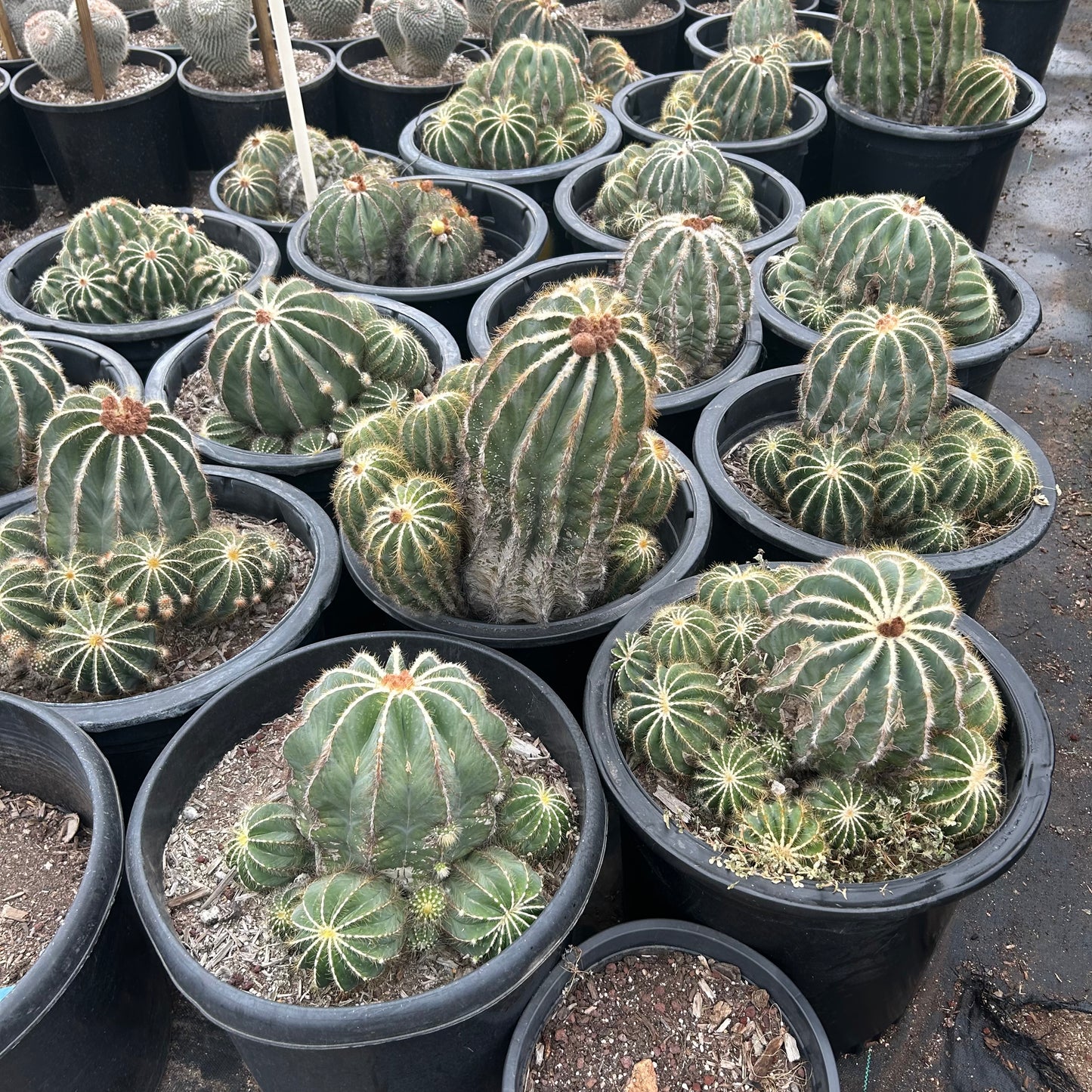
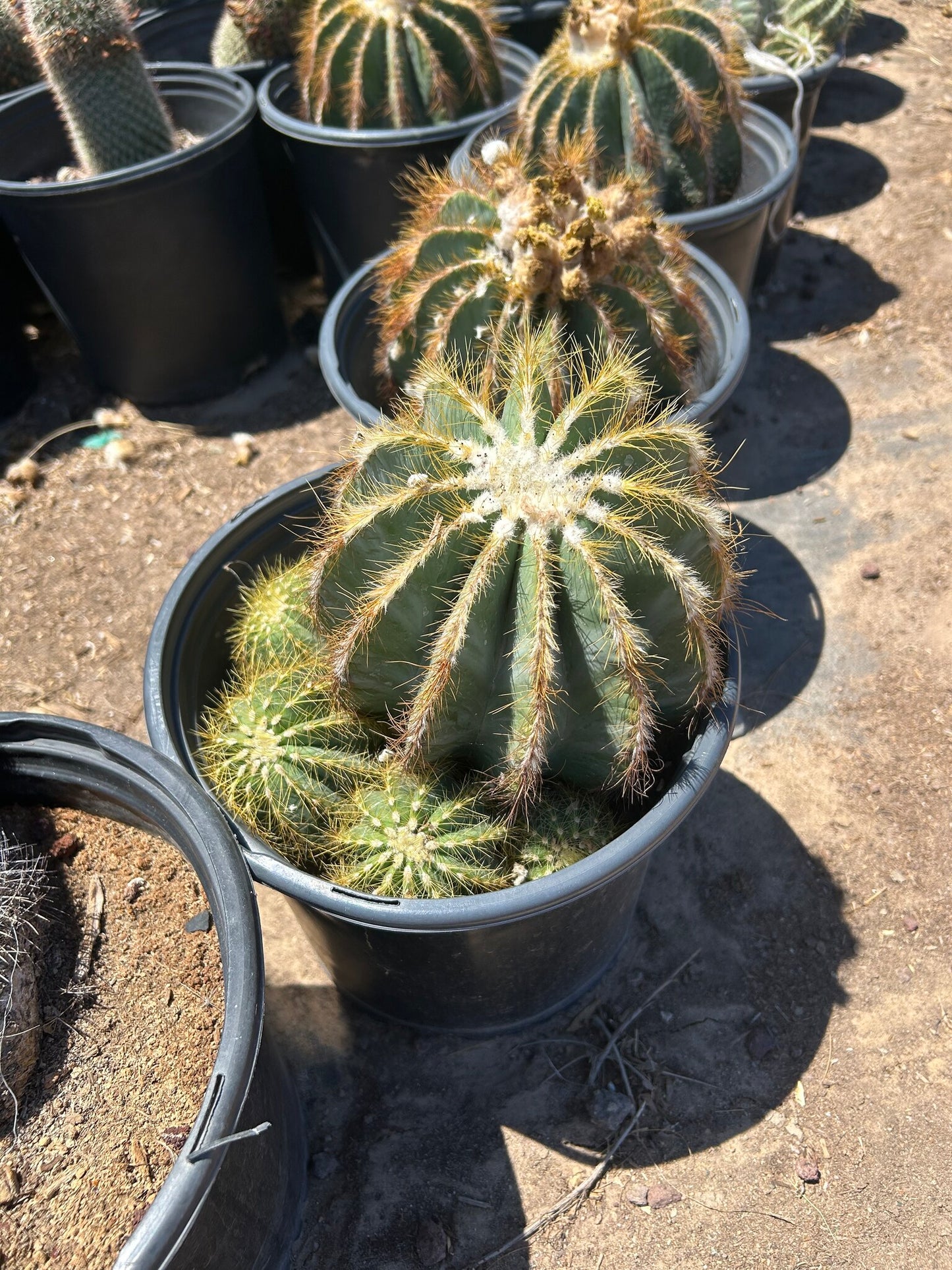
Notocactus magnificus (Balloon Cactus) is one of the most visually perfect cacti you can grow in the Phoenix Valley. Its blue-green globe is divided by deep, symmetrical ribs lined with golden-yellow spines, creating a geometric form that looks almost hand-carved. This compact, slow-growing species clusters over time into stunning multi-headed mounds. Whether you're designing a collector's cactus garden in Scottsdale, adding a statement container plant to a Tempe patio, or building a low-water rock garden in Mesa — Notocactus magnificus delivers sculptural beauty with minimal effort.
Notocactus magnificus Plant Details
| Attribute | Detail |
|---|---|
| Scientific Name | Notocactus magnificus (syn. Parodia magnifica) |
| Common Names | Balloon Cactus, Ball Cactus, Magnificent Ball Cactus |
| Mature Height | 8–18 inches |
| Mature Width | 8–12 inches per head; clusters spread wider |
| Growth Rate | Slow — 1–2 inches per year in Phoenix |
| Sun | Full sun to light afternoon shade. Tolerates reflected heat. |
| Water | Low once established. Drought-tolerant. |
| USDA Zones | 9–11 (Phoenix is Zone 9b–10a) |
| Soil | Well-draining. Adapts to Arizona caliche soils with added drainage. |
| Foliage | Evergreen — blue-green body with golden spines year-round |
| Bloom Color | Bright yellow funnel-shaped flowers (spring–summer) |
Notocactus magnificus Uses in Phoenix Landscapes
Collector's Rock Garden Centerpiece
Notocactus magnificus is a must-have for any serious cactus collector's garden. Its perfectly symmetrical ribs and blue-green coloring make it one of the most photogenic cacti in cultivation. Plant it at eye level in a raised rock garden bed or elevated planter where visitors can appreciate the geometric details up close. Pairs beautifully with Gymnocalycium and other globe cacti for a curated desert display.
Container & Patio Statement Plant
Because Notocactus magnificus stays compact, it's one of the best barrel cacti for decorative containers. A single specimen or small cluster in a wide ceramic or concrete pot creates a living sculpture on any patio, courtyard, or pool deck. The blue-green body contrasts especially well with warm terracotta or dark gray planters popular across Scottsdale and Paradise Valley.
Mixed Desert Border Accent
Use Notocactus magnificus as a foreground accent in drought-tolerant borders. Its compact size and striking color add visual interest at the front of plantings that include taller cacti and succulents behind it. Combine with Golden Ball, Mammillaria, and Agave for a layered desert garden design that needs almost no water.
Modern Minimalist Garden Feature
The clean geometric form of Notocactus magnificus fits perfectly in minimalist desert courtyard designs. A single specimen against a clean gravel bed or concrete wall creates a striking focal point. Add a spotlight for dramatic nighttime effect — the shadows cast by the deep ribs are stunning.
Best Time to Plant Notocactus magnificus in Phoenix
Fall (October–November) is ideal. Warm soil encourages root establishment while cooler air reduces transplant stress. Spring (February–April) is the second-best window. Avoid planting in the peak summer heat. This species prefers a bit more protection from extreme afternoon sun than some barrel cacti, so a spot with morning sun and light afternoon shade is perfect in the hottest Phoenix months.
How to Plant Notocactus magnificus
- Dig wide, not deep — excavate a hole 2–3x the root ball width, same depth.
- Check for caliche — break through any hardpan layer for drainage. This species is especially sensitive to standing water.
- Backfill with native soil — mix in 30% pumice or perlite for excellent drainage.
- Spacing — 12–18 inches apart for grouped displays; single specimens work beautifully alone.
- Water basin — build a shallow 3-inch soil ring to direct water to the root zone.
- Mulch — apply 2–3 inches of decomposed granite or fine gravel. Avoid organic mulch touching the cactus base.
Watering Notocactus magnificus in Phoenix
First Year Watering Schedule
- Weeks 1–2: Every 5–7 days, deep and slow
- Month 1–3: Every 10–14 days
- Month 3–12: Every 2–3 weeks (every 10 days in peak summer)
- After Year 1: Every 2–4 weeks in summer; little to no water in winter
Drip Irrigation
Place a single 0.5–1 GPH emitter 6–8 inches from the base. Run for 20–30 minutes per session. Established plants need very little supplemental water. Overwatering is the primary killer — ensure soil dries completely between waterings.
How fast does Notocactus magnificus grow?
Very slowly — expect 1–2 inches per year. Over time, the main globe produces offsets that form attractive clusters. A 1-gallon plant will take years to reach full maturity, but the perfectly symmetrical form is stunning from day one.
Does Notocactus magnificus flower?
Yes — mature specimens produce bright yellow funnel-shaped flowers at the crown in spring and summer. The golden flowers complement the golden spines beautifully. Blooming is most reliable on plants receiving good sun and proper watering cycles.
Is Notocactus magnificus the same as Parodia magnifica?
Yes — Parodia magnifica is the current accepted scientific name, though Notocactus magnificus remains the more widely known name in the nursery trade. They are the same plant.
Can it handle full Phoenix summer heat?
Notocactus magnificus handles Phoenix heat well but appreciates light afternoon shade during the hottest weeks of summer (June–August). A spot with 6+ hours of morning sun and some afternoon protection is ideal for the best color and health.
You May Also Like
- Golden Ball Cactus — compact columnar form with soft golden spines, a perfect companion for Notocactus magnificus.
- Notocactus claviceps — another stunning Notocactus with a cylindrical form and golden flowers.
- Gymnocalycium saglionis — large sculptural chin cactus with dramatic curving spines.
- Easter Lily Cactus — compact globe with showstopping large flowers in pink or white.
- Monk's Hood Cactus — geometric star-shaped ribs for a bold architectural accent.
How Many Notocactus magnificus Do I Need?
This is a slow, compact globe cactus (8 to 12 inches per head, clustering wider with age), so it works best as a front-of-bed grouping, a rock-pocket cluster, or a single container feature rather than a hedge. Space heads about 12 to 15 inches on center so each globe and its offsets have room to mound out. Use this coverage guide for a foreground mass:
| Area to fill | Plants needed (12–15 in centers) |
|---|---|
| 2 sq ft (small rock pocket) | 2 to 3 |
| 4 sq ft | 4 to 5 |
| 9 sq ft (front-of-bed band) | 9 to 12 |
For a collector display or container, a single specimen reads as living sculpture on its own. Plant in odd-numbered groups of 3 or 5 when massing in a bed.
Notocactus magnificus Season-by-Season in Phoenix
- Spring (Feb–Apr): Bright yellow funnel flowers open at the crown as days warm. This is the second-best planting window and the start of the active growth flush.
- Summer (May–Sep): Tolerates Valley heat but is happiest with morning sun and light afternoon shade in the hottest weeks. Blooming can continue into early summer. Keep soil dry between deep, infrequent waterings: monsoon humidity plus wet soil is the main rot risk.
- Fall (Oct–Nov): Prime planting season. Warm soil and cooler air give roots the easiest establishment of the year.
- Winter (Dec–Jan): Holds its blue-green form year-round but is frost-tender. Protect from hard frost below the upper 20s F and keep nearly dry. In an open Valley yard, cover on the coldest nights or grow it in a container you can pull under cover.
At a Glance
✔ Heat-Loving (Reflected-Heat Tolerant) ✔ Drought-Tolerant ✔ Pollinator-Friendly ✔ Evergreen ✔ Low-Maintenance ✔ Deer & Rabbit-Resistant
Plant It With
- Golden Ball Cactus: matching golden-spined globe that echoes the symmetry in a collector grouping.
- Notocactus claviceps: a closely related ball cactus with the same easy care and yellow bloom.
- Gymnocalycium saglionis: a larger sculptural chin cactus to anchor the group behind it.
- Easter Lily Cactus: a compact globe with showy spring flowers for a layered foreground.
Is Notocactus magnificus Right for Your Yard?
It thrives in a bright spot with 6-plus hours of sun (with light afternoon shade in peak summer), fast-draining soil amended through any caliche, and protection from hard winter frost. It is ideal for raised rock gardens, containers, and front-of-bed accents where its geometry can be seen up close. It is not a fit if your only open spot sits in a low, poorly draining basin that stays wet, or in deep shade: standing water and low light are this cactus's two biggest enemies.
Customer Reviews
Share