

Blood Flower
Blood Flower
Couldn't load pickup availability
Phoenix's #1 Monarch Butterfly Host Plant — Vivid Color All Season
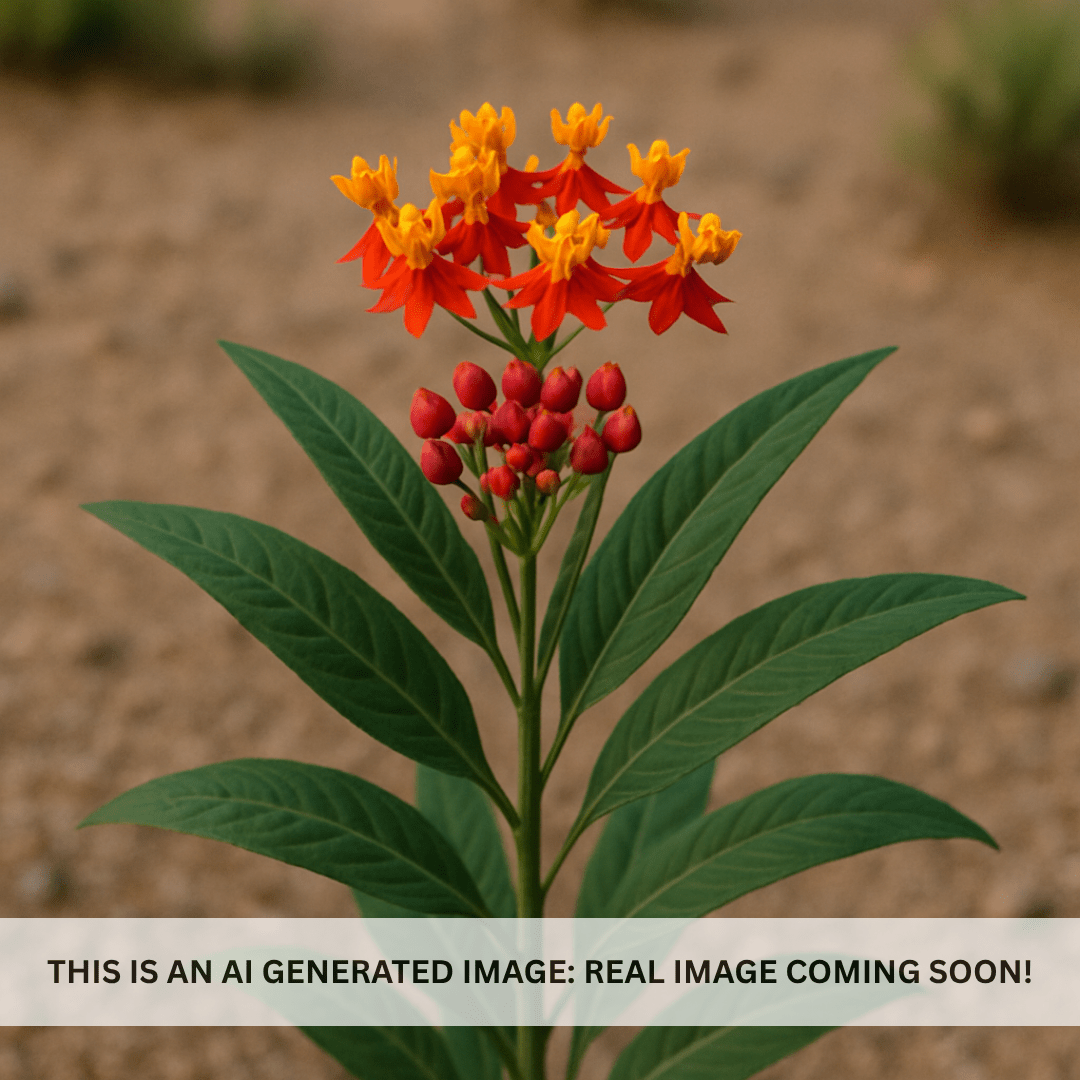
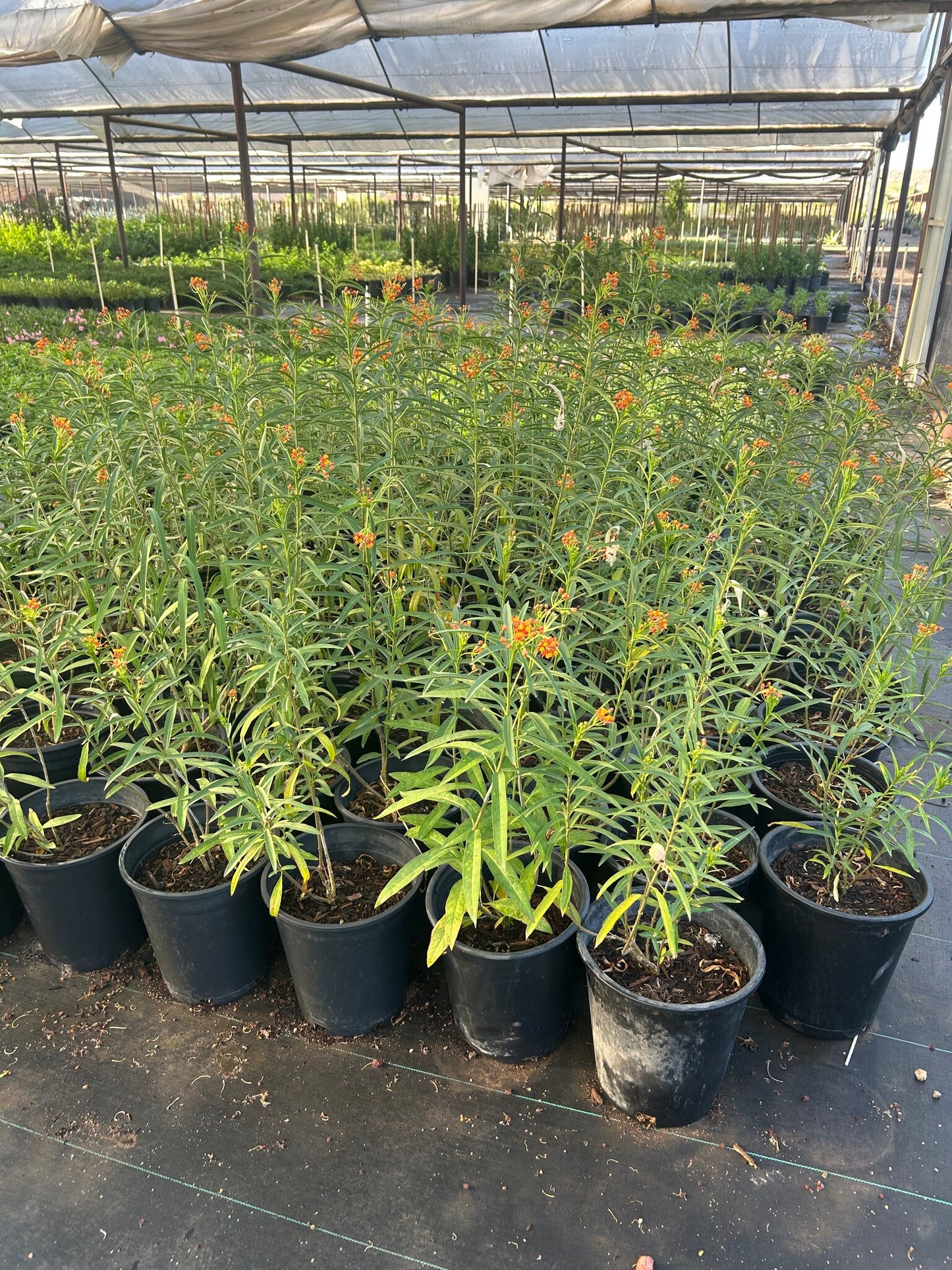
Blood Flower (Asclepias curassavica) is the must-have plant for Phoenix butterfly gardens — a tropical milkweed that produces stunning clusters of fiery red, orange, and yellow blooms from spring through fall. Monarch butterflies depend on it as a host plant for their caterpillars, and hummingbirds, bees, and other pollinators flock to its nectar-rich flowers. Growing 2–3 feet tall, this fast-growing perennial thrives in Phoenix heat and adds non-stop tropical color to gardens in Scottsdale, Mesa, Chandler, Gilbert, and Tempe with minimal care.
Blood Flower Plant Details
| Attribute | Detail |
|---|---|
| Scientific Name | Asclepias curassavica |
| Common Names | Blood Flower, Tropical Milkweed, Scarlet Milkweed, Mexican Butterfly Weed |
| Mature Height | 2–3 feet |
| Mature Width | 1–2 feet |
| Growth Rate | Fast — fills in quickly from spring planting |
| Sun | Full sun (6+ hrs). Blooms best with maximum sun exposure. |
| Water | Low to moderate once established. Drought-tolerant. |
| USDA Zones | 8–11 (Phoenix is Zone 9b–10a) |
| Soil | Well-draining. Adapts to Arizona caliche soils. |
| Foliage | Semi-evergreen in Phoenix — may die back in hard freezes, regrows in spring |
| Bloom Color | Red, orange, and yellow bicolor clusters — spring through fall |
| Wildlife | Monarch butterfly host plant; attracts hummingbirds, bees, and pollinators |
Blood Flower Uses in Phoenix Landscapes
Monarch Butterfly Garden
Blood Flower is THE essential plant for attracting and supporting monarch butterflies in Phoenix. Female monarchs lay their eggs exclusively on milkweed species, and the caterpillars feed on the leaves before transforming into butterflies. Plant a patch of 5–10 plants to create a meaningful monarch habitat. Pair with Desert Milkweed for year-round milkweed availability.
Pollinator & Wildlife Garden
Beyond monarchs, Blood Flower attracts an incredible diversity of pollinators — hummingbirds, painted lady butterflies, queen butterflies, bees, and beneficial wasps. Plant it alongside Chuparosa, Penstemon, Bells of Fire, and Mexican Honeysuckle for a buzzing, fluttering pollinator paradise that blooms from spring through fall.
Colorful Border & Mass Planting
The vivid red-orange-yellow flower clusters make Blood Flower a stunning border plant. Space 12–18 inches apart for mass plantings along fence lines, garden edges, or raised beds. A 10-foot border needs about 8 plants. The tropical colors pop against desert-toned homes and gravel landscapes.
Container & Patio Color
Blood Flower grows beautifully in containers on patios and balconies. Plant 2–3 per large pot for a burst of tropical color. Containers also make it easy to position near seating areas where you can watch monarch butterflies up close — a favorite activity for kids and adults alike.
Best Time to Plant Blood Flower in Phoenix
Spring (March–April) is the ideal planting window. Blood Flower loves warm soil and takes off quickly once temperatures rise. Fall planting (October) also works well in Phoenix. Avoid planting in winter — it's frost-sensitive and won't establish well in cold soil.
How to Plant Blood Flower
- Dig wide, not deep — 2x the root ball width, same depth as the container.
- Check for caliche — break through any hardpan layer for proper drainage.
- Backfill with native soil — a light 20% compost blend encourages faster growth.
- Spacing — 12–18 inches apart for mass plantings; 24 inches for individual specimens.
- Water basin — build a small ring of soil around the planting hole to direct water to roots.
- Mulch — 2 inches of organic mulch or gravel to retain moisture during establishment.
Watering Blood Flower in Phoenix
First Year Watering Schedule
- Weeks 1–2: Every 1–2 days, light and consistent
- Month 1–2: Every 2–3 days
- Month 3–6: Every 5–7 days (every 3–4 days in peak summer)
- After Year 1: Every 7–14 days in summer; reduce significantly in winter
Drip Irrigation
Place one 1-GPH emitter 6–12 inches from the base. Blood Flower is fairly drought-tolerant once established but produces more flowers and supports more caterpillars with consistent moisture during the growing season.
Does Blood Flower attract monarch butterflies?
Yes — it's one of the most important monarch host plants. Female monarchs lay eggs on the leaves, and the caterpillars feed exclusively on milkweed before pupating into butterflies. Planting Blood Flower directly supports monarch conservation.
Is Blood Flower perennial in Phoenix?
Yes, in most Phoenix Valley locations. It may die back to the ground after a hard freeze but reliably returns from the roots in spring. In mild winters, it stays semi-evergreen and may even continue blooming.
Is Blood Flower toxic?
Like all milkweeds, Blood Flower contains cardiac glycosides that are toxic if ingested. This is actually what makes monarch caterpillars taste bad to predators. Keep it away from areas where pets or small children might chew on the leaves.
Should I cut it back in Phoenix?
In late winter (January–February), cut back any frost-damaged stems to 4–6 inches above ground. This encourages vigorous new growth in spring. Some Phoenix gardeners also cut back in midsummer to promote a fresh flush of growth and flowers for fall monarchs.
You May Also Like
- Desert Milkweed — A native Arizona milkweed that supports monarchs and blooms in different seasons than Blood Flower.
- Chuparosa — A hummingbird magnet with red tubular flowers that complements Blood Flower in pollinator gardens.
- Mexican Honeysuckle — Orange tubular flowers that attract hummingbirds alongside Blood Flower's butterfly appeal.
- Bells of Fire — Red-orange Tecoma that adds height and more hummingbird color behind Blood Flower borders.
- Penstemon — Native wildflower that attracts hummingbirds and pairs beautifully in pollinator plantings.
How Many Blood Flower Do I Need?
Blood Flower grows 1 to 2 feet wide, so space plants about 15 inches on center for a full butterfly border or mass. Use the guide below to estimate your count:
| Border length | Plants needed (15 in spacing) |
|---|---|
| 10 ft | 8 plants |
| 15 ft | 12 plants |
| 20 ft | 16 plants |
| 30 ft | 24 plants |
For a meaningful monarch habitat, plant a patch of at least 5 to 10 together. As individual specimens, give each plant about 24 inches of room.
Blood Flower Season-by-Season in Phoenix
- Spring (Feb to Apr): New growth flushes fast as soil warms and the first red-orange-yellow clusters open. March to April is the prime planting window and the start of monarch season.
- Summer (May to Sep): Blooms hard through the heat in full sun and feeds monarch caterpillars, hummingbirds, and bees. A midsummer cutback drives a fresh flush of growth and flowers for fall, and monsoon moisture is welcome.
- Fall (Oct to Nov): Peak butterfly activity and a good second planting window. Color continues until the first cold nights.
- Winter (Dec to Jan): Frost-sensitive. A hard freeze knocks it back to the ground, but it returns reliably from the roots in spring. Cut frost-damaged stems to 4 to 6 inches in late winter.
At a Glance
✔ Pollinator-Friendly ✔ Hummingbird-Friendly ✔ Heat-Loving (Reflected-Heat Tolerant) ✔ Drought-Tolerant ✔ Low-Maintenance
Plant It With
- Desert Milkweed: a native milkweed that extends monarch host availability across more of the year.
- Chuparosa: red tubular flowers that pull in hummingbirds alongside the butterflies.
- Mexican Honeysuckle: soft orange tubular blooms for partial shade and more pollinator color.
- Bells of Fire: a red-orange Tecoma that adds height and hummingbird appeal behind the border.
Is Blood Flower Right for Your Yard?
Blood Flower thrives in full sun and reflected heat, in well-draining or caliche soil, on low to moderate water. It is ideal for butterfly and pollinator gardens, sunny borders, and containers near seating where you can watch the monarchs. It is not a fit where pets or small children may chew foliage, since the milky sap is toxic if ingested, or where you need an evergreen plant, since it dies back in a hard Valley freeze.
Customer Reviews
Share