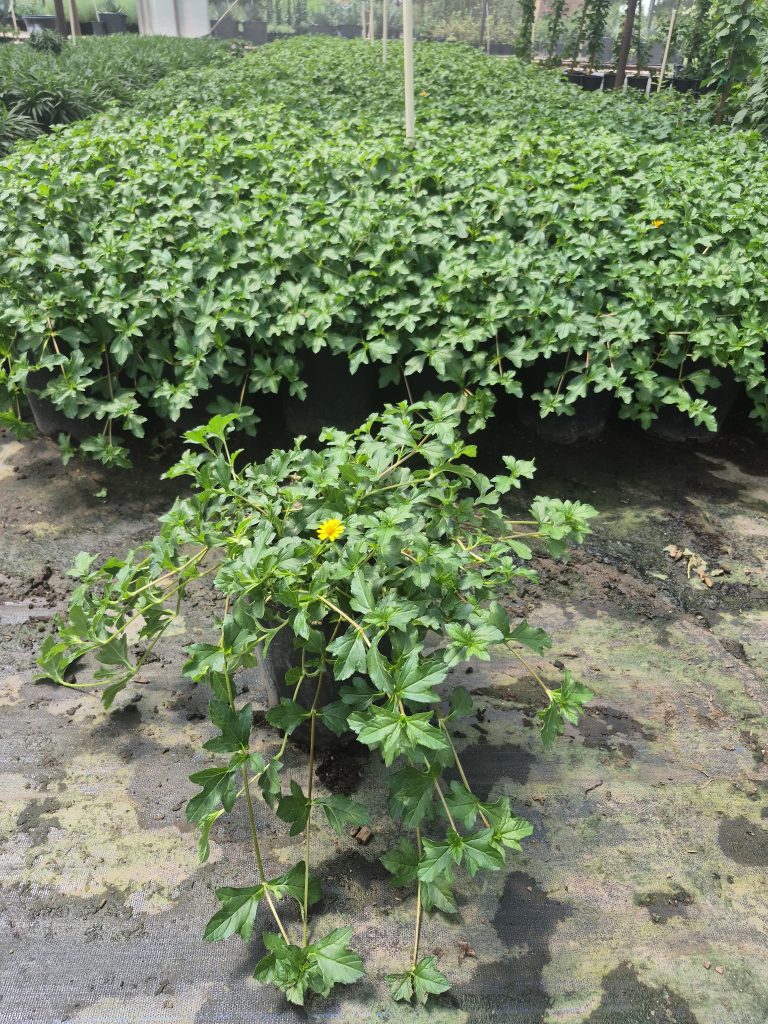


Yellow Dot
Yellow Dot
Couldn't load pickup availability
Phoenix's Best Low-Water Groundcover for Year-Round Golden Color — Yellow Dot
Yellow Dot (Sphagneticola trilobata) is one of the Phoenix Valley's most cheerful and resilient low-water groundcovers, delivering a dense carpet of bright golden-yellow blooms through the growing season. Its vigorous trailing habit quickly covers slopes, borders, and large open areas while suppressing weeds with minimal irrigation. Whether you're filling a sunny border in Mesa, blanketing a slope in Gilbert, or adding bold color to a xeriscape in Glendale, Yellow Dot delivers season-long sunshine with almost no effort once it's in the ground.
Yellow Dot Plant Details
| Attribute | Detail |
|---|---|
| Scientific Name | Sphagneticola trilobata |
| Common Names | Yellow Dot, Creeping Ox-Eye, Bay Biscayne Creeper |
| Mature Height | 1–2 ft |
| Mature Width | 4–8 ft (trailing spread) |
| Growth Rate | Fast — spreads 3–6 ft per season in Phoenix |
| Sun | Full sun to partial shade. Handles reflected heat from walls. |
| Water | Low to moderate once established. Drought-tolerant. |
| USDA Zones | 9–11 (Phoenix is Zone 9b–10a) |
| Soil | Well-draining. Adapts to Arizona caliche soils with amendment. |
| Foliage | Semi-evergreen — holds dense green foliage most of the year |
| Bloom Color | Bright golden yellow, daisy-like flowers; blooms spring through fall |
| Wildlife Value | Attracts bees and butterflies |
Yellow Dot Uses in Phoenix Landscapes
Sunny Slopes & Erosion Control
Yellow Dot's fast-spreading, rooting stems make it one of the best groundcovers for stabilizing sunny slopes in the Phoenix Valley. It roots as it spreads, binding soil while delivering a continuous bright bloom display. Plant 2–3 feet apart on slopes for coverage within one growing season; on steeper grades, closer 18–24 inch spacing provides faster establishment and better erosion control.
Weed-Suppressing Groundcover Beds
Once established, Yellow Dot forms a dense mat that crowds out weeds and eliminates the need for regular hand-weeding in open landscape areas. It's an excellent choice for filling large spaces between accent plants like Desert Spoon, Agave, and native grasses — covering bare soil quickly while the larger specimens mature. Plant 2–3 feet apart on center for a solid weed-suppressing bed within one season.
Color Contrast in Modern Desert Designs
Yellow Dot's vibrant golden blooms create striking color contrast when paired with blue-gray desert plants like Agave, Euphorbia, and native succulents. Its bright color holds from spring through fall, providing a reliable floral backbone for xeriscapes and modern desert landscape designs throughout the Phoenix Valley. Try it edging decomposed granite paths or bordering native plant medians for year-round visual pop.
Partial Shade Spaces
Unlike many groundcovers that demand full sun, Yellow Dot also performs well in partial shade — making it useful on the north or east side of buildings, under high-canopy trees, and in other lower-light locations where sunny groundcovers struggle to bloom well. In partial shade it grows slightly less vigorously but still delivers the characteristic golden flower display through the warm season.
Best Time to Plant Yellow Dot in Phoenix
Fall planting (October–November) is ideal — soil remains warm for fast root establishment while air temperatures cool, giving the plant 6–8 months to establish before its first Phoenix summer. Spring planting (February–April) is an excellent second option. Avoid June–August; Yellow Dot can be planted in summer but requires more frequent watering and some protection from extreme afternoon sun in the first 2–3 weeks.
How to Plant Yellow Dot
- Dig wide, not deep — 2–3x the root ball width, same depth. Yellow Dot roots shallowly and spreads outward, so width matters more than depth.
- Check for caliche — break through any hardpan layer with a breaker bar for drainage. Standing water after irrigation will rot the roots.
- Backfill with native soil — a light 20% organic compost blend is fine. Yellow Dot prefers lean, well-draining soil and doesn't need heavy amendment.
- Spacing — 2–3 ft apart for groundcover beds and slopes; 18–24 inches for faster coverage on steep erosion-prone grades.
- Water basin — build a 3–4 inch ring of soil around each plant to direct irrigation to the root zone during the establishment period.
- Mulch — 2–3 inches of gravel or decomposed granite around the base to retain moisture and prevent soil compaction during summer monsoons.
Watering Yellow Dot in Phoenix
First Year Watering Schedule
- Weeks 1–2: Every 1–2 days, deep and slow (20–30 min drip)
- Month 1–2: Every 3–4 days
- Month 3–6: Every 7–10 days (every 5–7 days in peak summer heat)
- After Year 1: Every 10–14 days in summer; every 3–4 weeks in winter.
Drip Irrigation
Place drip emitters 18–24 inches from the crown. Use 1 GPH emitters for 1-gallon plants; 2 GPH for 3/5-gallon plants. Established Yellow Dot is quite drought-tolerant and rarely needs more than biweekly irrigation during Phoenix summers.
How fast does Yellow Dot spread?
Very quickly in Phoenix's warm climate. Established plants spread 3–6 feet per season and can cover a significant area within 1–2 growing seasons. It does spread aggressively, so use edging to contain it at bed boundaries if needed.
Does Yellow Dot survive Phoenix summers?
Yes. Once established, Yellow Dot handles Zone 9b–10a heat reliably. It may look stressed during the hottest weeks of July–August, but bounces back quickly when temperatures moderate in late summer and fall monsoon moisture arrives.
Is Yellow Dot invasive?
Yellow Dot is an aggressive spreader that should be kept away from natural desert areas and wash edges where it could escape into native habitat. Use it in contained landscape beds and manage edges with regular trimming or edging.
Does it work in partial shade?
Yes — Yellow Dot is one of the few flowering groundcovers that blooms reasonably well in partial shade. It prefers full sun for maximum flowering, but performs adequately on north or east-facing exposures.
You May Also Like
- Purple Trailing Lantana — Vigorous trailing groundcover with cascading purple blooms; similar low-water habit
- Moss Verbena — Fine-textured purple groundcover for slopes and borders with delicate lacey foliage
- Ground Morning Glory — Silver-foliaged sprawling groundcover with white morning blooms
- Radiation Lantana — Vivid orange-red blooms on a trailing low-water groundcover
- Mexican Evening Primrose — Pink flowering low-maintenance groundcover for sunny Phoenix beds
How Many Yellow Dot Do I Need?
Yellow Dot trails 4 to 8 feet wide and fills in fast, so space plants 2 to 3 feet on center for a solid bed within one season. Use this coverage guide:
| Area to Cover | Plants Needed (about 2.5 ft spacing) |
|---|---|
| 25 sq ft | about 4 plants |
| 50 sq ft | about 8 plants |
| 100 sq ft | about 16 plants |
| 200 sq ft | about 32 plants |
Tighten to 18 to 24 inches on center for faster cover on steep, erosion-prone slopes.
Yellow Dot Season-by-Season in Phoenix
- Spring (Feb to Apr): Golden daisy-like flowers open and foliage flushes with fresh green growth, drawing bees and butterflies. A strong second planting window.
- Summer (May to Sep): Blooms right through the heat. It can look stressed in the hottest weeks of July and August, then rebounds with monsoon moisture and pushes its fastest spread of the year. Plan on more water than a true xeric groundcover.
- Fall (Oct to Nov): Prime planting season and a strong second flush of bloom as temperatures ease.
- Winter (Dec to Jan): Holds green most of the year but is frost-tender: expect foliage dieback in a hard frost below about 30°F. It resprouts from the roots when warmth returns, so cut back the damage in late winter.
At a Glance
✔ Drought-Tolerant ✔ Heat-Loving (Reflected-Heat Tolerant) ✔ Pollinator-Friendly ✔ Low-Maintenance
Plant It With
- Purple Trailing Lantana: cascading purple blooms that contrast the gold with a matching low-water habit.
- Radiation Lantana: vivid orange-red flowers for a hot-color groundcover combination.
- Moss Verbena: fine lacy purple-flowered texture to soften the bold daisy mat.
- Mexican Evening Primrose: soft pink blooms that blend into a season-long color carpet.
Is Yellow Dot Right for Your Yard?
Yellow Dot thrives in full sun to partial shade, in well-draining beds, on sunny slopes, and in contained borders where you want fast golden color and weed suppression. It is one of the few flowering groundcovers that still blooms in part shade. It is not a fit for strict low-water xeriscapes or natural desert edges: it is an aggressive spreader that wants more water than a true desert plant and is frost-tender, so keep it contained with edging and away from washes and native habitat.
Share