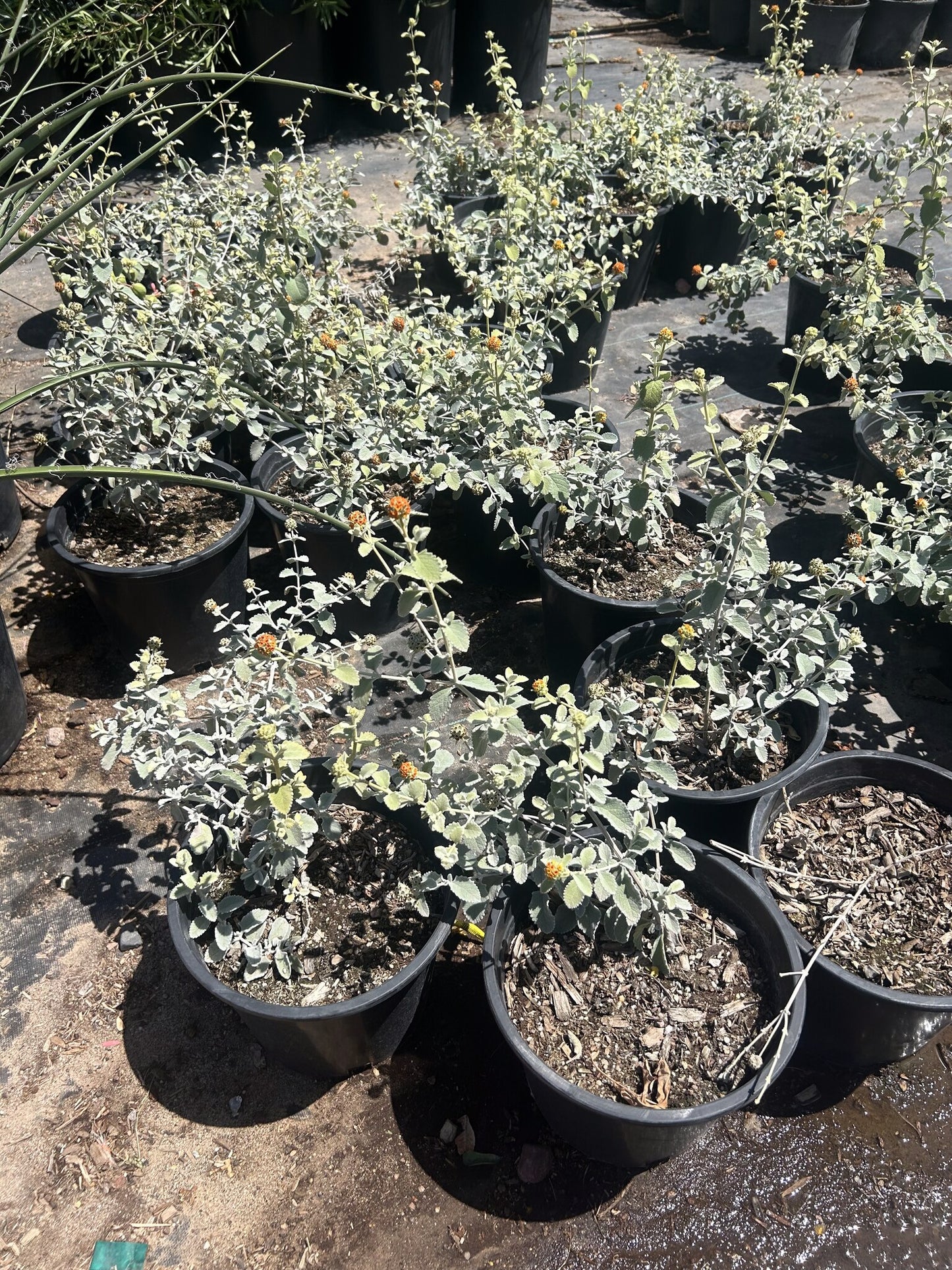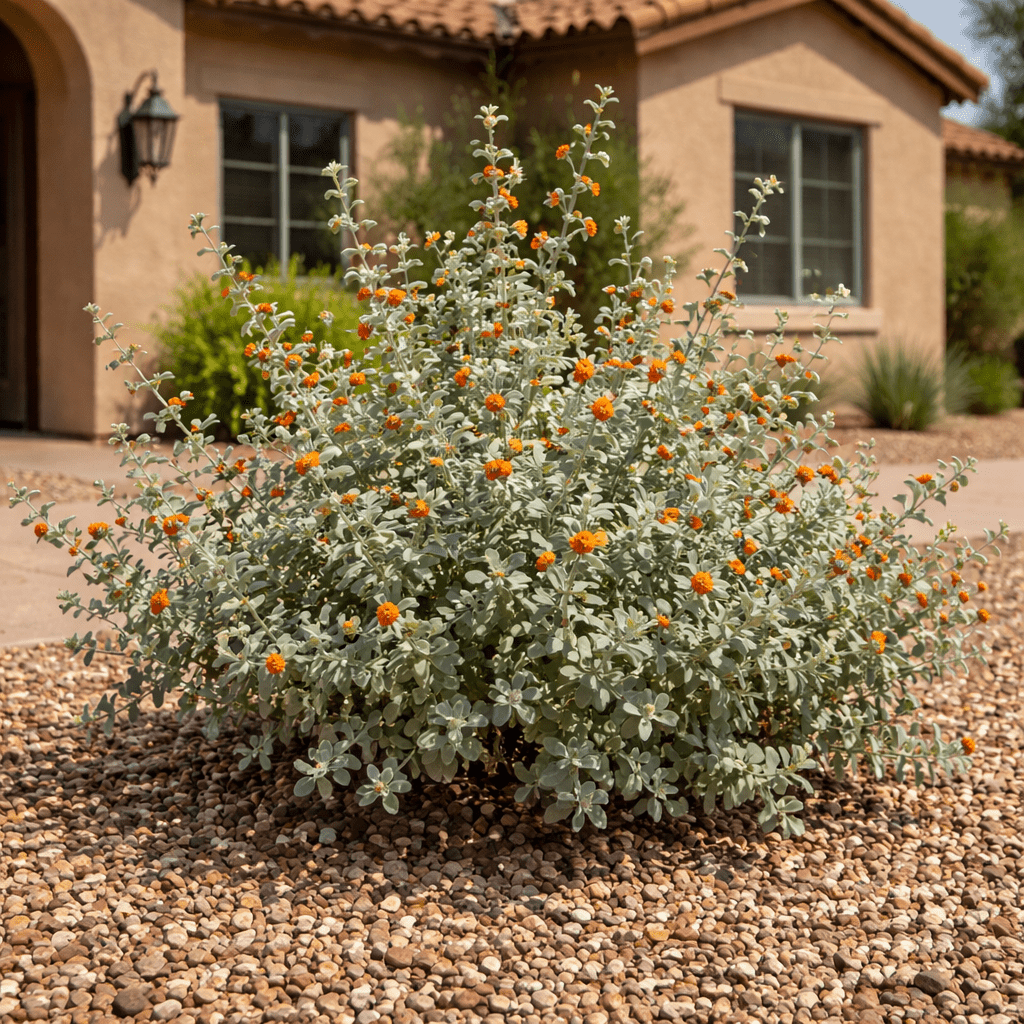


Wooly Butterfly Bush
Wooly Butterfly Bush
Couldn't load pickup availability
Arizona's Toughest Native Butterfly & Pollinator Shrub
Wooly Butterfly Bush (Buddleja marrubiifolia) is one of the most drought-tolerant native flowering shrubs you can grow in the Phoenix Valley. Its fuzzy silver-green foliage and round clusters of orange to golden-yellow flowers attract butterflies, bees, and beneficial insects nonstop from spring through fall. This Chihuahuan Desert native laughs at triple-digit heat, reflected walls, and extended dry spells. Whether you're building a Scottsdale wildlife habitat, adding texture to a Gilbert desert border, or planting a zero-water slope in Mesa — Wooly Butterfly Bush delivers year-round beauty with zero fuss.
Wooly Butterfly Bush Plant Details
| Attribute | Detail |
|---|---|
| Scientific Name | Buddleja marrubiifolia |
| Common Names | Wooly Butterfly Bush, Woolly Butterflybush |
| Mature Height | 3–5 feet |
| Mature Width | 4–6 feet |
| Growth Rate | Moderate — 1–2 feet per year in Phoenix |
| Sun | Full sun (6+ hrs). Thrives in reflected heat from walls and pavement. |
| Water | Very low once established. Extremely drought-tolerant. |
| USDA Zones | 7–11 (Phoenix is Zone 9b–10a) |
| Soil | Well-draining. Thrives in Arizona caliche and rocky desert soils. |
| Foliage | Evergreen — silvery-green woolly leaves year-round |
| Bloom Season | Spring through fall — orange to golden-yellow ball-shaped clusters |
| Native Status | Native to the Chihuahuan Desert (SW Texas, N Mexico, SE Arizona) |
Wooly Butterfly Bush Uses in Phoenix Landscapes
Butterfly & Pollinator Gardens
Wooly Butterfly Bush is a magnet for painted ladies, swallowtails, skippers, and dozens of native bee species. Its round orange flower clusters provide nectar from spring through fall — one of the longest bloom periods of any native desert shrub. Plant alongside Desert Milkweed, Chuparosa, and Blackfoot Daisy for a year-round pollinator haven in Scottsdale, Chandler, and Tempe yards.
Desert Borders & Foundation Planting
The silvery-green woolly foliage makes Wooly Butterfly Bush a standout texture plant in mixed desert borders. Its mounding 3–5 foot habit stays tidy without heavy pruning, and the silver leaves contrast beautifully with green-foliaged neighbors like Yellow Bells and Mexican Honeysuckle. Plant 4–5 feet apart for a continuous border along foundations, walkways, and driveways in Gilbert, Peoria, and Glendale.
Slope Stabilization & Erosion Control
Wooly Butterfly Bush's deep root system and spreading habit make it excellent for stabilizing slopes and controlling erosion in desert landscapes. Once established, it requires zero supplemental irrigation — making it perfect for unmaintained slopes, medians, and HOA common areas across the Valley.
Xeriscape & Low-Water Design
As one of the most drought-tolerant ornamental shrubs available, Wooly Butterfly Bush is a cornerstone plant for xeriscapes that need color without water bills. Its silver foliage reads as "cool" in the landscape, and the warm orange blooms add seasonal excitement. Pair with Agave, Desert Spoon, and Red Yucca for a stunning zero-water vignette in Mesa and Surprise.
Best Time to Plant Wooly Butterfly Bush in Phoenix
Fall (October–November) is ideal. Warm soil encourages root establishment while cooler air reduces transplant stress. Spring (March–April) is the second-best window. Avoid summer planting if possible — though this tough native handles heat better than most during transplant.
How to Plant Wooly Butterfly Bush
- Dig wide, not deep — 2–3× the root ball width, same depth as the container.
- Check for caliche — break through any hardpan layer for drainage.
- Backfill with native soil — no amendments needed. This native thrives in lean desert soil.
- Spacing — 4–5 feet apart for a border; 5–6 feet for individual accent plants.
- Water basin — build a 3-inch ring around the plant to direct water to the root zone.
- Mulch — 2–3 inches of gravel or decomposed granite. Avoid organic mulch against the stem.
Watering Wooly Butterfly Bush in Phoenix
First Year Watering Schedule
- Weeks 1–2: Every 2–3 days, deep soak for 20 minutes
- Month 1–2: Every 4–5 days
- Month 3–6: Every 7–10 days (every 5–7 days in peak summer)
- After Year 1: Every 2–3 weeks in summer; monthly or less in winter
Drip Irrigation
Place one 1-GPH emitter 18 inches from the base. Established Wooly Butterfly Bush is extremely drought-tolerant and can survive on rainfall alone in most years. Overwatering promotes leggy growth — keep it lean for the best form and heaviest flowering.
How fast does Wooly Butterfly Bush grow in Phoenix?
Moderate. Expect 1–2 feet of growth per year, reaching full size (3–5 feet) within 2–3 growing seasons. It fills in naturally into a dense, rounded mound without heavy pruning.
Is Wooly Butterfly Bush deer resistant?
Yes. The woolly, aromatic foliage is unpalatable to deer and rabbits, making it an excellent choice for properties near desert open space in Fountain Hills, Cave Creek, and north Scottsdale.
Does Wooly Butterfly Bush attract butterflies?
Absolutely — it's one of the top butterfly-attracting native shrubs in Arizona. The orange ball-shaped flower clusters provide abundant nectar for painted ladies, queens, swallowtails, and many other species from spring through fall.
How much water does Wooly Butterfly Bush need?
Very little once established. This Chihuahuan Desert native evolved in arid conditions and thrives with minimal irrigation. After the first year, water every 2–3 weeks in summer and barely at all in winter. It's one of the most water-efficient flowering shrubs you can plant.
You May Also Like
- Desert Milkweed — Native monarch butterfly host plant with fragrant white flower clusters.
- Chuparosa-Orange — Native hummingbird shrub with bright orange tubular blooms for a warm color pairing.
- Blackfoot Daisy — Low white groundcover that fills in beautifully at the base of Wooly Butterfly Bush.
- Autumn Sage - Red — Compact red-flowering sage that adds a second color tier below the butterfly bush.
- Mexican Honeysuckle — Compact evergreen with orange tubular flowers that bloom year-round.
How Many Wooly Butterfly Bush Do I Need?
For a continuous desert border or mass planting, space plants about 5 feet on center. Use this guide to estimate plant counts by run length:
| Border Run Length | Plants Needed (5 ft spacing) |
|---|---|
| 10 feet | 3 plants |
| 20 feet | 5 plants |
| 30 feet | 7 plants |
| 40 feet | 9 plants |
As an individual accent in a pollinator garden, allow 5 to 6 feet around each plant so the mounded silver form stands clear.
Wooly Butterfly Bush Season-by-Season in Phoenix
- Spring (Feb–Apr): Bloom ramps up with orange ball-shaped clusters that draw butterflies and native bees. New silver foliage flushes. A strong second planting window.
- Summer (May–Sep): Flowers right through triple-digit heat and reflected heat off walls on very little water. Monsoon rains (Jul–Sep) trigger a fresh flush of blooms. Keep it lean and avoid overwatering.
- Fall (Oct–Nov): Prime planting season with bloom continuing into the cooler weeks. New plants establish quickly before winter.
- Winter (Dec–Jan): Holds its silvery evergreen foliage for year-round structure. Very cold-hardy (rated to Zone 7), so Valley frosts are a non-issue.
At a Glance
✔ Arizona Native ✔ Pollinator-Friendly ✔ Evergreen ✔ Heat-Loving (Reflected-Heat Tolerant) ✔ Drought-Tolerant ✔ Low-Maintenance ✔ Deer & Rabbit-Resistant ✔ Cold-Hardy to 5°F
Plant It With
- Desert Milkweed: a native monarch host plant that doubles the pollinator value of the bed.
- Chuparosa-Orange: a native shrub with orange tubular blooms that echoes the warm color and draws hummingbirds.
- Autumn Sage - Red: a compact red-flowering sage for a lower color tier at the front of the border.
- Mexican Honeysuckle: an evergreen with year-round orange flowers that keeps nectar flowing between bloom cycles.
Is Wooly Butterfly Bush Right for Your Yard?
Wooly Butterfly Bush thrives in full sun, loves reflected heat, and wants lean, fast-draining desert soil, making it ideal for pollinator gardens, xeriscapes, slopes, and low-water borders. It is not the best fit for shady spots or rich, frequently watered beds, where it grows leggy, flowers less, and is prone to crown rot.
Customer Reviews
OUT OF THE 1 GALLON SIZE SO GAVE ME THE 5 GALLON FOR SAME PRICE...VERY CONSIDERATE AND CUSTOMER ORIENTATED
Share