

Wax Leaf Privet Bush
Wax Leaf Privet Bush
Couldn't load pickup availability
Phoenix's Most Popular Privacy Hedge — Wax Leaf Privet for Fast Screening
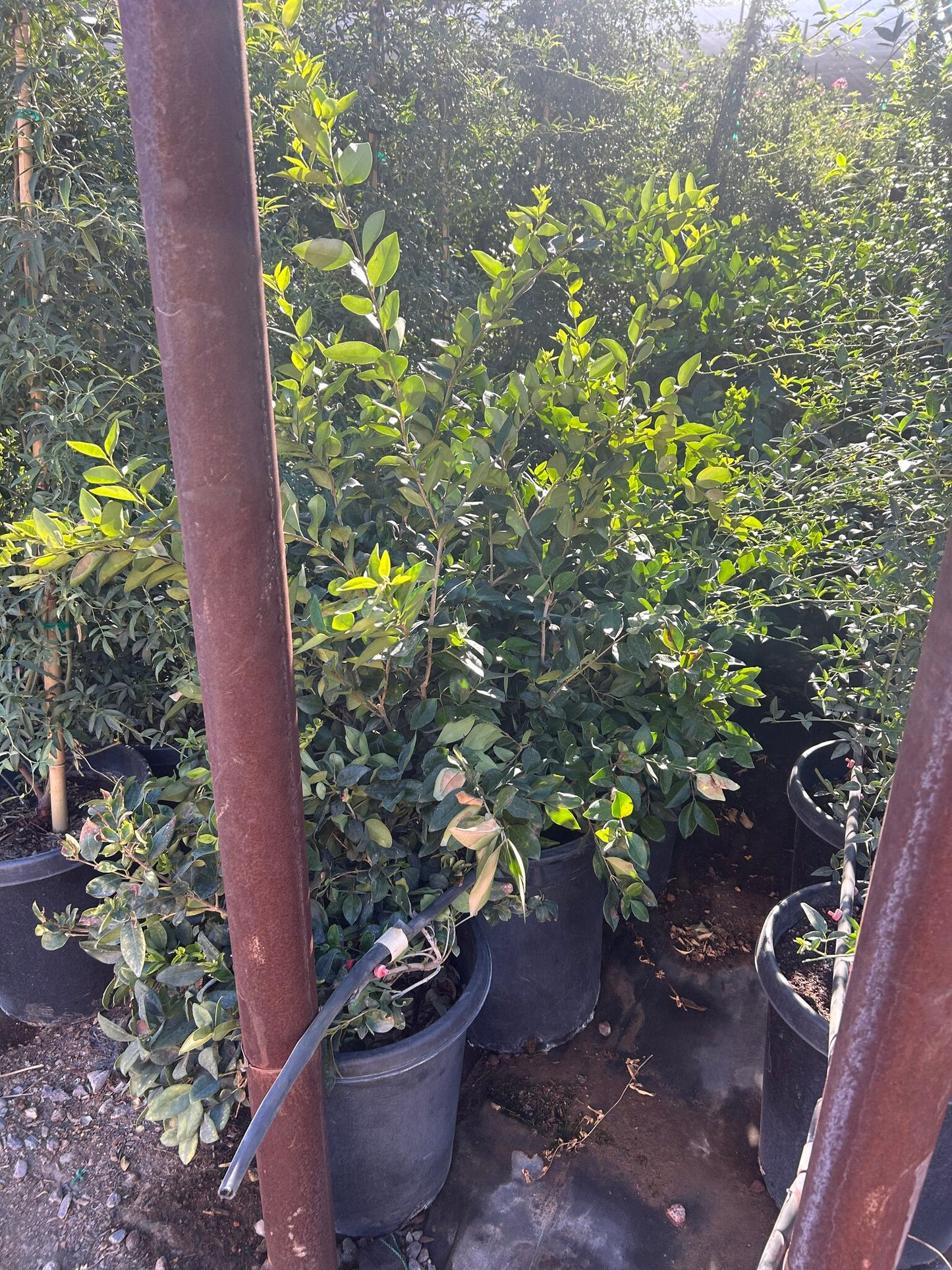
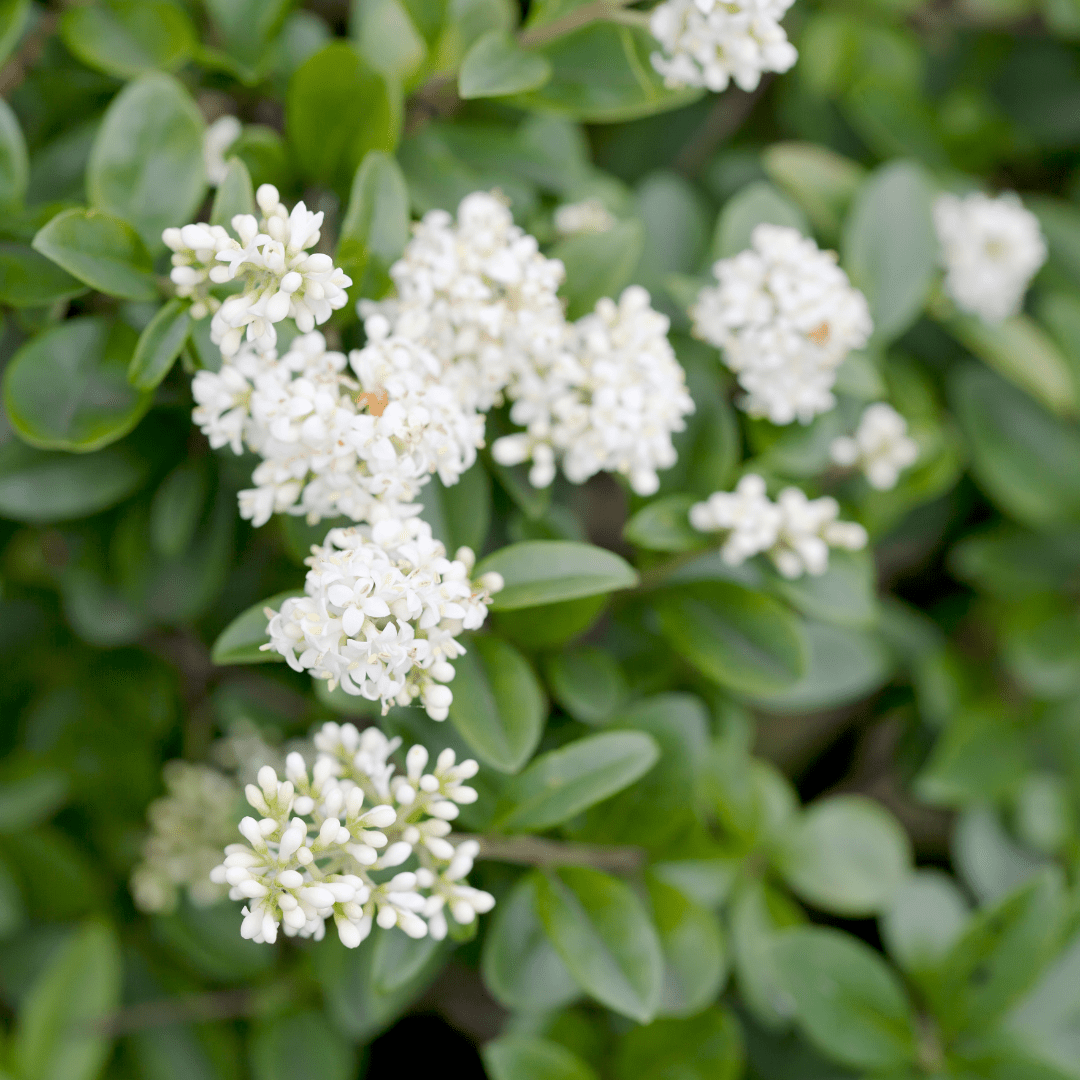
Wax Leaf Privet (Ligustrum japonicum), also known as Japanese Privet or Wax-Leaf Ligustrum, is one of the most widely planted privacy hedge shrubs in the Phoenix Valley. Its dense, glossy evergreen foliage, fast growth rate, and tolerance for Phoenix's heat and drought make it the go-to hedge plant for homeowners throughout the Valley. Fragrant white flower clusters appear each spring, adding seasonal beauty to an already hardworking plant. Whether you're establishing a privacy hedge in Scottsdale, planting a windbreak in Chandler, or creating a formal border in Gilbert — Wax Leaf Privet delivers fast, reliable results year after year.
Wax Leaf Privet Plant Details
| Attribute | Detail |
| Scientific Name | Ligustrum japonicum |
| Common Names | Wax Leaf Privet, Japanese Privet, Wax-Leaf Ligustrum, Texas Privet |
| Mature Height | 10–15 feet (easily maintained at 6–8 ft with regular pruning) |
| Mature Width | 6–10 feet |
| Growth Rate | Fast — 3–4 feet per year in Phoenix |
| Sun | Full sun to partial shade. Handles reflected heat from walls and driveways. |
| Water | Low to moderate once established. Very drought-tolerant after year one. |
| USDA Zones | 7–11 (Phoenix is Zone 9b–10a) |
| Soil | Well-draining. Highly adaptable — performs well in Arizona caliche soils. |
| Foliage | Evergreen — glossy, waxy dark green leaves year-round |
| Bloom | Fragrant white flower clusters in spring |
Wax Leaf Privet Uses in Phoenix Landscapes
Fast Privacy Hedges
Wax Leaf Privet is Phoenix's most planted privacy hedge shrub for good reason — it grows fast, stays dense, and requires minimal maintenance. Planted 3–4 feet apart, it forms a solid hedge within 2 seasons. Left unpruned it reaches 10–15 feet; maintained with light pruning 2–3 times per year it stays at any desired height from 4–10 feet. 30 ft fence — 8 plants / 60 ft fence — 16 plants. Pair with Texas Sage or Desert Museum Palo Verde for a layered privacy planting.
Formal Hedges and Topiaries
Wax Leaf Privet's dense branching and small, waxy leaves make it ideal for formal clipped hedges in Scottsdale and Paradise Valley landscapes. It can be maintained as a tight, formal hedge with flat tops and sheer sides, or shaped into topiaries and standard trees. Professional landscapers across the Phoenix Valley rely on Wax Leaf Privet for formal garden settings where precise shapes need to be maintained season after season.
Property Line and Windbreak Screening
Along exposed property lines in Peoria, Glendale, and Surprise, Wax Leaf Privet creates an effective windbreak that blocks dust and debris while providing complete visual privacy. Its dense foliage and stiff branching structure hold up well against desert winds. Space plants 4–5 feet apart for windbreaks; the hedge fills in quickly and the interconnected root systems help stabilize the plants against strong gusts.
Foundation Planting and Border Shrub
In smaller settings, Wax Leaf Privet works beautifully as a large foundation plant or border shrub. Pruned to 4–6 feet, it provides structure and year-round greenery that anchors a landscape design. Its glossy leaves reflect light, making it particularly useful in darker or partially shaded garden spots. Pair with Agave, Desert Spoon, or Mexican Feather Grass for a modern, low-water border with contrasting textures.
Best Time to Plant Wax Leaf Privet in Phoenix
Fall (October–November) is the ideal planting window. Warm soil encourages strong root development while cool air temperatures minimize transplant stress. Plants established in fall have 6–8 months to root deeply before their first Phoenix summer. Spring (February–April) is the second-best option. Avoid summer planting — Wax Leaf Privet is a fast grower that needs well-established roots before facing its first Phoenix summer above 110°F.
How to Plant Wax Leaf Privet
- Dig wide, not deep — excavate 2–3x the root ball width at the same depth. Wide planting holes encourage lateral root growth.
- Check for caliche — break through any hardpan layer. Caliche restricts drainage and can cause root rot in wet monsoon conditions.
- Backfill with native soil — add 15–20% organic compost. Don't over-amend — Wax Leaf Privet adapts well to native Arizona soil.
- Spacing — 3–4 feet apart for dense privacy hedges; 5–6 feet for windbreaks; 6–8 feet for specimen plantings.
- Water basin — build a 3–4 inch soil ring to concentrate irrigation at the root zone.
- Mulch — 2–3 inches of decomposed granite or bark mulch retains moisture and moderates root zone temperatures.
Watering Wax Leaf Privet in Phoenix
First Year Watering Schedule
- Weeks 1–2: Every 1–2 days, deep and slow (20–30 min per session)
- Month 1–2: Every 3–4 days, deep watering
- Month 3–6: Every 7–10 days (every 5 days during July–September peak heat)
- After Year 1: Every 14–21 days in summer; every 3–4 weeks in winter
Drip Irrigation
Place 1–2 GPH emitters 12–18 inches from the base of each plant. Run 30–45 minutes per irrigation cycle during the establishment year. Once established, Wax Leaf Privet is very drought-tolerant — cut irrigation frequency significantly after year two. Established hedges in Phoenix typically need watering only every 2–3 weeks in summer and once monthly in winter.
How fast does Wax Leaf Privet grow in Phoenix?
Very fast — Wax Leaf Privet typically grows 3–4 feet per year in Phoenix's warm climate. A row of 1-gallon plants spaced 3 feet apart will form a solid privacy hedge within 2 seasons. Larger 10-gallon plants provide nearly immediate screening upon installation.
How do I keep Wax Leaf Privet at a certain height?
Wax Leaf Privet responds very well to pruning. Trim 2–3 times per year — once in early spring, once in summer, and optionally once in fall — to maintain your desired height. Use hedge trimmers for formal shapes or hand shears for more natural forms. The plant recovers quickly and fills in after pruning.
Is Wax Leaf Privet drought-tolerant in Phoenix?
Yes. Once established after its first year, Wax Leaf Privet is highly drought-tolerant and well-adapted to low-rainfall desert environments. Established plants in Phoenix can go 2–3 weeks between irrigations in summer without showing stress.
Does Wax Leaf Privet work near pools in Phoenix?
Wax Leaf Privet is not ideal immediately poolside — its spring flower drop and occasional berry clusters can create debris near the water. It works well as a privacy screen planted 10–15 feet from the pool edge where it provides visual screening without pool maintenance concerns.
What's the difference between Wax Leaf Privet and Japanese Boxwood?
Both are popular hedge plants in Phoenix, but Wax Leaf Privet grows much faster and taller (10–15 ft vs. 4–6 ft for Japanese Boxwood). Privet is best for large-scale privacy screening; Japanese Boxwood is better for smaller, more formal borders and lower hedges.
You May Also Like
Green Hopseed Bush — The other most popular fast privacy hedge in Phoenix; more informal appearance, reaches 12 ft.
Purple Hopseed Bush — Same fast growth, striking bronze foliage — a colorful alternative to green hedge plants.
Japanese Privet Shrub — A closely related, slightly different variety of privet with similar characteristics.
Photinia — Fast-growing tall privacy hedge with stunning red new growth in spring.
Myoporum — Ultra-fast growing screening shrub for large Phoenix property borders.
How Many Wax Leaf Privet Do I Need?
Wax Leaf Privet matures at 6 to 10 feet wide but is almost always sheared as a hedge, so plant it on roughly 4 foot centers for a fast, solid privacy screen. For a looser windbreak, stretch spacing to 5 feet. Use this table as a starting point at 4 foot spacing:
| Hedge Run | Plants Needed (4 ft spacing) |
| 20 ft | 6 plants |
| 30 ft | 8 plants |
| 40 ft | 11 plants |
| 60 ft | 16 plants |
| 100 ft | 26 plants |
Wax Leaf Privet Season-by-Season in Phoenix
- Spring (Feb–Apr): A strong flush of new glossy growth, followed by clusters of fragrant creamy-white flowers. This is the best time for the first hard shaping of the year before the heat arrives.
- Summer (May–Sep): Holds up well to full sun and reflected heat off walls and driveways. Growth is fast in the warm months, so expect to shear once or twice. Keep water steady through July and August peak heat during the first year, then taper as the hedge establishes. Monsoon humidity can push soft new growth, so trim to keep the form tight.
- Fall (Oct–Nov): Prime planting season in the low desert and a good window for a final light trim. Roots establish quickly in the warm soil ahead of winter.
- Winter (Dec–Jan): Stays fully evergreen and holds its dark green color. Hardy well below Valley frost levels (to roughly 5°F), so no cover is needed on cold nights here.
At a Glance
✔ Evergreen ✔ Heat-Loving (Reflected-Heat Tolerant) ✔ Drought-Tolerant ✔ Low-Maintenance ✔ Pollinator-Friendly ✔ Cold-Hardy to 5°F
Plant It With
- Green Hopseed: the other go-to fast privacy hedge, for a layered or mixed screen.
- Purple Hopseed: bronze-purple foliage that contrasts against the privet's glossy green.
- Japanese Privet Shrub: a closely related privet with the same easy-care habit.
- Photinia: a taller screening shrub with bright red new growth for the back of the border.
Is Wax Leaf Privet Right for Your Yard?
Wax Leaf Privet thrives in full sun to part shade, takes reflected heat off block walls, and adapts to caliche soil as long as the planting hole drains. It is the fastest, most forgiving way to get a tall privacy hedge in the Valley, and it shears cleanly into formal shapes. It is not the best pick directly poolside, where its spring flower and berry drop adds litter, or for a gardener who wants a strictly no-prune plant, since the fast growth means a couple of shears each year to keep it tidy.
Customer Reviews
While this plant was delivered in a 3/5 gallon container, the actual plant is small. It is more the size of a 1 gallon plant.
Plants look great but just thought they would have been bigger for a 3/5 gallon size.
Share