

Hercules Tree Aloe
Hercules Tree Aloe
Couldn't load pickup availability
The Ultimate Multi-Headed Tree Aloe for Phoenix Estates
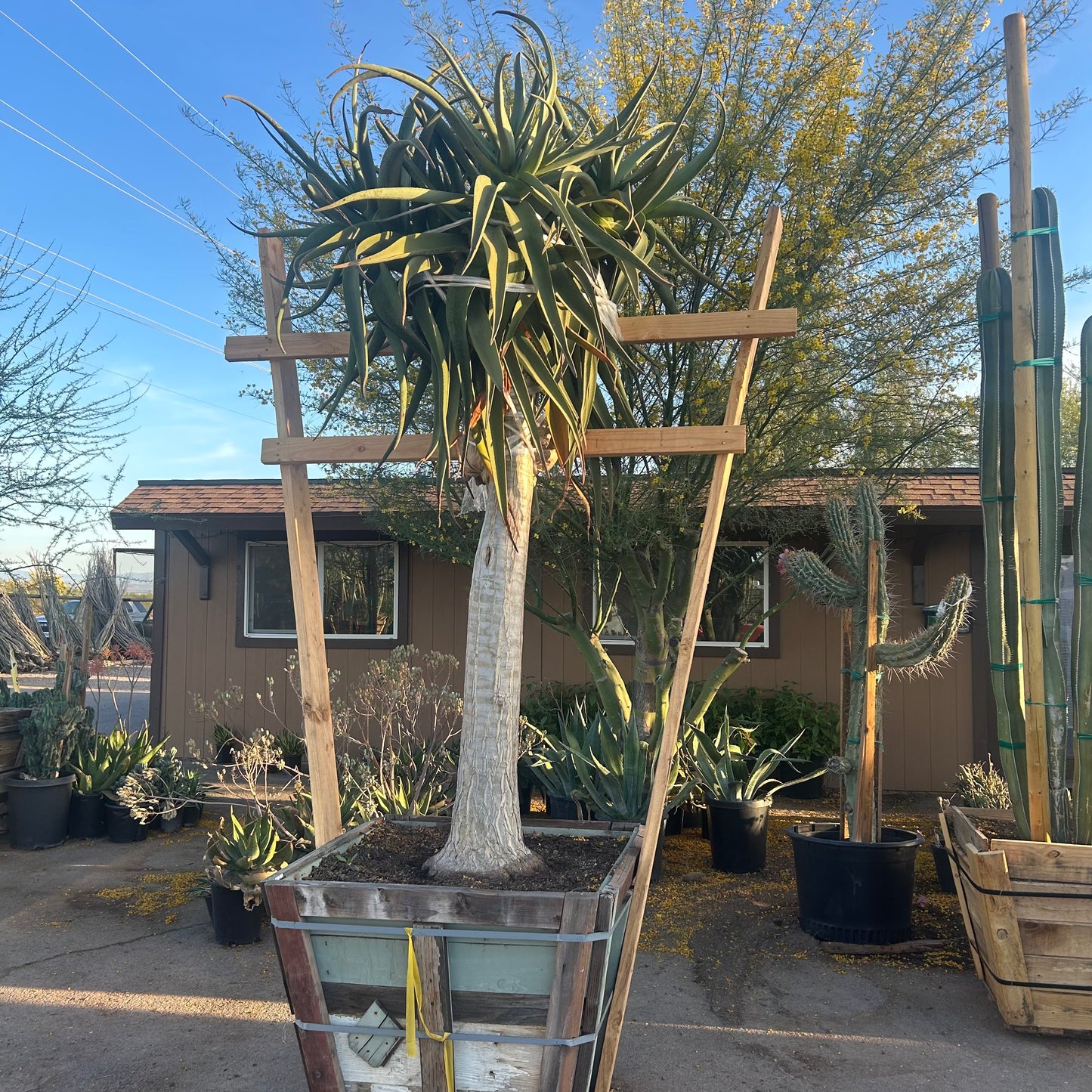
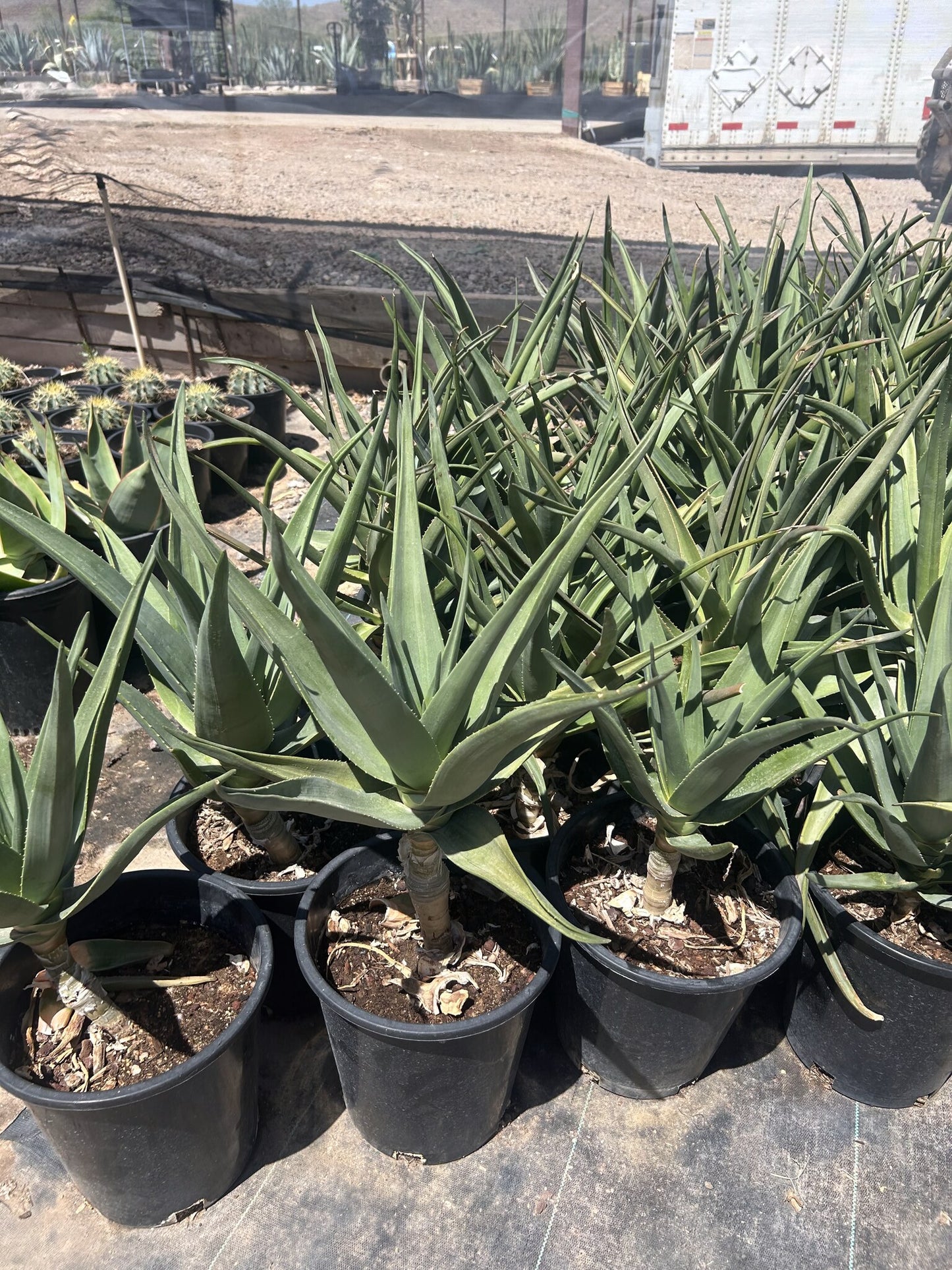
Hercules Tree Aloe (Aloe arborescens), also known as Torch Aloe, is one of the most spectacular and versatile tree aloes you can grow in the Phoenix Valley. This South African native reaches 8–10 feet tall and 4–6 feet wide, developing a dramatic multi-headed form with dense rosettes of fleshy, toothed green leaves — often blushing red at the tips in full sun. From winter through early spring, each head produces a brilliant torch-like spike of red, orange, or yellow flowers that attract hummingbirds and pollinators in droves. It thrives in full Phoenix sun, handles extreme heat, and needs minimal water once established. Whether you're anchoring a Scottsdale estate entry, creating a living sculpture in a Paradise Valley courtyard, or building a museum-worthy succulent garden in Chandler — Hercules Tree Aloe is the crown jewel. Three Timbers carries sizes from 1-gallon starters to massive 36-inch box specimens for instant impact.
Hercules Tree Aloe Plant Details
| Attribute | Detail |
|---|---|
| Scientific Name | Aloe arborescens |
| Common Names | Hercules Tree Aloe, Torch Aloe, Tree Aloe, Krantz Aloe |
| Mature Height | 8–10 feet |
| Mature Width | 4–6 feet |
| Growth Rate | Moderate to fast — 1–2 feet per year in Phoenix |
| Sun | Full sun (6+ hrs). Handles reflected heat from walls. |
| Water | Low once established. Highly drought-tolerant. |
| USDA Zones | 9–11 (Phoenix is Zone 9b–10a) |
| Soil | Well-draining sandy or rocky soil. Adapts to Arizona caliche soils. |
| Foliage | Evergreen — green with red-tipped leaves in full sun, multi-headed |
| Bloom Color | Red, orange, or yellow torch-like spikes, winter to early spring |
| Attracts | Hummingbirds, bees, nectar-feeding birds |
Hercules Tree Aloe Uses in Phoenix Landscapes
Estate & Property Entrance
A mature Hercules Tree Aloe — especially a branched 30-inch or 36-inch box specimen — creates an unforgettable entry statement. Flank a driveway or gate with a pair, or use a single specimen as the focal point of a front yard composition. The multi-headed form becomes increasingly dramatic with age, developing a sculptural trunk system that's equally stunning year-round.
Living Sculpture & Modern Design
The branching, multi-headed silhouette of Hercules Tree Aloe is living sculpture. Use it against modern walls, in minimalist courtyards, or lit dramatically at night for architectural impact. Variegated specimens (available in select sizes) add an extra layer of visual interest with cream and green striped leaves.
Hummingbird & Wildlife Gardens
With multiple heads each producing a torch-like flower spike, a single mature Hercules Tree Aloe can display dozens of blooms simultaneously in winter. This creates an extraordinary nectar station for hummingbirds and pollinators. Plant alongside Chuparosa, Bottlebrush Aloe, and Dawe's Aloe for continuous winter nectar.
Screening & Privacy
Plant Hercules Tree Aloe 4–5 feet apart for a dramatic living screen that reaches 8–10 feet tall. The dense, multi-headed growth provides effective visual screening while delivering spectacular winter color. Far more interesting than a traditional hedge.
Best Time to Plant Hercules Tree Aloe in Phoenix
Fall (October–November) is the ideal planting window. Warm soil promotes rapid root establishment, cooler air reduces transplant stress, and the plant gets 6–8 months to anchor before its first Phoenix summer. For large box specimens (25-gallon through 36-inch), fall planting is critical — these premium plants need time to establish their extensive root systems before summer heat and wind.
How to Plant Hercules Tree Aloe
- Dig wide, not deep — 2–3× the root ball width, same depth.
- Check for caliche — break through any hardpan layer. Critical for large specimens.
- Backfill with native soil — a light 20% organic blend is fine.
- Spacing — 5–6 ft apart for screening; 6–8 ft for individual specimens.
- Staking — large box specimens may need temporary staking for 6–12 months.
- Mulch — 2–3 inches of gravel mulch, kept away from the trunk.
Watering Hercules Tree Aloe in Phoenix
First Year Watering Schedule
- Weeks 1–2: Every 2–3 days, deep and slow (30–60 min for large specimens)
- Month 1–2: Every 4–5 days
- Month 3–6: Every 7–10 days (5–7 days in peak summer)
- After Year 1: Every 10–14 days summer; every 3–4 weeks winter
Drip Irrigation
For 15-gallon and larger specimens, use two 2 GPH emitters on opposite sides, 18–24 inches from the trunk. Established plants are remarkably drought-tolerant and can survive extended periods without supplemental water.
How fast does Hercules Tree Aloe grow in Phoenix?
Expect 1–2 feet per year in full sun. It's one of the faster-growing tree aloes. A 1-gallon plant can reach impressive multi-headed size within 4–5 years. For instant impact, choose a 25-gallon or larger specimen.
What makes the Hercules different from other tree aloes?
Its multi-headed branching habit sets it apart — while most tree aloes form a single rosette on a trunk, Hercules develops multiple heads that each produce their own flower spike, creating an extraordinary winter bloom display.
Is Hercules Tree Aloe medicinal like Aloe vera?
Yes — Aloe arborescens has been used medicinally in traditional medicine for centuries and is sometimes considered more potent than Aloe vera. However, we recommend it primarily as an ornamental landscape specimen.
Are variegated specimens available?
Yes — Three Timbers carries select variegated Hercules Tree Aloe specimens in larger sizes. These feature cream and green striped leaves and are highly sought after by collectors.
You May Also Like
- Goliath Aloe — Towering hybrid tree aloe reaching 8–12 feet.
- Mountain Aloe — Large rosette aloe with spectacular branching flower spikes.
- Bottlebrush Aloe — Tree-form aloe with dense red bottlebrush flower spikes.
- Cape Aloe — Dramatic tree-form aloe with coral-red flowers.
- Dichotomous Tree Aloe — Iconic branching Quiver Tree form.
How Many Hercules Tree Aloe Do I Need?
Hercules is unusual among tree aloes: its dense multi-headed form lets it work as either a single sculptural specimen or a tall living screen. For a screen at 4.5-foot spacing, use this run-length guide:
| Screen Length | Plants Needed (4.5 ft spacing) |
|---|---|
| 10 ft | 3 plants |
| 20 ft | 5 plants |
| 30 ft | 8 plants |
| 40 ft | 10 plants |
As a focal specimen, plant one with a clear 6 to 8 ft radius, or set a matched pair 8 to 10 ft apart to flank a drive or gate. The toothed leaves are firm, so keep plants set back 3 to 4 feet from walkways and pool decks.
Hercules Tree Aloe Season-by-Season in Phoenix
- Spring (Feb-Apr): Bloom tapers off and a strong new-growth flush begins. A good secondary planting window once frost risk has passed.
- Summer (May-Sep): Built for full sun and reflected heat, adding the bulk of its 1 to 2 feet of yearly growth. Leaf tips often blush red in peak sun, which is normal. Deep, infrequent water only.
- Fall (Oct-Nov): The prime planting season, especially for large boxed specimens that need to anchor before summer winds.
- Winter (Dec-Jan): The signature show. Multiple heads send up red, orange, and yellow torch spikes that feed hummingbirds for weeks. Hardy to about 25F; a brief hard freeze may tip-burn leaves, and young plants should be covered on the coldest nights.
At a Glance
✔ Hummingbird-Friendly ✔ Pollinator-Friendly ✔ Heat-Loving (Reflected-Heat Tolerant) ✔ Drought-Tolerant ✔ Evergreen ✔ Low-Maintenance ✔ Fire-Wise ✔ Deer & Rabbit-Resistant ✔ Cold-Hardy to 25°F
Plant It With
- Goliath Aloe: a towering 8 to 12 ft tree aloe to extend a bold succulent grove.
- Cape Aloe: a coral-flowered tree-form aloe for layered winter color.
- Bottlebrush Aloe: dense red bottlebrush spikes that echo the torch theme.
- Mountain Aloe: a large branching-bloom rosette aloe for the base planting.
Is Hercules Tree Aloe Right for Your Yard?
Hercules is ideal where you want a fast, low-water living sculpture or an unconventional tall screen: full sun, fast-draining soil including broken caliche, and room for a 4 to 6 foot multi-headed crown. It is not a fit in deep shade, in soggy or poorly draining ground, or in a spot too tight to let the branching heads spread without crowding a path.
Share