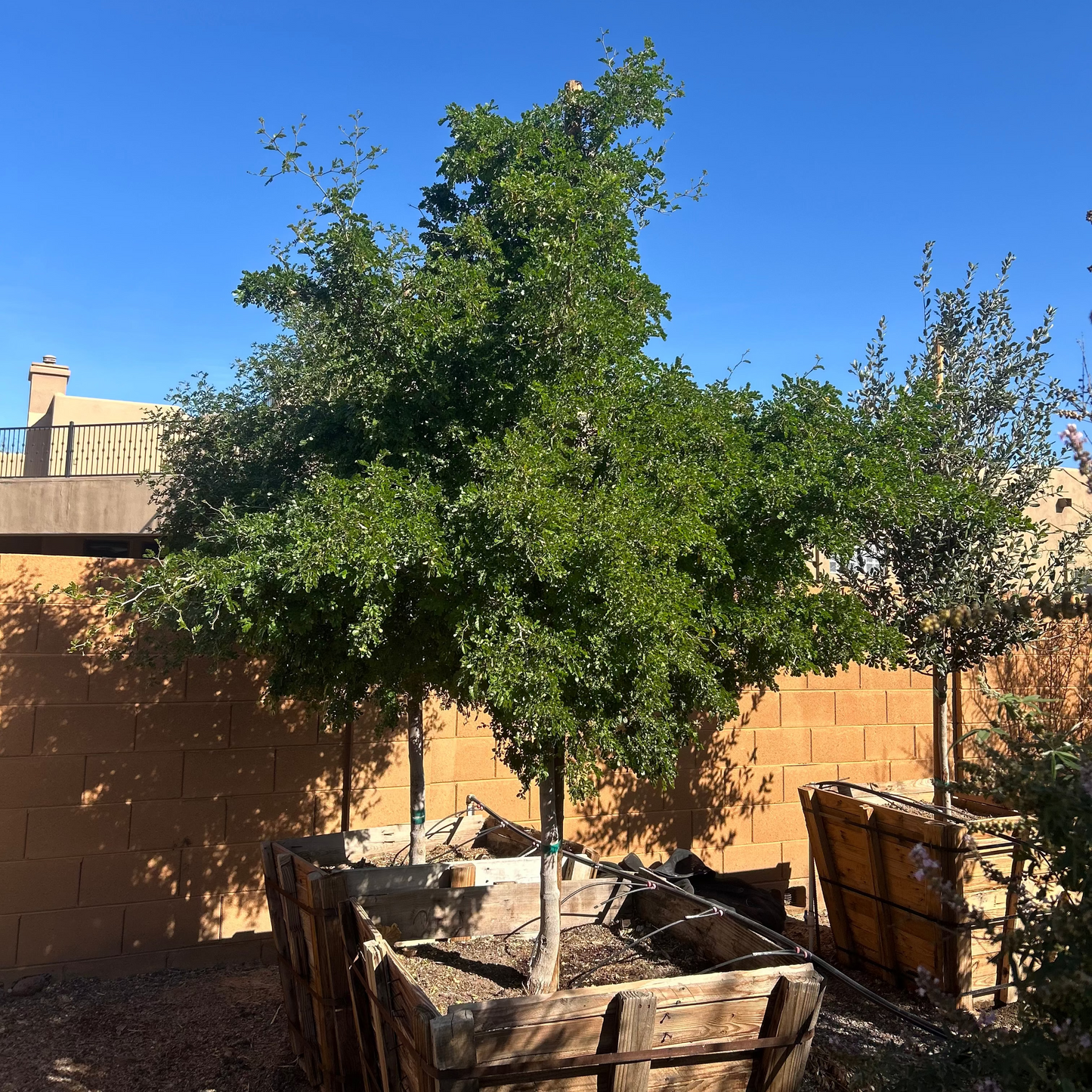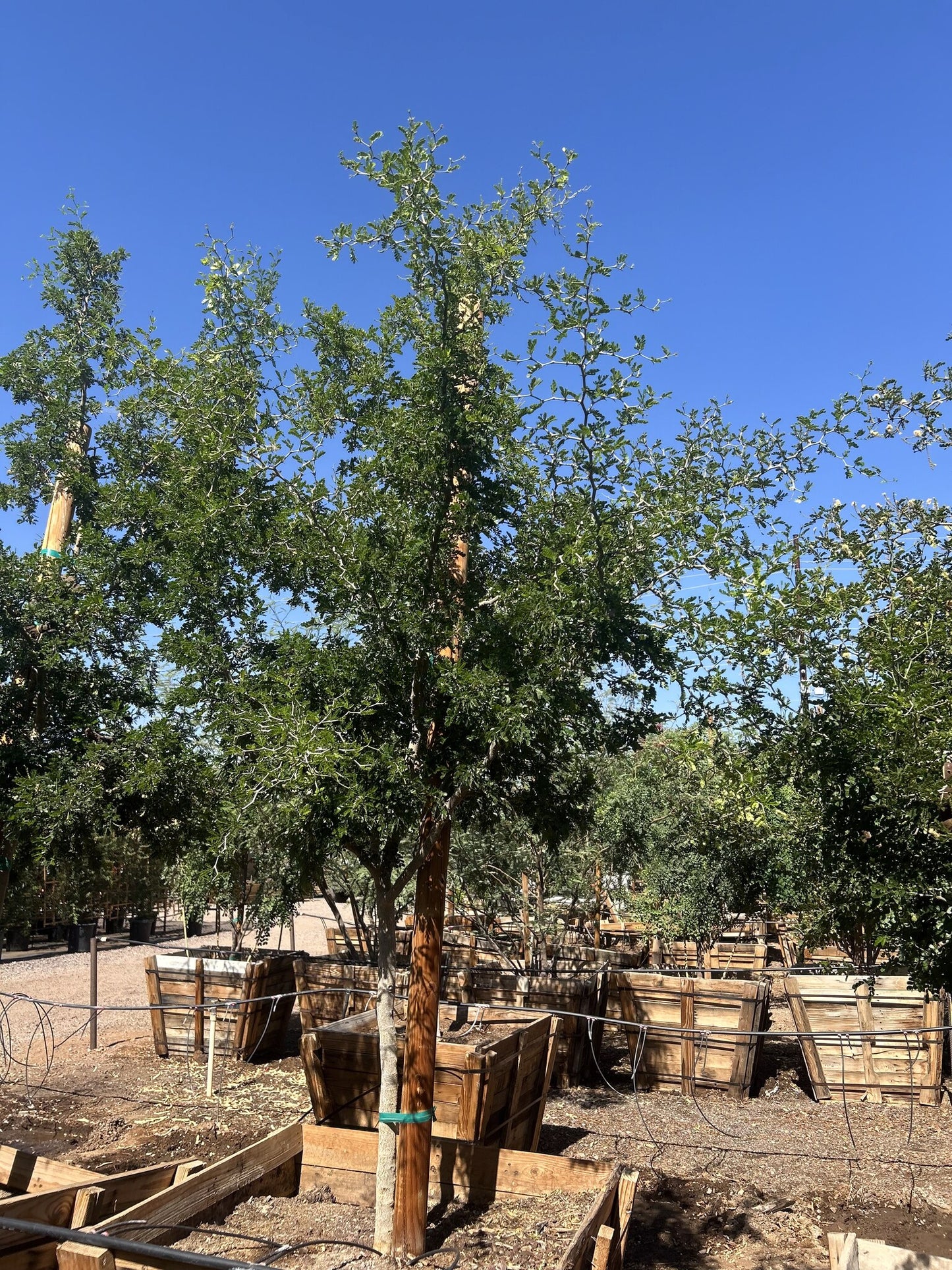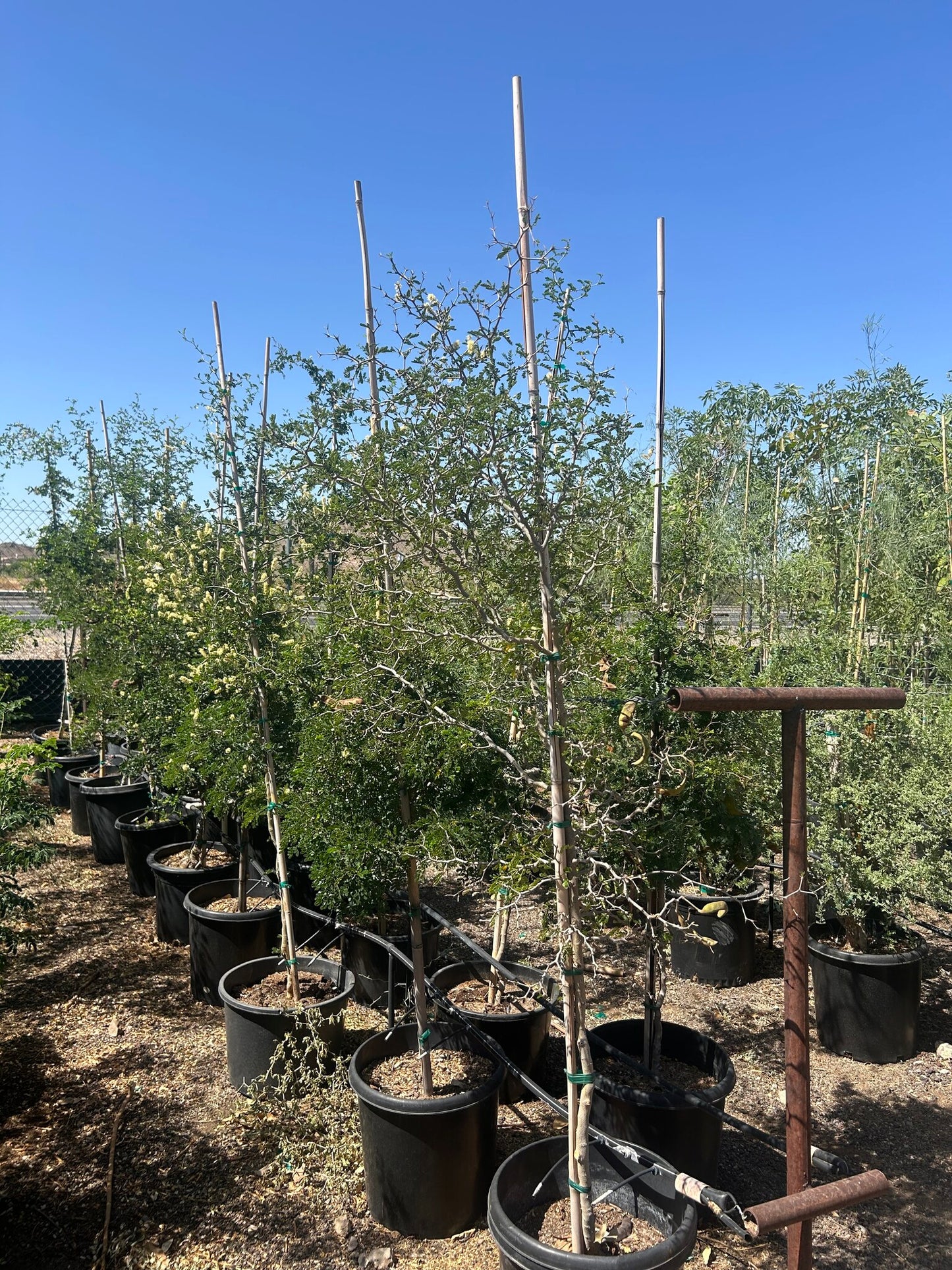


Texas Ebony
Texas Ebony
Couldn't load pickup availability
Phoenix's Toughest Native Privacy Screen — Texas Ebony Tree
Texas Ebony (Ebenopsis ebano) is the ultimate low-maintenance privacy screening tree for Phoenix Valley landscapes. This rugged, evergreen native produces an impenetrable wall of dense, dark green foliage year-round — and once established, it thrives on almost no supplemental water. With fragrant cream-yellow flowers in spring and summer, striking dark wood, and a naturally multi-branched form, Texas Ebony delivers serious privacy with serious toughness. Whether you're screening a fence line in Scottsdale, creating a wildlife habitat in Chandler, or building a permanent windbreak in Mesa or Peoria — Texas Ebony is built for Phoenix.
Texas Ebony Plant Details
| Attribute | Detail |
|---|---|
| Scientific Name | Ebenopsis ebano (syn. Pithecellobium flexicaule) |
| Common Names | Texas Ebony, Ebony Blackbead |
| Mature Height | 20–35 feet in Phoenix landscapes (up to 80 ft in native habitat) |
| Mature Width | 20–30 feet |
| Growth Rate | Slow — 1–2 feet per year in Phoenix |
| Sun | Full sun to partial shade. Handles reflected heat from walls and pavement. |
| Water | Very low once established. Among the most drought-tolerant privacy trees in Arizona. |
| USDA Zones | 9–11 (Phoenix is Zone 9b–10a) |
| Soil | Well-draining. Adapts to Arizona caliche soils. |
| Foliage | Evergreen — dense, dark green compound leaves year-round |
| Flower | Fragrant cream to yellow blooms in late spring to early summer |
| Native Origin | Texas-Mexico border region (Tamaulipan thornscrub) |
Texas Ebony Uses in Phoenix Landscapes
Ultimate Privacy Screen & Living Wall
Texas Ebony's naturally dense, multi-branched form creates one of the most impenetrable privacy screens available in Phoenix landscaping. The thorny branches add an additional security layer that keeps animals and unwanted foot traffic out. For a solid 20-foot fence screen, plant 2–3 trees spaced 8–10 feet apart; for a 40-foot boundary, plant 4–5 trees. Unlike many fast-growing privacy plants, Texas Ebony keeps its dense foliage all the way to the ground, eliminating gaps along the fence line.
Desert-Adapted Windbreak
The dense, low-branching canopy of Texas Ebony makes it one of the most effective windbreaks available for Phoenix's strong seasonal winds. Its evergreen foliage provides year-round wind and dust protection, and its slow, steady growth means it builds strength over time rather than growing weak and top-heavy like faster alternatives. Plant in a staggered double row for maximum wind buffering along exposed property lines in Surprise, Goodyear, or Avondale.
Wildlife Habitat Tree
Texas Ebony's fragrant flowers attract native bees, butterflies, and hummingbirds, while its dense branching provides nesting sites for birds and shelter for small desert wildlife. The seed pods are edible and attract quail and dove. As a native Tamaulipan thornscrub species, it supports the regional food web in ways that non-native privacy plants cannot. Pair it with Desert Willow, Mesquite, and Desert Marigold for a complete native habitat corridor along your property line.
Long-Term Shade & Specimen Tree
Though slow-growing, Texas Ebony rewards patience with a stunning, architectural specimen tree. Its extremely dark, dense wood and fine compound foliage create a textured canopy unlike any other Phoenix landscape tree. Mature trees provide meaningful afternoon shade over patios and outdoor living areas. The distinctive dark trunk and branch structure becomes a landscape feature in its own right, especially striking when underlit for evening landscape lighting.
Best Time to Plant Texas Ebony in Phoenix
Fall planting (October–November) is the best time for Texas Ebony in Phoenix. Warm soil temperatures accelerate root development while cooler air reduces heat stress, giving the tree a full 6–8 month establishment period before its first Phoenix summer. Spring planting (February–April) is the second-best window. Texas Ebony is highly cold-sensitive in its first two years — avoid planting near frost dates (December–February) with young, small-container trees. Larger box specimens are more cold-hardy from the start.
How to Plant Texas Ebony
- Dig wide, not deep — excavate a hole 2–3x the width of the root ball but no deeper than the root ball height.
- Check for caliche — probe the bottom of the hole. If caliche hardpan is present, break through it for proper drainage.
- Backfill with native soil — Texas Ebony thrives in unamended desert soil. No amendments needed.
- Spacing — plant 8–10 ft apart for a privacy hedge; 15–20 ft apart as individual specimen trees.
- Build a water basin — form a 3–4 inch earthen ring around the drip line to direct water to roots.
- Mulch — apply 2–3 inches of bark or gravel mulch to insulate roots and retain moisture.
Watering Texas Ebony in Phoenix
First Year Watering Schedule
Texas Ebony grows slowly and needs careful watering in year one to prevent root rot as much as drought stress:
- Weeks 1–2: Water every 1–2 days, slowly and deeply (20–30 min)
- Months 1–2: Water every 3–5 days
- Months 3–6: Water every 7–14 days (every 7–10 days during peak summer)
- After Year 1: Every 14–21 days in summer; every 4–6 weeks in winter
Drip Irrigation
Position drip emitters 18–24 inches from the trunk. Use 1–2 GPH emitters and run 45–60 minutes per cycle for deep penetration. Texas Ebony is prone to overwatering — err on the side of too little once established. After 3 years in Phoenix, many specimens require no supplemental irrigation outside of summer.
How fast does Texas Ebony grow in Phoenix?
Texas Ebony is a slow grower — typically 1–2 feet per year under Phoenix conditions. While this is slower than many alternatives, the tradeoff is exceptional longevity, structural strength, and one of the densest, most impenetrable canopies available in the Phoenix area. If you need faster coverage, pair it with faster-growing plants like Green Hopseed Bush while the Ebony matures.
Is Texas Ebony the most drought-tolerant privacy tree?
It's among the most drought-tolerant trees available in Phoenix, period — not just privacy trees. Once established (typically after 2–3 years of regular irrigation), mature Texas Ebony in Phoenix often requires zero supplemental water outside of June–August heat peaks. It evolved in one of the driest regions in North America and is perfectly adapted to Phoenix's desert conditions.
Is Texas Ebony thorny? Is it safe around kids and pets?
Yes, Texas Ebony has thorny branches — this is part of what makes it such an effective privacy and security screen. The thorns are firm but not excessively large. For family-friendly areas like play zones and high-traffic paths, plant Texas Ebony away from foot-traffic corridors or as a perimeter screen along fence lines. It is non-toxic to pets and humans.
Can Texas Ebony handle Phoenix summer heat?
Texas Ebony is extremely heat-tolerant and is actually better adapted to Phoenix summers than most trees. It handles reflected heat from block walls and concrete with no problem. In fact, Texas Ebony struggles more in cold snaps (below 25°F) than in heat — young trees should be protected from hard freezes in their first few winters.
Does Texas Ebony grow in reflected heat locations?
Yes — Texas Ebony is one of the few trees that thrives in reflected heat locations, such as south-facing block walls, parking areas, and narrow side yards. It evolved in the hot, dry Tamaulipan region and is built for intense solar exposure from all angles.
You May Also Like
- Green Hopseed Bush — Fast-growing evergreen privacy shrub for quick coverage while Texas Ebony matures.
- Desert Ironwood — Native Arizona shade and privacy tree with extreme drought tolerance and spring blooms.
- Texas Olive — Flowering privacy tree with white blooms; softer, thornless alternative to Texas Ebony.
- Indian Laurel Ficus — Dense evergreen screening tree for formal hedges and manicured privacy walls.
- Mastic Tree — Evergreen native shade tree with excellent heat and drought tolerance for Phoenix landscapes.
How Many Texas Ebony Do I Need?
Texas Ebony works as a dense privacy screen or as a spaced specimen. Use this guide for the Phoenix Valley, based on its 20 to 30 foot mature width:
| Use | Spacing | Example |
|---|---|---|
| Dense privacy / security screen | 8 to 10 ft on center | A 40 ft fence line needs 4 to 5 trees |
| Staggered windbreak | 8 ft on center, double row offset | Maximum dust and wind buffering |
| Specimen / shade tree | 15 to 20 ft apart, 15 ft from structures | 1 to 3 as a focal grouping |
Because the branches are thorny, keep this tree off walkways, play areas, and pool decks and use it along perimeters instead.
Texas Ebony Season-by-Season in Phoenix
- Spring (Feb-Apr): New growth flushes and fragrant cream-yellow puff flowers begin. A good second planting window once frost danger passes.
- Summer (May-Sep): In its element. Thrives in extreme and reflected heat where most trees struggle, and blooms into early summer. Monsoon rain (Jul-Sep) supports a slow, steady growth flush. Established trees need water only every 2 to 3 weeks.
- Fall (Oct-Nov): Prime planting season. Dark seed pods persist and feed quail and dove. Warm soil and cool air give roots months to establish.
- Winter (Dec-Jan): Holds its dense evergreen canopy. The key caveat: young trees are cold-sensitive and can be damaged below about 25°F, so cover them on hard frost nights for the first two winters. Mature trees shrug off Valley cold.
At a Glance
✔ Evergreen ✔ Heat-Loving (Reflected-Heat Tolerant) ✔ Drought-Tolerant ✔ Pollinator-Friendly ✔ Hummingbird-Friendly ✔ Low-Maintenance ✔ Deer & Rabbit-Resistant
Plant It With
- Green Hopseed Bush: a fast evergreen screen that fills in while the slow Ebony matures.
- Texas Olive: a thornless white-flowering privacy tree for the gentler, walk-by sections of the boundary.
- Mastic Tree: a tough evergreen that adds canopy variety along a privacy line.
- Desert Willow: a flowering native that completes a wildlife-habitat corridor with the Ebony.
Is Texas Ebony Right for Your Yard?
Texas Ebony is the right pick for full-sun and reflected-heat perimeters with well-drained soil where you want a permanent, evergreen, drought-proof privacy or security screen and you can wait for slow, durable growth. Break through caliche and avoid overwatering, since it rots more easily than it droughts. Not a fit next to walkways, pools, or play areas because of the thorns, and protect young trees from hard winter frosts in their first couple of years.
Customer Reviews
I have purchased several trees from Three Timbers. All have been large and healthy. I am very impressed with the plants they source.
Share