

Sugar Bush
Sugar Bush
Couldn't load pickup availability
Phoenix's Best Native Privacy Shrub — Sugar Bush
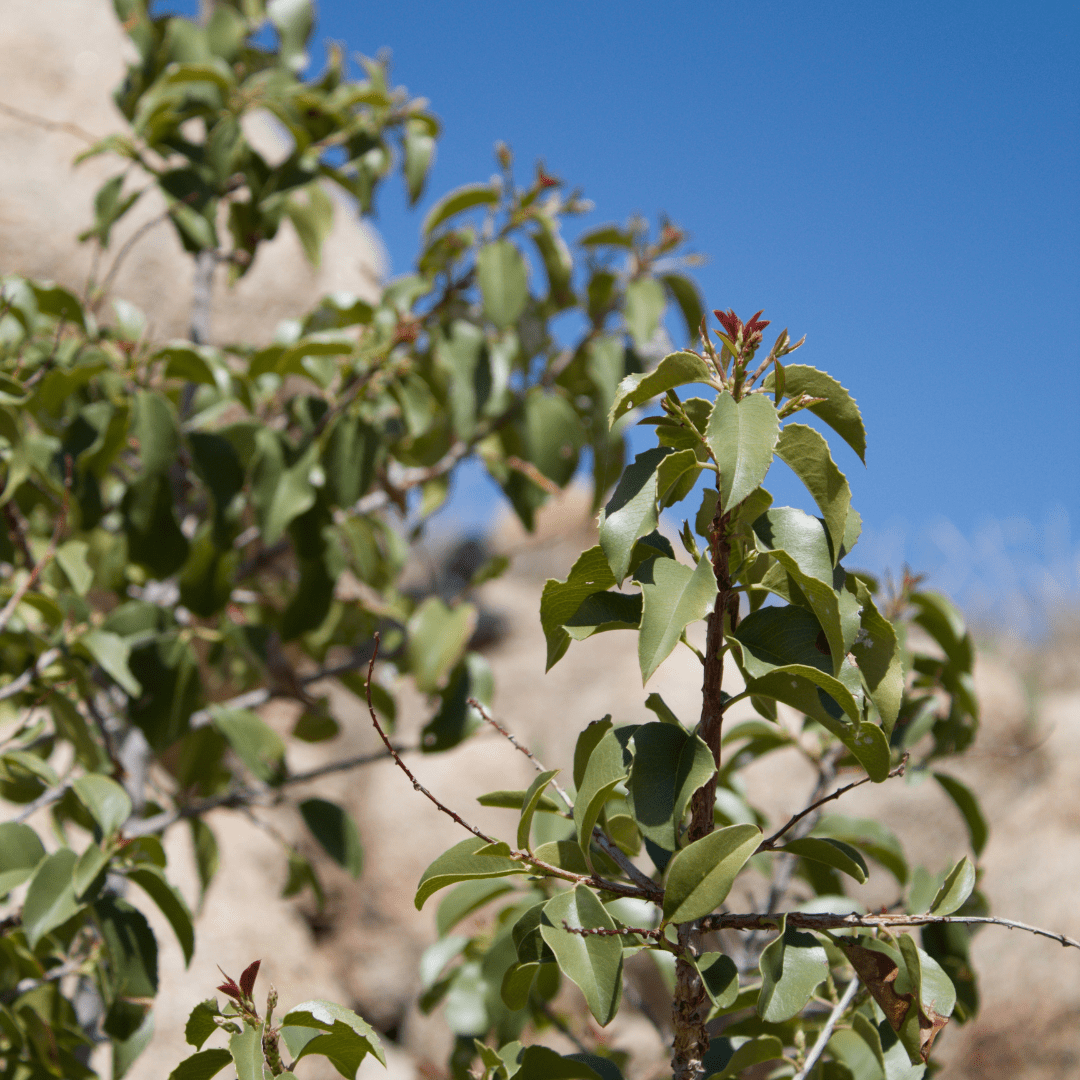
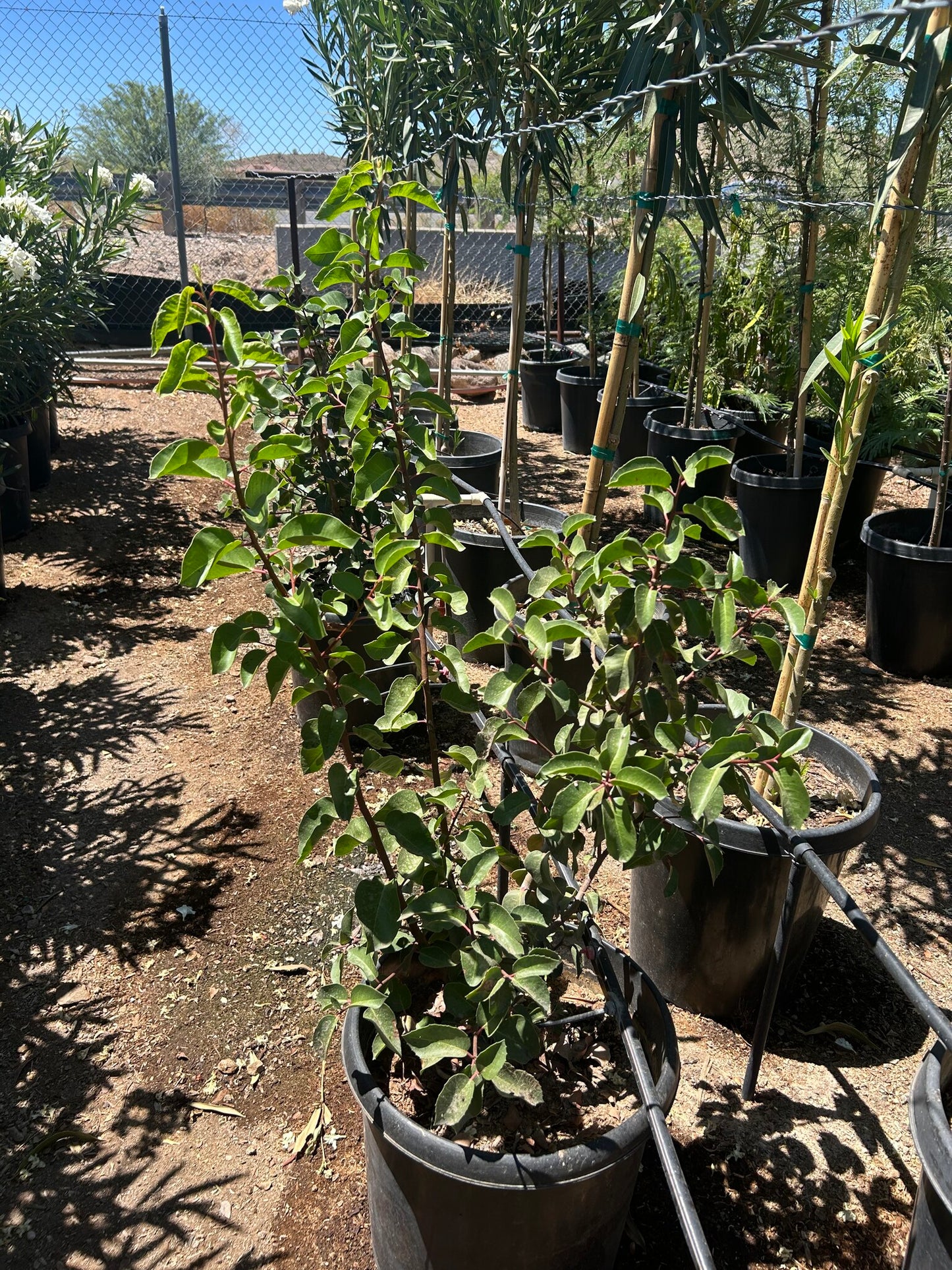
Sugar Bush (Rhus ovata) is one of the most reliable, water-wise native shrubs available for Phoenix Valley landscapes. Growing 8–15 feet tall and 6–10 feet wide, it creates a dense, evergreen privacy screen year-round while requiring almost no supplemental water once established. With glossy dark green leaves and clusters of small white flowers in spring, it's a top choice for homeowners in Scottsdale designing water-wise privacy hedges, in Chandler creating wildlife-friendly native gardens, or in Gilbert and Mesa adding natural screening to their properties.
Sugar Bush Plant Details
| Attribute | Detail |
|---|---|
| Scientific Name | Rhus ovata |
| Common Names | Sugar Bush, Sugar Sumac, Ovate-leaved Sumac |
| Mature Height | 8–15 feet |
| Mature Width | 6–10 feet |
| Growth Rate | Moderate — 1–2 feet per year in Phoenix's warm climate |
| Sun | Full sun to partial shade. Handles reflected heat from walls and fences. |
| Water | Very low once established. One of Arizona's most drought-tolerant native shrubs. |
| USDA Zones | 8–11 (Phoenix is Zone 9b–10a — ideal) |
| Soil | Well-draining. Adapts to Arizona caliche soils with proper drainage. |
| Foliage | Evergreen — dense, glossy dark green leaves year-round |
| Flower Color | White to pale pink; blooms in spring (March–April) |
| Native Status | Native to California, Baja California, and Arizona |
| Wildlife Value | Attracts birds; berries provide food for wildlife; deer-resistant |
Sugar Bush Uses in Phoenix Landscapes
Privacy Screening and Hedges
Sugar Bush is one of Phoenix's best native plants for creating dense, tall privacy screens. Its naturally upright, multi-branching form fills in quickly to block views, reduce noise, and create a lush green backdrop. For a 20-foot fence line, plant 3–4 Sugar Bush plants spaced 6 feet apart. For a continuous privacy hedge, space 5 feet apart. Pair with Texas Sage or Desert Willow to vary height and texture along the property line.
Low-Water Wildlife Habitat Gardens
As a California-Arizona native, Sugar Bush plays an important ecological role in desert landscapes. Its spring flowers attract native bees and butterflies, while its small red berries attract birds through summer and fall. Plant alongside other Arizona natives like Desert Bird of Paradise, Bursage, and Chuparosa to create a complete wildlife-friendly habitat garden that requires almost no water after the first year.
Slope Stabilization and Erosion Control
Sugar Bush's deep, extensive root system makes it an excellent choice for stabilizing slopes, hillsides, and erosion-prone areas in the Phoenix Valley. It thrives in rocky, well-draining soils typical of Arizona hillsides and washes. Plant on 6-foot centers to provide complete coverage while allowing room for mature spread.
Modern Desert and Xeriscape Design
With its glossy, dark green foliage and clean upright form, Sugar Bush adds a lush, refined look to modern desert and xeriscape landscapes. It provides year-round green structure that contrasts beautifully with the grays and tans of desert rock and gravel. Use as a specimen anchor plant in landscape beds alongside Desert Spoon or Agave for a bold, architectural composition.
Best Time to Plant Sugar Bush in Phoenix
Fall (October–November) is the ideal planting window. Soil remains warm for root development, and cooler air temperatures dramatically reduce transplant stress. Plants get 6–8 months to establish deep roots before facing their first Phoenix summer. Spring (February–April) is the second-best window. Avoid summer planting if possible — if necessary, provide afternoon shade and daily watering for the first 4–6 weeks.
How to Plant Sugar Bush
- Dig wide, not deep — excavate a hole 2–3 times the root ball width but only as deep as the root ball height.
- Check for caliche — break through any hardpan caliche layer to ensure water drains properly away from roots.
- Backfill with native soil — native Arizona soil works well; avoid heavy organic amendments that retain excess moisture.
- Spacing — plant 5–6 feet apart for privacy hedges; 8–10 feet apart for individual specimens.
- Water basin — create a 3–4 inch soil ring around the plant to direct irrigation to the root zone.
- Mulch — apply 2–3 inches of bark or gravel mulch to retain soil moisture and keep roots cool.
Watering Sugar Bush in Phoenix
First Year Watering Schedule
Weeks 1–2: Water every 1–2 days, deep and slow (20–30 minutes). Month 1–2: Reduce to every 3–4 days. Month 3–6: Water every 7–10 days (every 5–7 days during peak summer). After Year 1: Sugar Bush is highly drought-tolerant — water every 3–4 weeks in summer; every 4–6 weeks in winter. Established plants often survive on natural rainfall alone in low-water years.
Drip Irrigation
Place 1–2 GPH emitters 18–24 inches from the base of the plant. As the plant matures, move emitters outward to the drip line. Established Sugar Bush is extremely drought-tolerant and requires very little supplemental irrigation after year 2.
How fast does Sugar Bush grow in Phoenix?
Sugar Bush grows at a moderate rate of 1–2 feet per year in Phoenix's warm climate. In optimal full-sun conditions with well-draining soil, plants can reach 6–8 feet within 4–5 years of planting.
Is Sugar Bush deer resistant?
Yes — Sugar Bush is highly deer-resistant, making it an excellent choice for properties near desert preserve areas in Scottsdale, Cave Creek, and other Phoenix Valley communities where deer browsing is a concern.
Does Sugar Bush drop its leaves in winter?
No — Sugar Bush is fully evergreen and retains its glossy dark green leaves year-round. This makes it an excellent year-round privacy screen without any bare-branch winter gaps.
Can Sugar Bush handle Phoenix reflected heat?
Yes. Sugar Bush tolerates full sun and reflected heat from walls, fences, and pavement. It actually performs better in hot, dry conditions than in cool, moist climates — making Phoenix an ideal environment for it to thrive.
You May Also Like
Green Hopseed Bush — Another excellent fast-growing privacy hedge plant for Phoenix, with fine-textured green foliage and exceptional heat tolerance.
Desert Bird of Paradise — A bold flowering native shrub that pairs beautifully with Sugar Bush in wildlife habitat designs.
Bursage (Ambrosia deltoidea) — A low-growing Arizona native ground cover that complements Sugar Bush as an understory plant.
Desert Cassia — Yellow-blooming native shrub with a similar water-wise profile, great for mixing with Sugar Bush in native plant designs.
Little Leaf Cordia — A compact flowering native shrub that adds seasonal color alongside Sugar Bush's evergreen structure.
How Many Sugar Bush Do I Need?
Sugar Bush matures at 6 to 10 feet wide. For a dense privacy hedge, space plants 5 feet on center. For a looser screen or to let each shrub show its natural upright form, go to 6 feet.
| Run Length | Plants at 5 ft Spacing |
|---|---|
| 10 ft | 3 plants |
| 20 ft | 4 to 5 plants |
| 30 ft | 6 to 7 plants |
| 40 ft | 8 to 9 plants |
As a single specimen anchor, give Sugar Bush 8 to 10 feet of clearance so it can reach its full height and spread.
Sugar Bush Season-by-Season in Phoenix
- Spring (Feb–Apr): Clusters of white to pale-pink flowers open in March and April, drawing native bees and butterflies, followed by small reddish berries that feed birds. New growth flushes; a good second planting window.
- Summer (May–Sep): A standout heat performer. Sugar Bush holds its glossy evergreen screen through extreme heat and reflected warmth off walls and pavement on very little water. Monsoon rains are a welcome bonus and can carry established plants on rainfall alone.
- Fall (Oct–Nov): Prime planting season. Berries persist for wildlife while roots establish in warm soil under mild air.
- Winter (Dec–Jan): Fully evergreen with no bare-branch gaps, holding privacy through the season. Cold-hardy to about 10°F, so it rides through normal Valley frosts without damage.
At a Glance
✔ Arizona Native ✔ Evergreen ✔ Drought-Tolerant ✔ Heat-Loving (Reflected-Heat Tolerant) ✔ Low-Maintenance ✔ Pollinator-Friendly ✔ Deer & Rabbit-Resistant ✔ Cold-Hardy to 10°F
Plant It With
- Green Hopseed Bush: another fast, fine-textured evergreen screen to vary texture along the hedge.
- Desert Bird of Paradise: adds bold flowering color in a low-water native habitat planting.
- Bursage: a low Arizona native that fills the understory below Sugar Bush.
- Desert Cassia: a yellow-blooming native with the same water-wise profile for a mixed native screen.
Is Sugar Bush Right for Your Yard?
Sugar Bush is a fit for full sun and reflected heat, in well-drained or rocky caliche soil, anywhere you want a tall evergreen privacy screen, slope cover, or native wildlife planting on almost no water. It is not the best choice for a small, tight space without room for its 6 to 10 foot spread, or a spot that stays soggy, which it will not tolerate.
Share