

Banana Yucca
Banana Yucca
Rugged native yucca with bold sword-like leaves
Couldn't load pickup availability
Arizona's Best Native Desert Accent Plant for Bold, Low-Water Landscapes
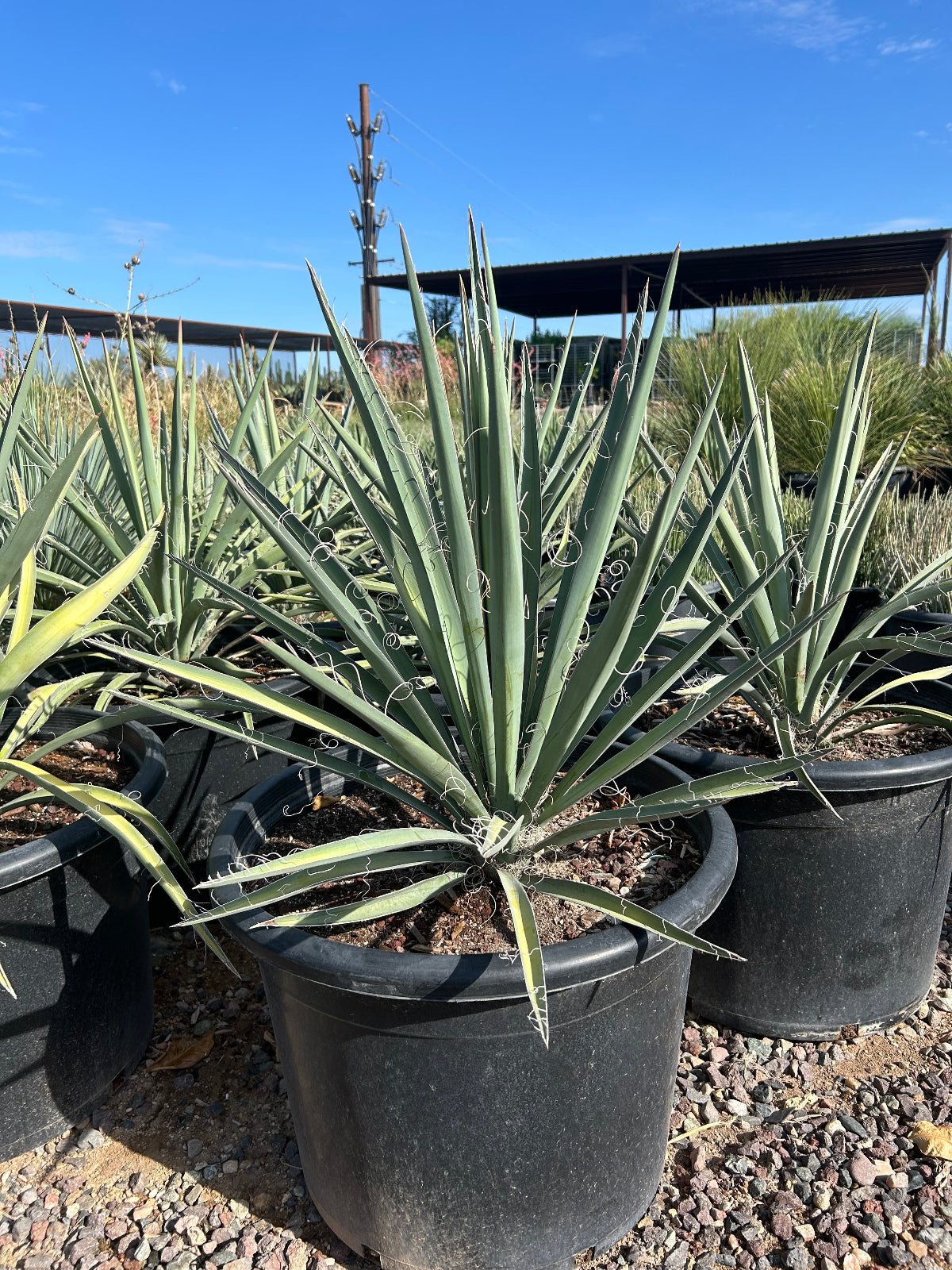
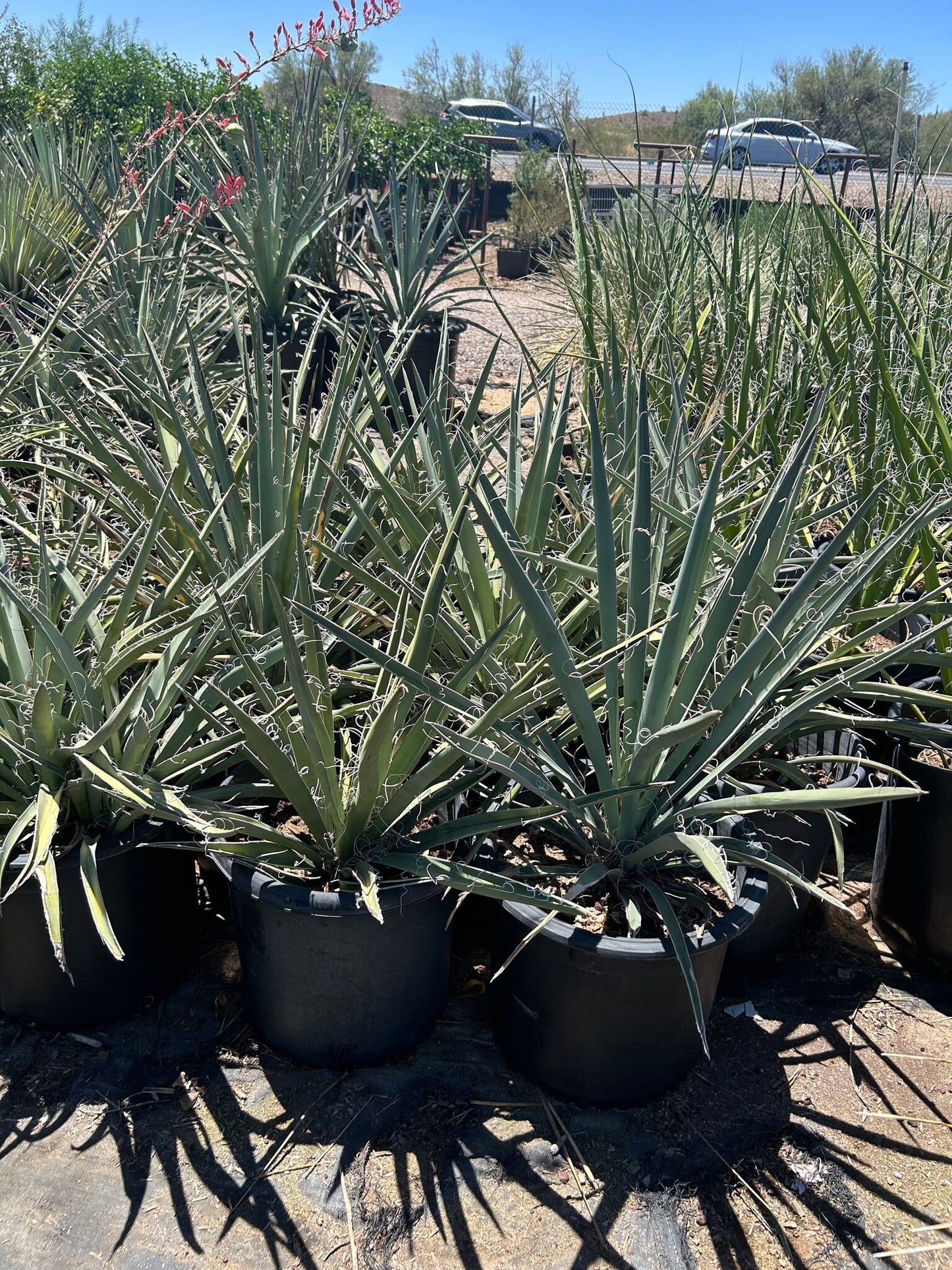
Banana Yucca (Yucca baccata) is one of the Southwest's most striking native perennials — a sculptural rosette of bluish-green, sword-shaped leaves that commands attention in any desert garden. Incredibly drought-tolerant once established, it laughs off Phoenix summer heat, reflected warmth from block walls, and caliche soil without missing a beat. Whether you're designing a xeriscape in Scottsdale, building a rock garden in Mesa, or adding native drama to a Chandler front yard — Banana Yucca delivers bold form with almost zero maintenance.
Banana Yucca Plant Details
| Attribute | Detail |
|---|---|
| Scientific Name | Yucca baccata |
| Common Names | Banana Yucca, Datil Yucca, Blue Yucca |
| Mature Height | 2–3 feet |
| Mature Width | 2–3 feet |
| Growth Rate | Slow — 3–6 inches per year in Phoenix |
| Sun | Full sun (6+ hrs). Handles reflected heat from walls and pavement. |
| Water | Very low once established. Extremely drought-tolerant. |
| USDA Zones | 5–11 (Phoenix is Zone 9b–10a) |
| Soil | Well-draining. Thrives in rocky, sandy, and Arizona caliche soils. |
| Foliage | Evergreen — bluish-green sword-shaped rosette year-round |
| Bloom Color | Creamy white to pale green, often tinged purple — spring/early summer |
| Fruit | Banana-shaped, edible — sweet and fleshy |
| Native Status | Native to the southwestern United States and northern Mexico |
Banana Yucca Uses in Phoenix Landscapes
Sculptural Desert Accent
Banana Yucca's bold rosette form and blue-toned foliage make it a natural focal point in any desert-themed garden. Plant it among boulders, decomposed granite, or alongside barrel cacti for a striking, low-water composition that looks designer-level without the irrigation bill.
Rock Gardens & Xeriscape Beds
This plant was made for xeriscaping. Its compact 2–3 foot profile fits perfectly in rock gardens, gravel beds, and hellstrip plantings. Pair it with Desert Spoon, Agave, or Red Yucca for a layered, textural desert palette. Spacing: 3–4 feet apart for groupings.
Native & Edible Landscaping
The banana-shaped fruit is sweet and edible — a unique feature for homeowners interested in native food plants. Combine Banana Yucca with Desert Milkweed, Chuparosa, and Penstemon to create a native pollinator garden that also provides harvestable fruit.
Modern Desert Design
Banana Yucca's architectural silhouette pairs beautifully with clean lines, concrete planters, and modern hardscaping. Use it as a repeating element along walkways or as a single specimen in a courtyard planter for contemporary Scottsdale and Tempe homes.
Best Time to Plant Banana Yucca in Phoenix
Fall (October–November) is the ideal planting window. Soil stays warm enough for root growth while cooler air temperatures reduce transplant stress. Your Banana Yucca gets 6–8 months of root establishment before its first Phoenix summer. Spring (February–April) is the second-best window. Avoid planting in peak summer if possible.
How to Plant Banana Yucca
- Dig wide, not deep — 2–3x the root ball width, same depth as the container.
- Check for caliche — break through any hardpan layer so water can drain freely.
- Backfill with native soil — Banana Yucca prefers lean, unamended soil. A light 20% sand mix is fine if your native soil is heavy clay.
- Spacing — 3–4 feet apart for grouped plantings; 5+ feet for standalone specimens.
- Water basin — build a 3–4 inch ring of soil around the planting hole to direct water to roots.
- Mulch — 2–3 inches of gravel or decomposed granite. Avoid organic bark mulch close to the crown to prevent rot.
Watering Banana Yucca in Phoenix
First Year Watering Schedule
- Weeks 1–2: Every 2–3 days, deep and slow (15–20 min drip)
- Month 1–2: Every 5–7 days
- Month 3–6: Every 10–14 days (7–10 days in peak summer)
- After Year 1: Every 3–4 weeks in summer; little to no supplemental water in winter
Drip Irrigation
Place one 1-GPH emitter 12–18 inches from the base. Banana Yucca is extremely drought-tolerant once established — overwatering is the most common mistake. Established plants in the ground rarely need supplemental irrigation outside of extreme drought.
How fast does Banana Yucca grow in Phoenix?
Banana Yucca is a slow grower — expect 3–6 inches of height per year. The trade-off is an incredibly tough, long-lived plant that needs almost no care once established.
Is Banana Yucca drought tolerant?
Extremely. Once established (about 1 year in the ground), Banana Yucca can survive on rainfall alone in most Phoenix Valley locations. It's one of the most water-efficient accent plants available.
Are the fruits really edible?
Yes. The banana-shaped fruits are sweet and fleshy when ripe. They've been harvested and eaten by indigenous peoples of the Southwest for centuries. They can be eaten fresh, roasted, or dried.
Can Banana Yucca handle full reflected heat?
Absolutely. It thrives against south- and west-facing walls where reflected heat would stress most plants. It's native to some of the hottest, driest landscapes in North America.
What's the difference between Banana Yucca and other Yuccas?
Banana Yucca stays compact (2–3 ft) compared to taller species like Beaked Yucca. Its unique edible fruit and bluish foliage set it apart. The curly fibers along its leaf edges are another distinguishing feature.
You May Also Like
- Beaked Yucca — A taller, trunking yucca that adds dramatic height to desert gardens.
- Desert Spoon — Another sculptural rosette that pairs beautifully with Banana Yucca in xeriscape beds.
- Red Yucca — Not a true yucca, but a perfect companion with coral-red flower spikes and similar water needs.
- Adam's Needle — A cold-hardy yucca variety with striking white flower stalks.
- Agave Americana — Bold blue rosettes that complement Banana Yucca's form in desert groupings.
How Many Banana Yucca Do I Need?
At a mature width of 2 to 3 feet, Banana Yucca works as a single specimen or in repeating groups. Space plants about 3 feet on center for a grouping, or give standalone specimens 5 feet of clearance. Use this guide:
| Planting Goal | Spacing & Count |
|---|---|
| Single accent | 1 plant, 5 ft clearance |
| Rock-garden cluster | Odd-numbered group of 3 to 5 at 3 ft centers |
| Repeating walkway rhythm | About 1 plant every 3 ft along the run |
Set the stiff, sharp-tipped rosettes at least 2 feet back from walkways and seating areas.
Banana Yucca Season-by-Season in Phoenix
- Spring (Feb–Apr): Tall creamy, purple-tinged flower stalks rise in spring to early summer, drawing pollinating yucca moths. A strong second planting window.
- Summer (May–Sep): Thrives in extreme and reflected heat against south and west walls. Edible banana-shaped fruit ripens through the warm season. Needs little water.
- Fall (Oct–Nov): The prime planting season, giving roots months to settle before summer. Slow steady growth continues.
- Winter (Dec–Jan): Fully evergreen and very cold-hardy (USDA Zone 5). No frost protection is needed anywhere in the Valley. The blue rosette holds its form year-round.
At a Glance
✔ Arizona Native ✔ Heat-Loving (Reflected-Heat Tolerant) ✔ Drought-Tolerant ✔ Evergreen ✔ Low-Maintenance ✔ Pollinator-Friendly ✔ Edible ✔ Deer & Rabbit-Resistant ✔ Cold-Hardy to -10°F
Plant It With
- Beaked Yucca: a taller trunking yucca that adds height behind the compact rosette.
- Desert Spoon: a silver sculptural rosette that echoes the form in a xeriscape bed.
- Red Yucca: coral flower spikes and matching water needs for a layered grouping.
- Adam's Needle: a white-flowering yucca with curly leaf filaments for textural contrast.
Is Banana Yucca Right for Your Yard?
Banana Yucca thrives in full sun and reflected heat, needs sharply draining soil (break through caliche), and survives on rainfall once established. As an Arizona native it is cold-hardy, edible, and essentially maintenance-free. Not a fit right along a busy walkway or play area, where the stiff, sharp leaf tips are better set back into a bed.
Share