
Snail Vine
Snail Vine
Couldn't load pickup availability
Phoenix's Most Fragrant Climbing Vine — Snail Vine
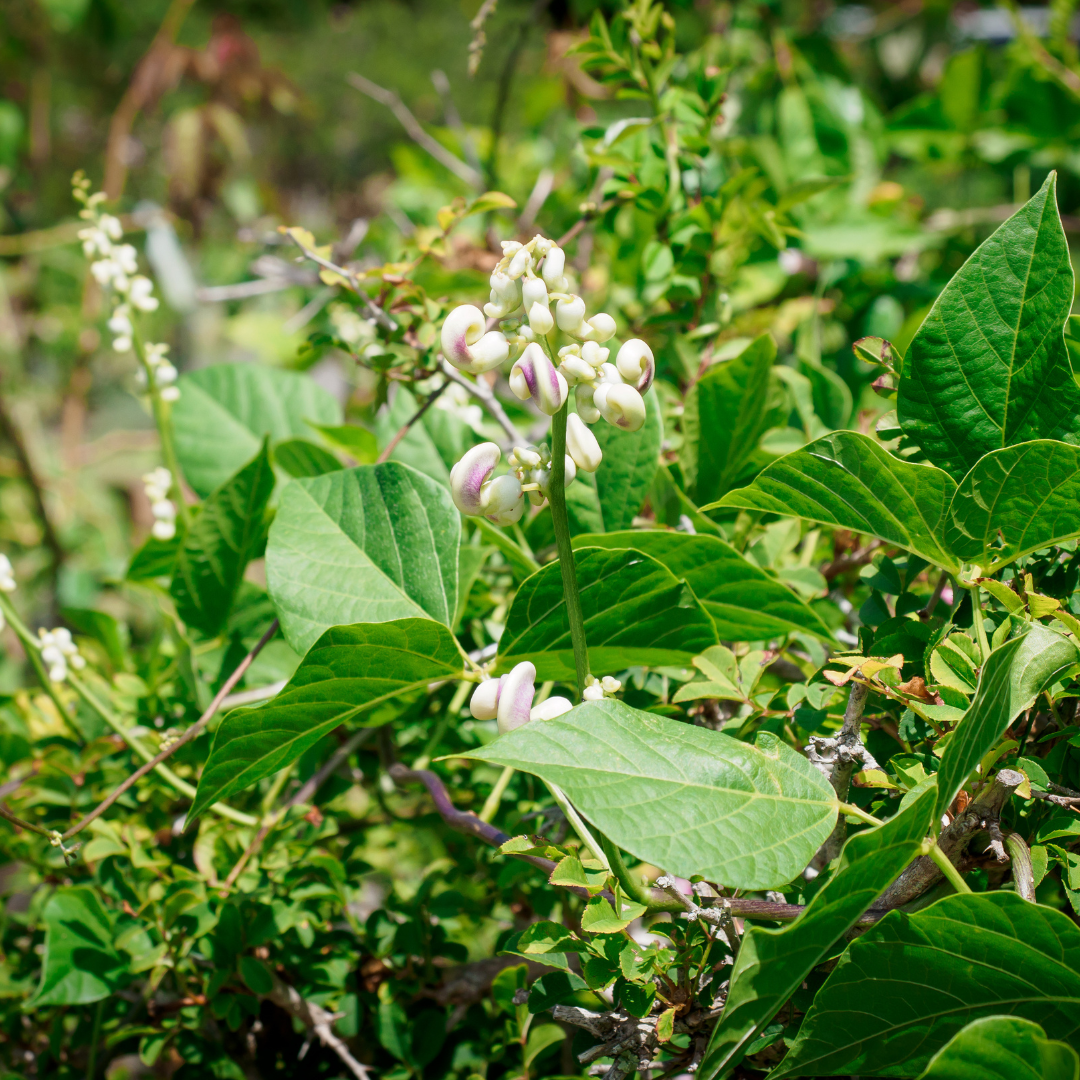
Snail Vine (Vigna caracalla) is one of the most distinctive and fragrant vines you can grow in the Phoenix Valley. Named for its uniquely coiled, snail-shell-shaped blooms that transition from creamy white to lavender and purple, this fast-growing perennial climber fills fences, trellises, and arbors with lush tropical foliage and intoxicating evening fragrance all season long. Whether you're dressing up a block wall in Scottsdale, covering a pergola in Chandler, or creating a fragrant garden screen in Gilbert — Snail Vine delivers unforgettable color and scent in minimal time.
Snail Vine Plant Details
| Attribute | Detail |
|---|---|
| Scientific Name | Vigna caracalla |
| Common Names | Snail Vine, Corkscrew Vine, Snail Flower |
| Mature Height | 15–20 feet |
| Mature Width | 6–10 feet spread |
| Growth Rate | Fast — 6–10 feet per season in Phoenix |
| Sun | Full sun to partial shade. Handles reflected heat from walls. |
| Water | Low to moderate once established. Drought-tolerant when mature. |
| USDA Zones | 9–11 (Phoenix is Zone 9b–10a) |
| Soil | Well-draining. Adapts to Arizona caliche soils. |
| Foliage | Semi-evergreen — may drop leaves in cool winters, returns vigorously in spring |
| Flower Color | Cream to lavender-purple, spiral-shaped blooms |
| Fragrance | Strong, sweet evening fragrance — especially potent at dusk |
Snail Vine Uses in Phoenix Landscapes
Covering Fences and Block Walls
Snail Vine is one of the best fast-covering vines for Phoenix block walls and chain-link fences. Its vigorous growth habit means you'll see coverage within a single season. Plant one vine every 8–10 feet for solid fence coverage — a 30-foot fence needs 3–4 plants. The tropical green foliage and spiraling blooms transform plain block walls into lush garden backdrops in Peoria, Glendale, or Mesa neighborhoods.
Arbors, Pergolas, and Shade Structures
Train Snail Vine over a pergola or shade structure and you'll create a fragrant outdoor living space that rivals any nursery plant in Phoenix. The vine's twining habit lets it grab onto lattice or metal supports without special training. Pair it with Desert Willow or a Palo Verde nearby for a layered, low-water landscape feel while the arbor provides filtered shade through summer.
Evening Garden Fragrance
One of Snail Vine's most prized traits is its powerful evening fragrance — a sweet, honeyed scent that fills patios and seating areas at dusk. If you entertain outdoors in Tempe or Scottsdale, a single Snail Vine near your seating area provides a natural, aromatic experience that no artificial fragrance can match. The blooms produce their strongest scent in warm Phoenix evenings from late spring through fall.
Pool-Friendly Vine for Privacy
Snail Vine is a great choice near pool enclosures where you want fast-growing privacy without messy fruit or debris. Its small coiled flowers drop cleanly and the vine stays tidy with minimal pruning. Use it on a pool fence or shade sail structure in Chandler or Gilbert to create a tropical feel without the maintenance demands of larger trees.
Best Time to Plant Snail Vine in Phoenix
Fall (October–November) is the ideal planting window for Snail Vine in the Phoenix Valley. The cooler air reduces transplant stress while warm soil temperatures allow roots to establish before summer. A fall-planted vine gets a full 6–8 months of root development before facing its first Phoenix summer, making it significantly more heat-resilient. Spring planting (February–April) is a solid second choice — just be prepared to water more frequently as temperatures climb. Avoid summer planting if possible, as the vine will need intensive irrigation to get established in 110°F heat.
How to Plant Snail Vine
- Dig wide, not deep — dig a hole 2–3 times the width of the root ball but no deeper than the container height.
- Check for caliche — break through any hardpan caliche layer to ensure proper drainage and root penetration.
- Backfill with native soil — a light 20% organic amendment blend is fine; don't over-amend desert soil.
- Spacing — plant 8–10 feet apart for fence coverage; 6–8 feet for dense, faster coverage.
- Water basin — build a 3–4 inch earthen ring around the root zone to direct irrigation water to the roots.
- Mulch — apply 2–3 inches of bark or gravel mulch to retain soil moisture and regulate root temperature.
Watering Snail Vine in Phoenix
First Year Watering Schedule
- Weeks 1–2: Every 1–2 days, deep and slow (20–30 minutes)
- Month 1–2: Every 3–4 days
- Month 3–6: Every 7–10 days (every 5–7 days in peak summer heat)
- After Year 1: Every 10–14 days in summer; every 3–4 weeks in winter
Drip Irrigation
Place a 1–2 GPH drip emitter 12–18 inches from the base of the vine. As the plant matures and roots spread, add a second emitter on the opposite side. Established Snail Vine needs very little supplemental water in winter and can often go 3–4 weeks between waterings outside of the peak summer months.
How fast does Snail Vine grow in Phoenix?
Snail Vine is a fast grower in Phoenix's warm climate, typically adding 6–10 feet of new growth per season. With a full sun position and regular summer watering, you can expect a newly planted vine to reach 10–15 feet within its first year in the Phoenix Valley.
Is Snail Vine drought tolerant once established?
Yes. After its first full year in the ground, Snail Vine becomes quite drought tolerant and can survive on a deep watering every 10–14 days during summer. During cooler months, it requires very little supplemental irrigation. It performs best with consistent but infrequent deep watering rather than frequent light watering.
Can Snail Vine handle Phoenix summer heat?
Absolutely. Snail Vine is a tropical plant that thrives in heat and humidity, making Phoenix's warm summers an ideal environment. It may show some leaf drop during the hottest stretches if under-watered, but recovers quickly with proper irrigation. Reflected heat from block walls or south-facing exposures can actually accelerate its growth.
When does Snail Vine bloom in Phoenix?
In Phoenix, Snail Vine typically begins blooming in late spring (April–May) and continues through fall (October–November). The uniquely coiled, snail-shaped flowers shift from cream to lavender-purple as they mature, and the evening fragrance is strongest during warm nights from May through September.
Is Snail Vine pet friendly?
Snail Vine is generally considered non-toxic to dogs and cats, making it a good choice for pet-friendly Phoenix landscapes. It is classified in the legume family and its pods are not considered harmful, though it's always wise to prevent pets from consuming large quantities of any plant material.
You May Also Like
- Bower Vine (Pandorea jasminoides) — another fragrant, fast-growing flowering vine perfect for Phoenix trellises and fences.
- Hacienda Creeper (Parthenocissus striata) — a vigorous wall-clinging vine for full coverage of block walls in Phoenix Valley landscapes.
- Queen's Wreath — a classic Arizona vine with stunning purple blooms, ideal for trellises and arbors in Scottsdale and Chandler.
- Texas Sage (Leucophyllum frutescens) — a drought-tolerant flowering shrub that pairs beautifully with Snail Vine in low-water Phoenix gardens.
- Ruellia — low-growing groundcover with purple blooms that pairs well beneath Snail Vine for a layered tropical planting.
How Many Snail Vine Do I Need?
For fence and wall coverage, space Snail Vine about 9 feet on center (the middle of its 8 to 10 foot range), or tighten to 6 to 8 feet for faster, denser fill. Measure your run and divide by your spacing.
| Fence / Wall Run | Plants Needed (9 ft spacing) |
|---|---|
| 12 linear feet | 2 plants |
| 24 linear feet | 3 plants |
| 36 linear feet | 4 plants |
| 48 linear feet | 5 to 6 plants |
For a single pergola, arbor, or seating-area trellis where you want the evening fragrance, one twining vine covers the structure on its own.
Snail Vine Season-by-Season in Phoenix
- Spring (Feb to Apr): Resprouts vigorously after any winter leaf drop and climbs fast. A strong second planting window once nights warm. First coiled blooms open in late spring.
- Summer (May to Sep): Peak performance. Loves the heat and reflected warmth from walls, blooms through the season, and the sweet evening fragrance is strongest on warm nights. Monsoon humidity suits this tropical climber well.
- Fall (Oct to Nov): Keeps blooming into fall and this is the prime planting window, giving roots months to settle before next summer.
- Winter (Dec to Jan): Semi-evergreen and frost-tender: in a cool or frosty winter it may drop most of its leaves or die back, then return strongly from the roots in spring. Do not count on it for solid evergreen winter cover, and cut back any frost-damaged growth in late winter.
At a Glance
✔ Pollinator-Friendly ✔ Heat-Loving (Reflected-Heat Tolerant) ✔ Drought-Tolerant ✔ Pool-Friendly (Low-Litter) ✔ Low-Maintenance
Plant It With
- Bower Vine: another fragrant flowering vine to pair on an adjacent panel for layered scent and color.
- Queen's Wreath 'Pink': adds bright pink summer color alongside Snail Vine's cool lavender blooms.
- Hacienda Creeper: a vigorous self-clinging vine to cover a bare block wall behind a Snail Vine trellis.
- Texas Sage: a drought-tolerant evergreen shrub that anchors the bed and holds structure when the vine thins in winter.
Is Snail Vine Right for Your Yard?
Snail Vine is a great fit for a full-sun to part-shade trellis, arbor, pergola, or pool fence where you want fast tropical cover, clean low-litter flowers, and sweet evening fragrance near a seating area. It handles caliche as long as the hole drains and is drought-tolerant once established. It is not a fit for a bare wall with no support, since it is a twiner that needs a trellis or wires to climb, and it is not the choice if you need dependable evergreen structure through a frosty winter.
Share