

Radiation Lantana
Radiation Lantana
Couldn't load pickup availability
Phoenix's Most Vibrant Orange-Red Blooming Groundcover for Full Sun
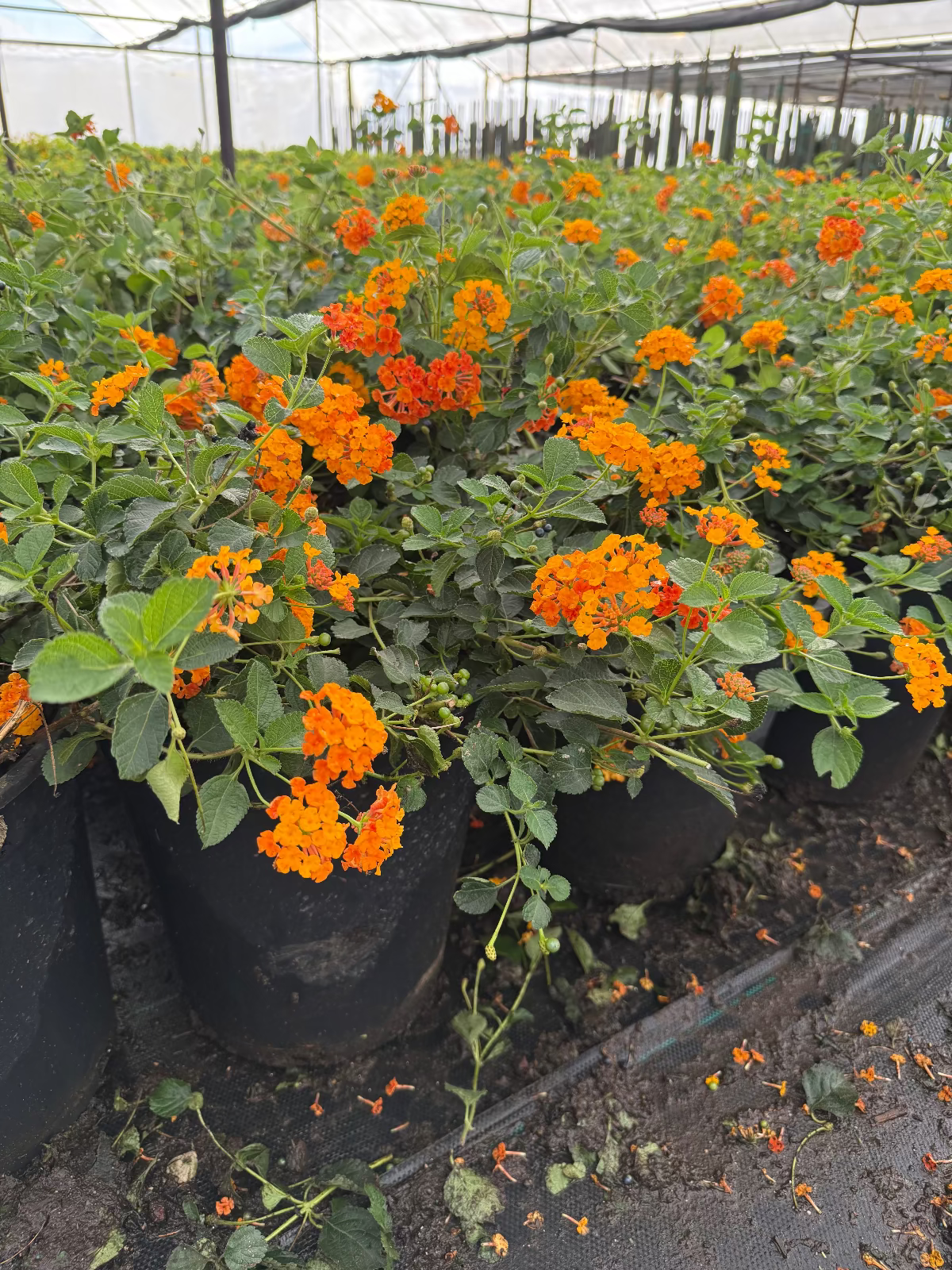
Radiation Lantana (Lantana camara 'Radiation') is one of the most colorful and reliable blooming groundcovers for the Phoenix Valley. Its bold orange-red blooms with bright yellow centers create a continuous fireworks display from spring through fall — and in Phoenix's mild winters, it often keeps blooming nearly year-round. It grows fast, spreads 2–4 feet wide, and handles full desert sun with minimal water once established. Whether you're covering a sunny slope in Chandler, adding color to a xeriscape in Scottsdale, or lining a wall in Mesa — Radiation Lantana delivers nonstop tropical color without the tropical water bill.
Radiation Lantana Plant Details
| Attribute | Detail |
|---|---|
| Scientific Name | Lantana camara 'Radiation' |
| Common Names | Radiation Lantana, Orange Lantana |
| Mature Height | 2–4 feet |
| Mature Width | 2–4 feet |
| Growth Rate | Fast — 1–2 feet per year in Phoenix |
| Sun | Full sun (6+ hours). Thrives in intense Phoenix heat and reflected heat from walls. |
| Water | Low once established. Highly drought-tolerant. |
| USDA Zones | 8–11 (Phoenix is Zone 9b–10a) |
| Soil | Well-draining. Tolerates Arizona caliche soils. |
| Foliage | Evergreen in warm Phoenix winters; may die back in hard freezes |
| Bloom Color | Orange-red with yellow center; multi-toned |
| Bloom Season | Spring through fall; near year-round in Phoenix |
Radiation Lantana Uses in Phoenix Landscapes
High-Impact Color for Sun-Baked Beds
Radiation Lantana thrives in the brutal Phoenix sun that kills less heat-tolerant plants. Its multi-toned orange-red and yellow blooms intensify with heat, making it most vibrant during Phoenix's hottest months when other plants struggle. Plant in full sun beds, along south-facing walls, or anywhere you need bold color without constant watering. One plant at maturity covers 2–4 square feet of bare soil beautifully.
Slope Stabilization and Mass Plantings
The spreading habit and fast growth rate make Radiation Lantana ideal for covering slopes, berms, and large open areas where weed suppression and erosion control are important. Mass plantings create a stunning carpet of orange-red color visible from the street. For slope coverage: plant 3 feet apart for full coverage in 1–2 seasons. For mass color beds in Gilbert or Tempe, plant 2.5 feet apart for quicker fill-in.
Butterfly and Pollinator Gardens
Radiation Lantana is a top butterfly plant for Phoenix landscapes. The dense flower clusters provide nectar for monarchs, swallowtails, Gulf fritillaries, and dozens of other species throughout the blooming season. Pair with Desert Marigold, Salvia, and Autumn Sage to create a pollinator corridor that supports wildlife from spring through fall in Peoria, Glendale, and beyond.
Low-Water Border and Edging Plant
At 2–4 feet tall, Radiation Lantana works perfectly as a low border shrub along driveways, pathways, or property lines. Its mounding habit fills in cleanly without staking or heavy pruning. Plant 3 feet apart along a fence or driveway edge for a continuous color hedge that stays colorful with almost no maintenance in Phoenix's desert climate.
Best Time to Plant Radiation Lantana in Phoenix
Fall (October–November) is ideal — warm soil supports root development while cooler air reduces transplant stress, giving the plant 6–8 months to establish before its first Phoenix summer. Spring (February–April) is a strong second option as temperatures are still manageable. Avoid summer planting if possible — although Lantana is tough, transplant stress in summer heat increases water demand and slows establishment.
How to Plant Radiation Lantana
- Dig wide, not deep — dig a hole 2–3x the width of the root ball and the same depth.
- Check for caliche — break through any hardpan layer to ensure water can drain below the roots.
- Backfill with native soil — a light 20% organic blend is fine; avoid heavy compost that retains excess moisture.
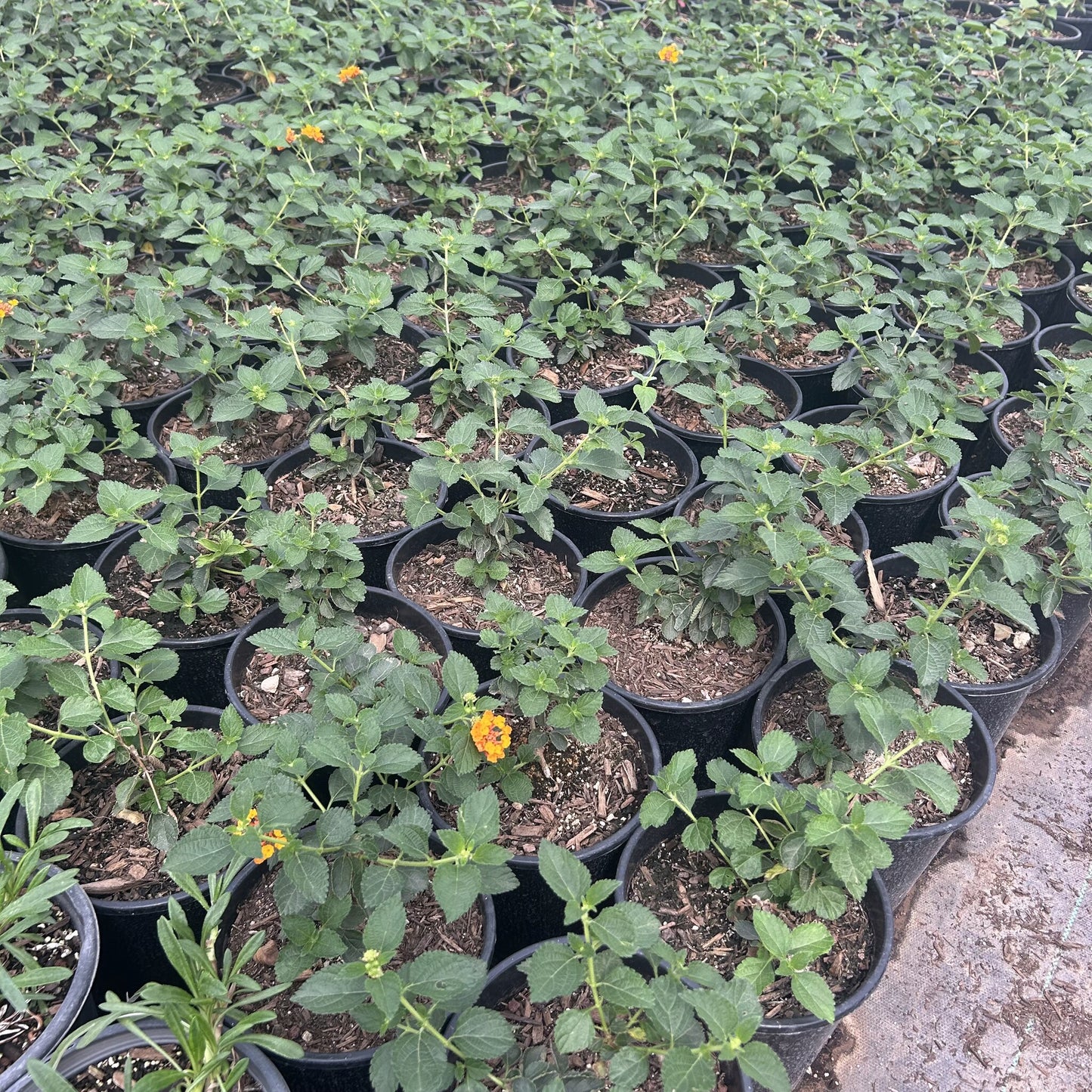
- Spacing — 2.5–3 feet apart for mass plantings; 3 feet for borders; 4 feet for standalone accent plants.
- Water basin — mound a 3–4 inch soil ring around the plant to direct water to the root zone.
- Mulch — apply 2–3 inches of bark or gravel mulch to reduce evaporation and moderate soil temperature.
Watering Radiation Lantana in Phoenix
First Year Watering Schedule
- Weeks 1–2: Every 1–2 days, deep and slow (20–30 minutes)
- Months 1–2: Every 3–4 days
- Months 3–6: Every 7–10 days (every 5–7 days during peak summer)
- After Year 1: Every 10–14 days in summer; every 3–4 weeks in winter
Drip Irrigation
Use a 1–2 GPH emitter placed 18–24 inches from the plant center. Water deeply and infrequently to encourage deep root development. Once established, Radiation Lantana is one of the most drought-tolerant flowering plants for Phoenix landscapes — cutting back to once every 2 weeks in summer is typically sufficient.
How fast does Radiation Lantana grow in Phoenix?
Expect 1–2 feet of growth per year under Phoenix conditions. It grows fastest in spring and fall and may slow during peak summer heat, but will resume vigorous growth when temperatures moderate.
Is Radiation Lantana drought-tolerant once established?
Yes — one of the best. After its first growing season, Radiation Lantana is highly drought-tolerant and will thrive with deep, infrequent watering every 10–14 days in summer. It's among the most water-efficient flowering shrubs available for Phoenix landscapes.
What's the difference between Radiation and other Lantana varieties?
Radiation Lantana features distinctive orange-red and yellow multi-toned blooms — one of the most vivid color combinations in the Lantana family. It's more compact than some Lantana species and keeps a tighter mounding habit, making it easier to use as a border or edging plant compared to trailing or sprawling varieties.
Does it attract butterflies?
Yes — Radiation Lantana is one of the top butterfly-attracting plants for the Phoenix Valley. The dense flower clusters are rich in nectar and draw monarchs, swallowtails, painted ladies, and many other species throughout the blooming season.
Will it survive Phoenix summers?
Absolutely. Radiation Lantana was made for desert heat. Full sun, reflected heat, and Phoenix's 110°F summers don't faze it. It actually blooms more intensely under heat stress, making it one of the most reliable summer-color plants for Scottsdale and Phoenix landscapes.
You May Also Like
Dallas Red Lantana — deep red blooms on a similarly spreading habit, great for bold color contrast in xeriscape and full-sun beds.
New Gold Lantana — bright solid yellow blooms on a spreading groundcover form, pairs beautifully with Radiation for a vibrant orange-and-gold color combo.
Purple Trailing Lantana — cool purple blooms that complement Radiation's warm tones perfectly in mixed groundcover plantings.
White Trailing Lantana — bright white blooms on a low-spreading form that creates a crisp contrast with Radiation's warm orange-red color.
How Many Radiation Lantana Do I Need?
Radiation Lantana mounds 2 to 4 feet tall and wide. For a solid mass of color or slope coverage, plant on 3-foot centers; tighten to 2.5 feet for a faster fill. At 3-foot spacing one plant covers roughly 8 square feet once filled in.
| Area to Cover | Plants Needed (3 ft spacing) |
|---|---|
| 50 sq ft | about 6 plants |
| 100 sq ft | about 12 plants |
| 200 sq ft | about 24 plants |
As a color hedge along a driveway or path, space plants 3 feet apart in a single row: about 4 plants per 10 linear feet.
Radiation Lantana Season-by-Season in Phoenix
- Spring (Feb to Apr): A late-winter cutback triggers a flush of new growth and the first orange-red blooms. Strong spring planting window.
- Summer (May to Sep): Peak season, and it actually blooms harder under heat stress. Shrugs off 110-degree days and reflected heat off walls and pavement, and the monsoon (Jul to Sep) fuels even more bloom. Among the toughest summer-color plants for the Valley.
- Fall (Oct to Nov): Prime planting season and heavy continued color as nights cool.
- Winter (Dec to Jan): Often keeps a little color in mild Valley winters, but Lantana camara is frost-tender: tops can freeze back below about 28°F. It re-sprouts from the crown in spring. Cut frost-damaged stems back hard in late February.
At a Glance
✔ Pollinator-Friendly ✔ Heat-Loving (Reflected-Heat Tolerant) ✔ Drought-Tolerant ✔ Low-Maintenance ✔ Deer & Rabbit-Resistant ✔ Cold-Hardy to 20°F (recovers from roots)
Plant It With
- Dallas Red Lantana: deep red blooms for bold contrast in the same full-sun bed.
- New Gold Lantana: solid gold flowers for a vivid orange-and-gold combination.
- Purple Trailing Lantana: cool purple tones that play off the warm orange-red.
- Desert Marigold: airy yellow daisies to weave a pollinator corridor through the planting.
Is Radiation Lantana Right for Your Yard?
This is a top pick for hot, sunny, low-water beds, slopes, and color hedges in full sun and reflected heat on well-draining soil. It is not a fit for shade or for cold low spots that trap frost, and lantana foliage and unripe berries are toxic if eaten, so keep it away from areas where pets or small children graze.
Share