

Purple Three Awn
Purple Three Awn
Couldn't load pickup availability
Arizona's Native Purple Grass for Desert Gardens — Purple Three Awn
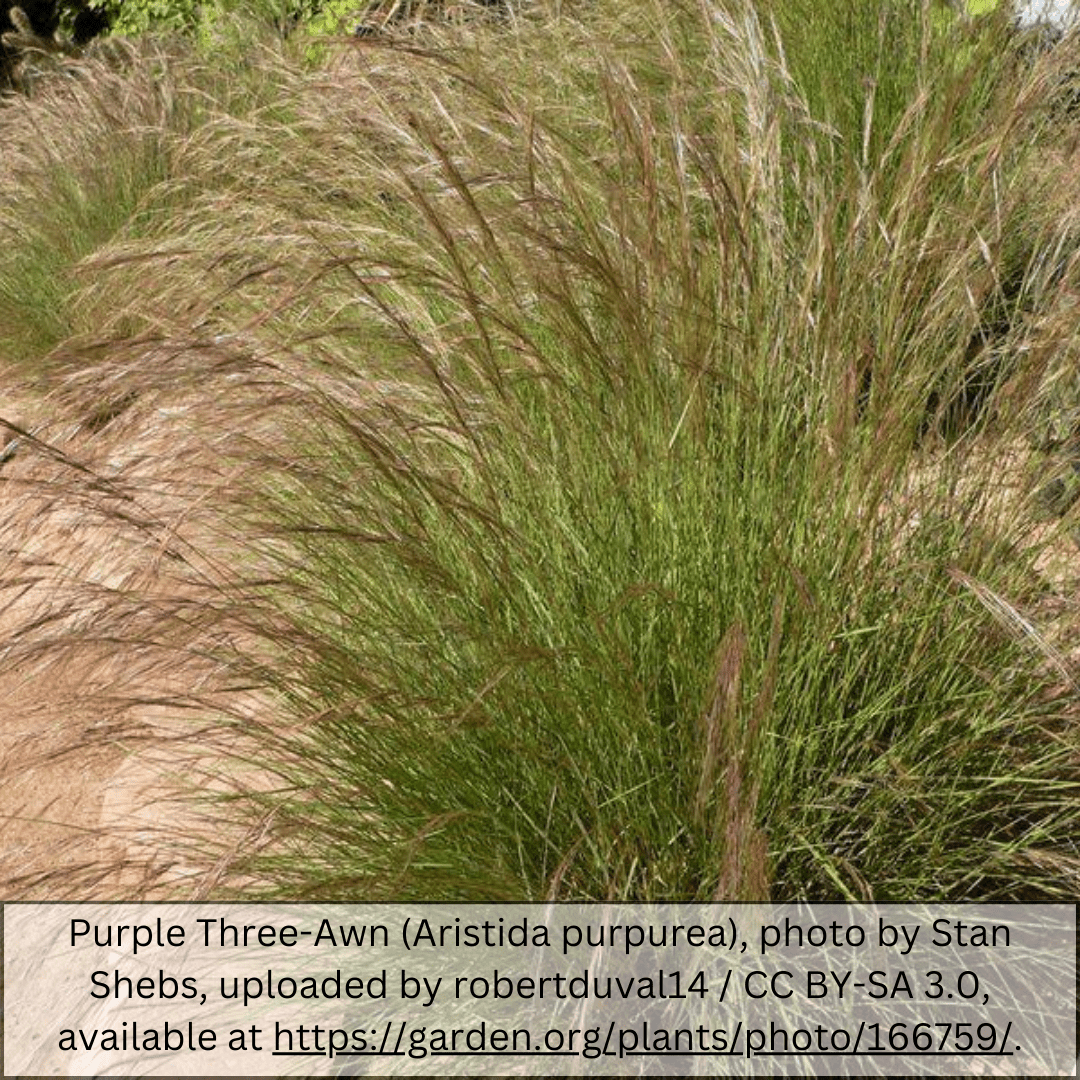
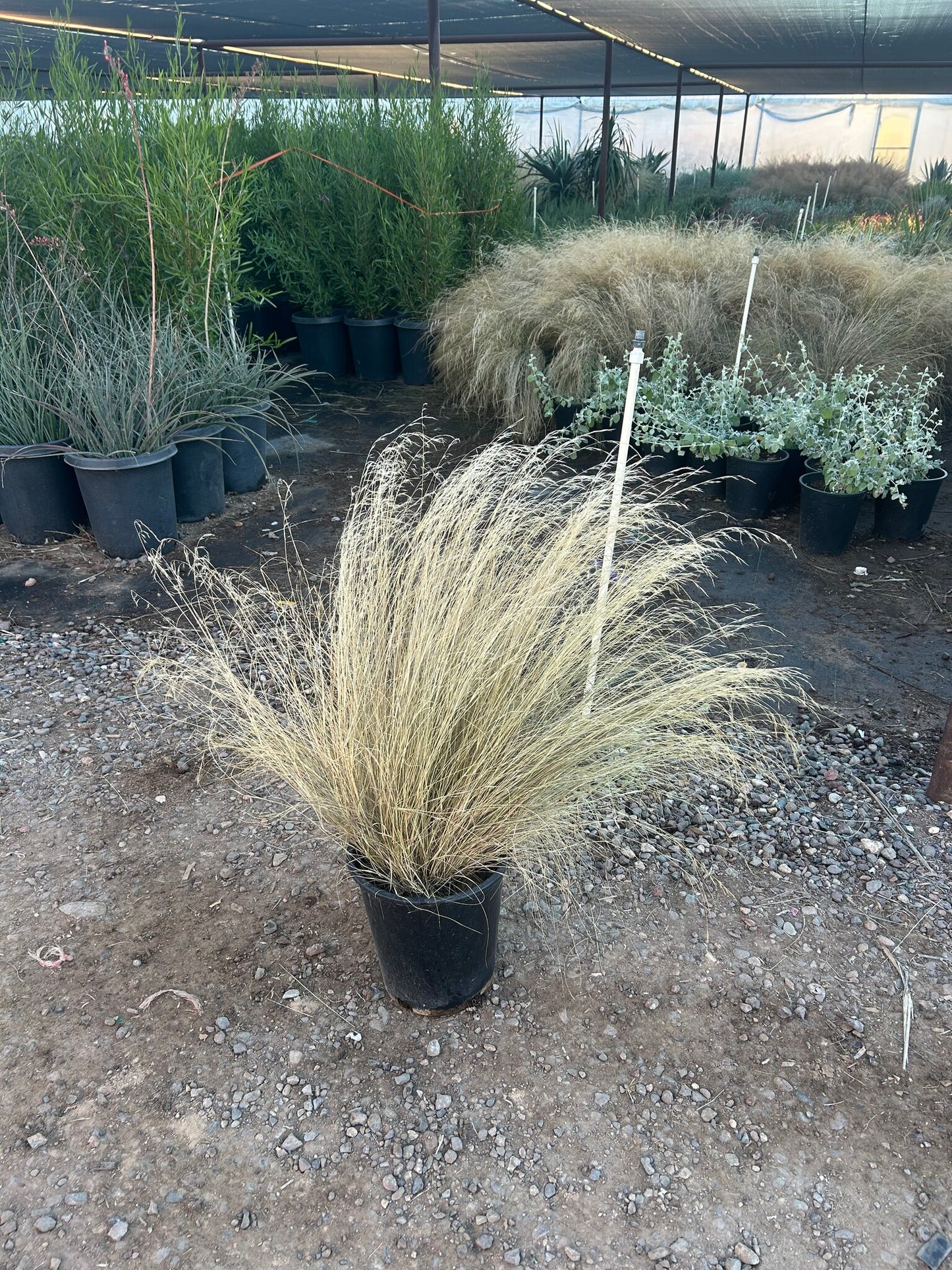
Purple Three Awn (Aristida purpurea) is one of the most beautiful and ecologically authentic native grasses for Phoenix Valley landscapes — a fine-textured, airy perennial grass that shimmers with purple to reddish-brown seed awns in the breeze, creating a stunning naturalistic display from spring through fall. Growing 1–3 feet tall and 1–2 feet wide, it forms elegant tufts with bright blue-green foliage that complements boulders, decomposed granite, and native desert plantings. Whether you're creating an authentic Sonoran Desert garden in Scottsdale, adding native grass texture to a xeriscape in Chandler, or designing a naturalistic planting in Mesa, Gilbert, or Tempe — Purple Three Awn brings irreplaceable native character with virtually zero water.
Purple Three Awn Plant Details
| Attribute | Detail |
|---|---|
| Scientific Name | Aristida purpurea |
| Common Names | Purple Three Awn, Purple Threeawn, Red Three Awn |
| Mature Height | 1–3 feet |
| Mature Width | 1–2 feet |
| Growth Rate | Moderate — established quickly in warm desert soils |
| Sun | Full sun (6+ hrs). Thrives in full reflected desert heat. |
| Water | Very low once established. Survives on natural Phoenix rainfall. |
| USDA Zones | 5–10 (Phoenix is Zone 9b–10a) |
| Soil | Well-draining, rocky, or sandy desert soil. Adapts to Arizona caliche. |
| Foliage | Semi-evergreen; blue-green narrow blades with purple to reddish-brown awns |
| Flower/Seed Color | Purple to reddish-brown seed heads with 3 distinctive spreading awns |
| Native Status | Native to Sonoran Desert and arid regions of North America |
| Wildlife Value | Provides seed for birds; habitat for native insects and small mammals |
Purple Three Awn Uses in Phoenix Landscapes
Native Desert Garden Texture
Purple Three Awn is the definitive fine-textured native grass for Sonoran Desert garden designs. Its airy, shimmering seed heads create a dramatic motion effect in even the lightest breeze, adding life and movement to otherwise static landscape compositions. Plant in drifts of 5–7 plants for a sweeping naturalistic grass meadow effect. Space 2 feet apart — a 20-foot drift needs about 10 plants. Pairs beautifully with Desert Marigold, Bursage, and Brittlebush for an authentic Sonoran Desert plant community.
Rock Garden and Boulder Planting
Purple Three Awn's fine, tufted form creates a spectacular contrast when planted alongside large boulders or in rock garden settings. Its blue-green foliage and purple awns complement the warm tones of Arizona granite and sandstone. Plant in pockets between boulders for a naturalistic effect that mimics how this grass grows in the wild Sonoran Desert landscape across Scottsdale, Fountain Hills, and Cave Creek.
Erosion Control on Desert Slopes
Native to rocky hillsides and desert slopes, Purple Three Awn is an excellent choice for erosion control on difficult sites. Its fibrous root system stabilizes sandy and rocky desert soils while its low profile reduces wind resistance. Plant at 2-foot intervals on south- and west-facing slopes for maximum soil coverage — a 40-foot slope needs about 20 plants for solid erosion protection.
Transition Zone and Median Planting
Purple Three Awn is a perfect choice for HOA-approved naturalistic median plantings and transition zones between manicured and naturalistic areas. Its drought tolerance and minimal maintenance make it ideal for Peoria, Surprise, and Goodyear community landscape installations where water conservation is required and maintenance access is limited.
Best Time to Plant Purple Three Awn in Phoenix
Fall (September–November) is ideal — warm soil with cooling air temperatures allows roots to establish before winter. Spring (February–April) is also good — the plant establishes quickly in warming desert soils and begins producing seed heads by early summer. Avoid mid-summer planting if possible, though established Purple Three Awn is extraordinarily heat-tolerant and actually thrives in the intense Phoenix summer heat that challenges most other plants.
How to Plant Purple Three Awn
- Dig wide, not deep — excavate a hole 2 times the root ball width and the same depth as the container.
- Check for caliche — break through any hard caliche layer with a breaker bar to ensure drainage; Purple Three Awn is highly sensitive to waterlogged soil.
- Backfill with native soil — do not amend; native desert soils are ideal and over-enrichment reduces drought tolerance.
- Spacing — 2 feet apart for naturalistic drifts; 2.5 feet for more open, specimen-style plantings.
- Build a water basin — form a small 2–3 inch berm during establishment only; remove after year one.
- Mulch — 1–2 inches of decomposed granite or gravel mulch mimics natural desert conditions and supports establishment.
Watering Purple Three Awn in Phoenix
First Year Watering Schedule
Weeks 1–2: Water every 2–3 days (15–20 minutes, deep and slow). Month 1–2: Every 5–7 days. Month 3–6: Every 10–14 days. After Year 1: Purple Three Awn can survive entirely on natural Phoenix rainfall in most years. No supplemental irrigation is needed for established plants — this is one of the most drought-tolerant plants available for Phoenix landscaping.
Drip Irrigation
Place a 0.5 GPH emitter 12 inches from the base during the establishment year. Run for 20–30 minutes per session. After establishment, Purple Three Awn can be removed from drip irrigation entirely and left to naturalize on rainfall — which is exactly how it grows in nature.
How do I care for Purple Three Awn in Phoenix? Minimal care is needed. Cut back old seed heads and dead foliage in late winter (January–February) before new growth emerges. This keeps the plant looking fresh and promotes vigorous new growth and seed head production in spring. No fertilizer is needed or recommended.
Is Purple Three Awn invasive? Purple Three Awn is native to North America and is not considered invasive in Arizona. However, its seed awns (the three bristles) can attach to pet fur and clothing. This natural seed dispersal mechanism is part of its ecological function — it helps native grass populations spread naturally in desert landscapes.
Does Purple Three Awn work for erosion control? Yes — it's one of the best native grass options for erosion control on rocky desert slopes and sandy desert soils in the Phoenix Valley. Its deep, fibrous roots effectively anchor loose desert soils on slopes and embankments.
You May Also Like
Common Deer Grass — A larger native bunchgrass that creates dramatic clumping texture and pairs beautifully with Purple Three Awn in naturalistic plantings.
Nashville Grass — Another fine-textured native grass that complements Purple Three Awn in low-water native grass meadow designs.
Bursage — A native desert shrub that forms the classic understory plant community with Purple Three Awn in authentic Sonoran Desert gardens.
Blue Nolina — A bold blue-gray accent that provides dramatic structural contrast to Purple Three Awn's fine, airy texture.
Bull Grass — A robust native bunch grass that pairs with Purple Three Awn for a complete, multi-height native grass planting.
How Many Purple Three Awn Do I Need?
Purple Three Awn is a fine, clumping native grass best used in drifts and naturalistic masses rather than clipped rows. At a mature width of 1 to 2 feet, plant on 2-foot centers for a knit-together meadow look or 2.5-foot centers for a more open, specimen feel.
- Single accent: set one tuft with 2 to 2.5 feet of clear space so its airy seed awns read against gravel or a boulder.
- Naturalistic drift: plant in odd-numbered groups of 3, 5, or 7 at 2 feet apart. A 20-foot drift takes roughly 10 plants.
- Slope or erosion mass: stagger at 2 feet on center across the slope face.
| Area to cover | Plants needed (2 ft spacing) |
|---|---|
| 25 sq ft | about 6 |
| 50 sq ft | about 12 |
| 100 sq ft | about 25 |
| 200 sq ft | about 50 |
Purple Three Awn Season-by-Season in Phoenix
- Spring (Feb to Apr): blue-green blades flush with new growth and the first purple to reddish seed awns rise. A strong second planting window as soil warms.
- Summer (May to Sep): thrives in full reflected heat that stalls other plants. Monsoon rains (Jul to Sep) trigger a fresh flush of awns and a shimmering second show.
- Fall (Oct to Nov): prime planting season and peak awn color, glowing copper and purple in low-angle light.
- Winter (Dec to Jan): semi-evergreen and genuinely cold-hardy well below freezing (USDA zone 5), so Valley frosts do no harm. Cut back old foliage in late winter before new spring growth.
At a Glance
✔ Arizona Native ✔ Heat-Loving (Reflected-Heat Tolerant) ✔ Drought-Tolerant ✔ Low-Maintenance ✔ Cold-Hardy to 0°F
Plant It With
- Deer Grass: a larger native bunchgrass that adds height and mass behind the fine three-awn drifts.
- Nashville Grass: another fine native muhly for a layered low-water grass meadow.
- Blue Nolina: a bold blue-gray rosette that contrasts the grass's airy texture.
- Bull Grass: a robust native bunchgrass for a complete multi-height native planting.
Is Purple Three Awn Right for Your Yard?
Purple Three Awn is right for you if you want an authentic native grass for full sun and reflected heat, sharp-draining or rocky caliche soil, and a naturalistic, low-water look with year-round cold hardiness. It is not a fit if you want a tidy, clipped, formal grass or plant near pools and patios, since the barbed seed awns shed freely and can cling to pet fur and clothing.
Share