

Purple Leaf Plum
Purple Leaf Plum
Couldn't load pickup availability
Phoenix's Most Striking Purple Ornamental Tree — Purple Leaf Plum
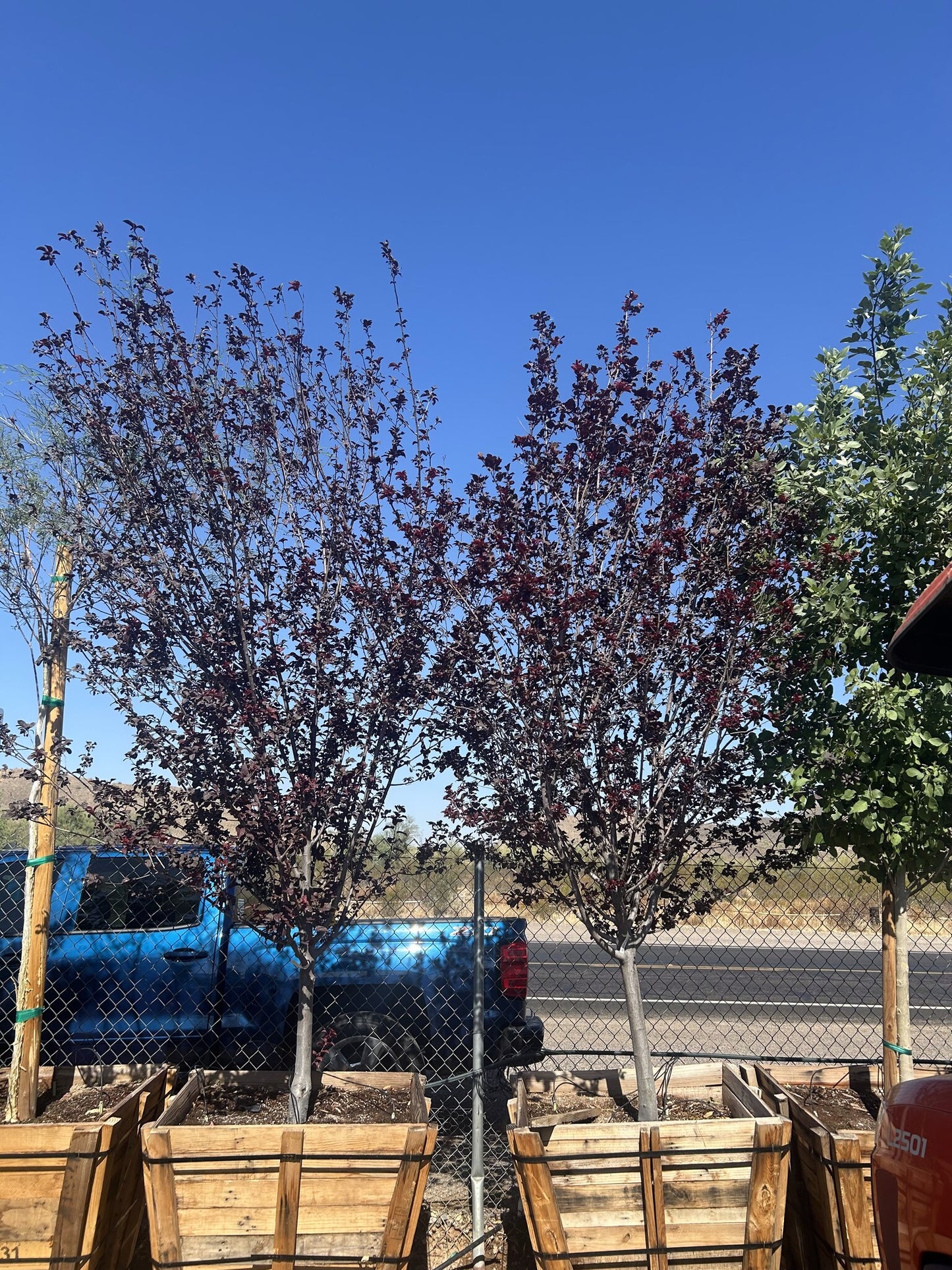
Purple Leaf Plum (Prunus cerasifera 'Atropurpurea') is the premier ornamental accent tree for Phoenix Valley landscapes. This stunning deciduous tree delivers a year-round show: delicate pink-white flowers blanket the branches in late winter, followed by rich burgundy-purple foliage that holds its color through fall — making it the most dramatic color-contrast tree available for Arizona yards. It grows steadily to 15–25 feet tall with a full, rounded canopy. Whether you're designing a bold front yard in Scottsdale, adding deep color contrast in Gilbert or Chandler, or creating a striking entry statement in Mesa or Tempe — Purple Leaf Plum makes every season memorable.
Purple Leaf Plum Plant Details
| Attribute | Detail |
|---|---|
| Scientific Name | Prunus cerasifera 'Atropurpurea' |
| Common Names | Purple Leaf Plum, Cherry Plum, Myrobalan Plum |
| Mature Height | 15–25 feet |
| Mature Width | 15–25 feet |
| Growth Rate | Moderate — 1–2 feet per year in Phoenix |
| Sun | Full sun (6+ hrs). Best purple foliage color in full Phoenix sun. |
| Water | Moderate — regular deep watering for best color and health. |
| USDA Zones | 5–9 (Phoenix is Zone 9b–10a — thrives with proper watering) |
| Soil | Well-draining. Adapts to Arizona caliche soils with good drainage. |
| Foliage | Deciduous — burgundy-purple leaves spring through fall; bare in winter |
| Bloom Season | Late January through March (early spring bloomer) |
| Bloom Color | Pale pink to white |
| Foliage Color | Deep burgundy-purple — holds color through full season |
| Pet Friendly | Yes — non-toxic foliage and flowers |
Purple Leaf Plum Uses in Phoenix Landscapes
Bold Color Focal Point and Front Yard Statement Tree
Nothing in Arizona landscaping makes a bolder color statement than a mature Purple Leaf Plum in full foliage. The deep burgundy-purple leaves provide a stunning contrast against beige stucco walls, desert-tan masonry, and the bright blue Phoenix sky. Used as a front yard specimen tree in Scottsdale or Paradise Valley, it creates immediate curb appeal and visual drama that no other tree can match. Plant it as a standalone focal point surrounded by decomposed granite and low-growing desert plants for a dramatic desert-modern look.
Early Spring Flowering Tree
Purple Leaf Plum blooms earlier than almost any other flowering tree in Phoenix — often as early as late January — making it a critical source of color after the long winter-gray months. The delicate pink-white blossoms appear before the leaves unfurl, creating a cloud of spring color when the rest of the landscape is still dormant. Pair it with Texas Mountain Laurel (which blooms in February-March with purple flowers) for a spectacular late-winter to early-spring color sequence in Chandler, Gilbert, or Mesa.
Privacy Screen and Property Line Tree
With its dense, rounded canopy and full growth to 25 feet, Purple Leaf Plum makes an excellent natural screen along property lines and rear fence lines. Plant 15–20 feet apart for a row of specimen trees that provides both privacy and year-round ornamental interest through the changing foliage seasons. Three trees planted 15 feet apart will screen a 45-foot property line within three to four seasons in the Phoenix Valley.
Planting density: 45 ft fence line — 3 trees / 60 ft fence line — 4 trees
Desert-Modern Contrast Planting
The Purple Leaf Plum's rich burgundy foliage creates extraordinary contrast when planted alongside silver-grey desert plants. Pair it with Desert Spoon (Dasylirion wheeleri), blue-grey Agave parryi, or white-flowering Ruellia for a sophisticated color-contrast palette that's become one of the most popular design directions in Scottsdale and Peoria high-end landscaping. The purple and silver combination has broad visual appeal and is both drought-tolerant and low-maintenance once established.
Best Time to Plant Purple Leaf Plum in Phoenix
Fall planting (October–November) is ideal. The mild temperatures and warm soil allow the root system to establish over winter while minimizing water demand. A fall-planted Purple Leaf Plum gets 4–5 months of root development before its first Phoenix summer — setting it up for better heat tolerance. Spring planting (February–March) is the second window — it allows you to see the spring bloom display immediately after planting, which is a great motivator. Avoid summer planting from June through September, as the combination of heat stress and transplant shock can be severe for this tree.
How to Plant Purple Leaf Plum
- Dig wide, not deep — Dig the hole 2–3x the width of the root ball, but no deeper than the root ball itself to prevent settling and crown rot.
- Check for caliche — Break through any hardpan caliche layer to ensure good drainage. Purple Leaf Plum does not tolerate standing water at its roots.
- Backfill with native soil — Mix in 20–30% organic compost to help with water retention during establishment. This tree benefits from richer soil than pure desert natives.
- Spacing — Plant 15–20 feet apart for a privacy row; 25 feet apart as individual specimen trees to allow full canopy development.
- Build a water basin — Form a 3–4 inch earthen ring 18–24 inches from the trunk to hold water and direct it to the root zone.
- Mulch generously — Apply 3–4 inches of bark mulch around the base to retain moisture and regulate root temperature. This is especially important in Phoenix's summer heat.
Watering Purple Leaf Plum in Phoenix
First Year Watering Schedule
Weeks 1–2: Water every 1–2 days, deep and slow (20–30 minutes). This tree needs consistent moisture during establishment. Month 1–2: Every 3–4 days. Month 3–6: Every 5–7 days. After Year 1: Every 7–10 days in summer; every 14–21 days in winter. Purple Leaf Plum needs more supplemental water than pure desert natives — consistent deep watering is key to maintaining vibrant foliage color and tree health through Phoenix summers.
Drip Irrigation
Place drip emitters 18–24 inches from the trunk, not at the base. Use 2–4 GPH emitters running 1.5–2 hours per session for deep water penetration. In peak summer (June–September), increase frequency to every 5–7 days. A well-watered Purple Leaf Plum will maintain its deep burgundy-purple leaf color through the entire growing season — drought-stressed trees will often fade to green.
How fast does Purple Leaf Plum grow in Phoenix?
Purple Leaf Plum grows at a moderate rate of 1–2 feet per year in Phoenix with adequate water. A 15-gallon tree planted in fall can reach 10–12 feet within 4–5 seasons. It's not the fastest-growing tree, but the deep purple foliage it provides is worth every inch of growth. Regular deep watering during the growing season is the key to maintaining both growth rate and foliage color.
Why does my Purple Leaf Plum lose its purple color?
Purple Leaf Plum turns green when it's water-stressed or in too much shade. In Phoenix, this usually means the tree needs more frequent deep watering — especially June through September. Make sure the drip emitters are placing water far enough from the trunk to reach the full root zone. Trees in full sun with consistent deep watering will hold their darkest burgundy-purple color all season.
Does Purple Leaf Plum produce edible fruit?
Yes — Purple Leaf Plum does produce small plum fruits in summer. The fruit is edible but small and tart, not like commercial plum varieties. Most Phoenix homeowners grow this tree strictly for ornamental value, but the fruit can be used for jams and preserves. Be prepared to rake fallen fruit in summer if it becomes a nuisance.
Does Purple Leaf Plum work in Phoenix's extreme summer heat?
Yes, with proper irrigation. Purple Leaf Plum handles Phoenix summers well when given deep, consistent watering. It's not as drought-tolerant as true desert natives, but it performs reliably in Phoenix's Zone 9b–10a climate when planted in full sun with regular irrigation. The worst outcome of inadequate summer water is foliage color fade — the tree rarely dies from summer heat alone in Phoenix.
Is Purple Leaf Plum pet friendly?
Yes. Purple Leaf Plum foliage and flowers are considered non-toxic and pet-safe for dogs and cats, making it an excellent choice for pet-friendly Phoenix backyards. The tree is listed in the pet-friendly category and is a popular option for homes with animals who access the yard regularly.
You May Also Like
Texas Mountain Laurel — An evergreen flowering tree with fragrant purple blooms in late winter that pairs beautifully with Purple Leaf Plum for a spring color duo.
Cascalote Tree — A bold desert-native flowering tree with yellow winter blooms that creates stunning color contrast alongside the purple-foliage Plum.
Desert Willow — A fast-growing Arizona flowering tree with orchid-like pink blooms that complement Purple Leaf Plum's color palette through summer.
Hong Kong Orchid Tree — A dramatic tropical-looking flowering tree with purple-pink blooms that harmonizes with Purple Leaf Plum's deep burgundy foliage tones.
Chaste Tree — A drought-tolerant summer flowering tree with lavender blooms that extends the purple color theme through the hot summer months.
How Many Purple Leaf Plum Do I Need?
With a rounded canopy that matures to 15 to 25 feet wide, this tree is usually placed as a focal point or a spaced specimen row rather than a tight hedge.
| Planting goal | Spacing | Guidance |
|---|---|---|
| Single focal point | n/a | One tree against a light wall makes the burgundy foliage and pink spring bloom the centerpiece of the yard. |
| Specimen screen row | 15 to 18 ft apart | A 45 ft property line takes about 3 trees; a 60 ft line about 4. |
| Full-canopy specimens | 25 ft apart | Widest spacing lets each rounded crown develop completely with no crowding. |
Purple Leaf Plum Season-by-Season in Phoenix
- Spring (Feb to Apr): Opens the year with pale pink-white blossoms on bare branches as early as late January, then leafs out in deep burgundy. A strong secondary planting window so you can enjoy the bloom right away.
- Summer (May to Sep): Holds rich purple foliage through the heat, but only with regular deep water. This tree is not a low-water desert native: skimp on irrigation and the leaves fade toward green. Small tart plums ripen and may drop. Afternoon relief in the harshest reflected-heat spots helps.
- Fall (Oct to Nov): Prime planting season. Foliage stays colored later than most deciduous trees before dropping. Cooling weather eases the watering load.
- Winter (Dec to Jan): Fully deciduous and bare. Very cold-hardy (rated to Zone 5), so Phoenix frost is never a concern. The bare structure sets the stage for the late-winter bloom.
At a Glance
✔ Pollinator-Friendly ✔ Shade-Providing ✔ Edible ✔ Cold-Hardy to -10°F
Plant It With
- Texas Mountain Laurel: an evergreen with fragrant purple late-winter bloom for a spring color duo.
- Desert Willow: a summer-flowering desert tree that carries pink color while the plum holds foliage.
- Desert Spoon: a silver-grey architectural rosette for the classic purple-and-silver contrast.
- Hong Kong Orchid Tree: a purple-pink bloomer that harmonizes with the plum's burgundy tones.
Is Purple Leaf Plum Right for Your Yard?
It thrives in full sun, in well-draining soil opened through any caliche, on a zone watered more generously than a desert-native bed. It is the right tree if you want bold burgundy foliage and early spring flowers, and you can commit to regular deep summer watering to keep the color from fading. It is not a fit for a no-irrigation, water-thrifty desert zone, or right at the pool edge, where spring petals and summer fruit drop create steady cleanup.
Customer Reviews
Customer Reviews
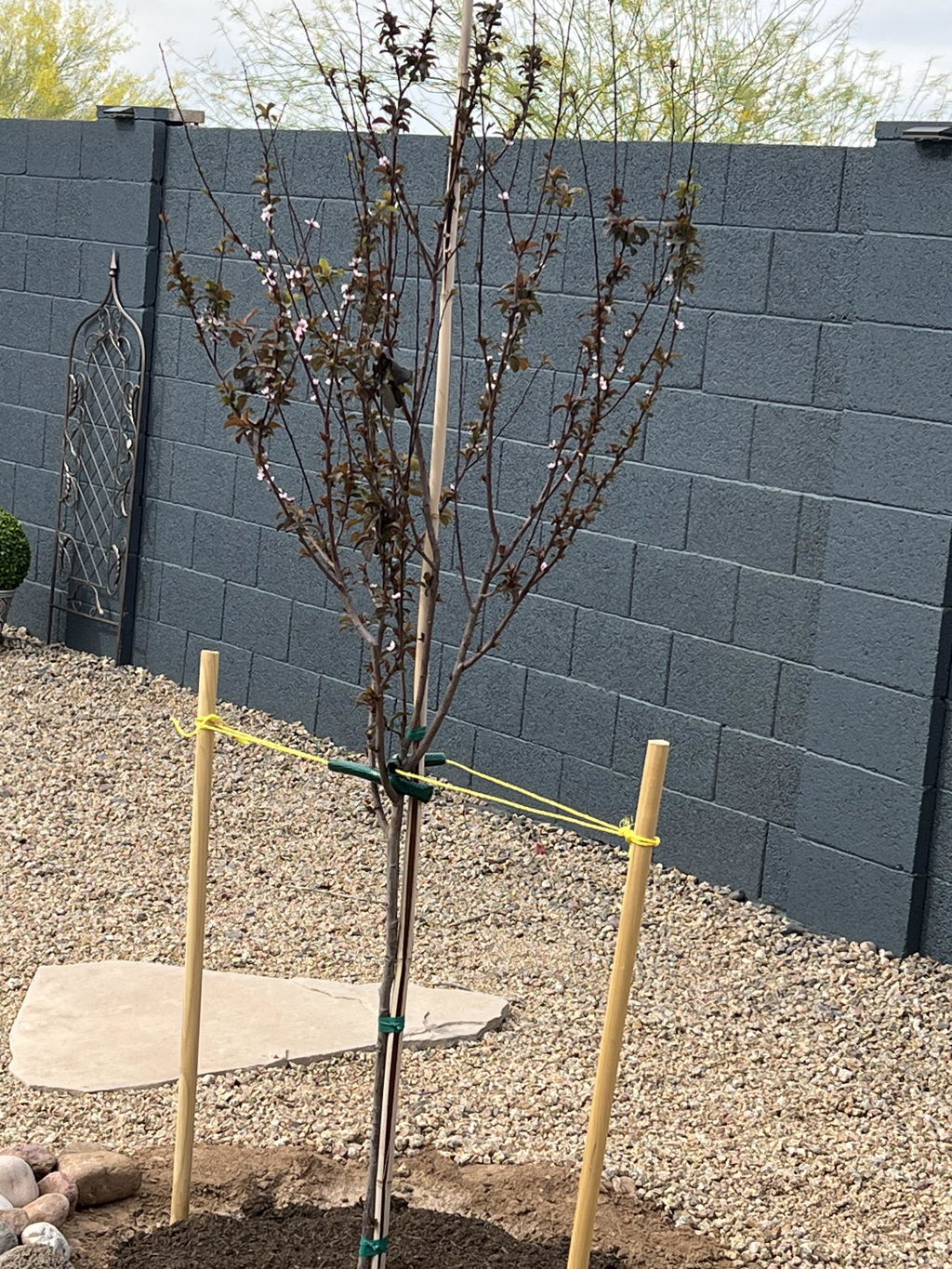
The tree was smaller than I expected and after it professionally planted I’m not sure it’s going to survive
Great quality plant arrived at my door the next day stunningly beautiful for an amazing price still can’t believe how beautiful and healthy the tree is.