

Purple Ice Plant sizes, side by side
Typical height of the plants we have in stock now, measured from the soil to the top. Every plant is a little different.
| Size | At delivery | Price |
|---|
Purple Ice Plant
Purple Ice Plant
Couldn't load pickup availability
Phoenix's Favorite Low-Water Groundcover — Purple Ice Plant
Purple Ice Plant (a Drosanthemum ice plant, grown by Cox Cactus Farm as Drosanthemum rosea) is one of the most eye-catching drought-tolerant groundcovers you can plant in the Phoenix Valley. Its succulent, mat-forming habit smothers weeds, controls erosion, and rewards you with a carpet of vivid pink-purple blooms that draw pollinators in late winter and spring. Unlike most flowering groundcovers, this plant truly thrives on neglect: low water, minimal fertilizer, and lean soil. Whether you're covering a bare slope in Scottsdale, adding low-maintenance color along a Chandler driveway, or filling gaps in a Mesa desert garden bed, Purple Ice Plant delivers a big spring show with almost zero effort.
Purple Ice Plant Plant Details
| Attribute | Detail |
|---|---|
| Scientific Name | Drosanthemum sp. (sold by Cox Cactus Farm as Drosanthemum rosea) |
| Common Names | Purple Ice Plant, Rosea Ice Plant, Dewflower |
| Mature Height | 4–12 inches |
| Mature Width | 24–36 inches (spreads as a mat) |
| Growth Rate | Moderate; grows mostly in the cool season |
| Sun | Full sun to light afternoon shade. Avoid hot reflected-heat spots in summer. |
| Water | Low once established, with an occasional deep summer watering. Drought-tolerant succulent. |
| USDA Zones | 9–11 (Phoenix is Zone 9b–10a) |
| Soil | Well-draining. Tolerates Arizona caliche soils with proper drainage. |
| Foliage | Evergreen: small, cylindrical succulent leaves covered in glistening dew-like cells |
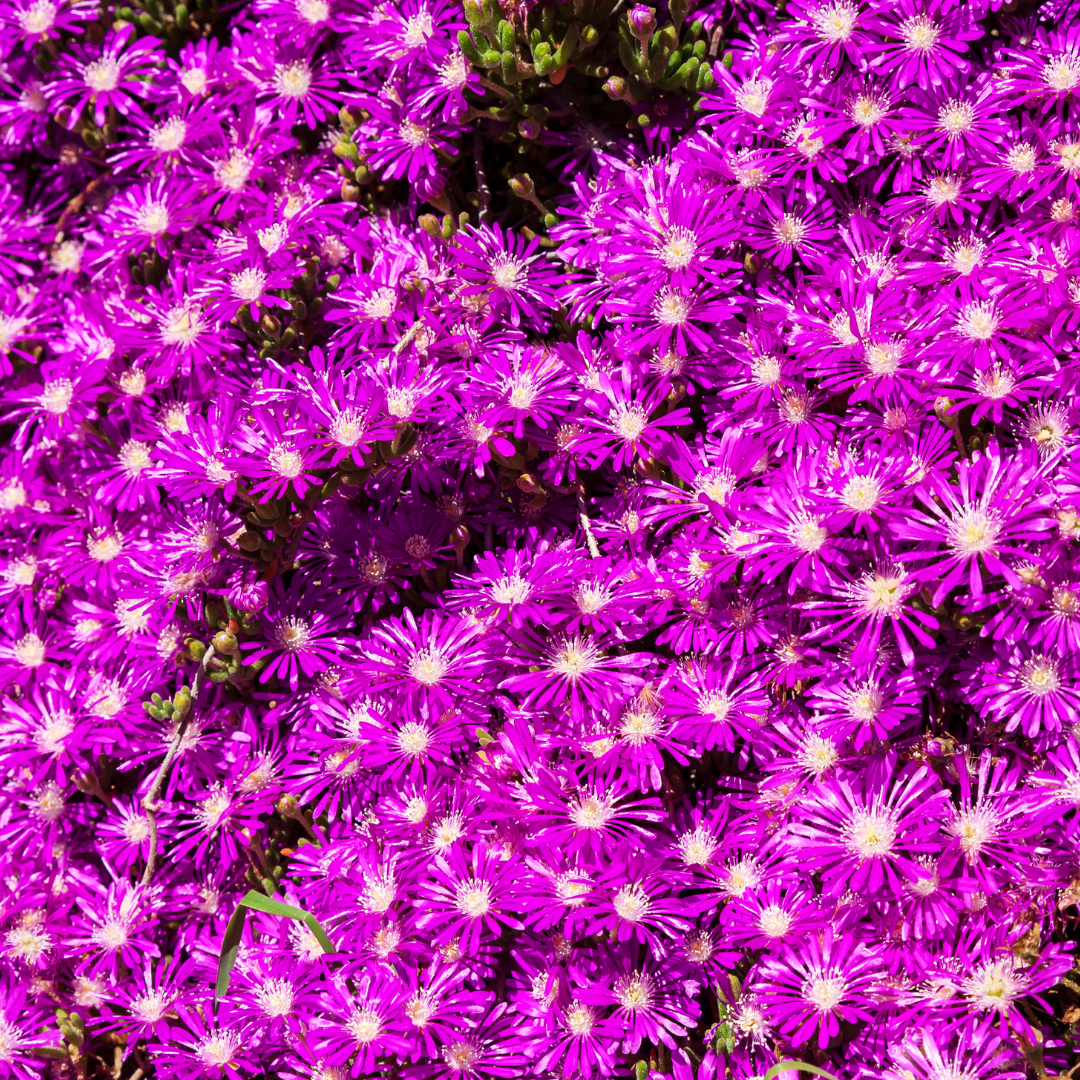
| Bloom Color | Pink to purple daisy-like flowers, in masses from late winter through spring |
Purple Ice Plant Uses in Phoenix Landscapes
Low-Water Slope and Erosion Control
Purple Ice Plant's creeping, mat-forming growth makes it ideal for stabilizing slopes and hillsides in Phoenix neighborhoods. Its dense root system binds soil against monsoon washouts while suppressing weeds. Plant 12–18 inches apart across a slope for full coverage within one to two growing seasons — a much cheaper and more attractive alternative to gravel or bark mulch.
Rock Garden and Desert Landscape Filler
The succulent foliage and vivid purple blooms contrast beautifully with desert boulders and gravel in modern Phoenix landscaping. Use it to fill gaps between boulders, along dry streambeds, or as a low-maintenance accent among agaves and cacti. It pairs especially well with Yellow Bells, Desert Marigold, and Agave for a stunning, low-water composition with bright spring color.
Pollinator Garden Groundcover
In late winter and spring, Purple Ice Plant's daisy-like blooms are a magnet for bees and butterflies, making it an excellent choice for Phoenix pollinator gardens. Plant in drifts of 5–10 plants for the most impact. Its bloom period complements other Three Timbers pollinator plants like Texas Sage and Ruellia, extending the season of color in your yard.
Pool-Friendly Edging and Border Plant
Purple Ice Plant's low, spreading habit makes it perfect for pool-area borders in Gilbert, Peoria, and Tempe. It creates a soft, lush edge without dropping leaves or large debris into the water. Its bright flowers add color poolside in spring.
Best Time to Plant Purple Ice Plant in Phoenix
Fall (October–November) is the best planting window. The soil stays warm enough for root development while cooler air reduces transplant stress — and the plant gets 6–8 months of root establishment before facing its first Phoenix summer. Spring (February–April) is a solid second-best option. Avoid planting in peak summer heat (June–August) if you can help it, as new transplants need extra irrigation support during the monsoon gap.
How to Plant Purple Ice Plant
- Dig wide, not deep — 2x the width of the root ball at the same depth. Purple Ice Plant has shallow roots and doesn't like sitting in a deep hole.
- Check for caliche — break through any hardpan layer to ensure water drains away from the roots. Soggy soil is this plant's only real enemy.
- Backfill with native soil — a light 20% organic amendment is fine. Avoid heavy compost that retains too much moisture.
- Spacing — 12–18 inches apart for groundcover use; 24 inches for individual accent plants.
- Water basin — build a 2–3 inch ring around the plant to direct water to roots at establishment.
- Mulch — 1–2 inches of gravel mulch (not wood chips) to retain moisture without holding excess water against the crown.
Watering Purple Ice Plant in Phoenix
First Year Watering Schedule
- Weeks 1–2: Every 2–3 days, deep and slow
- Month 1–2: Every 4–5 days
- Month 3–6: Every 7–10 days (5–7 days in peak summer)
- After Year 1: Every 14–21 days in summer; rainfall alone may suffice in winter
Drip Irrigation
Place emitters 12–15 inches from the crown of each plant. A 0.5–1 GPH emitter running 20–30 minutes is ideal for established plants in the growing season. Once Purple Ice Plant is established, it's one of the most water-efficient groundcovers in the Phoenix palette — often surviving on rainwater alone in cooler months.
How fast does Purple Ice Plant grow in Phoenix?
In Phoenix, it spreads 12–18 inches in the first growing season under good conditions. By year two, individual plants typically fill their full 24–36 inch spread. Fall-planted specimens establish quickly and often bloom by the following spring.
Is it truly drought-tolerant once established?
Yes. This Drosanthemum is a succulent that stores water in its fleshy leaves. Once established (6–12 months in Phoenix), it can survive on supplemental water every 2–3 weeks in summer and little to no irrigation in winter. It's one of the best choices for water-wise Phoenix gardens.
Can Purple Ice Plant handle Phoenix summer heat?
It survives the heat with some care, but summer is its rest season, not its bloom season. Drosanthemum grows and flowers mainly in the cool months. In a Phoenix summer, hot afternoon sun and reflected heat can scorch it, and wet, poorly drained soil can rot it. Give it sharp drainage and an occasional deep summer watering, and keep it away from hot south- and west-facing walls.
Does Purple Ice Plant stay green year-round?
Yes, it is evergreen, and winter is actually its main growing season in Phoenix. Temperatures below about 20°F can cause some dieback, but Phoenix rarely sees those extremes. Expect it to look its best from fall through spring and to rest through summer.
How does it do near a pool?
Purple Ice Plant is pool-friendly. It's a low, compact grower that doesn't drop significant debris, and it tolerates the occasional splash. Its bright blooms add color to pool areas in spring.
You May Also Like
Green Carpet Natal Plum — Another low-growing, drought-tolerant groundcover with glossy foliage and fragrant white flowers, ideal for Phoenix borders and slopes.
Texas Sage — Purple-blooming desert shrub that pairs beautifully with Purple Ice Plant for a coordinated color palette in low-water Phoenix gardens.
Ground Morning Glory — Spreading groundcover with gray-green foliage and sky-blue to lavender flowers, great for filling hot, dry areas in Phoenix and Scottsdale landscapes.
New Gold Lantana — Spreading, heat-loving groundcover with yellow blooms that complements Purple Ice Plant's purple flowers and thrives in the same sunny Phoenix conditions.
How Many Purple Ice Plant Do I Need?
Each plant spreads 24 to 36 inches wide. At 15 inch on-center spacing the succulent mat closes in within one to two seasons. Use the table below to estimate plant counts:
| Area to Cover | Plants Needed (15 in o.c.) |
|---|---|
| 25 sq ft | 16 |
| 50 sq ft | 32 |
| 100 sq ft | 64 |
| 200 sq ft | 128 |
For erosion control on a slope, plant in staggered rows; tighten to 12 inch spacing for the fastest cover, or open to 18 inches to stretch a budget over a larger area.
Purple Ice Plant Season-by-Season in Phoenix
- Spring (Feb–Apr): Peak bloom: masses of pink-purple daisy flowers open over the succulent foliage, drawing bees and butterflies. A strong second planting window.
- Summer (May–Sep): Rest season: bloom stops and growth slows in the heat. Give an occasional deep watering and keep it out of hot reflected-heat spots. Monsoon rain (Jul–Sep) is plenty; back the drip way off in wet weeks since soggy soil is its only real enemy.
- Fall (Oct–Nov): Prime planting season as active growth resumes with cooler nights.
- Winter (Dec–Jan): Stays green and grows actively, and bloom can begin in late winter. It handles typical Valley frosts, but temperatures below about 20°F can cause dieback.
At a Glance
✔ Drought-Tolerant ✔ Evergreen ✔ Pool-Friendly (Low-Litter) ✔ Pollinator-Friendly ✔ Low-Maintenance ✔ Cold-Hardy to about 20°F
Plant It With
- Green Carpet Natal Plum: a glossy, fragrant-flowered groundcover to weave alongside for contrasting texture.
- Texas Sage: a purple-blooming shrub backdrop that coordinates with the pink-purple flowers.
- Red Ice Plant: an orange-red Drosanthemum ice plant for a two-tone succulent carpet.
- Rocky Point Ice Plant: a yellow-flowered Malephora ice plant for a multi-color bloom drift in full sun.
Is Purple Ice Plant Right for Your Yard?
Purple Ice Plant is a top choice for full-sun slopes, rock gardens, pollinator drifts, and pool-edge borders with sharp drainage, where its big spring bloom shines on very little water. It is not a fit for deep shade, hot reflected-heat spots, or heavy, poorly drained soil that stays wet, where the shallow succulent crown will rot.
Share