

Pickle Plant
Pickle Plant
Couldn't load pickup availability
A Unique Textured Succulent That Thrives in Phoenix Heat
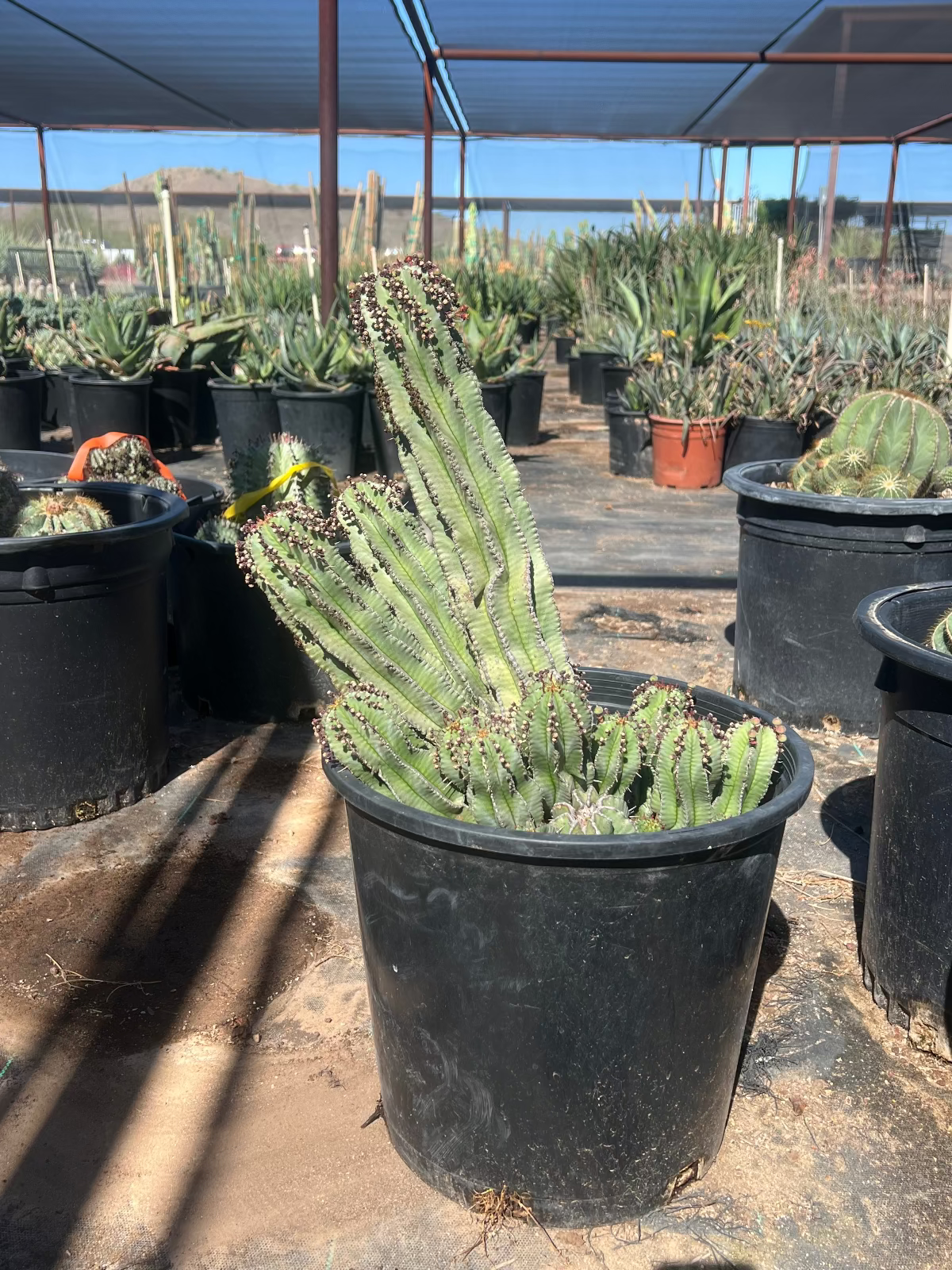
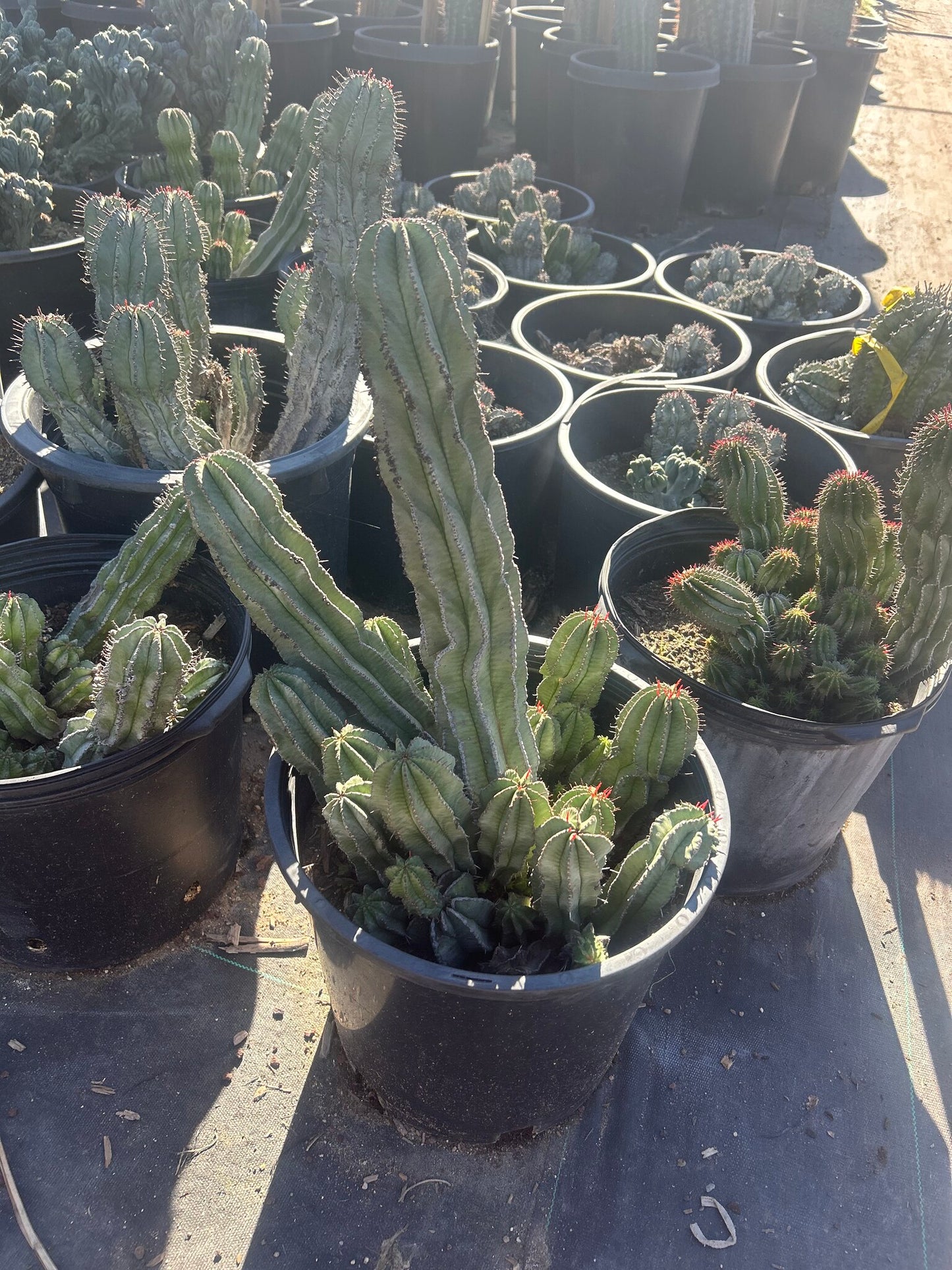
Pickle Plant (Delosperma echinatum) is one of the most distinctive succulents you can add to a Phoenix landscape. Named for its plump, pickle-shaped leaves covered in fine bristly hairs, this South African native forms dense, spreading mounds of fascinating textured foliage. It produces cheerful yellowish-orange flowers and requires almost zero maintenance once established. Whether you're building a succulent garden in Scottsdale, adding texture to a rock bed in Mesa, or filling a container on your Chandler patio — Pickle Plant gets the job done.
Pickle Plant Details
| Attribute | Detail |
|---|---|
| Scientific Name | Delosperma echinatum |
| Common Names | Pickle Plant, Pickle Cactus, Hedgehog Ice Plant |
| Mature Height | 6–12 inches |
| Mature Width | 6–12 inches (spreading) |
| Growth Rate | Moderate — fills out within one growing season in Phoenix |
| Sun | Full sun to partial shade. Handles reflected heat from walls and patios. |
| Water | Very low once established. Highly drought-tolerant. |
| USDA Zones | 7–11 (Phoenix is Zone 9b–10a) |
| Soil | Well-draining. Adapts to Arizona caliche soils with gritty amendment. |
| Foliage | Evergreen — fleshy pickle-shaped leaves with bristly texture year-round |
| Bloom Color | Yellowish to orange, spring through early summer |
Pickle Plant Uses in Phoenix Landscapes
Rock Garden & Succulent Bed Accent
Pickle Plant's unusual texture makes it a standout in rock gardens and succulent displays. Plant among boulders and decorative gravel for a low-maintenance arrangement that draws attention. Pairs beautifully with Agaves, Aloes, and other succulents available at Three Timbers for a layered desert garden.
Container & Patio Planting
This compact succulent thrives in containers and raised planters, making it perfect for patios, entryways, and poolside displays. Use the 3/5 gallon size in decorative pots for instant conversation-starter appeal. The bristly, pickle-like leaves look especially striking in modern concrete or ceramic planters.
Groundcover for Dry Slopes
Pickle Plant spreads to form dense mats that help stabilize dry slopes and fill bare areas between larger desert plants. Its low water needs and spreading habit make it an excellent living mulch in Scottsdale and Gilbert xeriscape designs.
Best Time to Plant Pickle Plant in Phoenix
Fall (October–November) is the ideal planting window. Warm soil encourages root establishment while cooler air reduces transplant stress, giving the plant 6–8 months to settle in before its first Phoenix summer. Spring (February–April) is the second-best window. Avoid summer planting when possible to prevent heat shock.
How to Plant Pickle Plant
- Dig wide, not deep — 2–3× the root ball width, same depth as the container.
- Check for caliche — break through any hardpan layer to ensure fast drainage (essential for succulents).
- Backfill with native soil mixed with 30–40% pumice or perlite for extra drainage.
- Spacing — 10–12 inches apart for groundcover; 18 inches for individual accent plants.
- Water basin — build a shallow 2-inch soil ring to direct water to the roots during establishment.
- Top dress — 1–2 inches of decomposed granite or pea gravel to keep the crown dry and prevent rot.
Watering Pickle Plant in Phoenix
First Year Watering Schedule
Weeks 1–2: Every 3–4 days, light and quick (5–10 minutes). Month 1–2: Every 5–7 days. Month 3–6: Every 10–14 days. After Year 1: Every 2–3 weeks in summer; monthly or less in winter. Always let the soil dry completely between waterings.
Drip Irrigation
Place one 0.5-GPH emitter 4–6 inches from the crown. Established plants need very little supplemental water — overwatering is the biggest risk. In winter, irrigation can be turned off entirely in most years.
How fast does Pickle Plant grow in Phoenix? Pickle Plant is a moderate grower that fills out nicely within one growing season. Expect a dense, spreading mound by the end of the first year when planted in fall.
Is Pickle Plant drought tolerant? Extremely. Once established, Pickle Plant is one of the most drought-tolerant succulents available. It stores water in its thick, fleshy leaves and thrives on neglect.
Can Pickle Plant handle full Phoenix sun? Yes, it handles full sun including reflected heat from walls and concrete. It also performs well in partial shade, making it versatile for various garden exposures.
Is Pickle Plant safe around pools? Its compact, clumping habit and minimal leaf drop make it a tidy choice near pool areas. The textured foliage adds visual interest without creating a maintenance headache.
You May Also Like
Pencil Euphorbia — Striking vertical succulent with pencil-thin green stems, perfect as a modern architectural accent.
Panda Plant — Fuzzy-leaved succulent with silvery foliage and chocolate-tipped edges for container gardens.
Paper Flower — Drought-tolerant perennial with papery blooms that pairs well in xeriscape beds.
Orange Bulbine — Low-growing succulent groundcover with bright orange flower spikes for color contrast.
How Many Pickle Plant Do I Need?
Pickle Plant is a low, spreading succulent (6 to 12 inches wide) that knits into a dense textured mat, so it is planted as a groundcover or rock-pocket filler rather than a specimen. Space plants about 12 inches on center for solid coverage, or 18 inches when used as scattered accents between larger succulents. Use the table below to estimate counts for a bed or slope.
| Area to cover | Spacing | Plants needed |
|---|---|---|
| 25 sq ft | 12 in o.c. | 25 |
| 50 sq ft | 12 in o.c. | 50 |
| 100 sq ft | 12 in o.c. | 100 |
Pickle Plant Season-by-Season in Phoenix
- Spring (Feb–Apr): Cheerful yellow-orange flowers open and the mound flushes with new growth. A strong second planting window as soil warms.
- Summer (May–Sep): Handles full sun and reflected heat from walls and patios, though a little afternoon shade keeps it freshest in the hottest spots. Keep water sparse and let soil dry fully between waterings, even through monsoon humidity, since overwatering is the main risk.
- Fall (Oct–Nov): The ideal planting season. Warm soil and mild air let it root in and form a dense mat before its first summer.
- Winter (Dec–Jan): Evergreen and hardier than most desert succulents, taking typical Valley winter nights in stride. In a hard freeze, a light cover and keeping it dry protect the fleshy leaves.
At a Glance
✔ Heat-Loving (Reflected-Heat Tolerant) ✔ Drought-Tolerant ✔ Evergreen ✔ Pollinator-Friendly ✔ Pool-Friendly (Low-Litter) ✔ Low-Maintenance
Plant It With
- Pencil Euphorbia: a vertical accent that rises above the low pickle mat.
- Gopher Plant: a spreading Euphorbia that pairs at a similar low scale with chartreuse spring color.
- Red Yucca: coral flower spikes for vertical pollinator color above the groundcover.
- Desert Spoon: a silver focal rosette to anchor a bed of low spreaders.
Is Pickle Plant Right for Your Yard?
Pickle Plant is an easy, low-water groundcover for full-sun to lightly shaded beds, rock pockets, slopes, and containers, as long as the soil drains fast and the crown stays dry. It is tidy enough for poolside and one of the more cold-tolerant succulents for Valley winters. Not a fit if your spot stays soggy or heavily shaded, since wet feet and deep shade lead to rot and stretching.
Share