

Parry's Penstemon
Parry's Penstemon
Couldn't load pickup availability
34 sold through Three Timbers
15 orders in the last 90 days.
Phoenix's Boldest Native Spring Wildflower
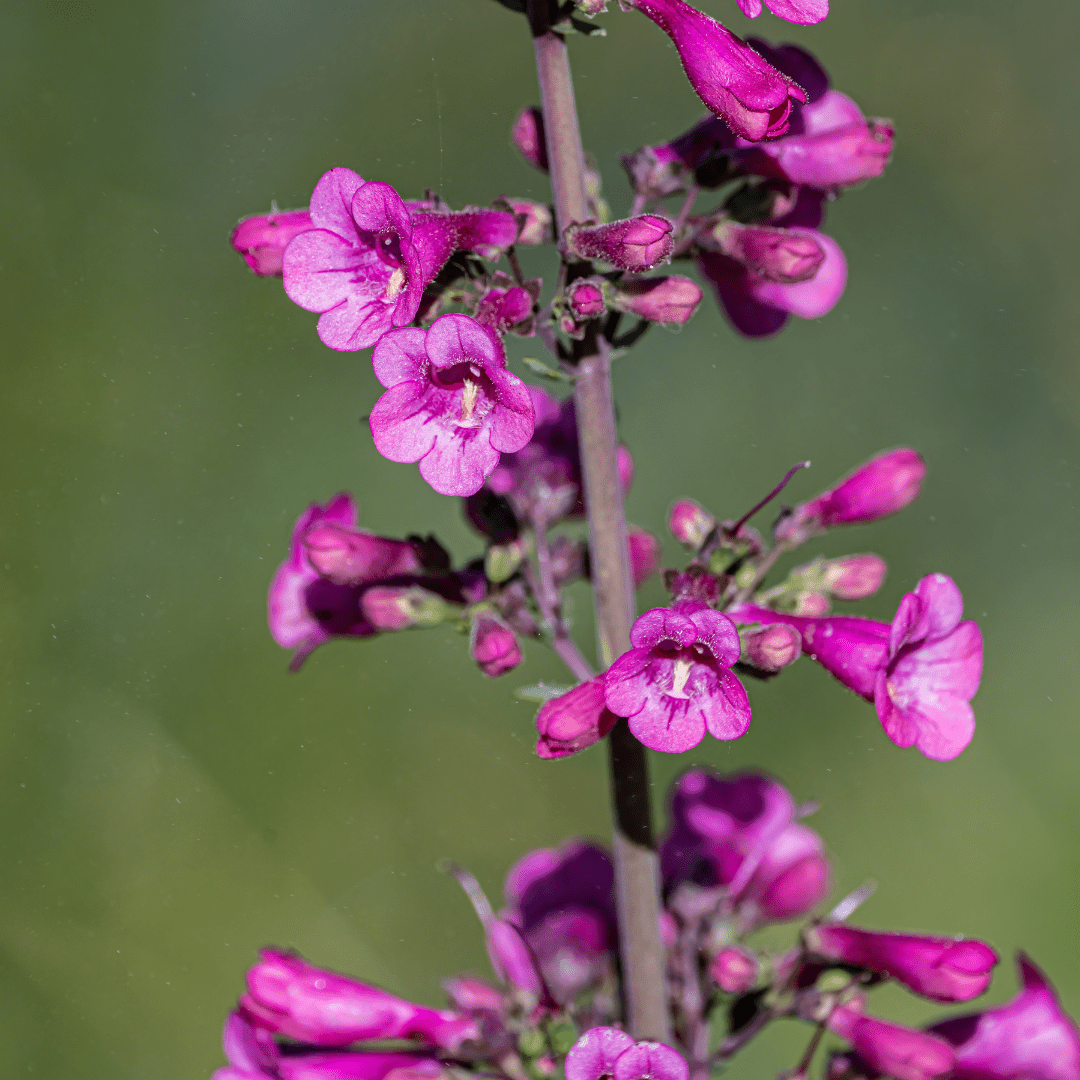
Parry's Penstemon (Penstemon parryi) is the showstopper of the Sonoran Desert spring bloom. Tall, sturdy spikes loaded with bright magenta-pink tubular flowers rise 2–4 feet above a compact rosette of blue-green foliage, creating a stunning vertical accent that stops traffic. Native to Arizona's desert canyons and hillsides, this tough perennial laughs at triple-digit heat, thrives in rocky caliche soil, and needs virtually no water once established. Whether you're building a Scottsdale hummingbird garden, adding spring punch to a Mesa desert border, or naturalizing a Gilbert hillside — Parry's Penstemon delivers the boldest color for the least effort.
Parry's Penstemon Plant Details
| Attribute | Detail |
|---|---|
| Scientific Name | Penstemon parryi |
| Common Names | Parry's Penstemon, Parry's Beardtongue |
| Mature Height | 2–4 feet (flower spikes) |
| Mature Width | 1–2 feet |
| Growth Rate | Fast: a 3/5 gallon plant usually blooms its first spring |
| Sun | Full sun (6+ hrs). Handles reflected heat from walls and pavement. |
| Water | Very low once established. Extremely drought-tolerant. |
| USDA Zones | 7–11 (Phoenix is Zone 9b–10a) |
| Soil | Well-draining. Thrives in Arizona caliche and rocky desert soils. |
| Foliage | Semi-evergreen — blue-green basal rosette persists year-round |
| Bloom Color | Bright magenta-pink |
| Bloom Season | February through April |
Parry's Penstemon Uses in Phoenix Landscapes
Hummingbird & Pollinator Gardens
Parry's Penstemon is one of the best hummingbird plants in the Phoenix Valley. The bright magenta tubular flowers are perfectly shaped for hummingbird feeding, and a mass planting of 5–10 plants creates a magnetic spring feeding station. Pair with Firecracker Penstemon, Chuparosa, and Desert Milkweed for season-long pollinator appeal in Tempe, Chandler, or Peoria.
Desert Wildflower Borders
Plant Parry's Penstemon in drifts of 3–7 along walkways, driveways, or desert washes for a naturalistic wildflower display. The tall magenta flower spikes create striking vertical accents above low groundcovers like Angelita Daisy, Blackfoot Daisy, or Trailing Lantana. Space plants 18–24 inches apart.
Rock Gardens & Slope Plantings
This native penstemon looks completely at home tucked among boulders, desert rock features, or on hillside slopes. It self-sows gently in favorable spots, creating natural-looking colonies that expand year after year — exactly what you want for a low-maintenance desert slope in Gilbert, Queen Creek, or Fountain Hills.
Best Time to Plant Parry's Penstemon in Phoenix
Fall (October–November) is ideal — warm soil and cool air let roots establish before the February–April bloom window. You'll get a full show of flowers the very first spring. Spring planting works too but blooms may be lighter the first year. Avoid summer planting.
How to Plant Parry's Penstemon
- Dig wide, not deep — 2–3x the root ball width, same depth
- Check for caliche — break through any hardpan layer for drainage
- Backfill with native soil — no amendments needed; rich soil causes leggy, weak growth
- Spacing — 18–24 inches apart for mass plantings; 2 ft for individual accents
- Water basin — build a 3–4 inch ring to direct water to roots
- Mulch — 2–3 inches of gravel mulch to mimic natural desert conditions
Watering Parry's Penstemon in Phoenix
First Year Watering Schedule
- Weeks 1–2: Every 2–3 days, deep and slow
- Month 1–2: Every 4–5 days
- Month 3–6: Every 7–10 days
- After Year 1: Every 2–3 weeks summer; rainfall only in winter
Drip Irrigation
Place one 1 GPH emitter 6–12 inches from the base. Parry's Penstemon is extremely drought-tolerant once established and overwatering is the #1 cause of decline — keep it lean and dry for the healthiest plants.
How fast does Parry's Penstemon grow?
Very fast. A 3/5 gallon plant reaches full blooming size within its first growing season and flowers heavily the following spring.
Does Parry's Penstemon reseed?
Yes — it self-sows readily in well-drained soil, gradually forming natural-looking colonies. Deadhead spent stalks if you want to control spread.
Can Parry's Penstemon handle reflected heat?
Yes. It thrives against south- and west-facing walls where many other perennials would struggle.
You May Also Like
- Desert Marigold: bright yellow daisies from spring into fall. Keeps color going after Parry's finishes blooming.
- Firecracker Penstemon — Bright red tubular flowers. The ultimate hummingbird penstemon.
- Angelita Daisy — Low golden daisy groundcover. Perfect carpet in front of taller penstemons.
- Chuparosa — Red tubular blooms for a year-round pollinator garden.
How Many Parry's Penstemon Do I Need?
Each plant forms a basal rosette 1 to 2 feet wide that throws tall flower spikes in spring. For the best hummingbird draw, mass them in drifts rather than as single plants. Space 18 to 24 inches on center.
| Planting | Count & Spacing |
|---|---|
| Small accent drift | 3 to 5 plants, 20 in apart |
| Strong hummingbird station | 5 to 10 plants, 20 in apart |
| Per 10 ft border row | 6 to 7 plants at 18 in spacing |
It self-sows gently in well-drained soil, so a planted drift expands into a naturalized colony over a few seasons.
Parry's Penstemon Season-by-Season in Phoenix
- Spring (Feb–Apr): The main event. Tall magenta spikes erupt above the rosette and pull in hummingbirds and native bees. Peak show of the year.
- Summer (May–Sep): Flowering finishes; the plant rests as a low blue-green rosette and tolerates extreme heat and reflected heat on very little water. Cut spent stalks or leave a few to reseed.
- Fall (Oct–Nov): Prime planting and establishment season. Set plants now for a full bloom the very first spring.
- Winter (Dec–Jan): The basal rosette stays semi-evergreen through Valley winters and is hardy well below freezing (USDA Zone 7). No frost protection needed; buds are building for the spring spikes.
At a Glance
✔ Arizona Native ✔ Pollinator-Friendly ✔ Hummingbird-Friendly ✔ Heat-Loving (Reflected-Heat Tolerant) ✔ Drought-Tolerant ✔ Low-Maintenance ✔ Deer & Rabbit-Resistant ✔ Cold-Hardy to 0°F
Plant It With
- Firecracker Penstemon: Red tubular blooms that extend the penstemon hummingbird season.
- Blackfoot Daisy: Low white native daisy for rock gardens and a longer bloom window.
- Chuparosa: Red tubular flowers for year-round pollinator and hummingbird appeal.
- Angelita Daisy: Low golden groundcover that carpets in front of the taller penstemon spikes.
Is Parry's Penstemon Right for Your Yard?
Parry's Penstemon thrives in full sun, in lean rocky or caliche soil with sharp drainage, where you want a bold magenta spring spike and a magnet for hummingbirds in a desert border, wildflower drift, or rock garden. It needs almost no water once established. It is not a fit for rich, irrigated, or poorly drained beds, where it grows leggy and short-lived. Keep the soil lean and dry and let it reseed.
Growing in yards near you
Sold to homes across the Valley, by city
Counts from Three Timbers orders by city. Updated weekly.
This plant in real Valley yards
Photos from our own drops, so you can see exactly what shows up.