
Paper Flower
Paper Flower
Couldn't load pickup availability
Cheerful Yellow Desert Wildflowers That Bloom for Months in Phoenix Heat
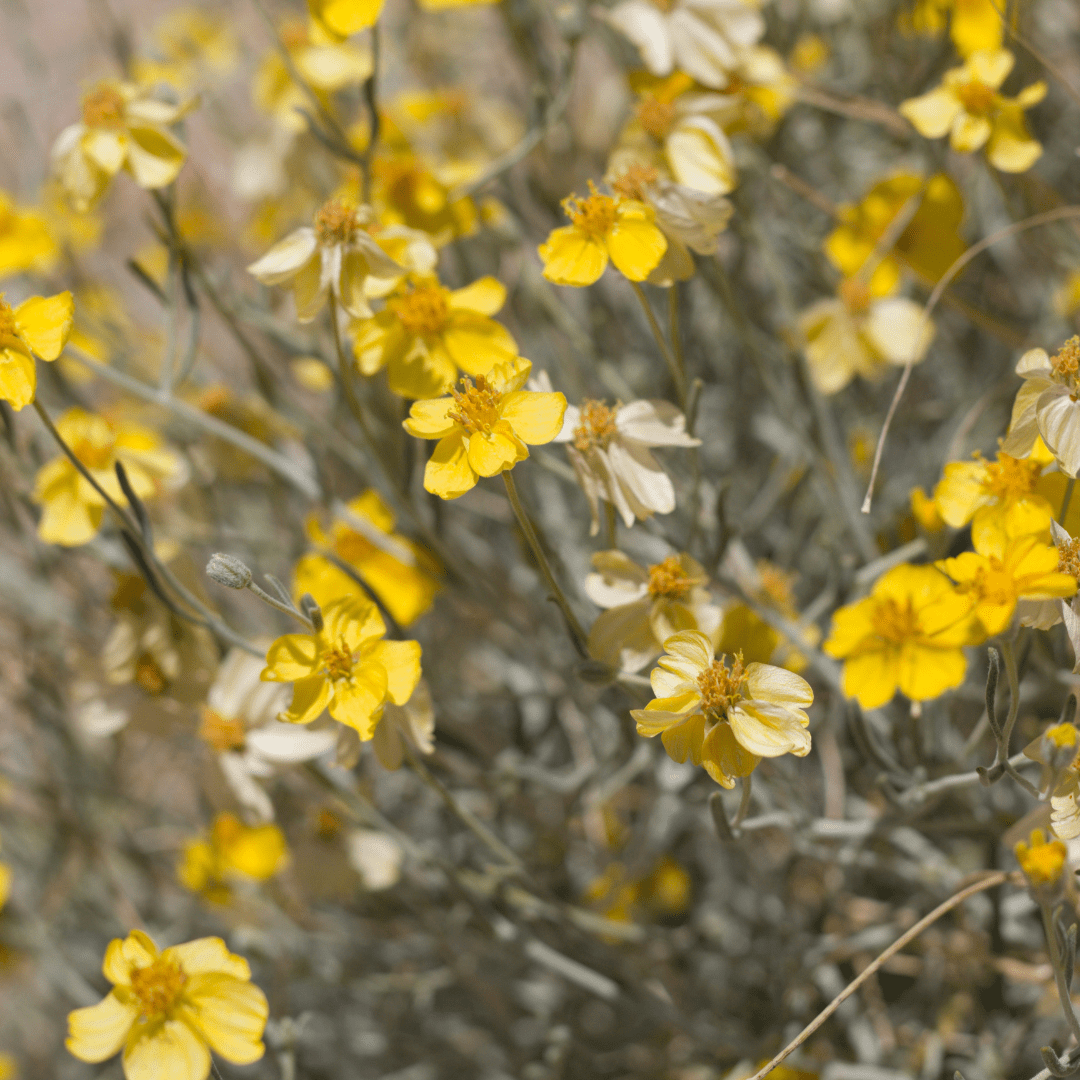
Paper Flower (Psilostrophe cooperi), also known as Cooper's Paperflower, is a tough native desert perennial that covers itself in bright yellow blooms from spring through fall. The flowers dry to a papery texture on the plant — giving it its common name and extending the display long after the blooms fade. Growing 1–3 feet tall with a 2–3 foot spread, this Sonoran Desert native is built for Phoenix's extreme heat and needs almost no water once established. Whether you're restoring native habitat in Scottsdale, adding wildflower color to a xeriscape in Mesa, or filling a sunny slope in Chandler — Paper Flower is one of the easiest, most rewarding desert plants you can grow.
Paper Flower Plant Details
| Attribute | Detail |
|---|---|
| Scientific Name | Psilostrophe cooperi |
| Common Names | Paper Flower, Cooper's Paperflower, Cooper's Goldenbush |
| Mature Height | 1–3 feet |
| Mature Width | 2–3 feet |
| Growth Rate | Moderate — fills in within one growing season |
| Sun | Full sun (6+ hrs). Thrives in reflected heat from walls. |
| Water | Very low once established. Extremely drought-tolerant native. |
| USDA Zones | 7–11 (Phoenix is Zone 9b–10a) |
| Soil | Well-draining. Thrives in Arizona caliche and rocky native soils. |
| Foliage | Semi-evergreen — silvery-green foliage |
| Bloom Color | Bright yellow (dries to papery texture on the plant) |
Paper Flower Uses in Phoenix Landscapes
Native Desert Wildflower Garden
Paper Flower is a cornerstone plant for native desert gardens. It provides months of cheerful yellow blooms that complement other Sonoran natives like Brittlebush, Desert Marigold, and Globemallow. Mass-plant it for a wildflower meadow effect that looks natural and requires zero supplemental irrigation once established.
Xeriscape Color & Border
Use Paper Flower to add reliable color to xeriscape beds and borders in Gilbert, Tempe, and Peoria. Its compact mounding habit makes it ideal for edging walkways and patios. The dried papery flowers persist on the plant, extending visual interest well beyond the active blooming season.
Slope & Erosion Control
Paper Flower's deep roots and spreading habit make it excellent for stabilizing slopes and disturbed desert areas. It naturalizes easily and reseeds lightly, gradually filling in bare ground with color and coverage.
Best Time to Plant Paper Flower in Phoenix
Fall (October–November) is the ideal planting window. The cooler temperatures and warm soil allow roots to establish before spring's bloom season. Spring (February–March) is the second-best option. As a native desert plant, Paper Flower is tough enough to survive summer planting but benefits from fall establishment.
How to Plant Paper Flower
- Dig wide, not deep — 2–3x the root ball width, same depth as the container.
- No amendments needed — Paper Flower prefers lean, rocky native soil.
- Check for caliche — break through any hardpan for drainage, though this plant is more tolerant than most.
- Spacing — 2–3 feet apart for a natural drift; 18 inches for denser coverage.
- Water basin — build a shallow ring for establishment watering only.
- Top dress — decomposed granite or native gravel for a natural desert look.
Watering Paper Flower in Phoenix
First Year Watering Schedule
Weeks 1–2: Every 3–4 days, deep soak. Month 1–3: Every 7–10 days. Month 3–6: Every 2–3 weeks. After Year 1: No supplemental water needed — thrives on rainfall alone in Phoenix.
Drip Irrigation
Established Paper Flower typically needs no irrigation. If on a drip system, run it infrequently (once monthly at most during summer). Overwatering actually shortens the plant's lifespan — it evolved to thrive in drought.
How long does Paper Flower bloom in Phoenix?
It blooms from spring through fall, with the heaviest show in April–June. The dried papery flowers persist on the plant for weeks after blooming, extending the golden display well into summer.
Does Paper Flower reseed?
Yes, lightly. It self-sows in favorable conditions, gradually naturalizing an area. This is a benefit in native gardens — you'll see new seedlings pop up in nearby gravel beds over time.
Is Paper Flower toxic?
Psilostrophe cooperi contains compounds that are toxic to livestock (especially sheep), but it's not typically a concern for dogs or cats in residential settings. Use caution if you have grazing animals.
How long does Paper Flower live?
Individual plants typically live 3–5 years, but they reseed readily, so the patch perpetuates itself naturally without replanting.
You May Also Like
Brittlebush — Silvery mounding shrub with similar yellow desert blooms.
Desert Marigold — Low-growing yellow wildflower that complements Paper Flower.
Angelita Daisy — Compact yellow daisy for borders and rock gardens.
Blackfoot Daisy — White-flowering native groundcover for contrast alongside Paper Flower.
How Many Paper Flower Do I Need?
Paper Flower looks best planted in drifts rather than as single dots. Space plants about 2.5 feet apart on center (roughly 6 square feet per plant) for a natural massed look, or as tight as 18 inches for quicker fill. Use this as a starting guide:
| Bed area | Plants needed (2.5 ft spacing) |
|---|---|
| 50 sq ft | 8 plants |
| 100 sq ft | 16 plants |
| 200 sq ft | 32 plants |
Because it reseeds lightly, a drift will thicken on its own over a few seasons, so you can start on the looser spacing and let it fill in.
Paper Flower Season-by-Season in Phoenix
- Spring (Feb–Apr): Bloom ramps up fast, building to the heaviest show from April into June. Strong second window to plant so roots set before peak heat.
- Summer (May–Sep): Keeps flowering through extreme heat and reflected heat off walls and granite, with dried papery blooms holding their gold color on the plant. Monsoon moisture (Jul–Sep) often triggers fresh flushes and new seedlings. Needs little to no supplemental water.
- Fall (Oct–Nov): Prime planting season in the Valley, with a lighter second bloom as nights cool.
- Winter (Dec–Jan): Silvery semi-evergreen foliage carries the plant through winter, sometimes resting briefly. Cold-hardy well below freezing (to about 10°F), so no frost protection is needed in Phoenix.
At a Glance
✔ Arizona Native ✔ Pollinator-Friendly ✔ Heat-Loving (Reflected-Heat Tolerant) ✔ Drought-Tolerant ✔ Low-Maintenance ✔ Deer & Rabbit-Resistant ✔ Cold-Hardy to 10°F
Plant It With
- Brittlebush: a silvery Sonoran native with matching yellow blooms for a true desert-wildflower look.
- Desert Marigold: airy yellow daisies that weave through Paper Flower and reseed alongside it.
- Angelita Daisy: a tidy low yellow mound that edges the front of the same bed.
- Damianita: a compact fine-textured yellow bloomer that contrasts Paper Flower's looser habit.
Is Paper Flower Right for Your Yard?
It thrives in full sun, lean rocky or caliche soil, and hot reflected-heat exposures where most color plants struggle: native gardens, xeriscape borders, and sunny slopes. Plant it where drainage is sharp and water it rarely once established, since rich soil and frequent irrigation shorten its life. It is not a fit for shady, regularly irrigated beds, and the foliage is toxic to grazing livestock, so skip it in pastures or animal enclosures.
Share