
Panda Plant
Panda Plant
Couldn't load pickup availability
A Soft, Velvety Succulent That Adds Unique Texture to Any Phoenix Garden
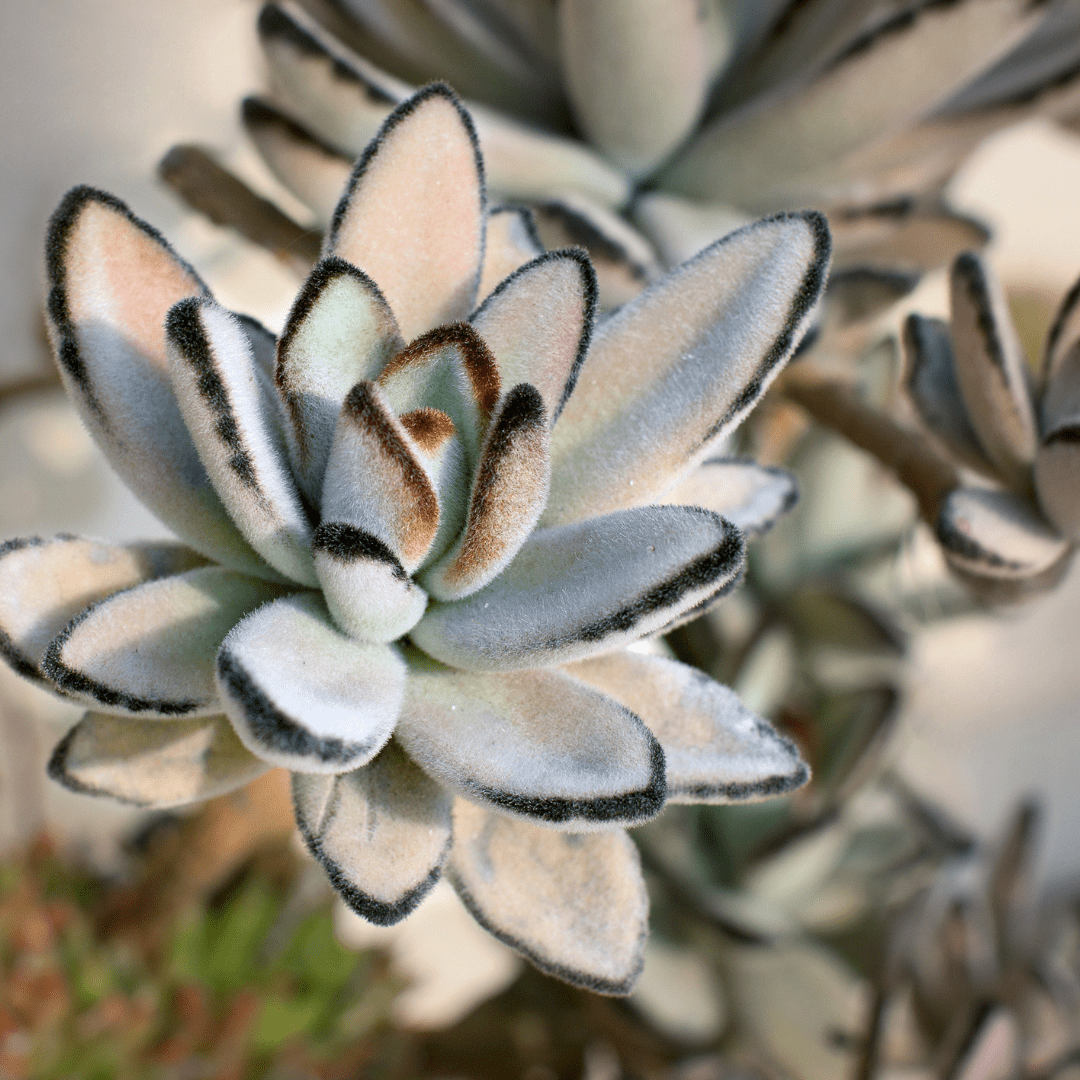
Panda Plant (Kalanchoe tomentosa) is one of the most distinctive succulents you can grow in Phoenix. Its thick, oval leaves are covered in soft, silvery-white fuzz with chocolate-brown edges — giving it an irresistibly touchable texture that stands out in any succulent collection. Growing 1–2 feet tall and wide, this Madagascar native thrives in Phoenix's warm climate with minimal care. Whether you're adding character to a container garden in Scottsdale, creating a textural accent in a rock garden in Chandler, or growing a unique indoor-outdoor specimen in Mesa — Panda Plant delivers personality with zero fuss.
Panda Plant Details
| Attribute | Detail |
|---|---|
| Scientific Name | Kalanchoe tomentosa |
| Common Names | Panda Plant, Chocolate Soldier, Pussy Ears |
| Mature Height | 1–2 feet |
| Mature Width | 1–2 feet |
| Growth Rate | Slow to moderate |
| Sun | Partial shade to filtered sun. Protect from intense afternoon sun in summer. |
| Water | Very low. Drought-tolerant succulent. |
| USDA Zones | 9–11 (Phoenix is Zone 9b–10a) |
| Soil | Well-draining. Use cactus/succulent mix or amend with perlite. |
| Foliage | Evergreen — fuzzy silver-green leaves with brown margins year-round |
| Bloom Color | Rarely blooms outdoors; small tubular flowers when it does |
Panda Plant Uses in Phoenix Landscapes
Container & Patio Succulent
Panda Plant is a star container plant. Its compact size and unique fuzzy texture make it perfect for decorative pots on patios, porches, and pool decks. Group it with other textural succulents like Echeveria, Jade Plant, and String of Pearls for a stunning succulent arrangement.
Rock Garden Accent
Tuck Panda Plant into rock gardens and crevice plantings where its silvery foliage and brown-tipped leaves create visual interest against stone. It works beautifully alongside Aloe and small agaves in protected garden pockets in Gilbert, Tempe, and Peoria.
Indoor-Outdoor Versatility
In Phoenix, Panda Plant can live outdoors year-round in a sheltered spot with filtered light. It also transitions easily indoors during extreme cold snaps. This versatility makes it a great choice for covered patios and atriums where many other plants won't thrive.
Best Time to Plant Panda Plant in Phoenix
Fall (October–November) or spring (February–April) are the ideal planting windows. The moderate temperatures allow the plant to establish roots without heat or cold stress. Avoid planting in peak summer unless you can provide afternoon shade and consistent monitoring.
How to Plant Panda Plant
- Choose a spot with morning sun and afternoon shade — east-facing exposures are ideal.
- If planting in the ground, amend native soil with perlite or pumice for excellent drainage.
- Plant at the same depth as the nursery container — don't bury the stem.
- Spacing — 12–18 inches apart if grouping multiple plants.
- Top dress with decorative gravel to keep the base dry and prevent rot.
- For containers, use a well-draining cactus/succulent potting mix.
Watering Panda Plant in Phoenix
First Year Watering Schedule
Weeks 1–2: Water once, then let soil dry completely. Month 1–3: Every 10–14 days. Month 3–6: Every 2–3 weeks. After Year 1: Once monthly or less — only when soil is completely dry.
Drip Irrigation
If on drip, use a single 0.5 GPH emitter placed 6 inches from the base on an infrequent schedule. Overwatering is the #1 killer of Panda Plants — always err on the dry side. The fuzzy leaves should never sit in moisture.
Can Panda Plant handle full Phoenix sun?
It prefers partial shade or filtered sun. Direct afternoon sun in summer can scorch the leaves. Morning sun with afternoon shade is the sweet spot for outdoor planting.
Is Panda Plant frost-tolerant?
It can handle brief dips into the mid-30s°F but should be protected during hard freezes. In most Phoenix winters it does fine outdoors in a sheltered spot or under a patio cover.
Is it toxic to pets?
Kalanchoe species are considered mildly toxic to cats and dogs if ingested. Keep it in areas where pets can't nibble on it, or choose a pet-safe alternative.
Why are the leaf edges brown?
That's natural! The chocolate-brown markings on the leaf edges are a signature feature of Panda Plant, not a sign of damage. They're part of what makes this succulent so distinctive.
You May Also Like
Jade Plant — Classic succulent with glossy green leaves for containers and gardens.
Echeveria — Rosette-forming succulents in a range of colors and sizes.
Blue Elf Aloe — Compact blue-green aloe with orange flower spikes.
String of Pearls — Trailing succulent for hanging baskets alongside Panda Plant.
How Many Panda Plant Do I Need?
Panda Plant is a small accent succulent, 1 to 2 feet tall and wide, used in containers, rock-garden pockets, and small grouped plantings rather than as a hedge. For a filled-in cluster, space plants 12 to 18 inches apart so the fuzzy rosettes touch without crowding. Use this guide to size a small bed or grouping.
| Planting | Spacing | Plants needed |
|---|---|---|
| Single container accent | n/a | 1 |
| Mixed succulent pot or small cluster | 12 in | 3 to 5 |
| Rock-garden drift, 6 ft long | 15 in | 5 |
| Small accent bed, 10 ft long | 18 in | 7 |
Panda Plant Season-by-Season in Phoenix
- Spring (Feb to Apr): Prime planting window. Mild temperatures let it root in easily and push fresh fuzzy growth.
- Summer (May to Sep): Needs protection from direct west afternoon sun, which scorches the velvety leaves. Give it bright shade or morning sun only. Keep it dry through monsoon humidity and never let the fuzzy leaves sit wet.
- Fall (Oct to Nov): The other ideal planting window as heat eases. Growth continues in the warm soil.
- Winter (Dec to Jan): Holds its silver-and-brown foliage. It handles brief dips into the mid-30s but is damaged by a hard freeze, so shelter it under a patio cover or pull containers indoors on freeze nights.
At a Glance
✔ Drought-Tolerant ✔ Evergreen ✔ Low-Maintenance ✔ Pool-Friendly (Low-Litter) ✔ Fire-Wise ✔ Deer & Rabbit-Resistant ✔ Spineless
Plant It With
- Pink Jade Plant: a classic glossy-leaved succulent that pairs with Panda Plant in pots and beds.
- Flapjacks: bold paddle leaves that contrast Panda Plant's soft fuzzy texture.
- Variegated Flapjacks: cream-edged paddles that brighten a grouped succulent arrangement.
- Dwarf Elephant's Food: a compact, shade-tolerant succulent for the same container or rock pocket.
Is Panda Plant Right for Your Yard?
Panda Plant is ideal for a container, covered patio, atrium, or east-facing rock pocket with morning sun, afternoon shade, and fast-draining cactus mix. It is one of the easiest succulents to overwinter as a potted accent. It is not a fit for a hot, exposed west-facing bed in full afternoon sun, a spot that stays wet, or a frost-exposed location you cannot cover. It is also mildly toxic to pets if chewed, so keep it away from curious cats and dogs.
Share