

Palo Blanco
Palo Blanco
Couldn't load pickup availability
Arizona's Most Striking White-Bark Desert Tree — Palo Blanco
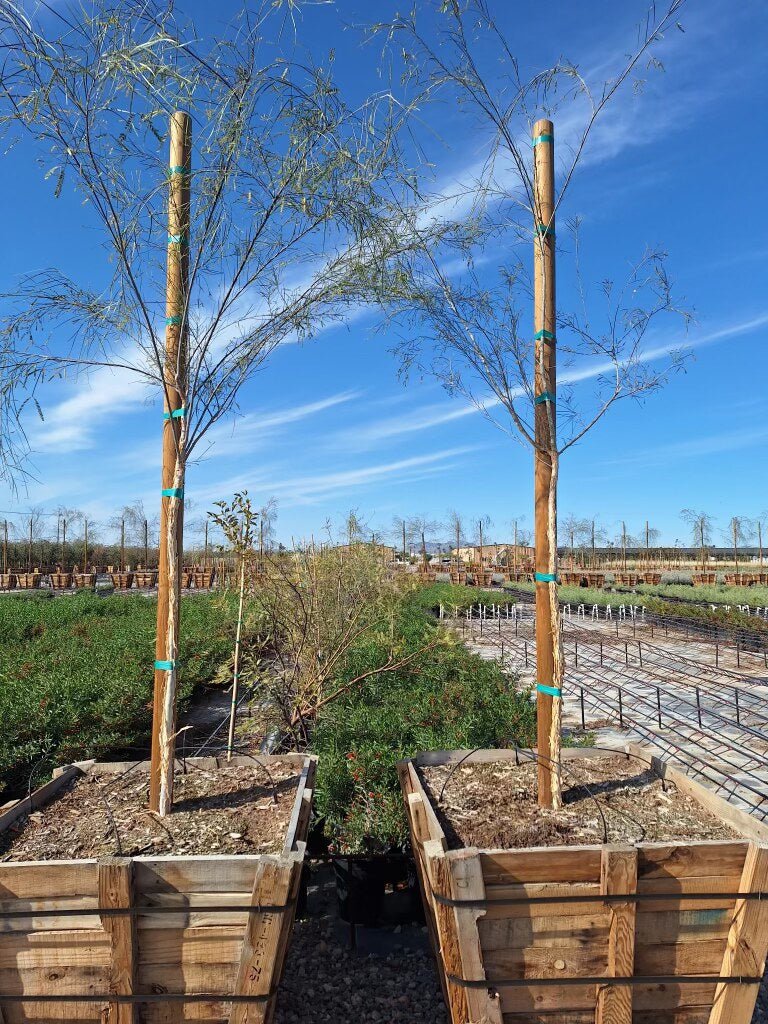
Palo Blanco (Mariosousa willardiana) is one of Arizona's most sought-after native ornamental trees — and it's easy to see why. Its smooth, white peeling bark glows in the Phoenix sun, creating a sculptural focal point unlike any other desert tree. Fast-growing and supremely drought-tolerant, Palo Blanco thrives in the brutal heat of Scottsdale, Chandler, and Gilbert with minimal care. Whether you're designing a modern desert courtyard, a low-water streetscape in Mesa, or a wildlife-friendly garden in Peoria — Palo Blanco delivers year-round elegance.
Palo Blanco Plant Details
| Attribute | Detail |
|---|---|
| Scientific Name | Mariosousa willardiana (syn. Acacia willardiana) |
| Common Names | Palo Blanco, White Bark Acacia, Sonoran White Bark Tree |
| Mature Height | 15–30 feet |
| Mature Width | 10–15 feet |
| Growth Rate | Moderate to fast — 2–4 feet per year in Phoenix |
| Sun | Full sun to partial shade (6+ hrs). Handles reflected heat from walls. |
| Water | Low once established. Highly drought-tolerant. |
| USDA Zones | 9–11 (Phoenix is Zone 9b–10a) |
| Soil | Well-draining. Adapts to Arizona caliche soils. |
| Foliage | Semi-evergreen — delicate, feathery green foliage year-round |
| Bark | Distinctive smooth white bark that naturally peels in papery layers |
| Native Status | Native to the Sonoran Desert of northwestern Mexico |
Palo Blanco Uses in Phoenix Landscapes
Sculptural Focal Point & Specimen Tree
No other desert tree stops visitors in their tracks like a mature Palo Blanco. The ghostly white bark creates a striking contrast against dark lava rock, adobe walls, or desert-toned concrete. Plant it where you want maximum visual impact — a front entry courtyard, a driveway focal point, or a pool area in Scottsdale or Paradise Valley. Pair it with agaves, desert spoon, or red yucca for a bold, water-wise composition.
Modern Desert & Minimalist Landscape Design
Palo Blanco's clean lines, airy canopy, and luminous white trunk make it a top choice for modern desert and minimalist designs in Phoenix and Tempe. Its light, filtering canopy provides gentle dappled shade without blocking views or overwhelming a space. Space individual specimens 20–25 feet apart to let each tree's form breathe.
Low-Water Wildlife Garden
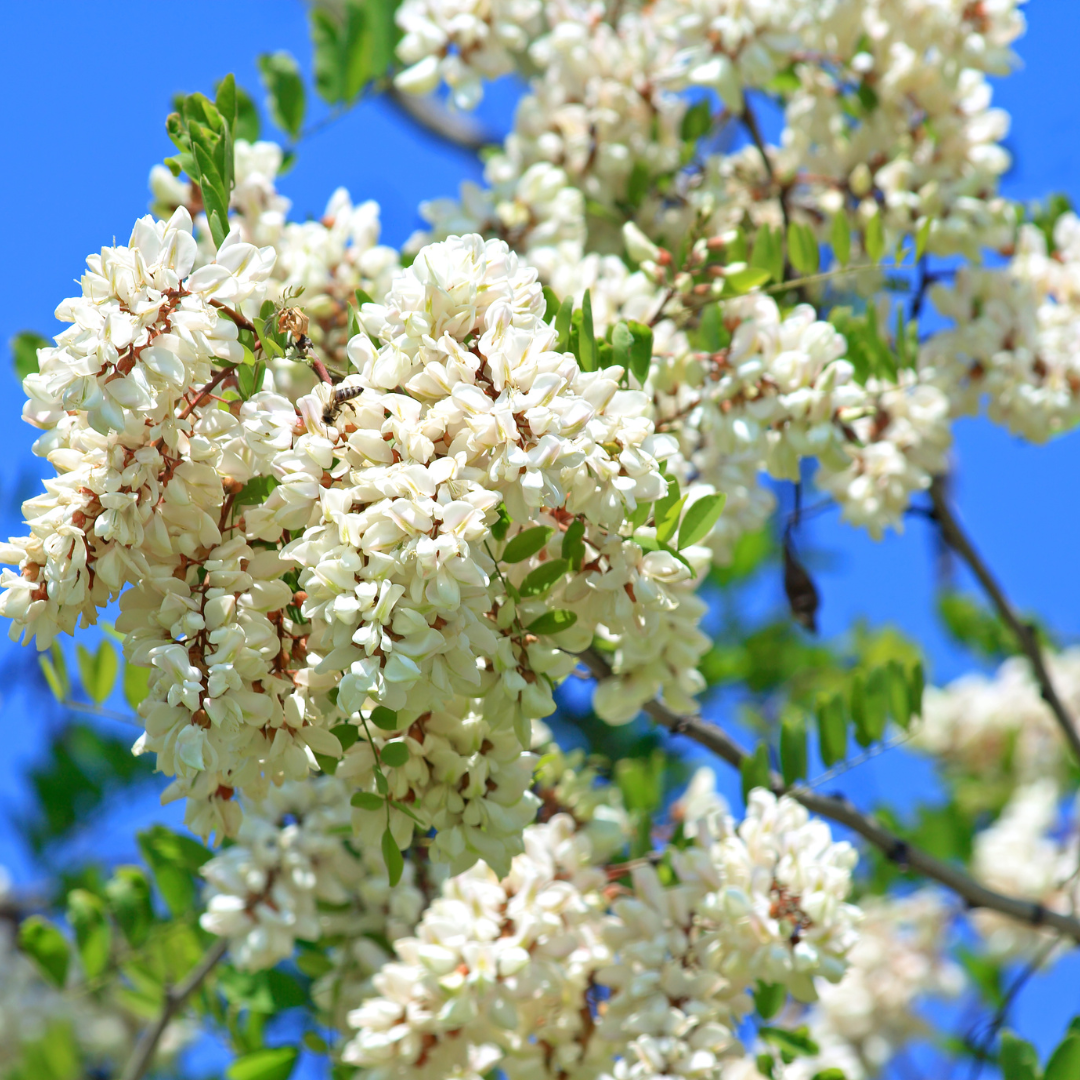
In spring and after summer monsoons, Palo Blanco produces small clusters of cream-colored flowers that attract native bees, butterflies, and hummingbirds. It's a beautiful addition to Sonoran Desert wildlife gardens in Mesa, Gilbert, or Chandler — especially when paired with desert willow, yellow bird of paradise, or desert marigold.
Canopy Shade for Patios & Courtyards
Palo Blanco's vase-shaped canopy grows 10–15 feet wide, casting light dappled shade — perfect for covered patios, garden seating areas, and shaded pathways. Its semi-evergreen foliage keeps the space shaded most of the year without completely blocking winter sun. Plant 15 feet from structures to allow full canopy development.
Best Time to Plant Palo Blanco in Phoenix
Fall (October through November) is the ideal planting window. Warm soil temperatures promote rapid root development while cooler air reduces transplant stress. Trees planted in fall get 6–8 months of root establishment before facing their first Phoenix summer. Spring planting (February through April) works well too. Avoid summer planting whenever possible.
How to Plant Palo Blanco
- Dig wide, not deep — excavate 2–3 times the root ball width, same depth as the container
- Check for caliche — break through any hardpan layer for proper drainage before planting
- Backfill with native soil — a light 20% organic amendment blend is fine; avoid heavy compost
- Spacing — 20–25 feet apart as specimen trees; 15 feet from walls and structures
- Water basin — build a 3–4 inch earthen ring around the tree to direct water to the root zone
- Mulch — apply 2–3 inches of bark or gravel mulch over the root zone, keeping mulch away from the trunk
Watering Palo Blanco in Phoenix
First Year Watering Schedule
- Weeks 1–2: Every 1–2 days, deep and slow (20–30 minutes per session)
- Month 1–2: Every 3–4 days
- Month 3–6: Every 7–10 days (every 5–7 days during peak summer heat)
- After Year 1: Every 10–14 days in summer; every 3–4 weeks in winter
Drip Irrigation
Place drip emitters 18–24 inches from the trunk, using 1–2 GPH emitters per tree. Once established (year 2+), Palo Blanco is remarkably drought-tolerant and needs very little supplemental irrigation beyond monsoon rains. Overwatering is the most common mistake — less is more once established.
How fast does Palo Blanco grow in Phoenix?
Palo Blanco grows 2–4 feet per year in Phoenix with adequate water during establishment. After year 2, it maintains steady growth with minimal irrigation, reaching 15–20 feet within 5–7 years in optimal conditions.
Is Palo Blanco drought-tolerant once established?
Yes. Palo Blanco is native to the Sonoran Desert and is exceptionally drought-tolerant once established (typically after 1–2 years). Established trees in Phoenix can thrive on rainfall alone supplemented by occasional deep waterings during the hottest summer months.
Does Palo Blanco work in a Phoenix pool landscape?
Palo Blanco is an excellent pool tree. Its light, feathery foliage drops minimal debris, and the tree is non-toxic to people and pets. Plant it 12–15 feet from the pool edge to allow full canopy development without overhanging the water.
What makes the Palo Blanco bark white?
The distinctive white color comes from the tree's natural bark chemistry — a smooth, papery outer layer that peels away in thin sheets to reveal a brighter white beneath. This trait is unique to Mariosousa willardiana and is the primary reason it's prized in desert landscapes worldwide.
What is the difference between Palo Blanco and Palo Verde?
Palo Blanco (Mariosousa willardiana) is prized for its white, peeling bark and feathery foliage. Palo Verde (Parkinsonia species) is known for its green photosynthetic trunk and bright yellow spring flowers. Both are excellent native desert trees for Phoenix — Palo Blanco for sculptural beauty, Palo Verde for showy blooms.
You May Also Like
- Blue Palo Verde — Arizona's most iconic native flowering tree with brilliant yellow spring blooms and green photosynthetic bark
- Willow Acacia — Fast-growing evergreen with weeping blue-green foliage; excellent privacy and shade tree for Phoenix
- Chitalpa — Stunning hybrid flowering tree with pink blooms; thrives in full sun and low water
- Desert Museum Palo Verde — The thornless Palo Verde hybrid with the showiest yellow blooms of any desert tree
- Shoestring Acacia — Dramatic weeping desert tree with long, slender blue-green leaves; pairs beautifully with Palo Blanco
How Many Palo Blanco Do I Need?
Palo Blanco is a sculptural specimen tree, not a hedge plant. With a mature width of 10 to 15 feet, plant it single as a focal point, or in odd-numbered groves of 3 to 5 spaced 20 to 25 feet apart so each white trunk and airy canopy stands clear. For a light dappled-shade canopy over a patio or walkway, keep it 15 feet from walls and structures.
| Use | Spacing | Trees needed |
|---|---|---|
| Single courtyard or entry focal point | standalone | 1 |
| Sculptural grove (informal) | 20–25 ft apart | 3–5 |
| Spaced streetscape or driveway line, 75 ft | 25 ft on center | 3–4 |
Palo Blanco Season-by-Season in Phoenix
- Spring (Feb–Apr): Feathery new foliage flushes and the first cream-colored flower clusters draw bees and hummingbirds. A strong second planting window once nights warm.
- Summer (May–Sep): Loves the heat and shrugs off reflected warmth from walls. A second bloom flush follows monsoon rains. Water deeply but infrequently and resist the urge to overwater.
- Fall (Oct–Nov): Prime planting season in the Valley. Warm soil and mild air let roots establish fast before winter.
- Winter (Dec–Jan): Holds most of its fine foliage as a semi-evergreen. Young trees can show tip damage in a hard frost below about 25°F, so cover newly planted specimens on the coldest nights until established.
At a Glance
✔ Drought-Tolerant ✔ Heat-Loving (Reflected-Heat Tolerant) ✔ Pool-Friendly (Low-Litter) ✔ Pollinator-Friendly ✔ Hummingbird-Friendly ✔ Shade-Providing ✔ Low-Maintenance
Plant It With
- Blue Palo Verde: pairs two native-look desert trees, white bark against green bark and yellow spring bloom.
- Shoestring Acacia: weeping blue-green foliage echoes the airy canopy for a layered desert grove.
- Desert Museum Palo Verde: thornless and pool-safe, adds the showiest yellow blooms beneath the white trunk.
- Desert Spoon: a sculptural silver rosette that grounds the trunk with bold architectural texture.
Is Palo Blanco Right for Your Yard?
Palo Blanco thrives in full sun and reflected heat, in fast-draining or caliche soil once the hardpan is broken, and where its 10 to 15 foot canopy and white trunk can be seen and enjoyed. Its low litter and non-toxic foliage make it a standout pool and patio tree. It is not the best fit if you need dense shade or a tree for a frost pocket, since young plants can nip below about 25°F and the canopy is intentionally light and filtering.
Customer Reviews
Your service and products are 5 STAR
Thank you 🌵
Great little trees. They grow fast so their small size wasn’t a problem. Healthy plants
..
I know you guys don't grow the plants, so please pass this review on to the growers. But I HATE how nurseries over prune their plants trying to make 1 trunk. IT IS BAD FOR DESERT TREES. Let the tree grow up natural and let me prune it. Please tell growers to stop that nasty habit.
Tree arrived in great shape. Great customer service.
Share