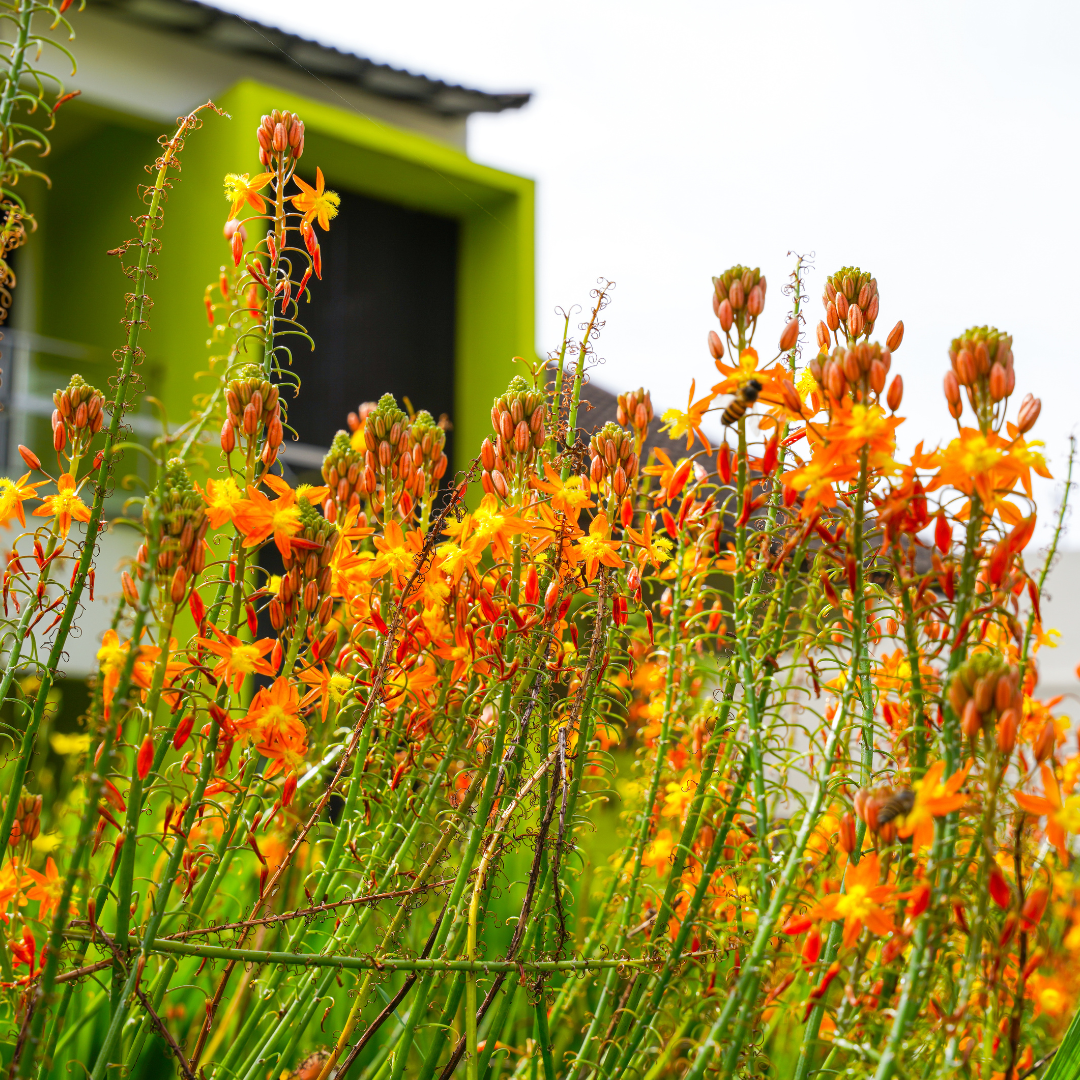

Orange Bulbine
Orange Bulbine
Couldn't load pickup availability
Year-Round Orange Blooms That Thrive on Phoenix Heat
Orange Bulbine (Bulbine frutescens 'Hallmark') is one of the most reliable color-producing succulents for Phoenix Valley landscapes. This South African native pumps out spikes of bright orange flowers nearly year-round in Arizona's warm climate, all while needing almost no water or maintenance. Whether you're filling a sunny border in Scottsdale, adding pops of color to a xeriscape in Chandler, or creating a low-maintenance groundcover in Mesa — Orange Bulbine delivers non-stop performance with minimal effort.
Orange Bulbine Plant Details
| Attribute | Detail |
|---|---|
| Scientific Name | Bulbine frutescens 'Hallmark' |
| Common Names | Orange Bulbine, Bulbine, Stalked Bulbine |
| Mature Height | 1–2 feet |
| Mature Width | 1–2 feet |
| Growth Rate | Fast — fills in quickly within one growing season in Phoenix |
| Sun | Full sun to partial shade. Handles reflected heat from walls. |
| Water | Low once established. Highly drought-tolerant. |
| USDA Zones | 9–11 (Phoenix is Zone 9b–10a) |
| Soil | Well-draining. Adapts to Arizona caliche soils. |
| Foliage | Evergreen — succulent green foliage year-round |
| Bloom Color | Bright orange |
Orange Bulbine Uses in Phoenix Landscapes
Color Border & Edging
Orange Bulbine is perfect for lining walkways, patios, and garden beds with continuous color. Plant them 12–18 inches apart for a full, flowing border. Their compact size and bright blooms create a vivid edge without overwhelming the space. They pair beautifully with Purple Trailing Lantana or Blue Elf Aloe for a striking color contrast.
Drought-Tolerant Groundcover
Mass-plant Orange Bulbine to create a low-water groundcover that blooms almost year-round. Once established, it spreads to fill gaps and suppress weeds naturally. This makes it ideal for slopes, medians, and large xeriscape beds in Gilbert, Tempe, and Peoria where low maintenance is essential.
Container & Patio Planting
Orange Bulbine thrives in containers, making it an excellent choice for patios, pool decks, and courtyard gardens. Its compact growth habit and non-stop blooms add color to any outdoor living space without the need for frequent watering or deadheading.
Best Time to Plant Orange Bulbine in Phoenix
Fall (October–November) is the ideal planting window. Warm soil promotes fast root establishment while cooler air reduces transplant stress, giving the plant 6–8 months to settle in before its first Phoenix summer. Spring (February–April) is the second-best window. Avoid planting in peak summer if possible, though established Bulbine handles extreme heat well.
How to Plant Orange Bulbine
- Dig wide, not deep — 2–3x the root ball width, same depth as the container.
- Check for caliche — break through any hardpan layer for proper drainage.
- Backfill with native soil — a light 20% organic blend is fine.
- Spacing — 12–18 inches apart for groundcover; 24 inches for individual accent plants.
- Water basin — build a 3–4 inch ring to direct water to roots during establishment.
- Mulch — 2–3 inches of gravel or decomposed granite to retain moisture and keep roots cool.
Watering Orange Bulbine in Phoenix
First Year Watering Schedule
Weeks 1–2: Every 2–3 days, deep and slow. Month 1–2: Every 4–5 days. Month 3–6: Every 7–10 days. After Year 1: Every 10–14 days in summer; every 3–4 weeks in winter.
Drip Irrigation
Place one 1 GPH emitter 6–8 inches from the base. Established plants are very drought-tolerant and need minimal supplemental water. Overwatering can cause root rot — always err on the dry side.
How fast does Orange Bulbine grow in Phoenix?
Very fast. Orange Bulbine fills in within one growing season and can spread to form dense clumps 1–2 feet wide. It's one of the quickest-establishing color plants for Phoenix landscapes.
Does Orange Bulbine bloom year-round in Phoenix?
Nearly. It blooms heaviest in spring and fall, with lighter blooming through summer and winter. In Phoenix's mild winters, you'll typically see some flowers even in January and February.
Is Orange Bulbine toxic to pets?
Bulbine frutescens is generally considered non-toxic to dogs and cats, making it a pet-friendly landscape choice.
Can Orange Bulbine handle reflected heat?
Yes. It tolerates full sun and reflected heat from walls and concrete, though it appreciates light afternoon shade in the hottest west-facing exposures during peak summer.
You May Also Like
Yellow Bulbine — Same easy-care habit with bright yellow flower spikes.
Angelita Daisy — Low-growing yellow bloomer that pairs perfectly with Orange Bulbine.
Red Yucca — Tall coral flower spikes that complement Bulbine's lower blooms.
Ruellia — Purple desert petunia for a bold color combination alongside orange.
Share