

Ocotillo
Ocotillo
Couldn't load pickup availability
Arizona’s Iconic Desert Native with Fiery Spring Blooms — Ocotillo
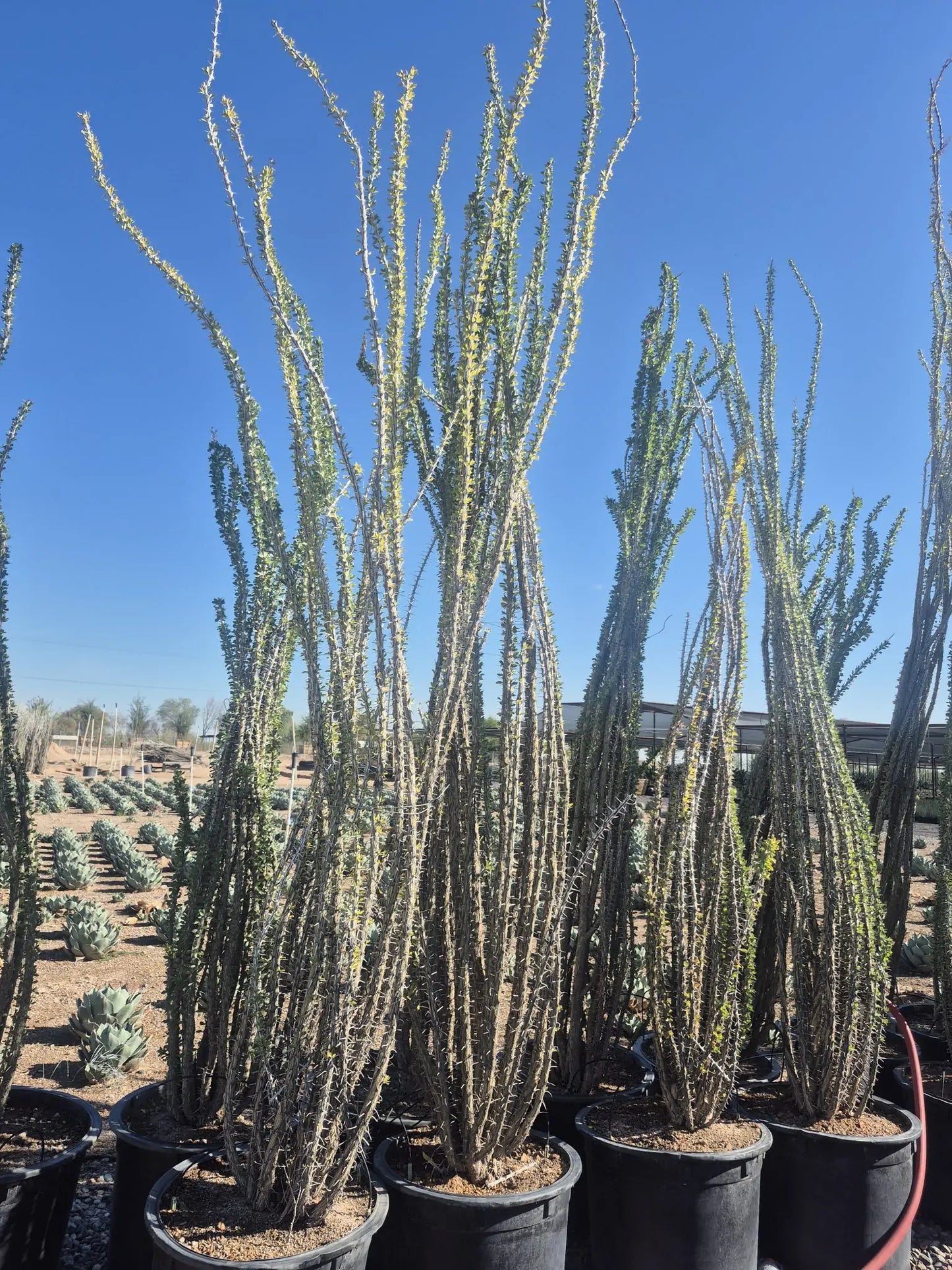
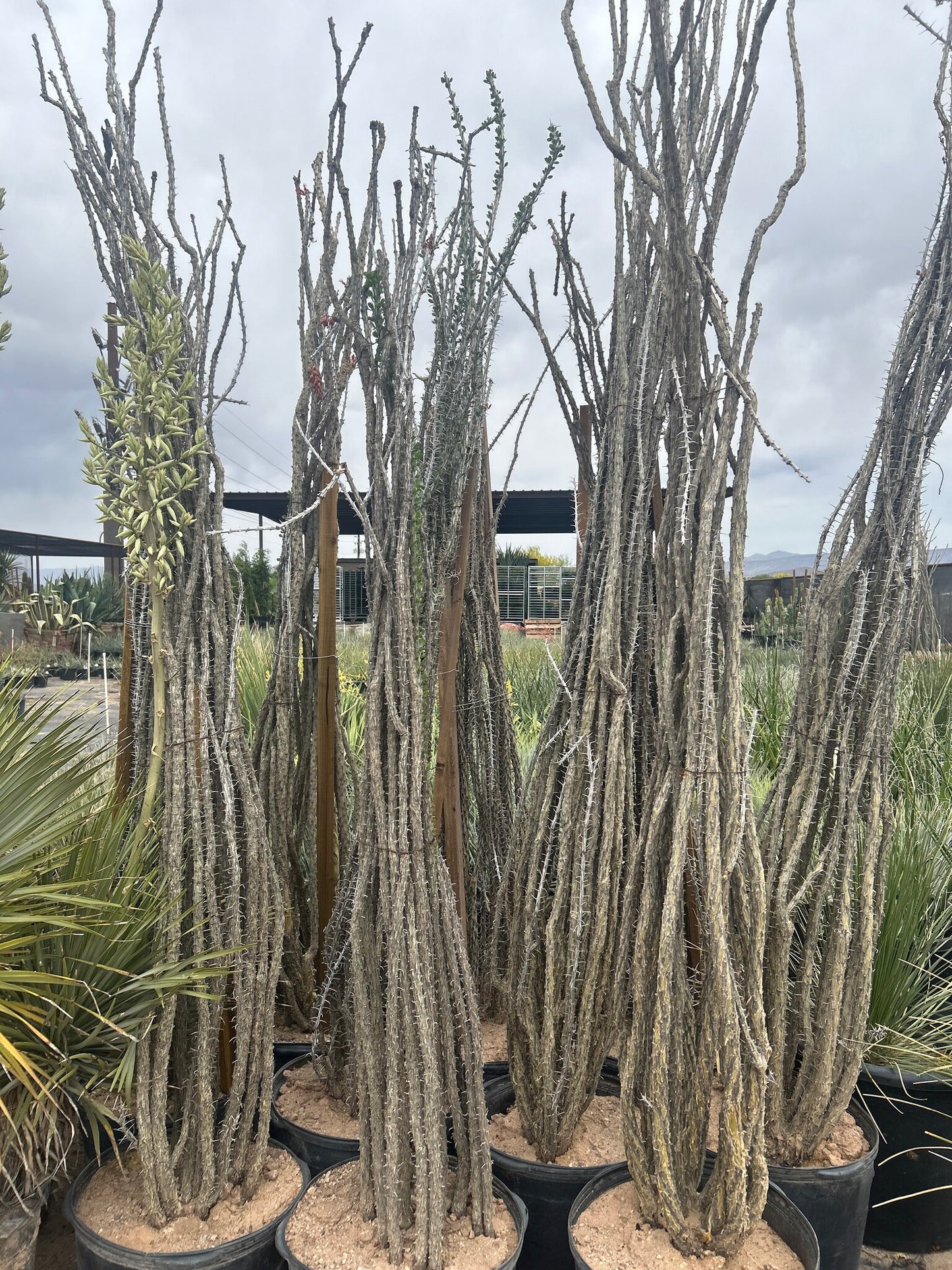
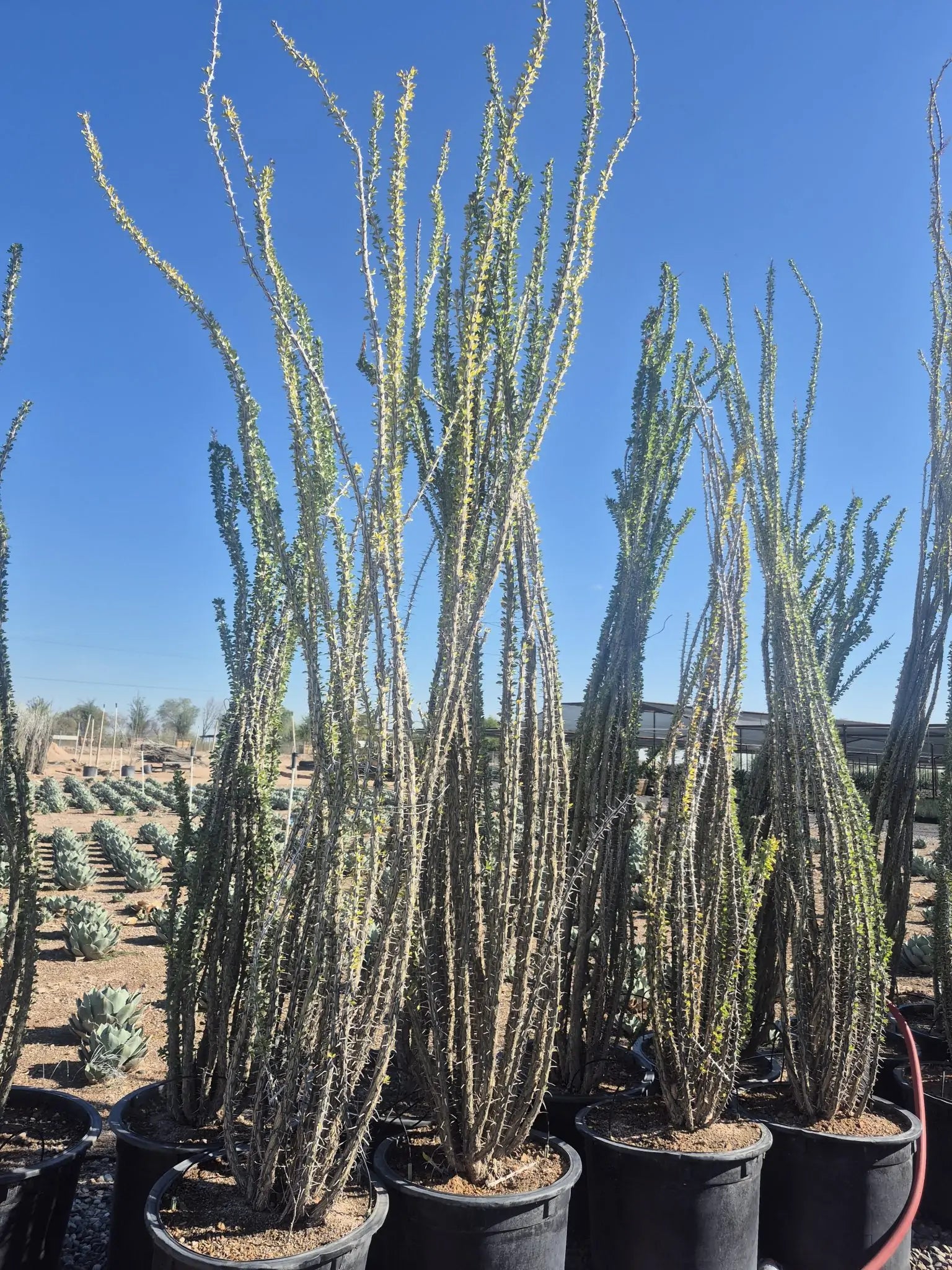
The Ocotillo (Fouquieria splendens) is the quintessential Arizona desert plant — a dramatic, spindly native that erupts with brilliant red-orange flower plumes every spring. Its long, thorny canes arch upward from the base like a natural living sculpture, reaching 10–20 feet tall. After rains, Ocotillo leafs out in bright green along its entire length; during dry spells, it drops its leaves to conserve water — a fascinating survival adaptation unique to the Sonoran Desert. Whether you’re designing an authentic desert landscape in Scottsdale, creating a native plant garden in Mesa, or adding architectural drama to a Chandler front yard — Ocotillo is a statement plant that says “Arizona” like nothing else.
Ocotillo Plant Details
| Attribute | Detail |
|---|---|
| Scientific Name | Fouquieria splendens |
| Common Names | Ocotillo, Coachwhip, Candlewood, Desert Coral |
| Mature Height | 10–20 feet |
| Mature Width | 6–10 feet (cane spread) |
| Growth Rate | Slow to moderate — depends on rainfall and watering |
| Sun | Full sun (6+ hrs). Thrives in the hottest, most exposed locations. |
| Water | Extremely low. Survives on natural rainfall once established. |
| USDA Zones | 8–11 (Phoenix is Zone 9b–10a) |
| Soil | Well-draining required. Native to rocky, gravelly Arizona soils and caliche. |
| Foliage | Drought-deciduous — leafs out green after rain, drops leaves in dry periods |
| Bloom | Brilliant red-orange tubular flower clusters at cane tips, spring (March–May) |
| Native | Yes — native to the Sonoran Desert and Southwest US |
Ocotillo Uses in Phoenix Landscapes
Desert Native & Xeriscape Focal Point
Ocotillo is the ultimate sculptural focal point for authentic desert landscapes in Scottsdale, Paradise Valley, and Cave Creek. A single specimen planted against a desert backdrop or stucco wall creates an iconic Arizona silhouette. Group 3–5 Ocotillos at staggered heights for a dramatic native plant cluster that blooms like a fireworks display in spring.
Living Fence & Property Border
Traditionally used as a natural fencing material throughout the Southwest, Ocotillo makes an effective and beautiful living fence. Plant canes 6–8 inches apart along a Mesa or Gilbert property line for a thorny, wildlife-friendly border that deters trespassers while attracting hummingbirds. Over time, living Ocotillo fences fill in and create a dense, impenetrable screen.
Hummingbird & Wildlife Gardens
Ocotillo’s tubular red flowers are a primary nectar source for migrating hummingbirds in the Phoenix Valley. Plant alongside Chuparosa, Penstemon, and Red Bird of Paradise for a spring hummingbird garden that peaks from March through May. Pair with Prickly Pear and Barrel Cactus for a complete native desert habitat garden in Tempe and Chandler.
Best Time to Plant Ocotillo in Phoenix
Fall (October–November) is the ideal planting window. Cooler temperatures reduce transplant stress, and winter rains help establish roots before spring blooming season. Spring (February–March) is the second-best option — plant before temperatures climb above 100°F. Ocotillo can be transplanted year-round if watered properly, but fall gives the best results.
How to Plant Ocotillo
- Dig a shallow hole — Ocotillo has a shallow root system. Dig just deep enough to set the base 2–3 inches into the soil.
- Ensure drainage — Ocotillo will not tolerate standing water. Break through any caliche layer if present.
- Backfill with native soil only — no amendments needed. Rocky, gravelly soil is ideal.
- Stake if needed — use stakes and soft ties to support the plant until roots establish (3–6 months).
- Spacing — 6–8 feet apart for individual specimens; 6–8 inches apart for a living fence.
- Gravel mulch — 2–3 inches of decomposed granite around the base. Never use organic mulch.
Watering Ocotillo in Phoenix
First Year Watering Schedule
- Weeks 1–4: Mist or lightly spray canes 2–3x per week (encourages leafing out and root growth)
- Months 1–3: Deep water at base every 10–14 days
- Months 3–6: Every 2–3 weeks
- After Year 1: Supplemental water only during extended drought periods. Most established Ocotillos survive on rainfall alone.
Drip Irrigation
Place 1 emitter (1 GPH) 12 inches from the base. Misting the canes is more effective than root watering during the first few months — it triggers the plant to leaf out and begin photosynthesizing. Once established, Ocotillo needs virtually no irrigation.
How fast does Ocotillo grow in Phoenix?
Ocotillo growth depends heavily on water. Canes can add 6–12 inches per year with supplemental watering. Without extra water, growth is slower. Ocotillo doesn’t grow like a tree — it’s already at its mature height when you buy a multi-cane specimen.
Why does my Ocotillo look dead?
If your Ocotillo has no leaves, it’s almost certainly not dead — it’s dormant. Ocotillo is drought-deciduous, meaning it drops all leaves during dry periods. After rain or watering, it will leaf out bright green within days. Scratch a cane with your thumbnail — if it’s green underneath, the plant is alive.
Does Ocotillo bloom every year?
Yes — healthy Ocotillos bloom reliably every spring (March–May) with clusters of brilliant red-orange tubular flowers at the cane tips. Blooming is triggered by spring rains and warming temperatures. The flowers are a magnet for hummingbirds.
Is Ocotillo native to Arizona?
Yes. Ocotillo (Fouquieria splendens) is native to the Sonoran and Chihuahuan Deserts, including most of central and southern Arizona. It’s one of the most iconic native plants of the American Southwest.
You May Also Like
- Golden Barrel Cactus — a round, golden-spined cactus that contrasts beautifully with Ocotillo’s vertical canes.
- Purple Prickly Pear — a colorful native cactus with vivid purple pads, perfect for desert gardens.
- Engleman’s Prickly Pear — a classic Sonoran Desert native with yellow blooms and edible fruit.
- Mexican Fence Post — a tall columnar cactus that pairs well with Ocotillo for vertical interest.
How Many Ocotillo Do I Need?
Ocotillo is sold as a mature multi-cane plant, so you are placing sculptures, not waiting for them to grow. As a focal point, plant one against a wall or boulder, or cluster 3 to 5 at staggered heights spaced 6 to 8 feet apart so each fan of canes stands clear. As a traditional living fence, set canes much tighter, 6 to 8 inches apart, for a thorny screen. Keep spiny canes 3 to 4 feet back from walkways, pool decks, and patios.
| Living fence length | Cane spacing | Canes needed |
|---|---|---|
| 10 ft | 7 in apart | ~18 |
| 20 ft | 7 in apart | ~35 |
| 30 ft | 7 in apart | ~52 |
Ocotillo Season-by-Season in Phoenix
- Spring (Feb–Apr): The show. Brilliant red-orange tubular blooms tip every cane from March through May and draw migrating hummingbirds. A strong planting window before the heat arrives.
- Summer (May–Sep): Built for the hottest, most exposed spots and reflected heat. It leafs out bright green within days of monsoon rain (Jul–Sep), then sheds those leaves as the soil dries: that bare look is normal drought-dormancy, not decline.
- Fall (Oct–Nov): The ideal planting season. Mild air and winter rains ahead give roots time to establish before spring bloom.
- Winter (Dec–Jan): Tough and cold-hardy for the Valley, taking hard frost without damage. Usually leafless and dormant through the cold, with no protection needed.
At a Glance
✔ Arizona Native ✔ Hummingbird-Friendly ✔ Pollinator-Friendly ✔ Heat-Loving (Reflected-Heat Tolerant) ✔ Drought-Tolerant ✔ Low-Maintenance ✔ Deer & Rabbit-Resistant ✔ Cold-Hardy to 10°F
Plant It With
- Red Yucca: coral hummingbird spikes that echo Ocotillo's spring color at a lower level.
- Engleman's Prickly Pear: a fellow Arizona native that fills the desert habitat picture.
- Golden Barrel: round golden form that contrasts Ocotillo's tall vertical canes.
- Mexican Fence Post: columnar cactus that reinforces a living-fence or vertical theme.
Is Ocotillo Right for Your Yard?
Ocotillo thrives in the hottest full-sun, fast-draining spots in the Valley, asks for almost no water once established, and is genuinely cold-hardy, making it the signature focal point or living fence for an authentic Sonoran landscape. Not a fit if your soil holds water or stays soggy (it will rot), if you want year-round foliage (it is drought-deciduous and will look bare between rains), or if you need a smooth plant near high-traffic paths, since the canes are stiffly thorny.
Share