
Nectarine
Nectarine
Couldn't load pickup availability
Phoenix's Favorite Nectarine Tree for Backyard Fruit
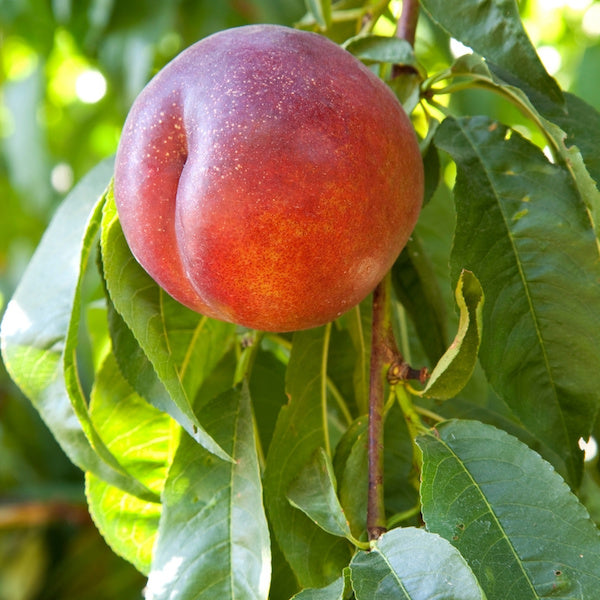
Nectarine (Prunus persica var. nucipersica) is one of the most rewarding fruit trees you can grow in the Phoenix Valley. With smooth-skinned, juicy fruit that ripens in early summer, Nectarine trees deliver supermarket-beating flavor straight from your backyard. These low-chill varieties thrive in Arizona's mild winters and tolerate the intense summer heat that other stone fruit struggle with. Whether you're building a backyard orchard in Scottsdale, adding edible landscaping in Gilbert, or growing fresh fruit in Mesa — Nectarine trees are a Phoenix homeowner favorite.
Nectarine Plant Details
| Attribute | Detail |
|---|---|
| Scientific Name | Prunus persica var. nucipersica |
| Common Names | Nectarine, Nectarine Tree |
| Mature Height | 15–25 feet |
| Mature Width | 15–25 feet |
| Growth Rate | Moderate to Fast — 2–3 feet per year in Phoenix |
| Sun | Full sun (6+ hrs). Handles reflected heat from walls. |
| Water | Moderate. Regular deep watering during fruit set, reduced in winter. |
| USDA Zones | 5–9 (Phoenix is Zone 9b–10a) |
| Soil | Well-draining. Adapts to Arizona caliche soils with amendments. |
| Foliage | Deciduous — drops leaves in winter |
| Chill Hours | 200–400 hours (low-chill varieties selected for Phoenix) |
| Bloom Color | White to pink-red |
| Fruit Season | Late May through July |
Nectarine Tree Uses in Phoenix Landscapes
Backyard Orchard Staple
Nectarine trees are one of the most productive fruit trees for Phoenix home orchards. A single mature tree can produce 50–100+ pounds of fruit per season. Plant alongside other low-chill stone fruit like Santa Rosa Plum and Desert Gold Peach for a staggered harvest from April through July.
Shade and Edible Landscaping
With a broad deciduous canopy reaching 15–25 feet, Nectarine trees provide excellent summer shade while allowing winter sun to pass through. The showy pink-red spring blossoms make them an attractive ornamental addition to front yards, patios, and landscape beds in Tempe, Chandler, and Peoria.
Specimen and Patio Tree
Nectarine trees respond well to pruning and can be kept at a more compact 10–15 foot size for smaller Phoenix lots. Larger specimen sizes (24" and 36" box) provide instant impact and shade for new landscapes or pool-adjacent plantings.
Best Time to Plant Nectarine Trees in Phoenix
Fall (October–November) is the ideal planting window. The soil remains warm enough for root development while cooler air temperatures reduce transplant stress. This gives the tree 6–8 months of root establishment before its first Phoenix summer. Spring (February–April) is the second-best option. Avoid summer planting — extreme heat makes establishment much harder on young fruit trees.
How to Plant Nectarine Trees
- Dig wide, not deep — 2–3x the root ball width, same depth as the container.
- Check for caliche — break through any hardpan layer to ensure proper drainage.
- Backfill with native soil mixed with 20% compost or organic amendment.
- Spacing — 18–22 ft apart for multiple trees; 12–15 ft for a tighter orchard row.
- Water basin — build a 3–4 inch berm ring around the root zone to direct water to roots.
- Mulch — 2–3 inches of bark or wood chip mulch to retain moisture and keep roots cool.
Watering Nectarine Trees in Phoenix
First Year Watering Schedule
Weeks 1–2: Every 1–2 days, deep and slow (20–30 minutes per session).
Month 1–2: Every 3–4 days.
Month 3–6: Every 5–7 days (every 3–4 days in peak summer heat).
After Year 1: Every 7–10 days in summer; every 2–3 weeks in winter. Increase frequency during fruit set (April–June).
Drip Irrigation
Place two emitters 18–24 inches from the trunk, each at 2 GPH. As the tree matures, move emitters outward to the drip line and add additional emitters. Established Nectarine trees need consistent moisture during fruiting but can handle drier conditions during winter dormancy.
How fast does a Nectarine tree grow in Phoenix?
Expect 2–3 feet of new growth per year with proper watering and full sun. Most trees begin producing fruit by the second or third year after planting.
Are Nectarine trees self-pollinating?
Most low-chill nectarine varieties are self-fertile and will produce fruit with a single tree. Planting a second stone fruit nearby can boost yield and fruit size.
Can Nectarine trees survive Phoenix summer heat?
Yes. With proper watering, mulch, and full sun, nectarine trees handle 110°F+ Phoenix summers. Light afternoon shade cloth during the first summer can help young trees establish faster.
What's the difference between Nectarine and Peach trees?
Nectarines are essentially peaches with smooth skin instead of fuzzy skin. They share similar growing requirements and both perform well in Phoenix's low-chill climate.
You May Also Like
- Santa Rosa Plum — A classic low-chill plum with heavy crops of sweet-tart reddish-purple fruit.
- Desert Gold Peach Tree — Ultra-low-chill peach that fruits by late April in Phoenix.
- Pomegranate — The ultimate drought-tolerant fruit tree for the Phoenix Valley.
- Fig Tree — Another supremely heat-tough fruit tree that thrives in Phoenix with minimal care.
- Lemon Improved Meyer — The most popular backyard lemon for Phoenix with nearly year-round fruit.
Share