

Myoporum
Myoporum
Couldn't load pickup availability
Arizona's Top Drought-Tolerant Ground Cover — Creeping Myoporum
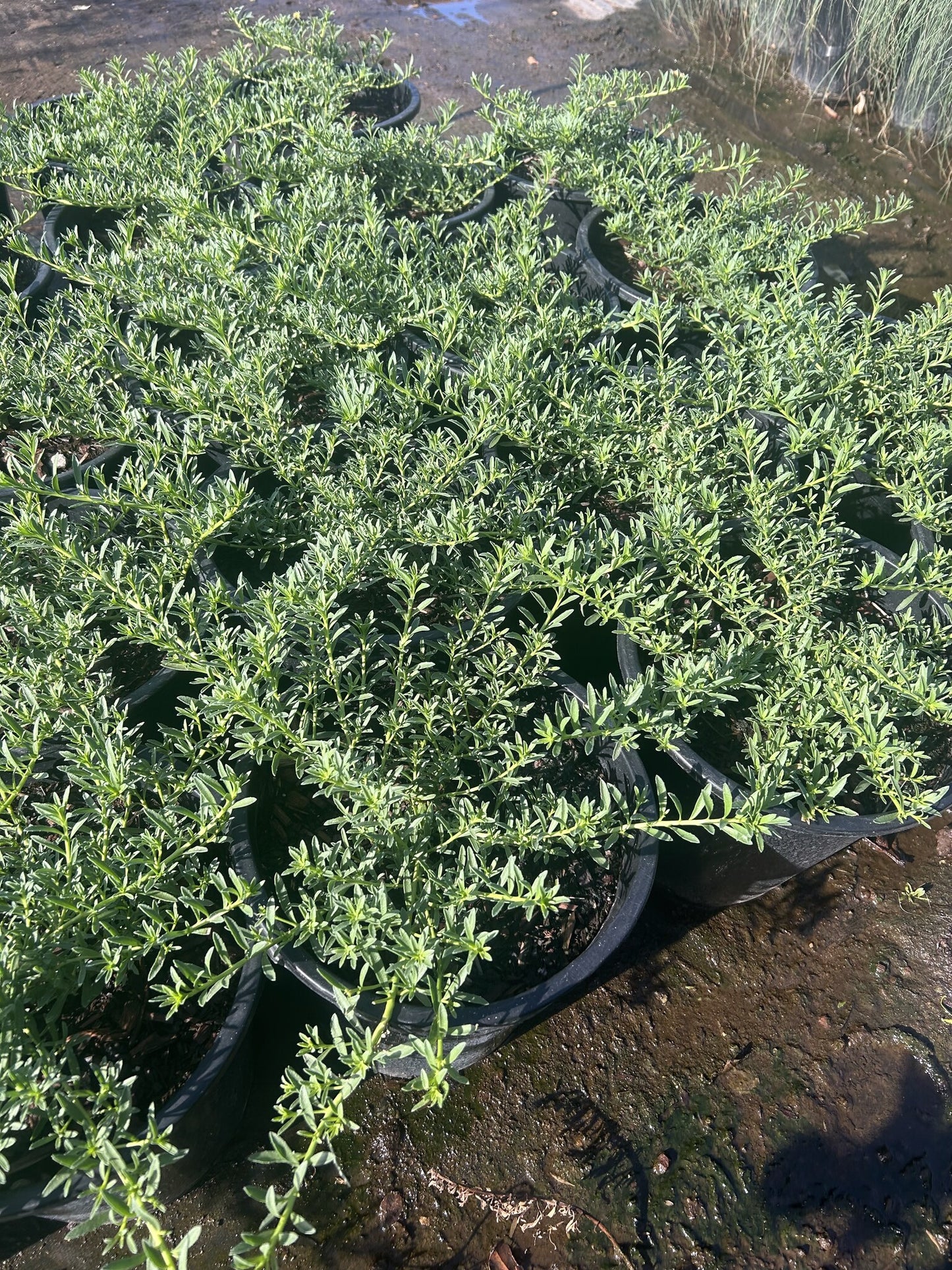
Creeping Myoporum (Myoporum parvifolium) is Arizona's favorite low-maintenance ground cover for hot, sunny landscapes. This fast-spreading plant forms a dense, bright green carpet that suppresses weeds, stays evergreen year-round, and thrives on minimal water once established. Whether you're covering a bare hillside in Scottsdale, filling a rock garden in Chandler, or replacing thirsty grass in Gilbert — Creeping Myoporum gets the job done.
Myoporum Plant Details
| Attribute | Detail |
|---|---|
| Scientific Name | Myoporum parvifolium |
| Common Names | Myoporum, Creeping Myoporum, Creeping Boobialla |
| Mature Height | 4–6 inches |
| Mature Width | 5–9 feet |
| Growth Rate | Fast — 1–2 feet of spread per year in Phoenix |
| Sun | Full sun to partial shade. Handles reflected heat from walls and paving. |
| Water | Low once established. Highly drought-tolerant. |
| USDA Zones | 9–11 (Phoenix is Zone 9b–10a) |
| Soil | Well-draining. Adapts to Arizona caliche soils. |
| Foliage | Evergreen — stays green year-round |
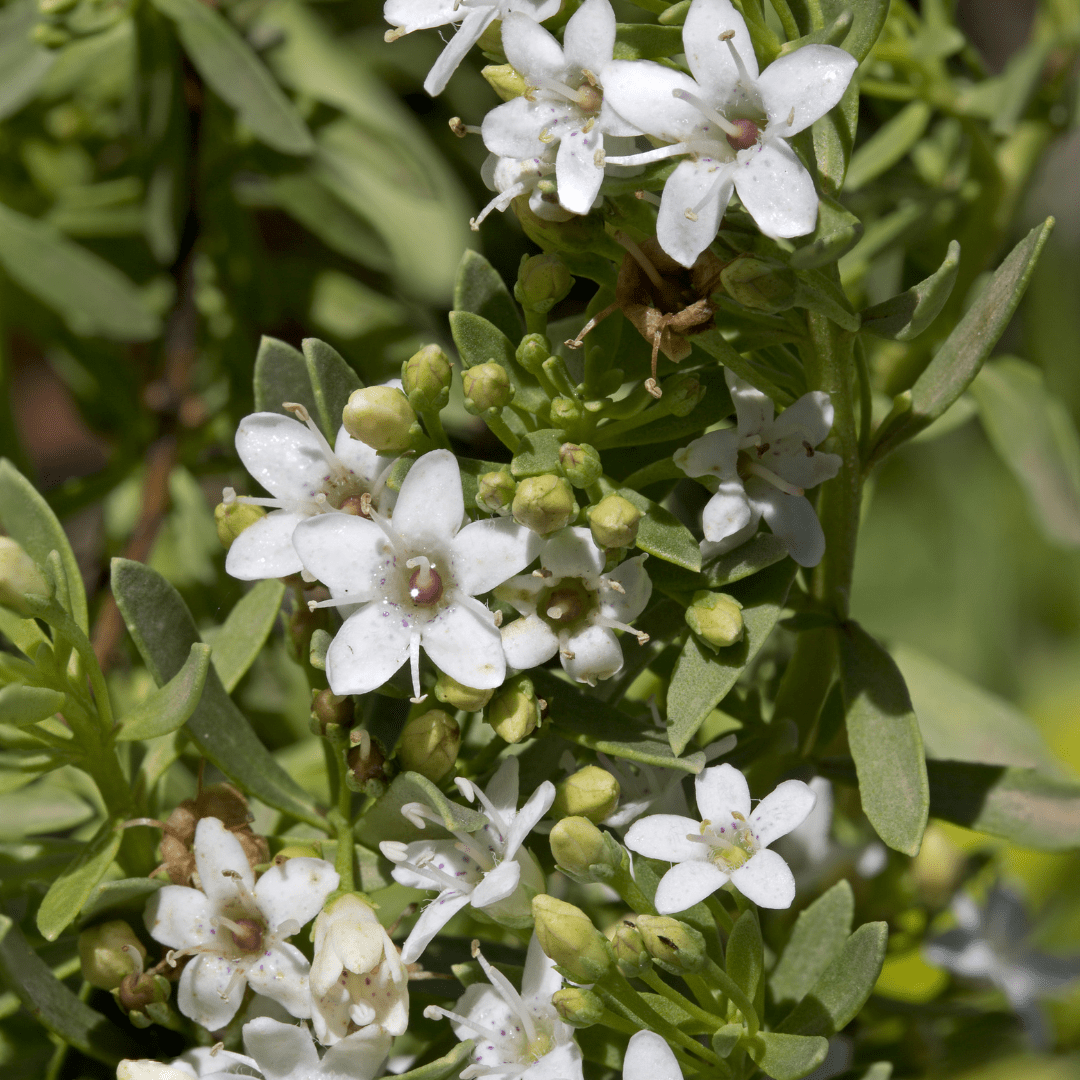
| Flower Color | White or pale pink (small, star-shaped blooms) |
Myoporum Uses in Phoenix Landscapes
Weed-Suppressing Ground Cover
Myoporum's dense, mat-forming habit makes it one of the most effective weed suppressors available for Phoenix landscapes. Once established, its thick foliage leaves no room for weeds to take hold, reducing maintenance significantly. Plant 2–3 feet apart for full coverage within 1–2 growing seasons — for a 100 sq ft area, plan on about 11–12 plants.
Slope and Erosion Control
Myoporum's fibrous root system grips soil effectively, making it ideal for sloped areas and hillsides where erosion is a concern. Its spreading habit quickly stabilizes bare soil while the low profile stays out of sight lines. It pairs beautifully with Desert Spoon or Texas Sage for a layered slope planting in Mesa or Peoria.
Pool and Patio Surround
Myoporum is a popular choice around Phoenix pools because it stays low, creates minimal debris, and its small white flowers don't attract heavy bee traffic. The ground-hugging profile keeps sightlines open while greening up concrete or decomposed granite zones. Pair with Blue Nolina or Bear Grass for contrast along pool edges in Tempe or Glendale.
Water-Wise Lawn Alternative
As Phoenix homeowners switch from grass to desert-friendly landscapes, Myoporum has become a go-to turf replacement. It provides lush, green coverage with a fraction of the water requirements of traditional lawn. Use it in front yard parkways, median strips, or anywhere you want year-round green without the high water bill.
Best Time to Plant Myoporum in Phoenix
Fall planting (October through November) is ideal for Myoporum in the Phoenix Valley. Warm soil temperatures encourage fast root establishment while cooler air temperatures reduce transplant stress — giving the plant a full 6–8 months of root growth before its first Phoenix summer. Spring planting (February through April) is a solid secondary option. Avoid summer planting if possible, as the extreme heat will require heavy supplemental watering to keep new transplants alive.
How to Plant Myoporum
- Dig wide, not deep — dig each hole 2–3x the width of the root ball, same depth
- Check for caliche — break through any hardpan layer to ensure proper drainage
- Backfill with native soil — a light 20% organic amendment is fine but not required
- Spacing — plant 2–3 feet apart for ground cover use; 4–5 feet apart for slower fill
- Water basin — build a 3–4 inch ring around each plant to direct water to roots
- Mulch — apply 2–3 inches of bark or gravel mulch to conserve moisture
Watering Myoporum in Phoenix
First Year Watering Schedule
- Weeks 1–2: Water every 1–2 days, deep and slow (20–30 minutes)
- Month 1–2: Reduce to every 3–4 days
- Month 3–6: Water every 7–10 days (every 5–7 days during peak summer heat)
- After Year 1: Every 10–14 days in summer; every 3–4 weeks in winter
Drip Irrigation
Use 1-GPH emitters placed 12–18 inches from the crown of each plant. As Myoporum spreads, you can reduce irrigation frequency — established plants are highly drought tolerant and thrive on minimal supplemental water. In Phoenix, most established Myoporum plantings need only 2–3 waterings per month during summer.
How fast does Myoporum grow in Phoenix?
In the Phoenix Valley, Myoporum typically spreads 1–2 feet per year, sometimes faster with regular irrigation. A single plant can cover 5–9 feet within a few growing seasons.
Is Myoporum drought tolerant once established?
Yes — Myoporum is one of the most drought-tolerant ground covers available for Arizona landscapes. After one full growing season, it can survive on minimal irrigation and handles the intense Phoenix heat very well.
Is Myoporum pool-friendly?
Absolutely. Myoporum stays low, drops minimal debris, and its small flowers don't attract heavy bee traffic — making it a clean, low-maintenance option for pool surrounds in Scottsdale, Chandler, and Tempe.
Can Myoporum handle reflected heat from walls?
Yes. Myoporum handles reflected heat better than most ground covers. It's often planted along south-facing walls, concrete driveways, and rock borders in Phoenix — full sun exposure actually promotes dense, compact growth.
What's the difference between Myoporum and traditional lawn grass?
Myoporum uses a fraction of the water that Bermuda or St. Augustine grass requires. It doesn't need mowing, fertilizing, or aerating, and stays green year-round — making it an excellent turf replacement for water-conscious Phoenix homeowners.
You May Also Like
Blue Nolina — A dramatic, fountain-like accent plant that pairs beautifully with Myoporum for texture contrast in modern desert landscapes.
Desert Spoon — A striking structural plant that complements Myoporum's low, spreading habit with bold vertical form.
Bear Grass — Another drought-tolerant, low-maintenance option for Phoenix landscapes, ideal for mixing with Myoporum in naturalistic plantings.
Texas Sage — A purple-blooming shrub that makes a colorful backdrop when combined with Myoporum ground cover in Scottsdale or Mesa yards.
Cape Honeysuckle — A vibrant orange flowering shrub that adds seasonal color above a Myoporum ground cover planting.
How Many Myoporum Do I Need?
A single plant spreads 5 to 9 feet wide, so 3 foot on-center spacing knits into a solid mat within one to two seasons. Use the table below to estimate plant counts for full ground cover:
| Area to Cover | Plants Needed (3 ft o.c.) |
|---|---|
| 25 sq ft | 3 |
| 50 sq ft | 6 |
| 100 sq ft | 12 |
| 200 sq ft | 23 |
For quicker coverage, tighten to 2 foot spacing and add roughly 40 to 50 percent more plants; for slower, lower-cost fill, open up to 4 to 5 feet.
Myoporum Season-by-Season in Phoenix
- Spring (Feb–Apr): Vigorous new growth flushes across the mat and small white to pale-pink star flowers appear. A strong second planting window once nights warm.
- Summer (May–Sep): Peak spreading season. Myoporum thrives in extreme heat and reflected heat off walls and paving, putting on the most growth of the year. Monsoon rains (Jul–Sep) supplement irrigation; back off the drip during wet stretches to avoid soggy roots.
- Fall (Oct–Nov): Prime planting season in Phoenix. Warm soil drives fast root establishment while cooler air eases transplant stress.
- Winter (Dec–Jan): Stays evergreen and green through most Valley winters. It can show leaf burn or dieback in a hard frost below the upper 20s°F, so site it where it gets a little overhead protection in the coldest microclimates.
At a Glance
✔ Evergreen ✔ Drought-Tolerant ✔ Heat-Loving (Reflected-Heat Tolerant) ✔ Pool-Friendly (Low-Litter) ✔ Low-Maintenance
Plant It With
- Desert Spoon: a bold vertical accent that rises above the low Myoporum mat for structure and contrast.
- Texas Sage: a purple-blooming shrub backdrop that layers color above the green carpet.
- Red Yucca: an architectural, drought-tough accent with red bloom spikes for slope and parkway plantings.
- AZ Ice Plant (Copper): a succulent ground cover to weave alongside Myoporum for added flower color.
Is Myoporum Right for Your Yard?
Myoporum is a top pick for full-sun slopes, parkways, pool surrounds, and lawn-replacement areas with well-draining soil, where its fast, weed-smothering spread and reflected-heat tolerance shine. It is not a fit for shady spots, poorly drained or constantly wet ground (it is prone to root rot in soggy soil), or the coldest frost-pocket yards where a hard freeze can burn it back.
Customer Reviews
My plants arrived quickly and they were in good condition and well shaped.
Share