

Blue Monstrosus cereus
Blue Monstrosus cereus
Couldn't load pickup availability
The Most Sculptural Cactus for Phoenix Modern Landscapes
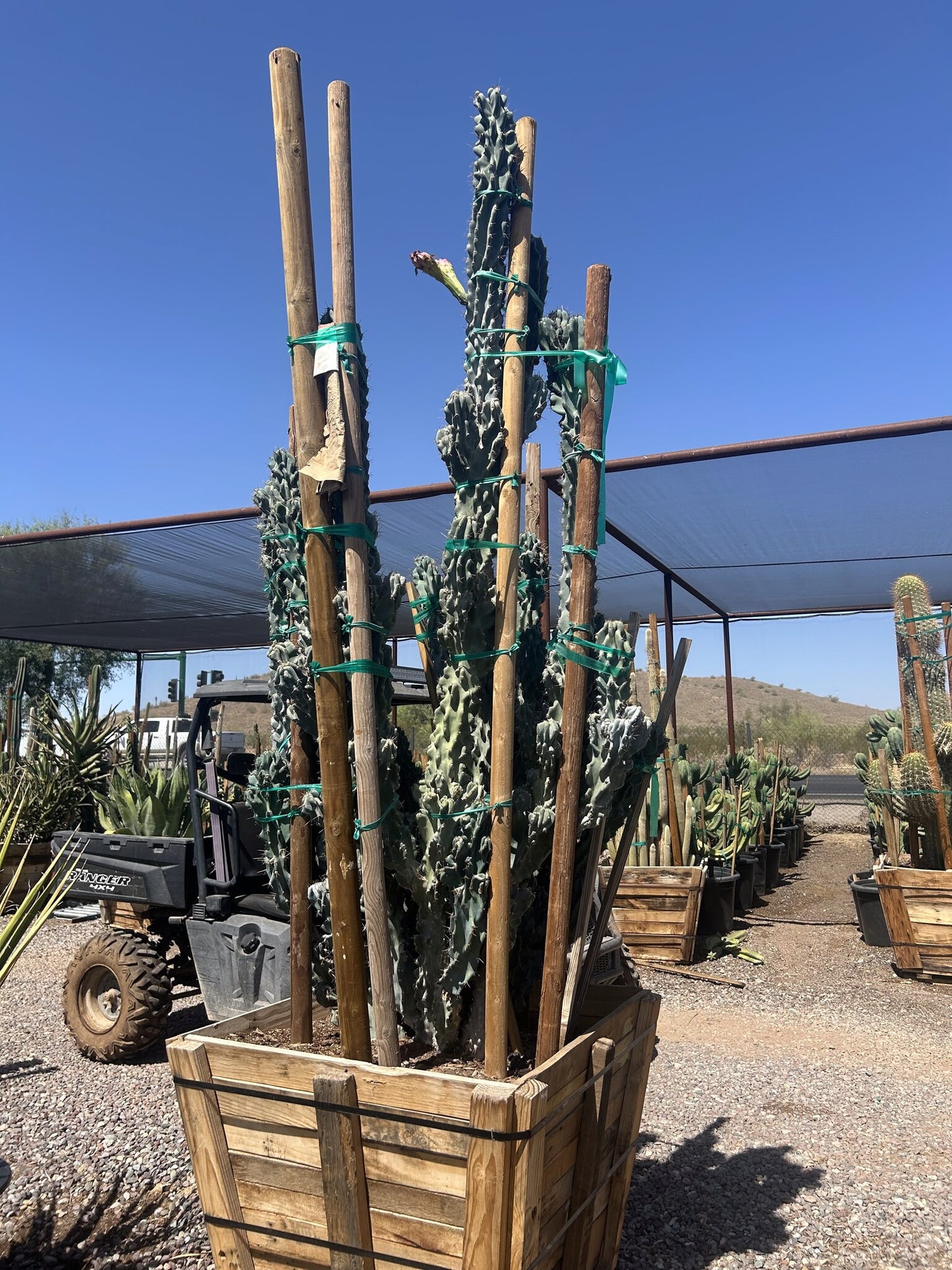
The Blue Monstrosus Cereus (Cereus repandus f. monstruosus) is unlike any other cactus in the Phoenix Valley. Its twisted, contorted blue-green stems grow in unpredictable, sculptural forms that make every specimen a one-of-a-kind living art piece. No two plants look alike — each develops its own unique ridges, bumps, and irregular branching patterns that become more dramatic with age. Hardy, drought-tolerant, and surprisingly fast-growing, this cactus thrives in full sun and asks for almost nothing in return. Whether you're creating a contemporary desert garden in Scottsdale, adding a conversation piece to a Mesa patio, or filling a xeriscape bed in Chandler with unforgettable texture — the Blue Monstrosus Cereus is the plant that stops people in their tracks.
Blue Monstrosus Cereus Plant Details
| Attribute | Detail |
|---|---|
| Scientific Name | Cereus repandus f. monstruosus |
| Common Names | Blue Monstrosus Cereus, Monstrose Cereus, Monstrose Apple Cactus |
| Mature Height | 10–15 feet |
| Mature Width | 3–6 feet |
| Growth Rate | Moderate to fast — 6–12 inches per year in Phoenix |
| Sun | Full sun to partial shade. Handles reflected heat from walls. |
| Water | Low once established. Highly drought-tolerant. |
| USDA Zones | 9–11 (Phoenix is Zone 9b–10a) |
| Soil | Well-draining. Adapts to Arizona caliche soils with drainage amendment. |
| Foliage | Evergreen — blue-green monstrose stems year-round |
| Bloom | White to pale yellow nocturnal flowers in summer |
Blue Monstrosus Cereus Uses in Phoenix Landscapes
Living Sculpture & Focal Point
This is the ultimate statement cactus. A single mature Blue Monstrosus Cereus in a gravel bed or raised planter commands attention like a piece of outdoor sculpture. Landscape architects in Paradise Valley and North Scottsdale use it as a standalone focal point where its twisted form can be fully appreciated. Uplight it at night for even more drama.
Modern & Contemporary Desert Design
The irregular, organic forms of the Monstrosus Cereus contrast beautifully with the clean lines of modern architecture. Pair it with smooth-skinned cacti like Totem Pole or Blue Ghost for a curated cactus garden that balances order and chaos. The blue-green skin tone works perfectly alongside concrete, steel, and glass design elements common in Scottsdale and Tempe homes.
Xeriscape Beds & Rock Gardens
Plant Blue Monstrosus Cereus among boulders and decomposed granite for a natural desert look with maximum visual impact. It pairs well with Golden Barrel, Agave, and Desert Spoon for a low-water garden in Gilbert, Peoria, or Glendale that looks professionally designed.
Container & Courtyard Specimen
Smaller sizes (1–5 gallon) thrive in large containers on patios and courtyards. The monstrose form stays compact longer than standard columnar cacti, making it ideal for spaces where you want drama without rapid overgrowth. It also tolerates partial shade, making it versatile for covered patios.
Best Time to Plant Blue Monstrosus Cereus in Phoenix
Fall (October–November) is ideal. Warm soil promotes root establishment while cooler air reduces transplant stress. The plant gets 6–8 months to anchor its roots before the first Phoenix summer. Spring (February–April) is the second-best planting window. Avoid summer planting if possible — though this cactus is heat-tough, fresh transplants establish faster in moderate conditions.
How to Plant Blue Monstrosus Cereus
- Dig wide, not deep — 2–3x the root ball width, same depth as the container.
- Check for caliche — break through any hardpan layer to ensure excellent drainage.
- Backfill with native soil — add 20% pumice or perlite for extra drainage if needed.
- Spacing — 4–6 feet apart for grouped plantings; 6+ feet for standalone specimens that will branch wide.
- Water basin — build a 3–4 inch ring around the base to direct water to the root zone.
- Mulch — 2–3 inches of gravel mulch around the base (avoid bark mulch which retains too much moisture).
Watering Blue Monstrosus Cereus in Phoenix
First Year Watering Schedule
- Weeks 1–2: Every 3–4 days, deep and slow (20–30 min)
- Month 1–2: Every 5–7 days
- Month 3–6: Every 10–14 days (7–10 days in peak summer)
- After Year 1: Every 14–21 days summer; monthly or less in winter
Drip Irrigation
Place one 2 GPH emitter 18–24 inches from the trunk base. Established plants need very little supplemental water — overwatering can cause stem rot, especially in winter. Let the soil dry completely between waterings.
How fast does Blue Monstrosus Cereus grow in Phoenix?
Moderately fast — expect 6–12 inches of new growth per year on established plants. The monstrose form means growth is unpredictable and sculptural rather than uniformly upward, which is part of its appeal.
Is it drought tolerant once established?
Very. After the first year, this cactus can survive on rainfall alone during Phoenix winters. In summer, occasional deep watering every 2–3 weeks keeps growth active and the skin color vibrant.
What makes it "monstrose"?
Monstrose is a natural genetic mutation that causes irregular, unpredictable growth patterns instead of the normal symmetrical form. Each growing point develops at different rates and angles, creating the twisted, lumpy, sculptural appearance that makes these plants so prized by collectors and designers.
Can it handle full Phoenix summer heat?
Absolutely. Blue Monstrosus Cereus handles temperatures above 115°F and reflected heat from walls and pavement. It also tolerates partial shade, giving you more placement flexibility than most columnar cacti.
Does it produce fruit?
Yes — mature plants can produce small, edible fruit similar to Peruvian Apple Cactus (they're closely related). The nocturnal white flowers bloom in summer and are pollinated by moths and bats.
You May Also Like
- Blue Myrtle Cactus — another blue-skinned columnar with a more uniform growth habit, great for pairing.
- Totem Pole Major — smooth, spineless monstrose cactus for a different take on sculptural forms.
- Spiral Cereus — twisted columnar with spiraling ribs that complements the Monstrosus form.
- Night-blooming Cereus — a related species famous for its spectacular night-blooming flowers.
- Blue Ghost — blue Pilosocereus columnar that matches the cool blue-green tones of the Monstrosus.
How Many Blue Monstrosus Cereus Do I Need?
Every Blue Monstrosus Cereus grows into a one-of-a-kind sculptural form (10 to 15 ft high, 3 to 6 ft wide), so it is almost always used as a single living-sculpture focal point rather than a hedge. Give one room to be seen from multiple angles in a gravel bed or raised planter. If you want a curated cactus grouping, set odd-numbered groups of 3 spaced 4 to 6 ft apart so each twisted form reads on its own, and allow 6+ ft of clearance for standalone specimens that will branch wide.
| Planting | Spacing | Plants needed |
|---|---|---|
| Single living-sculpture focal point | standalone | 1 |
| Curated sculptural grouping | 4 to 6 ft apart | 3 |
| Bold xeriscape composition | 4 to 6 ft apart | 5 |
Blue Monstrosus Cereus Season-by-Season in Phoenix
- Spring (Feb to Apr): New monstrose growth flushes from multiple points, each at its own angle. Best second planting window once nights stay above the upper 40s.
- Summer (May to Sep): Built for extreme Phoenix heat, handling 115 F+ and reflected heat with ease, and it will even take partial shade on a covered patio. White night flowers open in summer for moths and bats. Water deeply but infrequently and let the soil dry fully, especially through monsoon humidity.
- Fall (Oct to Nov): Prime planting season. Warm soil and mild air give roots time to anchor before winter. Small edible fruit may follow the season's flowers on mature plants.
- Winter (Dec to Jan): Holds its blue-green color and twisted form. Established plants take typical Valley winters in stride. Cut water back to monthly or less, since cold plus wet soil is the main risk of stem rot.
At a Glance
✔ Heat-Loving (Reflected-Heat Tolerant) ✔ Drought-Tolerant ✔ Evergreen ✔ Low-Maintenance ✔ Pollinator-Friendly ✔ Edible ✔ Deer & Rabbit-Resistant
Plant It With
- Blue Myrtle Cactus: a more uniform blue-skinned columnar that pairs order against the monstrose chaos.
- Blue Ghost: matching cool blue-green tones in a clean upright column.
- Mexican Fence Post: crisp green columns that frame the twisted form.
- Desert Spoon: silver-blue fountain of foliage that softens the base of the planting.
Is Blue Monstrosus Cereus Right for Your Yard?
Blue Monstrosus Cereus thrives in full sun to partial shade with fast-draining soil, shrugs off reflected heat above 115 F, and asks for almost no water once established, making it one of the most forgiving statement cacti for the Valley. It is not a fit if your soil stays wet or you want a predictable, symmetrical shape, since the monstrose form grows in irregular, unrepeatable directions and soggy soil leads to stem rot.
Share