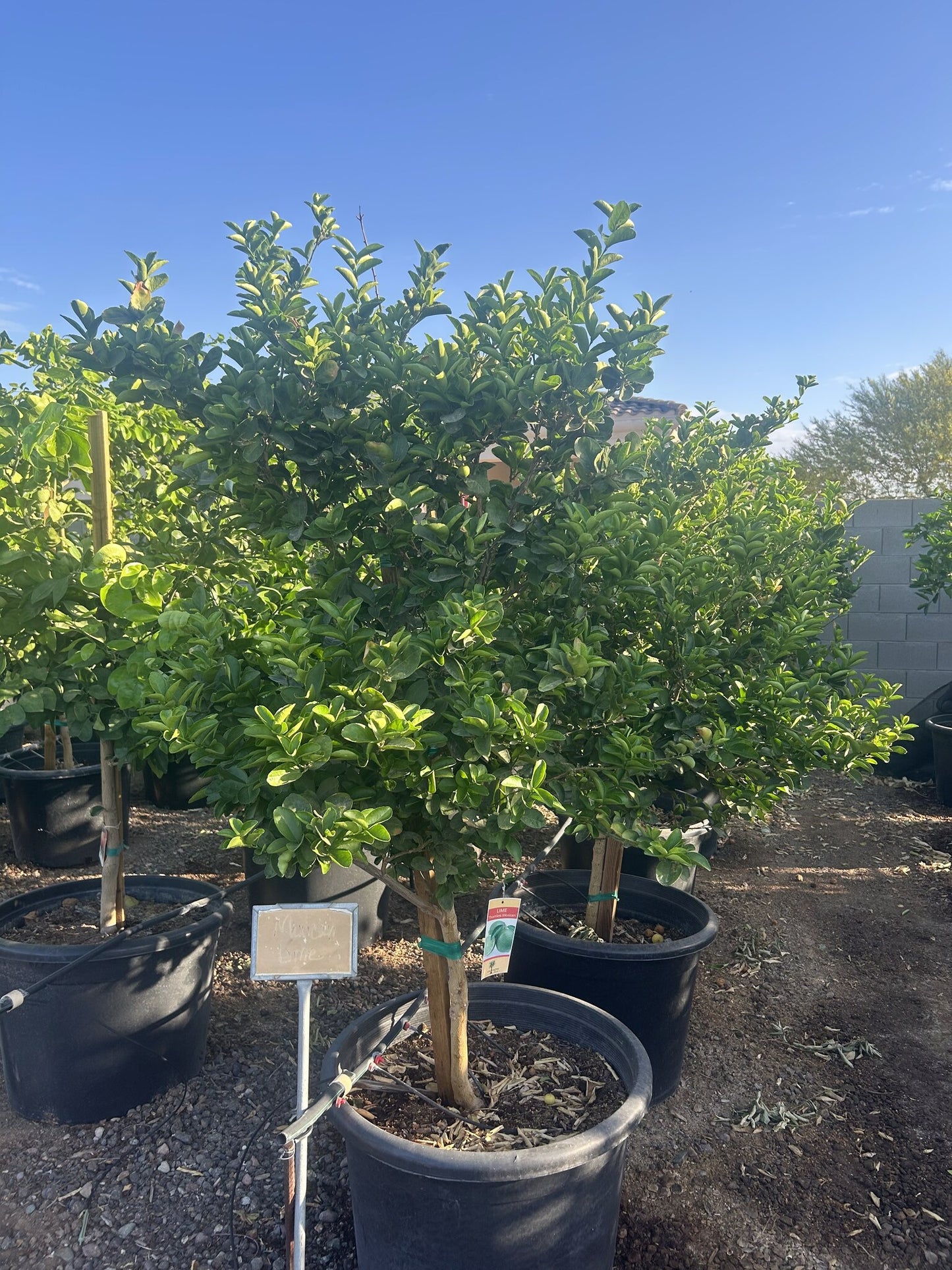


Mexican Lime
Mexican Lime
Couldn't load pickup availability
Grow Fresh Key Limes Right in Your Phoenix Backyard
Mexican Lime (Citrus aurantiifolia), also known as the Key Lime, is one of the most rewarding citrus trees for Phoenix Valley homeowners. This compact evergreen tree produces an abundance of small, intensely flavored limes prized by chefs and home cooks alike. Its fragrant white blossoms perfume your yard while the dense green canopy provides light shade. Thriving in Phoenix's long growing season, the Mexican Lime can fruit nearly year-round in Scottsdale, Mesa, Chandler, and Gilbert — giving you a steady supply of fresh limes for cooking, cocktails, and more.
Mexican Lime Tree Plant Details
| Attribute | Detail |
|---|---|
| Scientific Name | Citrus aurantiifolia |
| Common Names | Mexican Lime, Key Lime, West Indian Lime, Bartender's Lime |
| Mature Height | 6–13 feet |
| Mature Width | 6–10 feet |
| Growth Rate | Moderate to fast — 1–2 feet per year in Phoenix |
| Sun | Full sun (6+ hrs). South- or west-facing exposure ideal in Phoenix. |
| Water | Moderate. Regular deep watering needed, especially during fruit production. |
| USDA Zones | 9–11 (Phoenix is Zone 9b–10a) |
| Soil | Well-draining preferred. Amend Arizona caliche soils with compost for best results. |
| Foliage | Evergreen — glossy dark green leaves year-round |
| Fruit | Small green limes turning yellow when ripe, intensely aromatic and flavorful |
Mexican Lime Uses in Phoenix Landscapes
Backyard Fruit Production
The Mexican Lime is a prolific producer in Phoenix's warm climate. A single mature tree can yield hundreds of limes per year — enough for fresh lime juice, key lime pie, ceviche, margaritas, and more. Plant it in a sunny spot near your kitchen or outdoor cooking area for the ultimate farm-to-table convenience. The fruit is smaller and more aromatic than Persian limes, with a distinctive tart flavor prized in Mexican and Thai cuisine.
Patio & Container Growing
Mexican Limes grow beautifully in large containers on patios, pool decks, and courtyards. Their compact size makes them one of the best citrus trees for container culture. Use a well-draining citrus potting mix and a container with drainage holes. Container trees are easier to protect from the rare hard freeze in Tempe and Mesa. Move them to a sheltered spot against a south-facing wall when frost threatens.
Edible Landscape Design
Incorporate Mexican Lime into your landscape design alongside other fruit trees for a productive and beautiful yard. The glossy evergreen foliage and fragrant blossoms make it ornamental as well as functional. Pair with other Three Timbers citrus like Lisbon Lemon and Meyers Lemon for a complete backyard citrus grove in Peoria, Glendale, or Gilbert.
Best Time to Plant Mexican Lime in Phoenix
Spring (March–April) is the ideal planting window for citrus in Phoenix. The warming temperatures encourage rapid root establishment and new growth. Fall (October–November) is the second-best option. Avoid planting in summer — extreme heat stresses new transplants, and avoid winter when cold snaps can damage young citrus trees.
How to Plant Mexican Lime
- Dig wide, not deep — hole should be 2–3x the root ball width, same depth. Never bury the graft union.
- Check for caliche — break through any hardpan layer completely. Citrus roots need excellent drainage.
- Backfill with amended soil — mix 30% compost with native soil. Citrus benefits from richer soil than most desert plants.
- Spacing — 8–10 feet from structures or other trees for air circulation and sun access.
- Water basin — build a wide 4–5 inch soil ring to direct deep watering to the root zone.
- Mulch — 3–4 inches of bark mulch, keeping it 6 inches away from the trunk to prevent rot.
Watering Mexican Lime in Phoenix
First Year Watering Schedule
Weeks 1–2: Every 2–3 days, deep soak for 30+ minutes. Month 1–3: Every 3–4 days. Month 3–12: Every 5–7 days. After Year 1: Every 7–10 days in summer; every 14–21 days in winter. Citrus needs consistent moisture — irregular watering causes fruit drop and split fruit.
Drip Irrigation
Place 2–3 emitters (2 GPH each) in a ring 18–24 inches from the trunk. As the tree grows, expand the emitter ring outward to match the drip line. Mature trees benefit from a wider irrigation zone that encourages deep root growth.
How long until my Mexican Lime produces fruit?
Container-grown trees from Three Timbers are already established and may fruit within the first year of planting. Full production typically starts in years 2–3 as the tree develops its canopy and root system.
Is Mexican Lime cold hardy in Phoenix?
Mexican Lime is the most cold-sensitive common citrus, tolerating temperatures down to about 28–30°F. In most Phoenix Valley locations, it does fine through winter, but protect young trees with frost cloth during rare hard freeze events below 28°F.
What's the difference between Mexican Lime and Persian Lime?
Mexican Limes (Key Limes) are smaller, seedier, and more aromatic with a more intense tart flavor. Persian Limes are the larger seedless limes you see in grocery stores. For cooking and cocktails, many chefs prefer the superior flavor of the Mexican Lime.
Can I grow Mexican Lime near my pool?
Yes — Mexican Lime is a good pool-side tree. The evergreen foliage doesn't create excessive leaf litter, and the fruit is a bonus for poolside entertaining. Just ensure adequate sun exposure and keep the root zone well-drained.
You May Also Like
Lisbon Lemon — classic lemon tree that pairs perfectly for a complete citrus corner.
Meyers Lemon — sweeter lemon variety with beautiful orange-yellow fruit.
Mexican Tree Yucca — dramatic sculptural tree to contrast with the lime's soft canopy.
Red Bird of Paradise — fiery blooms that complement the lime tree's green foliage.
Yellow Bells — bright yellow flowers nearby create a cheerful tropical feel.
How Many Mexican Lime Trees Do I Need?
Mexican Lime is self-fruitful, so one tree produces a full crop on its own. It stays compact at 6 to 10 feet wide, making it one of the easiest citrus to fit into a small yard or a large pot. For a backyard citrus row, space trees on 9 foot centers:
| Orchard Row Length | Trees at 9 ft Spacing |
|---|---|
| 9 ft | 2 trees |
| 18 ft | 3 trees |
| 27 ft | 4 trees |
| 36 ft | 5 trees |
For a single patio or kitchen-side specimen, plant 4 to 6 feet from walls and walkways, or grow it in a 15+ gallon container so you can move it under cover on the coldest nights.
Mexican Lime Season-by-Season in Phoenix
- Spring (Feb to Apr): Fragrant white blossoms open and draw bees, setting the first wave of fruit. New growth flushes on this fast grower. Prime planting window. Feed with citrus fertilizer at bloom.
- Summer (May to Sep): Heat-loving and highly productive through the long desert summer. Keep moisture steady to prevent fruit drop and splitting. Limes size up and can be picked green or left to turn yellow.
- Fall (Oct to Nov): A reliable second planting window and a heavy fruiting period. Pick limes as you need them.
- Winter (Dec to Jan): Mexican Lime is the most frost-tender common citrus, so cover young trees on any night near or below 30°F and move container trees under a patio cover or against a warm south wall. In most Valley yards it carries through winter with this simple protection.
At a Glance
✔ Edible ✔ Evergreen ✔ Heat-Loving (Reflected-Heat Tolerant) ✔ Pollinator-Friendly ✔ Pool-Friendly (Low-Litter) ✔ Low-Maintenance
Plant It With
- Bearss Lime: a larger, seedless Persian lime to extend your lime supply.
- Lisbon Lemon: a classic high-yield lemon for a complete citrus corner.
- Meyers Lemon: a sweeter, thinner-skinned lemon that pairs well with the tart lime.
- AZ Sweet Orange: sweet winter oranges to round out the backyard grove.
Is Mexican Lime Right for Your Yard?
Mexican Lime is right for you if you want intensely flavored limes from a compact, pool-friendly tree in full sun with well-draining soil and steady water. Its small size suits courtyards, kitchen gardens, and large containers. It is not the best fit for a cold, low-lying frost pocket, since it is the most cold-sensitive common citrus and young trees need reliable freeze protection to get established.
Customer Reviews
Got delivered quickly, mostly healthy, just the top looked like something was eating the leafs, but it's now growing healthy,
Share