

Mexican Evening Primrose
Mexican Evening Primrose
Fast-spreading pink blooms for effortless ground cover
Couldn't load pickup availability
Phoenix's Most Cheerful Low-Water Spreading Ground Cover — Mexican Evening Primrose
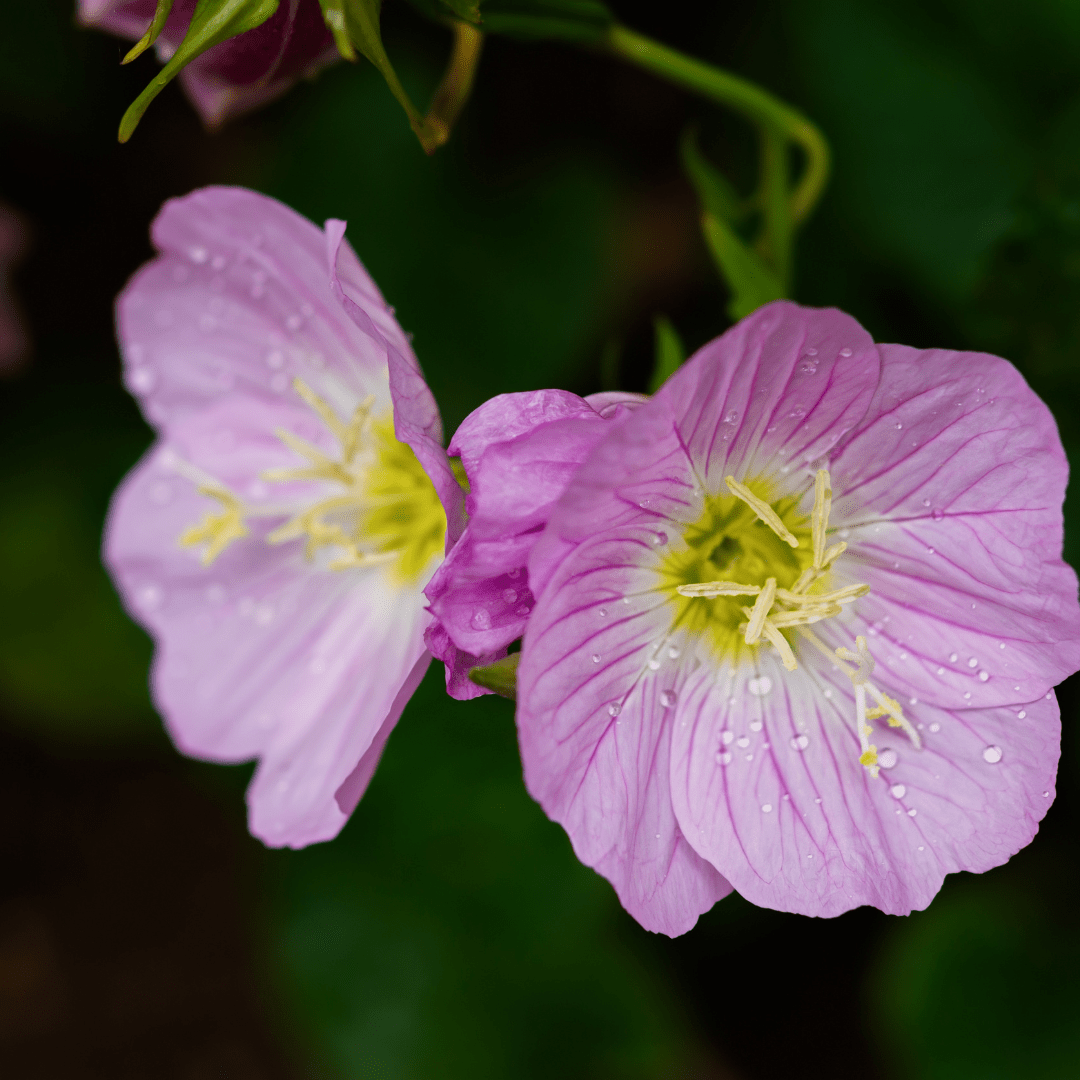
Mexican Evening Primrose (Oenothera berlandieri) is Phoenix's most reliably blooming perennial ground cover for full sun desert landscapes. This tough Southwestern native produces masses of delicate pink blooms from spring through fall, spreading energetically to fill gaps in rock gardens, slopes, and borders with almost zero care. Once established, it laughs at Phoenix summer heat and thrives on minimal irrigation. Whether you're covering a bare caliche slope in Mesa, adding pollinator-friendly color in Chandler, or filling a low-maintenance border in Gilbert — Mexican Evening Primrose delivers season after season.
Mexican Evening Primrose Plant Details
| Attribute | Detail |
|---|---|
| Scientific Name | Oenothera berlandieri (syn. Oenothera speciosa) |
| Common Names | Mexican Evening Primrose, Pink Evening Primrose, Showy Evening Primrose |
| Mature Height | 6–12 inches |
| Mature Width | 1–3 feet (spreading ground cover) |
| Growth Rate | Fast — spreads readily by runners in warm Phoenix conditions |
| Sun | Full sun (6+ hrs). Handles reflected heat from walls and hardscape. |
| Water | Low once established. Very drought-tolerant after first season. |
| USDA Zones | 5–9 (Phoenix is Zone 9b–10a — thrives here) |
| Soil | Well-draining. Adapts excellently to Arizona caliche soils; does not like wet feet. |
| Foliage | Semi-evergreen — stays green in mild winters; may die back slightly in hard freezes |
| Bloom Color | Soft pink with yellow centers (occasionally white) |
| Bloom Season | Spring through fall; often year-round in warm Phoenix winters |
| Native Status | Native to southwestern USA and Mexico |
| Attracts | Bees, butterflies, and hummingbirds |
Mexican Evening Primrose Uses in Phoenix Landscapes
Spreading Ground Cover for Desert Slopes and Rock Gardens
Mexican Evening Primrose is one of the best spreading ground covers for Phoenix slopes, berms, and rock gardens where water runs off quickly. Its spreading root system helps stabilize soil while its low foliage suppresses weeds naturally. Plant it 18–24 inches apart and it will fill in solid coverage within one season. It pairs beautifully with desert boulders, decomposed granite, and boulders in naturalistic Scottsdale and Peoria landscapes.
Pollinator and Wildlife Border
Few plants in the Phoenix palette attract pollinators as reliably as Mexican Evening Primrose. Its cup-shaped pink flowers are irresistible to native bees, painted lady butterflies, and even hummingbirds. Mass-plant it in drifts alongside Desert Marigold, Brittlebush, and Autumn Sage for a full-season pollinator garden that blooms from February through November in the Phoenix Valley.
Low-Maintenance Perennial Border Edging
Its compact 6–12 inch height makes Mexican Evening Primrose a natural front-of-border plant for xeriscape beds. Use it along driveways, pathways, and fence lines where you want consistent pink color without constant maintenance. In Tempe and Chandler neighborhoods it's a popular choice for HOA-compliant low-water landscaping that still looks lush and colorful through the summer months.
Container and Raised Bed Accent
In 1-gallon or 3/5-gallon pots, Mexican Evening Primrose makes a lovely trailing accent for patio containers and raised desert garden beds. Its soft pink blooms contrast beautifully with the silver foliage of desert plants like Artemisia or the bold textures of Agave and Desert Spoon. A single plant will quickly fill a 12-inch container with trailing foliage and continuous blooms.
Best Time to Plant Mexican Evening Primrose in Phoenix
Fall planting (October–November) is ideal in Phoenix. Cool air reduces transplant stress while warm soil encourages root development over winter, giving plants 5–6 months to establish before their first Phoenix summer. Spring planting (February–April) is equally good — get plants in the ground before temperatures climb past 95°F so roots can settle before the heat peaks. Mexican Evening Primrose is one of the most forgiving plants to establish, even tolerating summer planting with adequate irrigation.
How to Plant Mexican Evening Primrose
- Dig wide, not deep — excavate a hole 2–3x the root ball width, same depth as the container.
- Check for caliche — break through any hardpan layer beneath to ensure drainage; this plant does not tolerate waterlogged roots.
- Backfill with native soil — minimal amendment needed; a light 20% compost blend is fine but not required.
- Spacing — 18–24 inches apart for ground cover; 12 inches for a quicker-filling border edge.
- Water basin — build a 2–3 inch soil ring around each plant to direct irrigation to the root zone during establishment.
- Mulch — apply 1–2 inches of bark or gravel mulch to retain moisture (keep mulch away from plant crown).
Watering Mexican Evening Primrose in Phoenix
First Year Watering Schedule
- Weeks 1–2: Every 1–2 days, deep and slow
- Months 1–2: Every 3–4 days
- Months 3–6: Every 7–10 days (every 5–7 days during peak summer)
- After Year 1: Every 10–14 days in summer; every 3–4 weeks in winter
Drip Irrigation
Place 1 GPH drip emitters 12–18 inches from plant crowns. Run 20–30 minutes per cycle. Once established after year one, Mexican Evening Primrose is highly drought tolerant and often thrives on monsoon rainfall with only occasional supplemental deep watering during the dry pre-monsoon months (April–June).
Does Mexican Evening Primrose spread aggressively?
Yes — it spreads by underground runners and can colonize an area over time. This makes it excellent as a ground cover or slope plant, but it may need occasional edge management near formal planting beds or lawns. In most Phoenix rock garden settings it's considered a well-behaved, attractive spreader.
Is Mexican Evening Primrose drought tolerant in Phoenix?
Very much so. Once established after the first growing season, it survives on minimal supplemental irrigation, relying largely on Phoenix's monsoon rains (July–September). During drought conditions, plants may temporarily die back to their roots but regrow vigorously when water returns.
Does it bloom in Phoenix summer heat?
Yes — Mexican Evening Primrose blooms reliably through Phoenix's triple-digit summer heat, often continuing to flower right through monsoon season. The blooms are at their peak in spring (March–May) and again in fall (September–October), with intermittent flowering throughout summer.
Why is it called "evening primrose" if it blooms during the day?
The name comes from related species whose flowers open in the evening. Mexican Evening Primrose (Oenothera berlandieri) actually blooms during the day — its soft pink cup-shaped flowers are open from morning through afternoon, making it more of a daytime bloomer than its name suggests.
Can I grow Mexican Evening Primrose near a pool in Phoenix?
Yes — it's a pool-friendly choice. Its low, spreading form won't drop excessive debris into pool water, and it's non-invasive near hardscape edges. Plant it 3–5 feet from the pool coping as a colorful low border that won't interfere with filtration systems.
You May Also Like
Moss Verbena — Another low-growing flowering perennial ground cover with purple, pink, or white blooms; similar use case and water needs for Phoenix rock gardens.
Desert Marigold — Upright yellow perennial that pairs beautifully with the pink tones of Mexican Evening Primrose in pollinator borders.
Brittlebush — Native yellow-blooming desert shrub with similar drought tolerance; pairs well in naturalistic Phoenix landscapes.
Gooding's Verbena — Low-spreading native perennial with purple blooms; similar ground cover habit and pollinator appeal.
Damianita — Low-growing native shrub with golden yellow flowers; excellent companion plant alongside Mexican Evening Primrose in dry desert borders.
How Many Mexican Evening Primrose Do I Need?
As a fast spreading groundcover with a 1 to 3-foot mature width, set plants on 18 to 24-inch centers for slopes and mass plantings, or tighten to 12 inches for a quick border fill. It knits together within a season, so you do not need to plant wall to wall:
| Area to Cover | Plants at 18 in spacing | Plants at 24 in spacing |
|---|---|---|
| 25 sq ft | 11 | 6 |
| 50 sq ft | 22 | 13 |
| 100 sq ft | 44 | 25 |
| Border edge (per 10 ft) | 7 | 5 |
On an open slope, lean toward 24-inch spacing and let the runners fill the gaps. For a tidy front-of-border ribbon, 12 to 18 inches gives faster solid color.
Mexican Evening Primrose Season-by-Season in Phoenix
- Spring (Feb-Apr): Peak bloom. Masses of soft pink cups open by day and runners push out fresh growth. The prime planting and dividing window.
- Summer (May-Sep): Keeps flowering through triple-digit heat and reflected heat, then flushes again with the monsoon rains. May thin in the worst heat but bounces back fast with water.
- Fall (Oct-Nov): A strong second bloom as nights cool. Prime planting season and a good time to pull back any runners that have wandered past the bed edge.
- Winter (Dec-Jan): Semi-evergreen. Stays green in mild Valley winters and may dieback slightly in a hard freeze, then regrows from the roots in spring. Cold-hardy well below Phoenix lows.
At a Glance
✔ Pollinator-Friendly ✔ Hummingbird-Friendly ✔ Heat-Loving (Reflected-Heat Tolerant) ✔ Drought-Tolerant ✔ Pool-Friendly (Low-Litter) ✔ Low-Maintenance ✔ Cold-Hardy to -10°F
Plant It With
- Desert Marigold: upright golden-yellow daisies that pop against the soft pink and bloom on the same low-water schedule.
- Brittlebush: a native yellow-flowering mound that anchors a naturalistic pink-and-gold drift.
- Gooding's Verbena: a low purple-flowering native spreader that layers color at the same height.
- Moss Verbena: a fine-textured spreading companion with purple bloom for the same rock-garden and slope plantings.
Is Mexican Evening Primrose Right for Your Yard?
Mexican Evening Primrose thrives in full sun and reflected heat on well-drained caliche, covering slopes, berms, rock gardens, and low borders with pink bloom on very little water once established. It is the easy answer for color on a hot, dry bank. It is not a fit for a small, formal bed where you want plants to stay put, since it spreads by runners and needs edge management. Give it room to roam or choose a clumping perennial instead.
Share