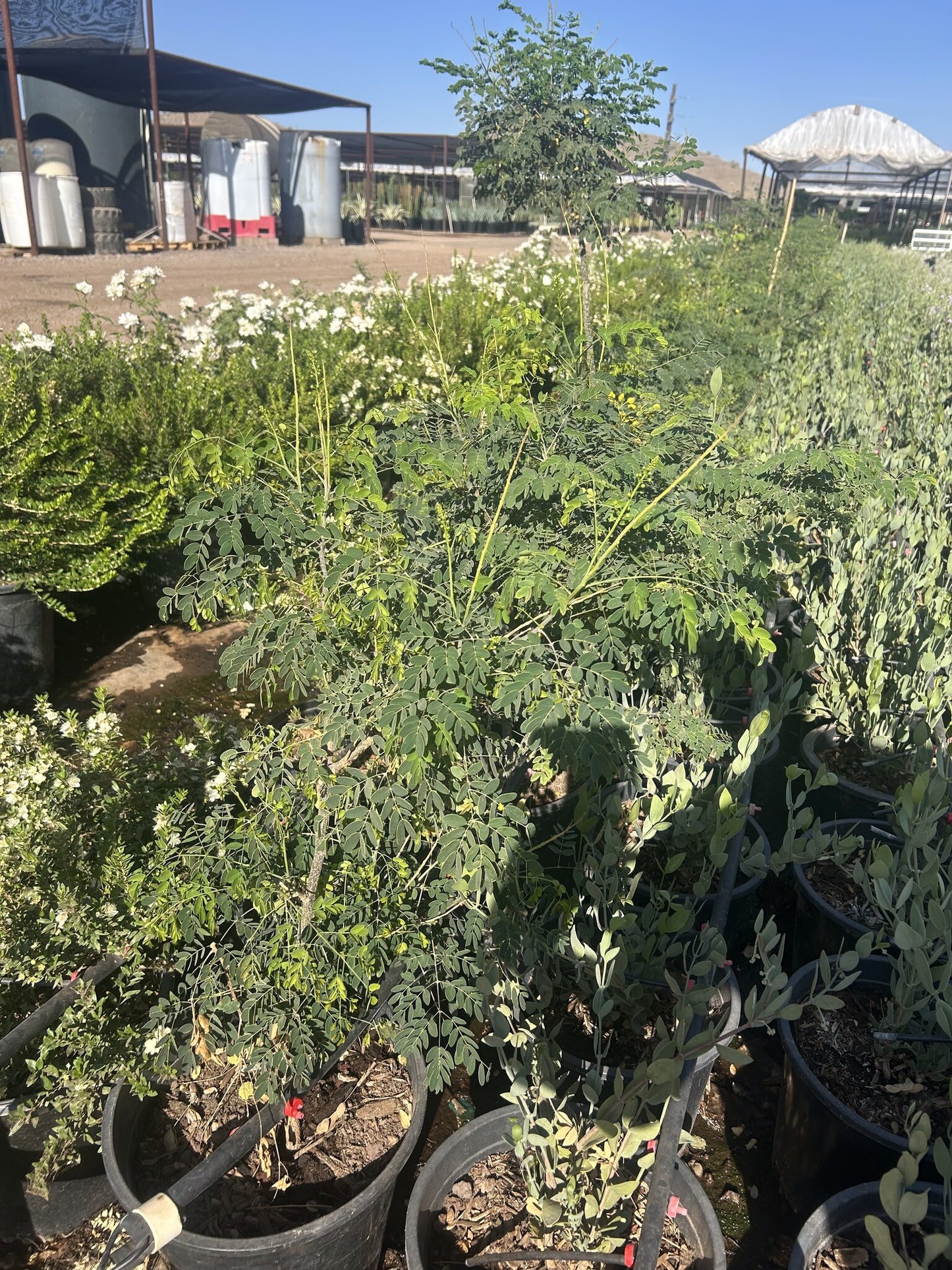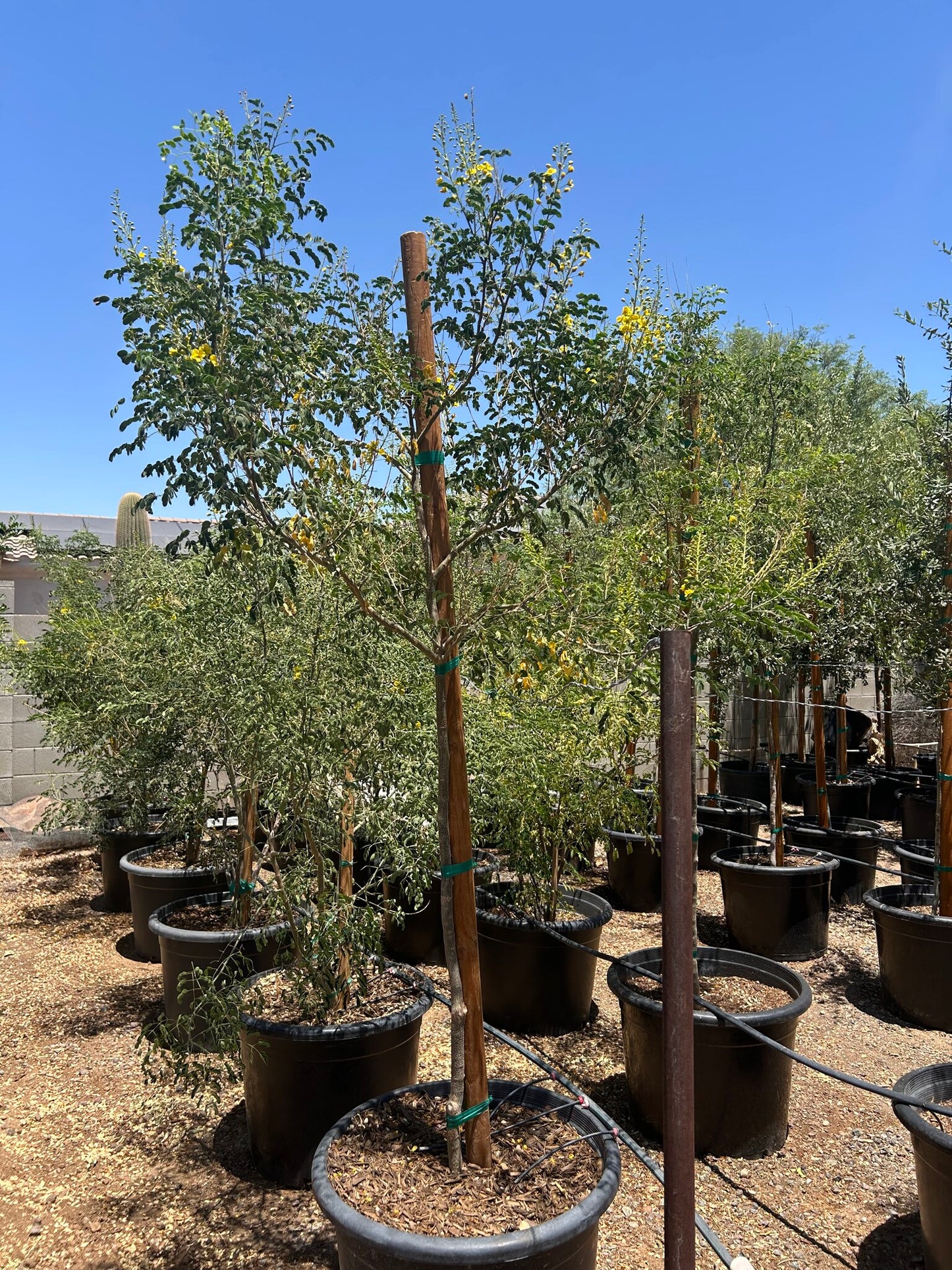


Mexican Bird of Paradise
Mexican Bird of Paradise
Fast-growing shrub with bright yellow summer blooms
Couldn't load pickup availability
Phoenix's Best Summer-Blooming Shrub — Mexican Bird of Paradise
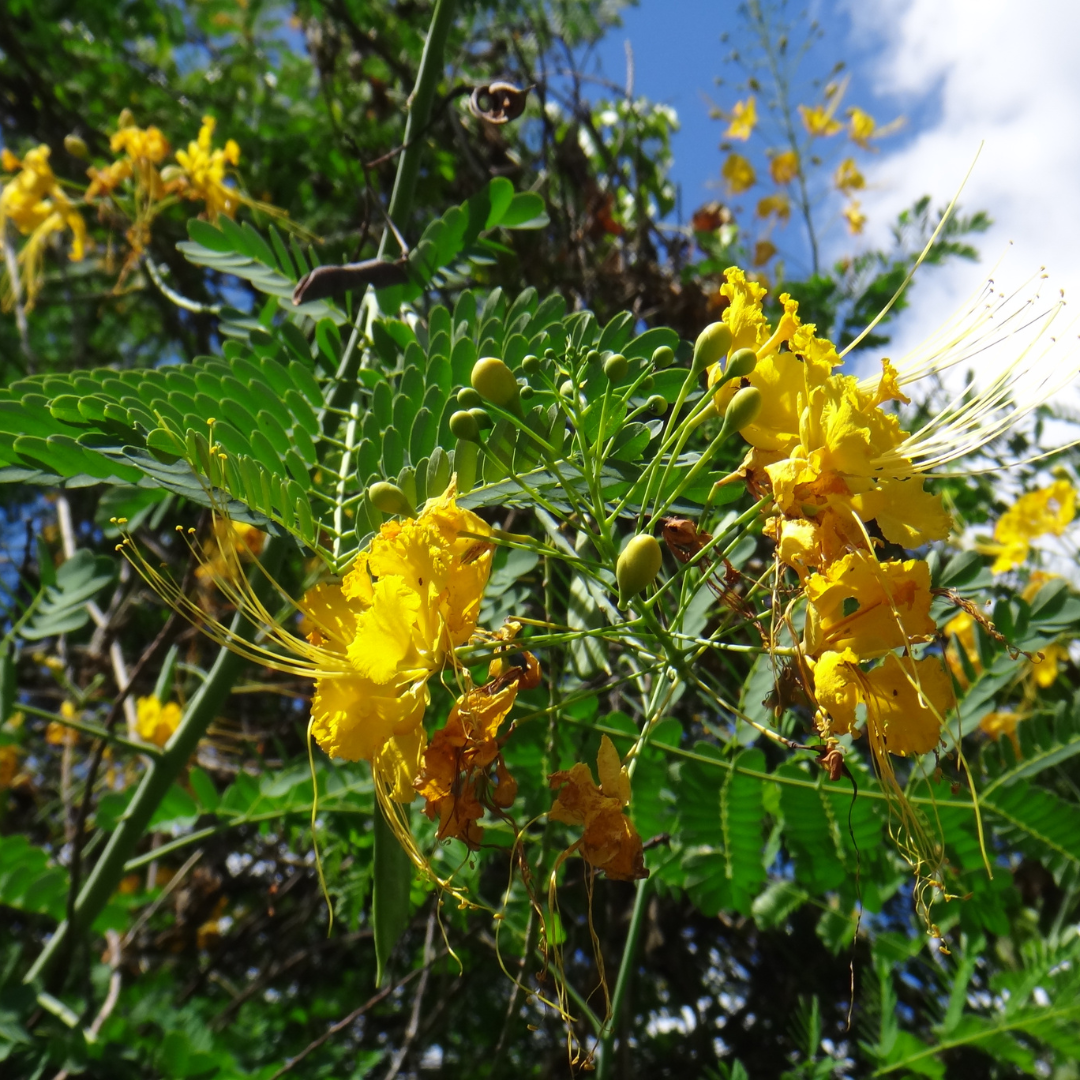
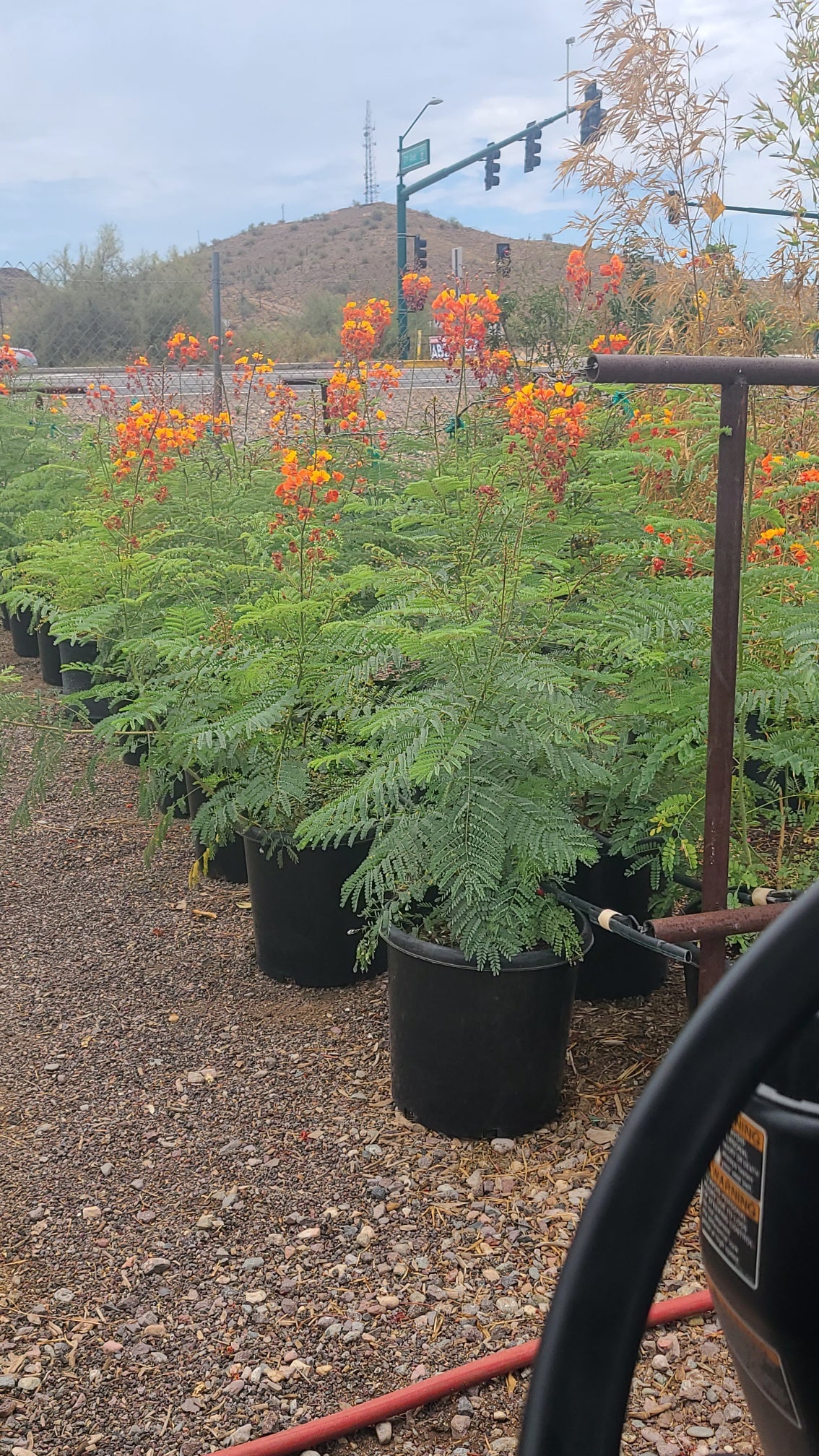
Mexican Bird of Paradise (Caesalpinia pulcherrima) is one of the most beloved flowering shrubs in the Sonoran Desert, delivering spectacular tropical color from late spring straight through fall. It grows fast — reaching 6–8 feet in just a couple of seasons — and thrives on minimal water once established. Whether you're lighting up a courtyard in Scottsdale, adding bold color to a xeriscape in Chandler, or creating a dramatic border in Peoria — Mexican Bird of Paradise gets the job done.
Mexican Bird of Paradise Plant Details
| Attribute | Detail |
|---|---|
| Scientific Name | Caesalpinia pulcherrima |
| Common Names | Mexican Bird of Paradise, Pride of Barbados, Red Bird of Paradise |
| Mature Height | 6–8 feet |
| Mature Width | 4–7 feet |
| Growth Rate | Fast — 2–3 feet per year in Phoenix |
| Sun | Full sun (6+ hrs). Handles reflected heat from walls and pavement. |
| Water | Low once established. Highly drought-tolerant. |
| USDA Zones | 9–11 (Phoenix is Zone 9b–10a) |
| Soil | Well-draining. Adapts to Arizona caliche soils. |
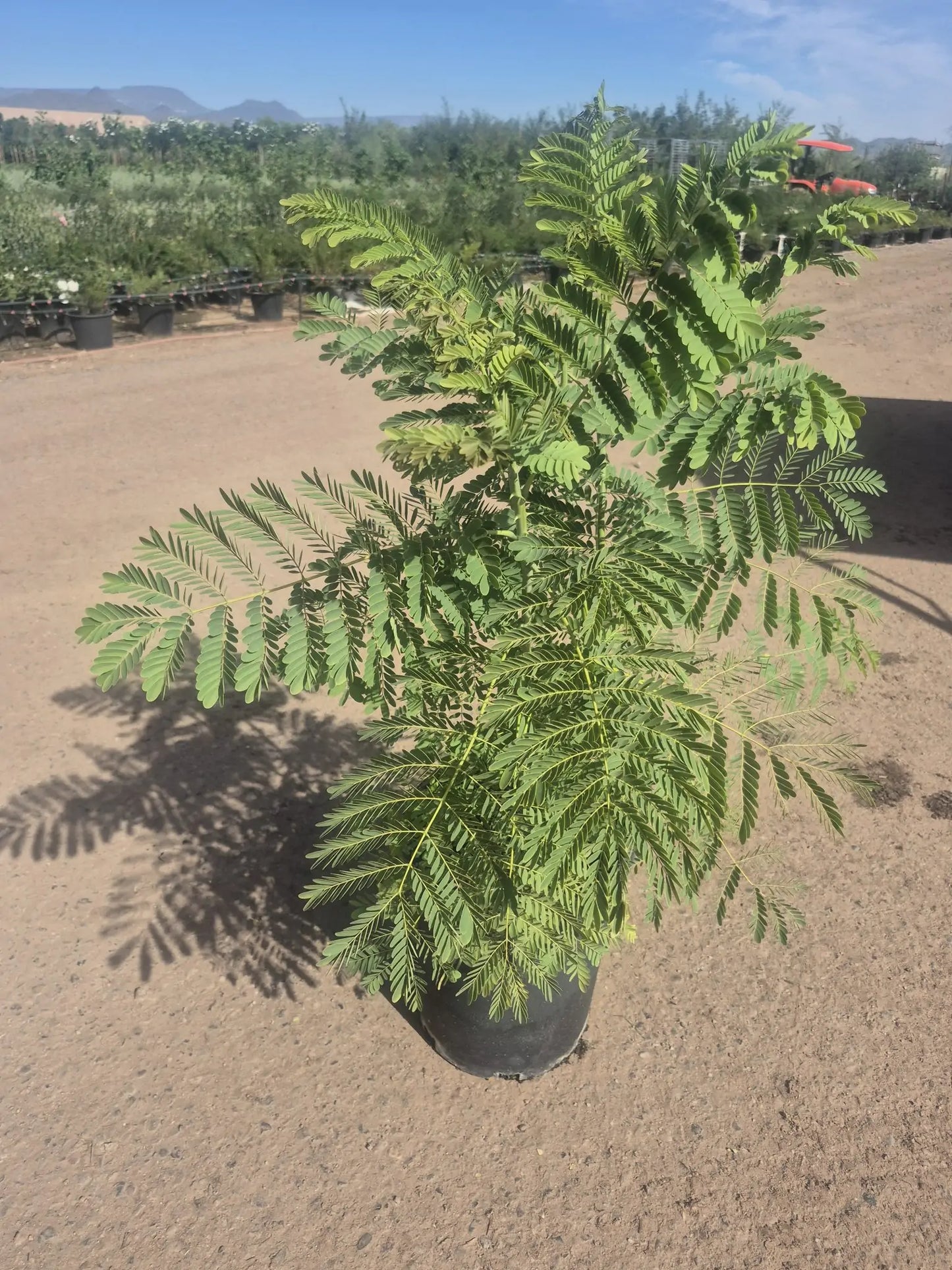
| Foliage | Semi-evergreen — may drop leaves in cold winters, returns in spring |
| Bloom Season | Late spring through fall (May–November) |
| Bloom Color | Yellow, orange, and red — vibrant tropical palette |
| Pet Friendly | No — toxic to pets if ingested |
Mexican Bird of Paradise Uses in Phoenix Landscapes
Summer Color Anchor
Few plants match Mexican Bird of Paradise for sheer summer impact. While most plants struggle in Phoenix's brutal June–September heat, this shrub absolutely thrives — exploding with clusters of flame-colored blooms from May through November. It's one of the rare plants that delivers its best show during the hottest months, making it an essential anchor for any summer landscape in the Phoenix Valley. Plant it in full sun near a south- or west-facing wall in Tempe or Gilbert to maximize the bloom display.
Courtyard and Patio Accent
Mexican Bird of Paradise's compact, tidy growth habit makes it ideal for enclosed courtyards, patios, and pool-adjacent areas. It doesn't produce heavy leaf litter and its 4–7 foot spread stays manageable with minimal pruning. Plant one on each side of an entry gate in Scottsdale or Paradise Valley for a dramatic flowering welcome. Pair with Desert Spoon or Agave for a striking modern desert contrast.
Xeriscape Border and Informal Hedge
Planted 3–5 feet apart in a row, Mexican Bird of Paradise creates a lush, colorful informal hedge or border that stays attractive all growing season. Its dense branching and continuous blooms make it an excellent alternative to high-water flowering plants. For a 20-foot border, use 5–6 plants; for a 40-foot border, use 10–12 plants. In Mesa, Chandler, and Gilbert, it pairs beautifully with Texas Sage and Ruellia for a layered, low-maintenance planting strip.
Desert Wildlife Garden
The nectar-rich flowers of Mexican Bird of Paradise are irresistible to hummingbirds and butterflies, making it a star performer in any Sonoran Desert pollinator garden. The tubular flowers are perfectly shaped for the long bill of Anna's and Costa's hummingbirds, which are year-round Phoenix Valley residents. Plant alongside Ruellia and Texas Sage to create a continuous wildlife habitat that blooms through every season.
Best Time to Plant Mexican Bird of Paradise in Phoenix
Fall planting (October–November) is ideal. The soil is still warm from summer, which encourages root establishment, while the cooler air dramatically reduces transplant stress. A fall-planted Mexican Bird of Paradise gets 6–8 months of root development before it faces its first Phoenix summer — setting it up to bloom heavily right out of the gate. Spring (February–April) is the second-best window. Avoid summer planting if possible, as the combination of heat and transplant stress can slow establishment significantly.
How to Plant Mexican Bird of Paradise
- Dig wide, not deep — Excavate 2–3 times the width of the root ball, but match the depth exactly. Too deep is the #1 cause of new plant failure in Phoenix.
- Check for caliche — Break through any hardpan caliche layer beneath the hole to ensure water can drain freely. Mexican Bird of Paradise will not tolerate standing water.
- Backfill with native soil — No need to amend heavily. A light mix of 80% native soil and 20% compost is ideal for strong root development.
- Spacing — Space 4–5 feet apart for an informal hedge; 5–6 feet apart for individual specimens with room to fill out.
- Build a water basin — Mound a 3–4 inch ring of soil around the drip line to direct irrigation water straight to the roots during establishment.
- Mulch — Apply 2–3 inches of bark or gravel mulch out to the drip line to retain soil moisture and moderate root temperatures.
Watering Mexican Bird of Paradise in Phoenix
First Year Watering Schedule
Getting your Mexican Bird of Paradise through its first Phoenix summer is the critical challenge. Follow this schedule for strong establishment:
- Weeks 1–2: Water every 1–2 days, deep and slow (20–30 minutes per session)
- Months 1–2: Reduce to every 3–4 days as roots begin to spread
- Months 3–6: Every 7–10 days; increase to every 5–7 days during peak summer (June–August)
- After Year 1: Every 10–14 days in summer; every 3–4 weeks in winter — or rely on monsoon rains
Drip Irrigation
For established plants, place two drip emitters (2 GPH each) approximately 18–24 inches from the base of the plant, at the outer edge of the canopy. Run for 30–45 minutes per irrigation session. Established Mexican Bird of Paradise planted in Phoenix landscapes often survives on monsoon rainfall alone (July–September) with minimal supplemental irrigation in winter.
How fast does Mexican Bird of Paradise grow in Phoenix?
Expect 2–3 feet of growth per year in a Phoenix Valley landscape with regular watering during establishment. A 3/5-gallon plant can reach 6 feet within 2–3 growing seasons. Once established, growth slows slightly as the plant directs more energy into flower production.
Is Mexican Bird of Paradise drought-tolerant once established?
Yes — it is one of the most reliable drought-tolerant flowering shrubs in the Southwest. After the first full year in the ground, established plants can survive on Phoenix's natural monsoon rainfall (roughly 8 inches annually) with minimal supplemental irrigation. In summer, a deep watering every 10–14 days keeps it blooming heavily; without any irrigation, it will still survive but may produce fewer flowers.
Does Mexican Bird of Paradise die back in winter?
It may experience some frost damage or partial dieback during freeze events below 28°F, which can occasionally occur in Phoenix (Zone 9b). However, the roots are very cold-hardy and plants reliably resprout from the base each spring. Frost damage that looks severe in January typically results in a full, lush plant by April. No protective wrapping is necessary in most Phoenix Valley locations.
Can it be planted near a pool?
Yes, with some caveats. Mexican Bird of Paradise produces moderate amounts of leaf and flower litter, so plants sited directly over a pool edge will require regular skimming. A better placement is 5–10 feet back from the pool coping, where the plant provides vibrant color and light shade without depositing too much debris into the water. Its relatively contained spread (4–7 feet) makes it easy to manage around pool environments in Scottsdale, Tempe, and Phoenix.
Is Mexican Bird of Paradise toxic to pets?
Yes — all parts of Caesalpinia pulcherrima are considered toxic to cats and dogs if ingested. If you have pets that chew on plants, consider a pet-friendly alternative such as Ruellia or Texas Sage. That said, most dogs and cats naturally avoid the plant due to its slightly bitter foliage.
You May Also Like
- Texas Sage (Leucophyllum frutescens) — A drought-tolerant native shrub with silver foliage and purple blooms that pairs beautifully with Mexican Bird of Paradise in low-water borders.
- Ruellia (Ruellia brittoniana) — A fast-growing flowering perennial with purple trumpet blooms that layers well beneath Mexican Bird of Paradise for season-long color.
- Desert Spoon (Dasylirion wheeleri) — A bold architectural accent with a dramatic spiky rosette that creates stunning contrast with the soft tropical foliage of Mexican Bird of Paradise.
- Cascalote Tree (Vachellia cacalaco) — A winter-blooming tree with golden-yellow flowers that extends the color season when Mexican Bird of Paradise goes dormant in cold months.
- Desert Willow (Chilopsis linearis) — A fast-growing flowering tree with orchid-like blooms that provides overhead shade while Mexican Bird of Paradise fills in the mid-layer with color.
How Many Mexican Bird of Paradise Do I Need?
Mexican Bird of Paradise matures at 4 to 7 feet wide. Space plants about 4 feet on center for a full informal flowering hedge or border. Use this table to estimate counts:
| Run Length | Plants Needed (4 ft spacing) |
|---|---|
| 10 ft | 3 plants |
| 20 ft | 5 plants |
| 30 ft | 8 plants |
| 40 ft | 10 plants |
| 50 ft | 13 plants |
For individual specimens, give each plant 5 to 6 feet of clear space to fill out. Flanking an entry gate or framing a courtyard, a matched pair spaced well apart makes a bold summer statement.
Mexican Bird of Paradise Season-by-Season in Phoenix
- Spring (Feb to Apr): Leafs out from the base and pushes fast new growth as soil warms. A strong second planting window before peak heat, with first blooms opening by late spring.
- Summer (May to Sep): Its showcase season. Explodes with flame-colored bloom right through the hottest months and reflected heat, and the monsoon (July to September) fuels even heavier flowering. No afternoon shade needed.
- Fall (Oct to Nov): Bloom continues into November and this is the prime planting season, giving roots months to establish in still-warm soil.
- Winter (Dec to Jan): Semi-evergreen and frost-sensitive. Expect tip dieback or partial defoliation below about 28°F. The roots are hardy and resprout fully each spring, so cut back frost-damaged stems in late winter. No wrapping needed in most Valley yards.
At a Glance
✔ Pollinator-Friendly ✔ Hummingbird-Friendly ✔ Heat-Loving (Reflected-Heat Tolerant) ✔ Drought-Tolerant ✔ Low-Maintenance
Plant It With
- Texas Sage: silver foliage and purple bloom that cools down the hot tropical color in a low-water border.
- Desert Ruellia: purple-flowering perennial that layers beneath for season-long color.
- Desert Spoon: bold spiky rosette that contrasts the soft fern-like foliage.
- Red Yucca: arching coral bloom spikes that bring more hummingbird traffic to the bed.
Is Mexican Bird of Paradise Right for Your Yard?
Mexican Bird of Paradise is an ideal fit for full-sun, reflected-heat spots that need bold summer color: south and west walls, courtyards, and xeriscape borders across Phoenix, Scottsdale, Tempe, and Gilbert. Give it well-draining soil and break through caliche at planting. It is not the best choice right at a pool's edge, where its moderate litter means extra skimming, or for homes with pets that chew foliage, since all parts are toxic if ingested.
Share