

Mastic Tree
Mastic Tree
Couldn't load pickup availability
Phoenix's Toughest Evergreen Shade & Privacy Tree — Mastic Tree
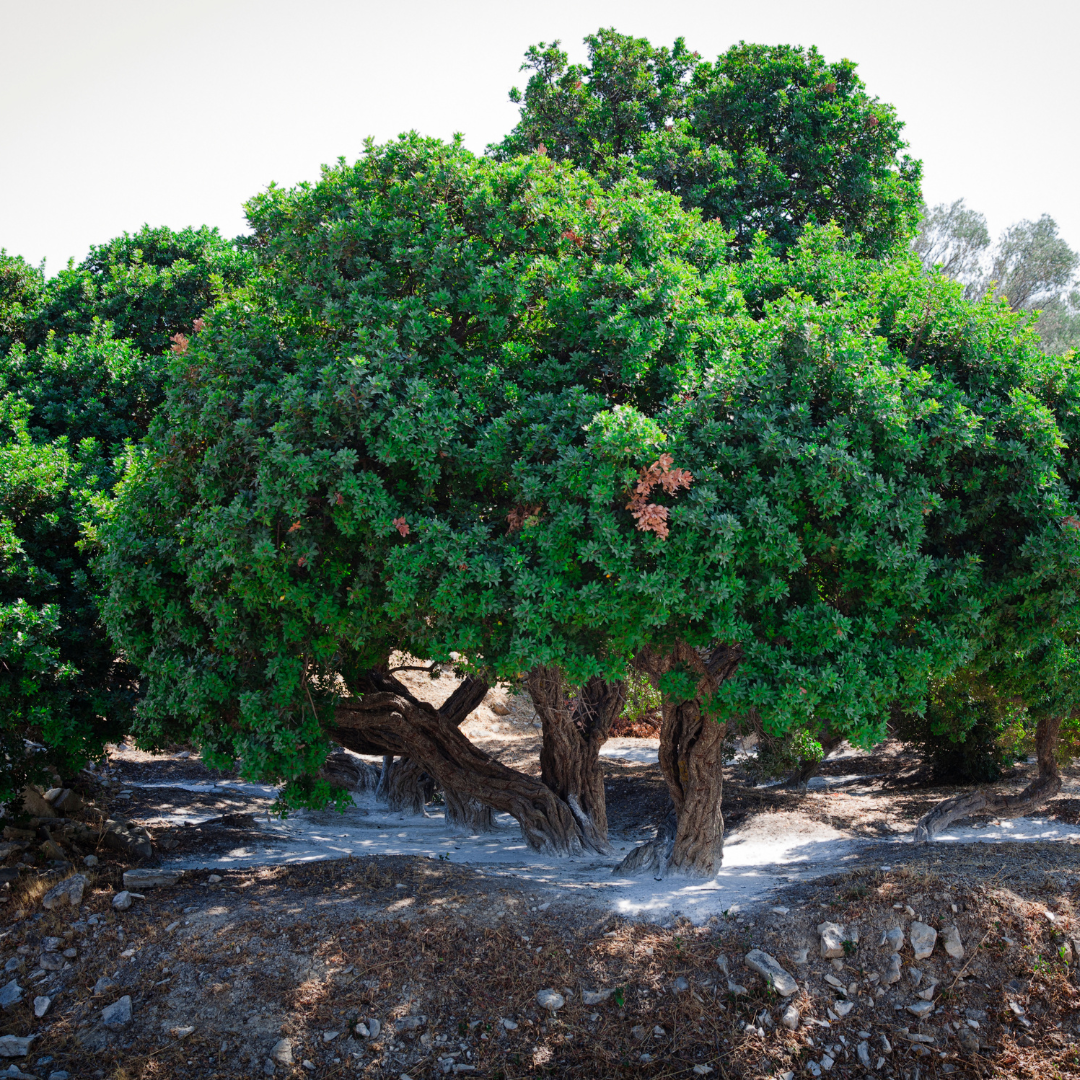
Mastic Tree (Pistacia lentiscus) is one of the most drought-tolerant, heat-resistant evergreen trees available for Phoenix Valley landscapes. Native to the Mediterranean basin and the Canary Islands, this rugged beauty thrives in conditions that stress most other trees — poor soils, reflected heat, extreme drought, and full desert sun. With a dense, rounded canopy of glossy dark green compound leaves, Mastic Tree delivers year-round shade, privacy screening, and outstanding architectural form. Whether you're creating a low-water privacy screen in Scottsdale, adding a long-lived shade tree in Chandler, or building a fire-resistant landscape buffer in Mesa or Peoria — Mastic Tree is built for Phoenix.
Mastic Tree Plant Details
| Attribute | Detail |
|---|---|
| Scientific Name | Pistacia lentiscus |
| Common Names | Mastic Tree, Mastic, Lentisk |
| Mature Height | 15–20 feet (up to 25 ft in ideal conditions) |
| Mature Width | 15–20 feet |
| Growth Rate | Slow to moderate — 1–2 feet per year in Phoenix |
| Sun | Full sun (6+ hrs). Thrives in reflected heat from walls and pavement. |
| Water | Very low once established. Among the most drought-tolerant shade trees in Arizona. |
| USDA Zones | 8–11 (Phoenix is Zone 9b–10a) |
| Soil | Well-draining. Adapts well to Arizona caliche soils; tolerates poor rocky soils. |
| Foliage | Evergreen — dense, glossy dark green compound leaves year-round |
| Fruit | Small red-to-black berries attractive to birds; low litter |
| Native Origin | Mediterranean basin, Canary Islands (adapted to hot, dry climates) |
Mastic Tree Uses in Phoenix Landscapes
Evergreen Privacy Screen
Mastic Tree's naturally dense, rounded canopy fills in to create an effective privacy screen that stays green and full year-round, even through Phoenix's most intense summer heat. Unlike some privacy trees that go bare or thin during heat stress, Mastic holds its foliage reliably under all Phoenix conditions. For a 20-foot fence screen, plant 2–3 trees spaced 8–10 feet apart. Its moderate height (15–20 ft) is ideal for typical residential fence-line privacy without overwhelming neighboring properties. Pair with Desert Spoon or Agave at the base for a layered, water-wise privacy planting.
Long-Term Shade Tree
While Mastic Tree grows slowly, its patience pays off with a beautiful, long-lived specimen that can shade outdoor living areas for generations. The dense, rounded canopy provides deep shade throughout the year, and the tree's architectural form becomes more striking with age. Plant on the west side of patios, courtyards, and outdoor rooms to block late afternoon sun — the harshest heat exposure in Phoenix. Mastic is also one of the few shade trees that thrives in reflected heat locations like south-facing block walls and paved courtyards.
Fire-Resistant Landscape Buffer
Mastic Tree is classified as a fire-resistant plant species, making it an excellent choice for defensible space landscaping in Phoenix, Scottsdale, and other desert communities with wildfire risk. Its high moisture-content leaves and resinous nature give it better fire resistance than many other landscape trees. Plant along property perimeters and along fence lines where fire-resistant buffering is most important. Its low water requirement also means it integrates seamlessly with drought-tolerant landscape plans that limit irrigation near structures.
Wildlife-Friendly Garden Anchor
Mastic Tree produces small, vivid red-to-black berries in late summer and fall that attract mockingbirds, thrashers, and other desert birds. Combined with its dense branch structure, which provides excellent nesting cover, Mastic makes a top-tier wildlife garden anchor for Phoenix-area xeriscape designs. Pair it with Brittlebush, Ruellia, and Fairy Duster for a complete low-water wildlife habitat garden.
Best Time to Plant Mastic Tree in Phoenix
Fall planting (October–November) is the best time for Mastic Tree in Phoenix. Warm soil temperatures encourage root development during cooler air temperatures, giving the tree a full 6–8 months to establish before its first Phoenix summer. Spring planting (February–April) is also excellent. Mastic is cold-hardy to about 15°F, so even December and January planting is possible with established container sizes. Avoid planting in peak summer (June–August) if possible — heat stress during transplanting can set back slow-growing trees significantly.
How to Plant Mastic Tree
- Dig wide, not deep — excavate a hole 2–3x the width of the root ball but no deeper than the root ball height.
- Check for caliche — break through any hardpan at the hole bottom to ensure drainage; Mastic is sensitive to wet feet.
- Backfill with native soil — Mastic thrives in unamended desert soil. No amendments are necessary or preferred.
- Spacing — plant 10–12 ft apart for a privacy hedge; 15–20 ft apart as individual specimen trees.
- Build a water basin — form a 3–4 inch earthen ring around the drip line to direct irrigation.
- Mulch — apply 2–3 inches of bark mulch or decomposed granite to insulate roots from extreme temperature swings.
Watering Mastic Tree in Phoenix
First Year Watering Schedule
Mastic Tree establishes slowly and needs careful watering in its first year — err toward consistent but infrequent deep watering:
- Weeks 1–2: Water every 2–3 days, slowly and deeply (20–30 min)
- Months 1–2: Water every 4–5 days
- Months 3–6: Water every 7–14 days (every 7–10 days in peak summer)
- After Year 1: Every 14–21 days in summer; every 4–6 weeks in winter
Drip Irrigation
Position drip emitters 18–24 inches from the trunk. Use 1–2 GPH emitters and run 45–60 minutes per cycle for deep penetration. Mastic is prone to root rot if overwatered — always allow the soil to dry somewhat between irrigation cycles. After 3 years in Phoenix, most Mastic Trees require supplemental irrigation only during June–August peak heat.
How fast does Mastic Tree grow in Phoenix?
Mastic Tree grows slowly — typically 1–2 feet per year in Phoenix. This is one of the trade-offs for its exceptional drought tolerance, fire resistance, and longevity. For faster initial coverage, consider planting alongside faster-growing species like Green Hopseed Bush or Italian Cypress, with Mastic as the long-term anchor. Larger box specimens (36"–48") available at Three Timbers provide immediate impact while the tree continues to develop.
Is Mastic Tree truly drought-tolerant once established?
Yes — Mastic Tree is one of the most drought-tolerant evergreen shade trees available in Phoenix. Once established after 2–3 years, mature trees in Phoenix often survive on zero supplemental irrigation outside of peak summer months. It evolved in Mediterranean regions that receive very low summer rainfall, making it exceptionally well-adapted to Phoenix's summer drought pattern.
Is Mastic Tree deer resistant?
Yes — Mastic Tree is considered highly deer resistant due to its resinous foliage, which deer and most other browsing animals find unpalatable. This makes it excellent for landscapes adjacent to the desert preserve, riparian areas, and other locations with frequent wildlife activity in Scottsdale, Cave Creek, and North Phoenix.
Can Mastic Tree handle reflected heat in Phoenix?
Mastic Tree is one of the best trees for reflected heat situations in Phoenix. It thrives against south-facing block walls, in narrow side yards with reflected pavement heat, and in commercial parking lot applications where heat stress would kill most other trees. Its Mediterranean origins prepared it perfectly for Phoenix's intense solar radiation.
Does Mastic Tree produce any mess?
Mastic Tree produces small red-to-black berries that drop in late summer/fall — much smaller and less messy than olives or carobs. Leaf drop is minimal since the tree is evergreen. Overall, Mastic is considered a low-litter tree, making it appropriate for use near pools, patios, and hardscape areas.
You May Also Like
- Texas Ebony — Native, thorny evergreen shade and privacy tree; similar drought tolerance with a more compact, dense form.
- Desert Ironwood — Native Arizona shade tree with spring blooms and extreme drought tolerance; slower growth, even more rugged.
- Italian Cypress — Tall, columnar evergreen for vertical privacy accents in formal desert landscapes.
- Green Hopseed Bush — Fast-growing evergreen privacy shrub ideal for quick coverage while Mastic Tree matures.
- Indian Laurel Ficus — Dense evergreen shade tree for formal hedges; requires more water but offers faster growth.
How Many Mastic Trees Do I Need?
As a single shade or screen specimen, give Mastic Tree 15 to 20 feet of clearance so the rounded canopy fills out. For a dense evergreen privacy screen, plant on about 10 foot centers so the crowns knit together into a continuous green wall at fence height.
| Screen / Fence Run | Trees Needed (10 ft spacing) |
|---|---|
| 10 ft | 2 |
| 20 ft | 3 |
| 30 ft | 4 |
| 40 ft | 5 |
| 50 ft | 6 |
Mastic Tree Season-by-Season in Phoenix
- Spring (Feb–Apr): Slow, steady new growth flush on the glossy compound leaves. A strong second planting window once frost risk passes. Holds its full evergreen screen while other trees leaf out.
- Summer (May–Sep): A top performer in extreme heat and reflected heat off walls and pavement, holding dense green foliage when stressed trees thin out. Very low water once established; let soil dry between deep cycles to avoid root rot. Berries begin coloring in late summer.
- Fall (Oct–Nov): Prime planting season and peak berry color, drawing in mockingbirds and thrashers. Roots establish fast in still-warm soil.
- Winter (Dec–Jan): Stays evergreen and full through Valley winters, giving year-round structure and screen. Hardy to roughly 15°F, so normal Phoenix frost is not a concern.
At a Glance
✔ Heat-Loving (Reflected-Heat Tolerant) ✔ Drought-Tolerant ✔ Pool-Friendly (Low-Litter) ✔ Evergreen ✔ Shade-Providing ✔ Fire-Wise ✔ Deer & Rabbit-Resistant ✔ Low-Maintenance ✔ Cold-Hardy to 15°F
Plant It With
- Desert Ironwood: Rugged Arizona native shade tree with spring bloom for an even tougher low-water pairing.
- Italian Cypress: Tall columnar evergreen for vertical privacy accents against the rounded mastic form.
- Green Hopseed Bush: Fast evergreen screen shrub for quick coverage while the slow-growing mastic matures.
- Indian Laurel Ficus: Dense evergreen shade tree for a fuller, faster hedge where more water is available.
Is Mastic Tree Right for Your Yard?
It is an excellent fit for a hot, dry, low-water yard that needs a tough evergreen screen or long-lived shade anchor, thriving in full sun, reflected heat, poor rocky caliche, and fire-wise buffer zones with minimal care. It is not the choice if you need fast coverage right away, since it grows slowly at 1 to 2 feet per year, or if your planting spot stays wet and poorly drained, since it is prone to root rot in soggy soil.
Share