
Magnolia Tree
Magnolia Tree
Couldn't load pickup availability
A Stunning Evergreen Shade Tree for Phoenix Landscapes
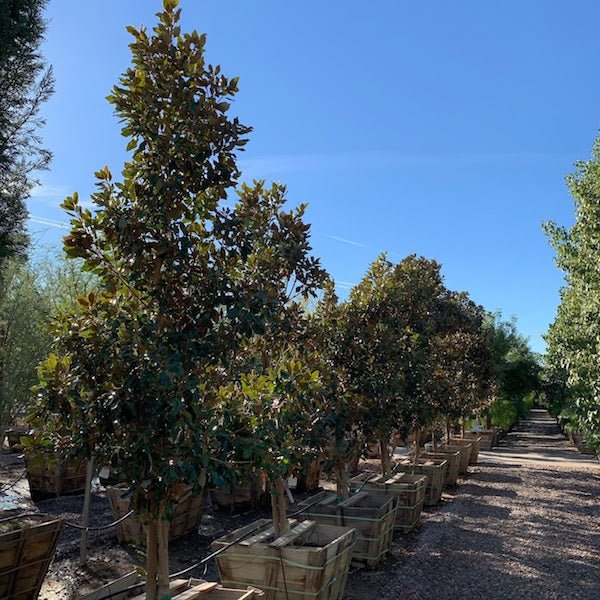
Magnolia Tree (Magnolia grandiflora) brings timeless Southern elegance to the Phoenix Valley with its massive, fragrant white blooms and year-round glossy green foliage. This evergreen powerhouse provides dense shade, impressive curb appeal, and a lush, tropical look that stands out in Arizona's desert landscape. Whether you're creating a grand entry in Scottsdale, anchoring a shade garden in Mesa, or lining a driveway in Chandler — Magnolia Tree delivers beauty and performance in every season.
Magnolia Tree Plant Details
| Attribute | Detail |
|---|---|
| Scientific Name | Magnolia grandiflora |
| Common Names | Southern Magnolia, Bull Bay Magnolia, Magnolia Tree |
| Mature Height | 40–60 feet (often kept 25–35 ft with pruning in Phoenix) |
| Mature Width | 25–40 feet |
| Growth Rate | Moderate — 1–2 feet per year in Phoenix |
| Sun | Full sun to partial shade. Benefits from afternoon shade in hottest months. |
| Water | Moderate. Regular deep watering, especially in summer. |
| USDA Zones | 7–10 (Phoenix is Zone 9b–10a) |
| Soil | Well-draining, slightly acidic preferred. Adapts to Arizona caliche soils with amendments. |
| Foliage | Evergreen — stays green year-round with glossy dark leaves |
| Bloom Color | Creamy white, intensely fragrant (6–12 inch blooms) |
| Bloom Season | Late spring through summer |
Magnolia Tree Uses in Phoenix Landscapes
Grand Shade Tree
Magnolia Trees provide dense, year-round shade that few other Phoenix trees can match. A mature specimen can shade an entire patio, pool area, or section of yard. The evergreen canopy means shade even in winter — ideal for south- and west-facing exposures in Tempe, Gilbert, and Peoria.
Statement Specimen Tree
With its dramatic white blooms, glossy leaves, and stately form, Magnolia is one of the most visually striking trees you can plant in a Phoenix landscape. Use it as a focal point in front yards, courtyard gardens, or large landscape beds where its beauty can be fully appreciated.
Privacy Screen and Windbreak
Magnolia's dense, low-branching habit makes it an excellent evergreen screen for blocking views, reducing wind, and dampening road noise. Plant 15–20 ft apart for a continuous green wall along property lines or fences in Glendale, Peoria, or Scottsdale estates.
Best Time to Plant Magnolia Trees in Phoenix
Fall (October–November) is the ideal planting window. Cooler temperatures reduce transplant stress while warm soil promotes root establishment. This gives the tree 6–8 months to develop roots before its first Phoenix summer. Spring (February–March) is the second-best option. Avoid summer planting — Magnolias need consistent moisture during establishment and extreme heat makes this much harder.
How to Plant Magnolia Trees
- Dig wide, not deep — 2–3x the root ball width, same depth as the container.
- Check for caliche — break through any hardpan layer for drainage. Magnolias prefer slightly acidic soil.
- Backfill with native soil amended with 30% organic compost and sulfur to lower pH.
- Spacing — 20–25 ft apart for a grove; 15–20 ft for a privacy screen; 30+ ft for a standalone specimen.
- Water basin — build a 4–6 inch berm ring around the root zone to direct water to roots.
- Mulch — 3–4 inches of bark mulch to retain moisture, keep roots cool, and acidify soil over time.
Watering Magnolia Trees in Phoenix
First Year Watering Schedule
Weeks 1–2: Every 1–2 days, deep and slow (30–45 minutes per session).
Month 1–2: Every 2–3 days.
Month 3–6: Every 4–5 days (every 2–3 days in peak summer heat).
After Year 1: Every 5–7 days in summer; every 10–14 days in winter.
Drip Irrigation
Place 3–4 emitters 18–24 inches from the trunk, each at 2 GPH. As the tree matures, add emitters outward to the drip line. Magnolias need more consistent moisture than most desert-adapted trees — don't let them dry out completely during summer.
How fast does a Magnolia Tree grow in Phoenix?
Expect 1–2 feet of new growth per year with proper watering and soil amendments. Larger specimen sizes (36" box and up) provide instant impact while continuing to grow.
Can Magnolia Trees survive Phoenix summer heat?
Yes, with proper care. Magnolias handle Phoenix summers well when given consistent deep watering and a thick mulch layer. They actually benefit from reflected heat in winter but appreciate some afternoon shade protection during peak summer months.
Are Magnolia Trees messy?
Magnolias do drop large, leathery leaves and seed pods periodically. The leaf drop is gradual year-round rather than seasonal. Plant them where occasional cleanup is manageable, and keep them away from pools.
Do Magnolia Trees have invasive roots?
Magnolia roots are relatively shallow and spreading but not aggressively invasive. Keep them 10+ feet from foundations, sidewalks, and underground utilities for best results.
You May Also Like
- Japanese Privet Tree — A fast-growing evergreen tree with fragrant white blooms and dense shade.
- Bottle Brush Tree — A striking evergreen with vibrant red bottlebrush-shaped flowers.
- Pineapple Guava Tree — An evergreen fruit tree with tropical flavor and ornamental appeal.
- Jacaranda Tree — A stunning deciduous shade tree with purple spring blooms.
- Arizona Sycamore — A native shade tree with beautiful white bark and large canopy.
How Many Magnolia Trees Do I Need?
Magnolia is a large statement specimen, so a single tree anchors most front yards or courtyards; give a standalone tree 30 or more feet of clearance from structures and 10-plus feet from foundations and walks. For a tall evergreen privacy screen or windbreak, plant on about 18 foot centers so the dense low-branching canopies grow into a continuous green wall.
| Screen Run | Trees Needed (18 ft spacing) |
|---|---|
| 18 ft | 2 |
| 36 ft | 3 |
| 54 ft | 4 |
| 72 ft | 5 |
Magnolia Tree Season-by-Season in Phoenix
- Spring (Feb–Apr): Glossy new growth flush and the start of the fragrant creamy-white bloom show. A good second planting window after the last frost.
- Summer (May–Sep): Peak bloom into early summer. This is the demanding season: provide consistent deep water and ideally some afternoon shade in the hottest inland yards, since Magnolia is not a true desert-drought tree. Monsoon humidity (Jul–Sep) is welcome and eases water stress.
- Fall (Oct–Nov): Prime planting season as heat breaks. Holds its full evergreen canopy while deciduous trees begin to drop.
- Winter (Dec–Jan): Stays evergreen and green through Valley winters, giving structure and shade year-round. Hardy to roughly 10°F, so normal Phoenix frost is not a concern.
At a Glance
✔ Pollinator-Friendly ✔ Evergreen ✔ Shade-Providing ✔ Cold-Hardy to 10°F
Plant It With
- Japanese Privet Tree: Another fragrant evergreen for a lush, layered green screen alongside the Magnolia.
- Bottle Brush Tree: Evergreen red bloom that adds color contrast against the Magnolia's glossy foliage.
- Jacaranda Tree: Purple spring bloom for a striking flowering companion in a larger landscape.
- Arizona Sycamore: Native large shade tree for a moist, well-watered part of the property.
Is Magnolia Tree Right for Your Yard?
It is a strong choice for a larger yard with room for a grand evergreen specimen and an irrigation budget for steady moisture, especially in a spot with some afternoon shade in the hottest months and slightly acidified, well-drained soil. It is not the right fit for a true low-water xeriscape or a poolside planting, since it needs regular summer water and drops large leathery leaves and seed pods year-round.
Share