

Lisbon Lemon
Lisbon Lemon
Couldn't load pickup availability
Phoenix's Most Productive Backyard Lemon Tree
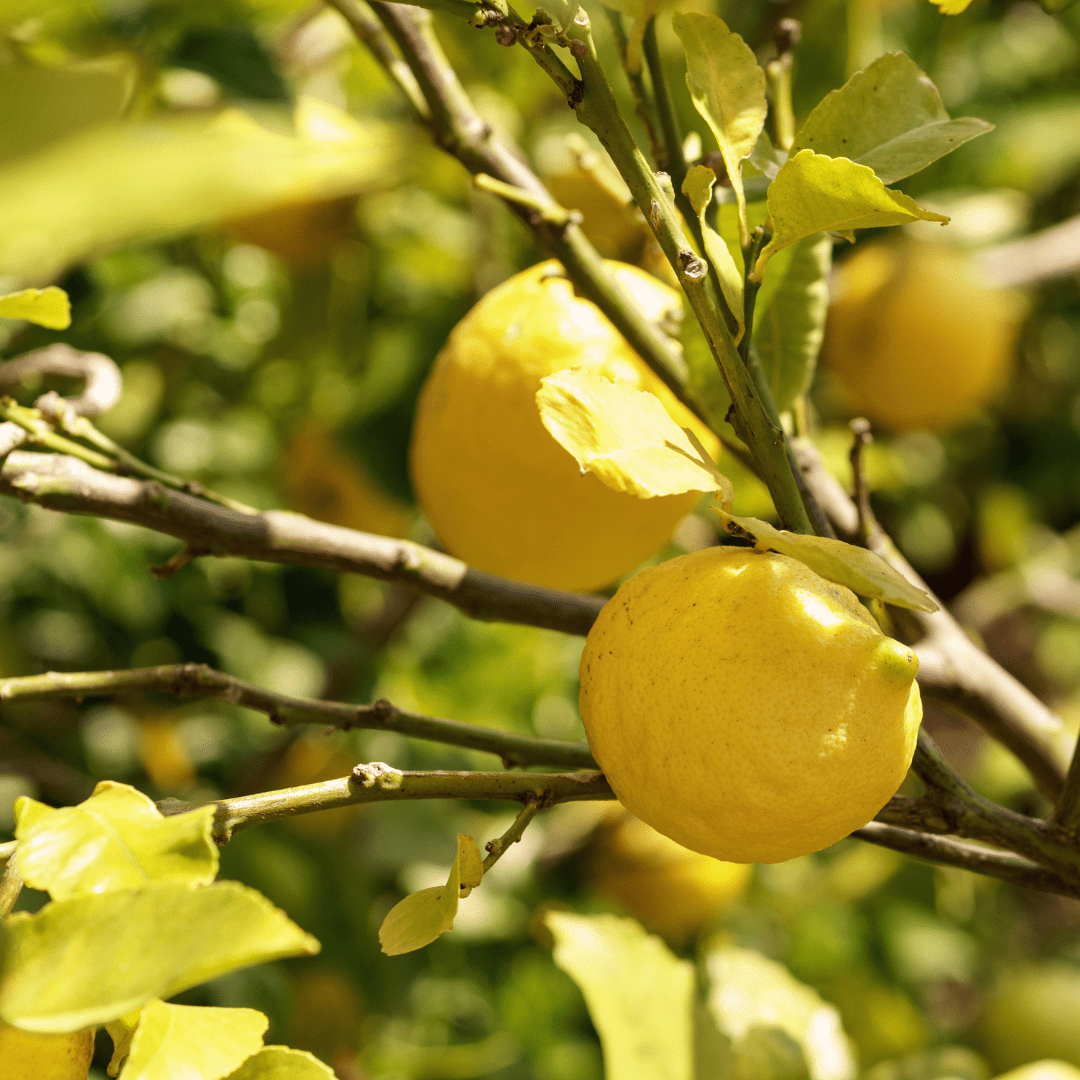
Citrus limon 'Lisbon', commonly known as the Lisbon Lemon, is one of the most vigorous and high-yielding lemon trees for Phoenix Valley gardens. This classic citrus variety produces abundant crops of bright yellow, juicy lemons with the tangy flavor that defines everything from lemonade to lemon meringue. With dense, attractive evergreen foliage and fragrant white blossoms, the Lisbon Lemon is both a productive fruit tree and a beautiful landscape specimen. Whether you're growing citrus in your Scottsdale backyard, adding a fruit tree to a Chandler patio, or establishing a mini orchard in Gilbert — Lisbon Lemon is a proven Phoenix performer.
Lisbon Lemon Tree Plant Details
| Attribute | Detail |
|---|---|
| Scientific Name | Citrus limon 'Lisbon' |
| Common Names | Lisbon Lemon, Lisbon Lemon Tree |
| Mature Height | 15–25 feet (can be kept smaller with pruning) |
| Mature Width | 15–20 feet |
| Growth Rate | Fast — 2–3 feet per year in Phoenix |
| Sun | Full sun (6+ hours). South-facing exposure is ideal in Phoenix. |
| Water | Moderate. Deep, regular watering essential — citrus are not drought-tolerant. |
| USDA Zones | 9–11 (Phoenix is Zone 9b–10a) |
| Soil | Well-draining required. Amend Arizona caliche with compost for best results. |
| Foliage | Evergreen — glossy dark green leaves year-round |
| Fruit | Bright yellow lemons, primary harvest November–March with some fruit year-round |
Lisbon Lemon Uses in Phoenix Landscapes
Backyard Fruit Tree
Lisbon Lemon is the quintessential Phoenix backyard citrus tree. A single mature tree can produce 100+ lemons per year — more than enough for a family's cooking, juicing, and lemonade needs. Plant in a south-facing spot with full sun exposure and good air circulation for maximum fruit production.
Shade & Privacy Tree
With its dense evergreen canopy reaching 15–25 feet, Lisbon Lemon doubles as an excellent shade tree and privacy screen. Plant along property lines in Mesa, Tempe, and Peoria for year-round screening that also produces fresh fruit. The fragrant white blossoms in spring are an added bonus.
Container Citrus
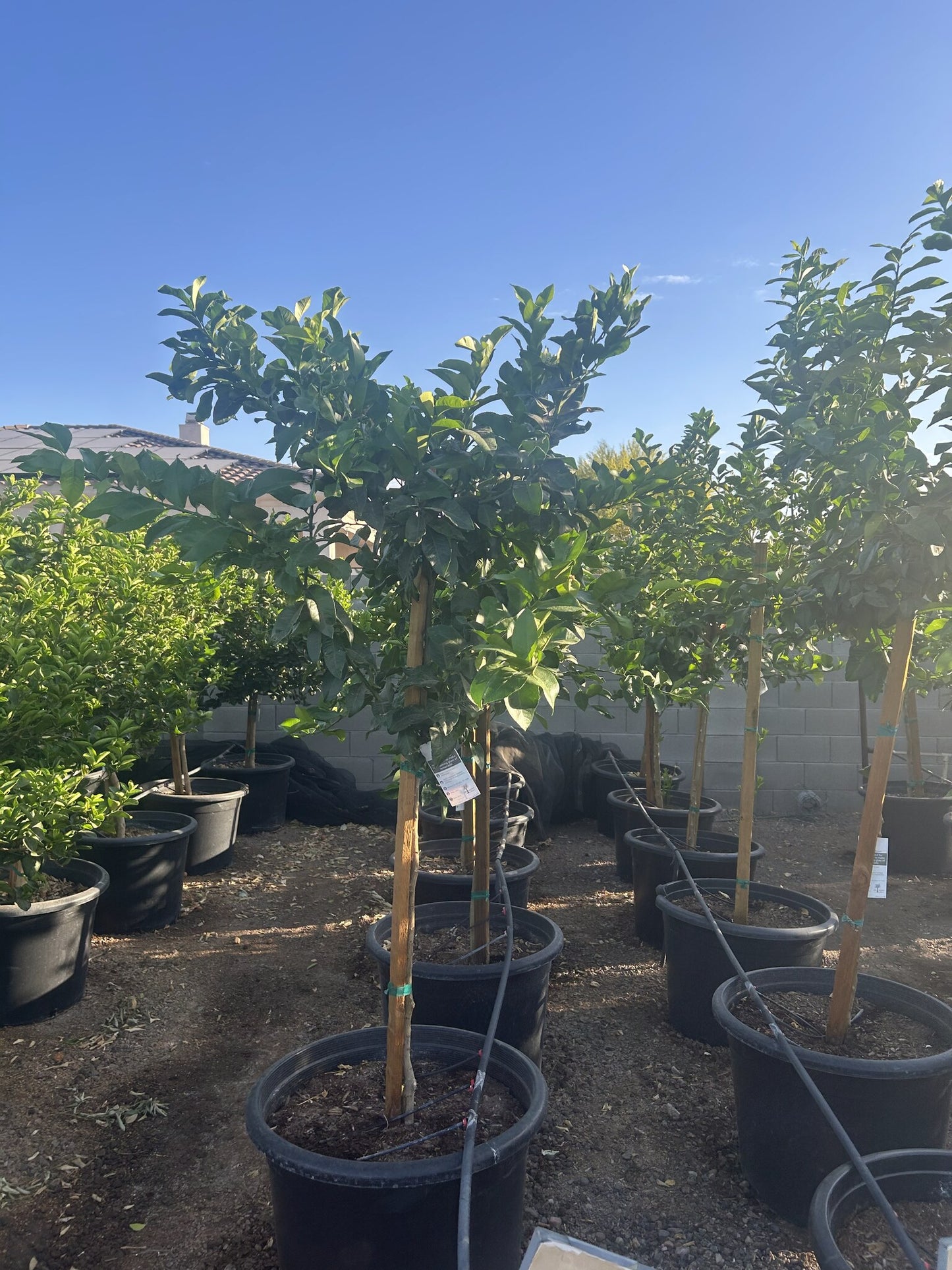
Lisbon Lemon adapts well to large containers (25+ gallon), making it perfect for patios, courtyards, and balconies across Scottsdale and Paradise Valley. Container growing also allows you to move the tree to a protected spot during rare hard freezes. Use a well-draining citrus potting mix.
Best Time to Plant Lisbon Lemon in Phoenix
Spring (March–May) is the ideal planting window for citrus in Phoenix. Warm soil promotes rapid root establishment, and the tree has a full growing season to settle in before winter. Fall (October–November) also works but gives less time for root development before cool temperatures slow growth. Avoid planting in peak summer heat.
How to Plant Lisbon Lemon
- Dig wide, not deep — hole should be 3x the root ball width, same depth as the container. Never plant deeper than nursery level.
- Check for caliche — break through any hardpan completely. Citrus roots must have excellent drainage.
- Amend generously — mix 30–40% compost into backfill. Citrus thrive in rich, well-draining soil unlike most desert plants.
- Spacing — 15–20 feet from structures and other trees for full-size specimens; 8–10 feet for hedgerow planting.
- Create a wide water basin — 3–4 foot diameter ring to direct deep watering to the entire root zone.
- Mulch heavily — 3–4 inches of organic mulch (bark, wood chips) keeping it 6 inches away from the trunk to prevent rot.
Watering Lisbon Lemon in Phoenix
First Year Watering Schedule
Weeks 1–4: Every 2–3 days, deep soaking (30–45 minutes). Month 2–6: Every 4–5 days. Month 6–12: Every 5–7 days. After Year 1: Every 7–10 days in summer; every 14–21 days in winter. Citrus need consistent, deep watering — never let the soil dry out completely.
Drip Irrigation
Use 2–4 emitters (2-GPH each) placed around the drip line, 18–24 inches from the trunk. As the tree grows, move emitters outward to follow the expanding root zone. Citrus in Phoenix need significantly more water than desert-adapted plants — plan irrigation accordingly.
When does Lisbon Lemon produce fruit in Phoenix?
Lisbon Lemon produces its main crop from November through March in Phoenix, though you'll often find some fruit on the tree year-round. Young trees (1–3 years) may produce light crops while establishing; expect full production by year 4–5.
How cold hardy is Lisbon Lemon?
Lisbon Lemon is one of the most cold-hardy true lemons, tolerating temperatures down to about 26°F for short periods. It handles typical Phoenix winters well. During rare hard freeze warnings, protect young trees with frost cloth. Established trees usually recover from light frost damage.
What's the difference between Lisbon and Eureka Lemon?
Both produce similar-tasting lemons. Lisbon is more vigorous, slightly more cold-hardy, and tends to produce heavier crops. Eureka has a more compact growth habit and produces fruit more evenly throughout the year. Both perform excellently in Phoenix. Three Timbers carries both varieties.
Does Lisbon Lemon need fertilizer?
Yes. Feed with a citrus-specific fertilizer three times per year: February, May, and September. Citrus are heavy feeders and perform best with regular nutrition. Watch for yellowing leaves (chlorosis), which often indicates iron deficiency — common in Phoenix's alkaline soils. Treat with chelated iron.
You May Also Like
Eureka Lemon — Classic lemon with a more compact growth habit and year-round fruiting.
Bearss Lime — Seedless Persian lime that thrives alongside lemons in Phoenix.
AZ Sweet Orange — Premium eating orange perfectly adapted to Phoenix climate.
Flame Grapefruit — Ruby red grapefruit with exceptional flavor in the Phoenix Valley.
How Many Lisbon Lemons Do I Need?
Lisbon Lemon is self-fruitful, so a single tree carries a heavy crop alone. It is vigorous and reaches 15 to 20 feet wide, so it wants more room than a Meyer. For a full-size orchard row, space trees on 16 foot centers; for a fruiting privacy hedge, tighten to 8 to 10 feet and prune to shape:
| Orchard Row Length | Trees at 16 ft Spacing |
|---|---|
| 16 ft | 2 trees |
| 32 ft | 3 trees |
| 48 ft | 4 trees |
| 64 ft | 5 trees |
For a single specimen or shade tree, plant 12 to 15 feet from walls and structures so the fast-growing canopy has room to fill out.
Lisbon Lemon Season-by-Season in Phoenix
- Spring (Feb to Apr): Fragrant white blossoms cover the tree and draw bees, setting the main crop. A strong flush of new growth follows on this fast grower. Prime planting window. Feed citrus fertilizer at bloom.
- Summer (May to Sep): Heat-loving and vigorous. Keep deep watering consistent, since citrus are not drought-tolerant and uneven water causes drop and splitting. Fruit sizes up through the warm season.
- Fall (Oct to Nov): A workable second planting window. The main wave of fruit begins to color toward the November harvest.
- Winter (Dec to Jan): Peak harvest. Lisbon is among the most cold-hardy true lemons, tolerating brief dips to about 26°F, but cover young trees with frost cloth on hard-freeze nights. Established trees usually shrug off light Valley frost.
At a Glance
✔ Edible ✔ Evergreen ✔ Heat-Loving (Reflected-Heat Tolerant) ✔ Pollinator-Friendly ✔ Shade-Providing ✔ Low-Maintenance ✔ Cold-Hardy to 26°F
Plant It With
- Eureka Lemon: a more compact lemon that spreads the harvest evenly through the year.
- Bearss Lime: a seedless Persian lime that thrives in the same conditions.
- AZ Sweet Orange: a premium eating orange to round out the citrus row.
- Flame Grapefruit: ruby-red winter grapefruit for a complete citrus collection.
Is Lisbon Lemon Right for Your Yard?
Lisbon Lemon is right for you if you want heavy lemon harvests and have the space for a vigorous 15 to 20 foot tree in full sun with rich, well-draining soil and steady water. It doubles as a fruiting shade or privacy tree. It is not the best fit for a tight courtyard or container life long-term (choose Meyer there instead), or for a hard frost pocket unless you are ready to protect young trees on the coldest nights.
Share