

Lilac Vine
Lilac Vine
Couldn't load pickup availability
Phoenix's Best Winter-Blooming Vine — Lilac Vine for Arizona Gardens
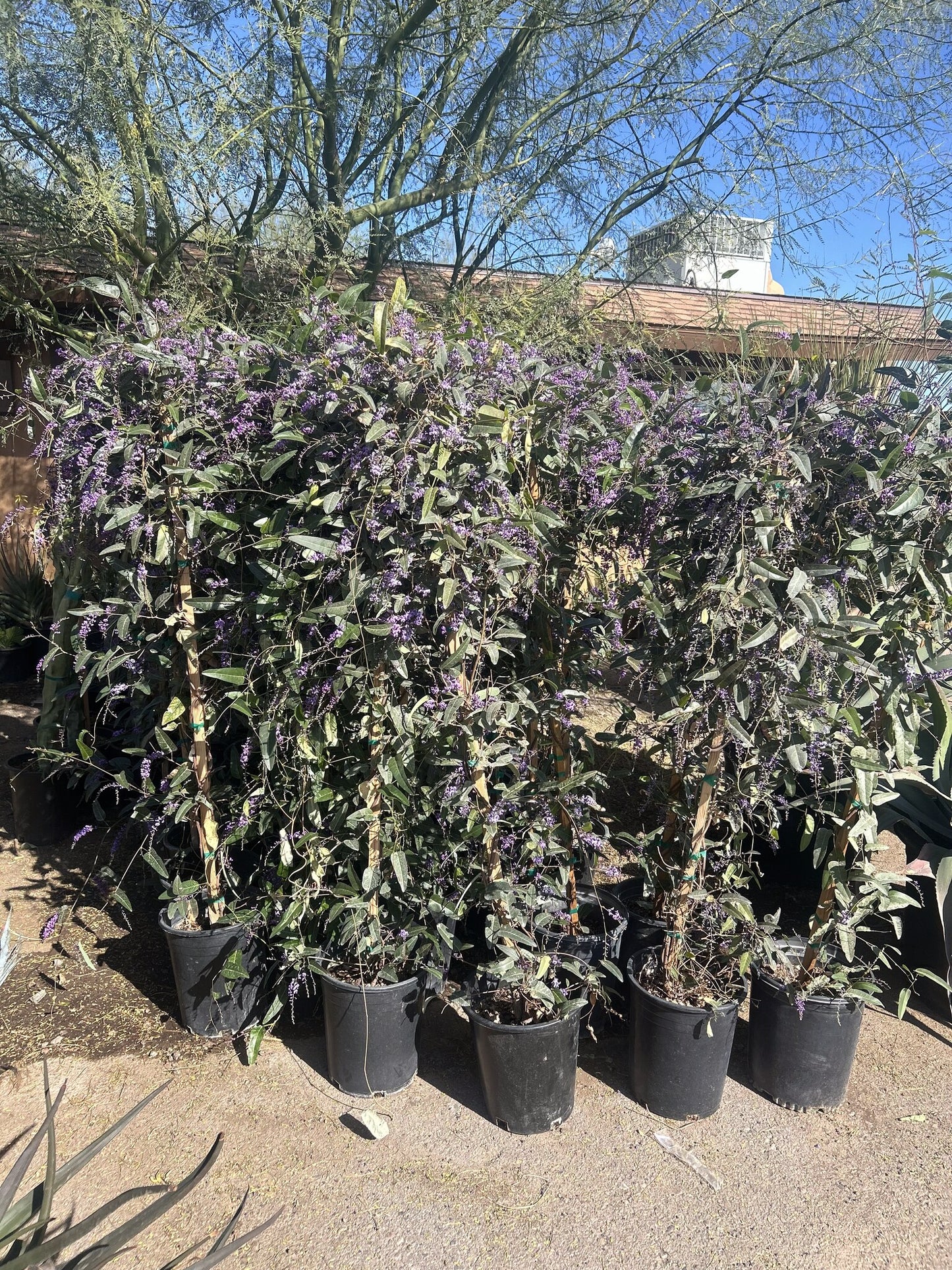
Lilac Vine (Hardenbergia violacea), also called Happy Wanderer, is Phoenix's most spectacular late-winter bloomer. When nearly every other plant in the garden is dormant, this vigorous evergreen climbing vine erupts with cascading clusters of vivid purple-lilac pea-shaped flowers — transforming fences, trellises, and walls into breathtaking living tapestries. Whether you're adding vertical drama to a Scottsdale backyard, covering a block wall in Chandler, or creating a flowering privacy screen in Mesa, Lilac Vine delivers show-stopping color from January through March with very little effort. Hardy in Zones 9–11 and drought-tolerant once established, it's an ideal choice for Phoenix Valley landscapes craving beauty without high maintenance.
Lilac Vine Plant Details
| Attribute | Detail |
|---|---|
| Scientific Name | Hardenbergia violacea |
| Common Names | Lilac Vine, Happy Wanderer, False Sarsaparilla |
| Mature Height | 6–10 ft. (as a climbing vine) |
| Mature Width | 4–6 ft. |
| Growth Rate | Moderate to fast — 3–5 ft. per year in Phoenix |
| Sun | Full sun to partial shade. Handles reflected heat from walls with afternoon protection. |
| Water | Low to moderate once established. Drought-tolerant after year one. |
| USDA Zones | 9–11 (Phoenix is Zone 9b–10a) |
| Soil | Well-draining. Adapts to Arizona caliche soils with proper drainage. |
| Foliage | Evergreen — stays green year-round |
| Bloom Color | Purple-lilac, pink, or white |
| Bloom Season | Late winter to early spring (January–March) |
Lilac Vine Uses in Phoenix Landscapes
Fence and Wall Coverage
Lilac Vine is the top choice for covering block walls, chain-link fences, and wooden trellises in Phoenix yards. Its twining stems cling and climb naturally, providing dense, year-round green coverage that transforms utilitarian structures into garden features. In winter and early spring, those green walls become spectacular purple waterfalls of bloom. For a 20-foot fence: plant 3–4 vines spaced 6 ft. apart. For a 40-foot wall: plant 7–8 vines.
Pergola and Patio Shade Vine
Trained over a pergola or ramada, Lilac Vine creates a lush canopy that filters harsh Phoenix sun while delivering seasonal flower displays directly overhead. Pair it with Bougainvillea for year-round color, or let it stand alone as the garden's star performer in winter when little else blooms. Plant at each post of a pergola for full coverage within 2–3 seasons.
Privacy Screen and Living Wall
Lilac Vine's dense, dark-green evergreen foliage makes it an excellent privacy screen between properties or along roadside walls. Unlike seasonal plants that lose their screening ability in winter, Lilac Vine stays full and green while simultaneously providing its peak flower show. Combine with Desert Spoon and Texas Sage for a layered, low-water privacy planting.
Pollinator Garden Vine
The pea-shaped flowers of Lilac Vine are highly attractive to native bees, hummingbirds, and butterflies — making it one of the most wildlife-friendly vines available for Phoenix gardens. Plant it near a seating area or water feature to enjoy the activity up close during the January–March bloom season.
Best Time to Plant Lilac Vine in Phoenix
Fall planting (October–November) is ideal for Lilac Vine in the Phoenix Valley. The warm soil temperatures allow roots to establish quickly, while cooler air temperatures reduce transplant stress. Six to eight months of root development before the first Phoenix summer gives the vine the resilience it needs to thrive through triple-digit heat. Spring planting (February–April) is the second-best window — you may even catch the tail end of the bloom season shortly after planting. Avoid summer planting if possible, as newly transplanted vines struggle with Phoenix's peak heat.
How to Plant Lilac Vine
- Dig wide, not deep — dig a hole 2–3x the width of the root ball and the same depth. Avoid planting too deep.
- Check for caliche — break through any caliche hardpan layer to ensure proper drainage. Arizona caliche can trap water and kill roots if not addressed.
- Backfill with native soil — a light 20% organic amendment blend is fine; Lilac Vine adapts readily to native desert soils.
- Spacing — plant 5–6 ft. apart for fence coverage; 8–10 ft. apart on pergolas. Individual specimen plants can go 6–8 ft. from structures.
- Water basin — build a 3–4 inch soil ring around the plant to direct water to the root zone.
- Mulch — apply 2–3 inches of bark or gravel mulch to retain soil moisture and regulate root temperature during Phoenix summers.
Watering Lilac Vine in Phoenix
First Year Watering Schedule
Consistent watering through the first year is essential for establishing a strong root system before Phoenix summers arrive.
- Weeks 1–2: Water every 1–2 days, deep and slow (20–30 minutes per session)
- Months 1–2: Water every 3–4 days
- Months 3–6: Water every 7–10 days (every 5–7 days during peak summer heat)
- After Year 1: Every 10–14 days in summer; every 3–4 weeks in winter
Drip Irrigation
Install drip emitters 18–24 inches from the base of the vine, using 1–2 GPH emitters per plant. For established vines on a fence line, two emitters per plant spaced around the root zone is ideal. Once fully established, Lilac Vine is highly drought-tolerant and needs very little supplemental irrigation in winter.
How fast does Lilac Vine grow in Phoenix?
In Phoenix's warm climate, Lilac Vine grows 3–5 feet per year. With good irrigation and a sturdy trellis, most plants will cover a 6-foot fence within 2 full growing seasons.
Is Lilac Vine drought-tolerant?
Yes — once established after its first year, Lilac Vine is quite drought-tolerant. During Phoenix summers it still benefits from occasional deep watering every 2 weeks, but it doesn't require the frequent irrigation of more water-hungry plants.
What's the difference between Lilac Vine and Wisteria?
Both produce cascading purple blooms, but Lilac Vine (Hardenbergia) is much better suited to Phoenix. Wisteria prefers cooler climates and can be invasive. Lilac Vine is compact, well-behaved, and thrives in Zone 9b–10a desert heat that wisteria struggles in.
Can Lilac Vine survive Phoenix summer heat?
Yes, with some consideration. Established plants handle full sun well, but in the hottest western exposures, afternoon shade cloth or placement on an east or north-facing wall helps the vine thrive through July and August. The foliage may look stressed in peak heat but recovers once temperatures drop.
Does Lilac Vine work near pools?
Yes — Lilac Vine is a popular pool-area vine in Phoenix because it's evergreen, provides good privacy, and its flowers are not messy. It doesn't drop excessive debris in water and pairs beautifully with pool coping and tropical plantings.
You May Also Like
- Bougainvillea — the ultimate warm-season climbing vine for Phoenix fences, with brilliant magenta, orange, or white bracts from spring through fall.
- Blue Hibiscus (Alyogyne huegelii) — a drought-tolerant shrub with lavender-blue blooms that complements Lilac Vine's purple tones in mixed plantings.
- Texas Sage (Leucophyllum frutescens) — a low-water, heat-loving shrub that pairs beautifully with Lilac Vine as a privacy planting base.
- Desert Spoon (Dasylirion wheeleri) — a structural desert accent that contrasts elegantly with Lilac Vine's soft, flowing texture.
- Lavender Starflower (Grewia occidentalis) — another flowering vine/shrub option for Phoenix with lavender star-shaped blooms and similar low-water needs.
How Many Lilac Vine Do I Need?
Lilac Vine has a 4 to 6 foot spread, so space plants about 6 feet apart for a continuous flowering fence or wall screen, or one per post on a pergola.
| Fence run | Plants needed (at ~6 ft spacing) |
|---|---|
| 12 ft | 2 plants |
| 20 ft | 3 to 4 plants |
| 30 ft | 5 plants |
| 40 ft | 7 to 8 plants |
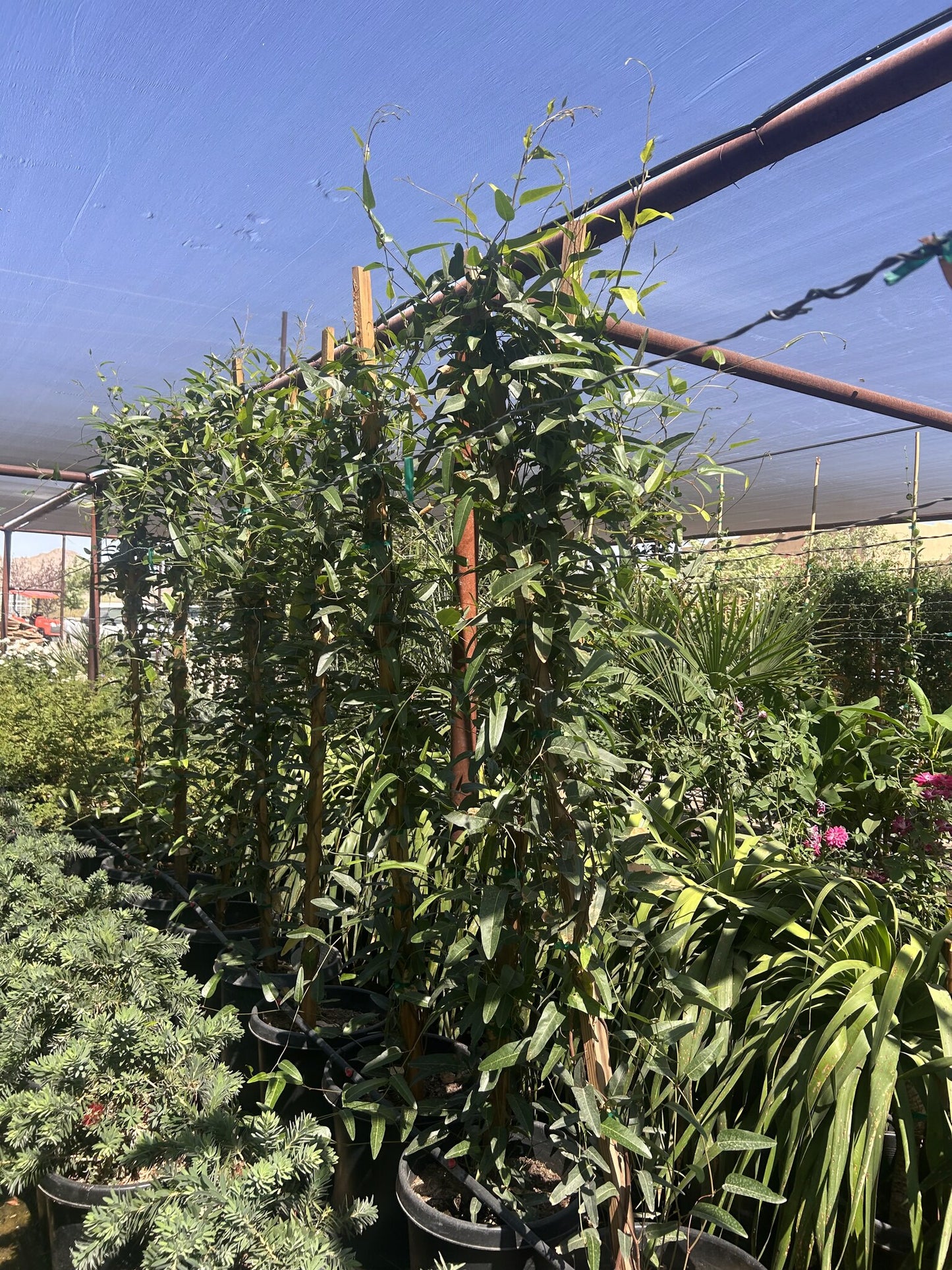
It twines rather than clings, so give it wire, lattice, or a trellis to climb. One vine will cover a 6 foot fence panel within about two seasons.
Lilac Vine Season-by-Season in Phoenix
- Spring (Feb–Apr): The tail end of its signature purple-lilac bloom carries into early spring, drawing bees, hummingbirds, and butterflies. Good second planting window.
- Summer (May–Sep): Stays evergreen and green through the heat, though foliage may look stressed in the hottest western exposures. Afternoon shade or an east or north wall helps it through July and August. Monsoon humidity eases heat stress.
- Fall (Oct–Nov): Prime planting season. Roots establish in warm soil ahead of the winter bloom show.
- Winter (Dec–Jan): The main event. Cascading purple-lilac flower clusters cover the vine while most of the garden is dormant. Hardy in the Valley; protect only in an unusually hard freeze.
At a Glance
✔ Evergreen ✔ Pollinator-Friendly ✔ Hummingbird-Friendly ✔ Drought-Tolerant ✔ Low-Maintenance ✔ Pool-Friendly (Low-Litter)
Plant It With
- Texas Sage: a low-water, heat-loving shrub that makes a great privacy base beneath the vine.
- Desert Spoon: a structural desert accent that contrasts with Lilac Vine's soft, flowing texture.
- Queen's Wreath 'Pink': a warm-season vine to carry pink-purple color through summer when the lilac vine rests.
- Red Yucca: a tough hummingbird perennial for the sunny bed at the base of the trellis.
Is Lilac Vine Right for Your Yard?
Lilac Vine is the right pick when you want an evergreen, pool-friendly screen that explodes with purple color in winter, on a fence, trellis, or pergola with afternoon protection in the hottest spots. It is drought-tolerant and well-behaved in caliche soil with drainage. Not a fit for a full-blast west-facing wall with no afternoon relief, where summer foliage can scorch, or if you want peak color in summer rather than winter.
Customer Reviews
Got out third delivery and again this company hit a home run!
I am not a shill i shop and pay like everyone else but i am a 77 year old lifetime gardener
So no time, energy or money to waste on problem plants
This crew is the Best!!
Share