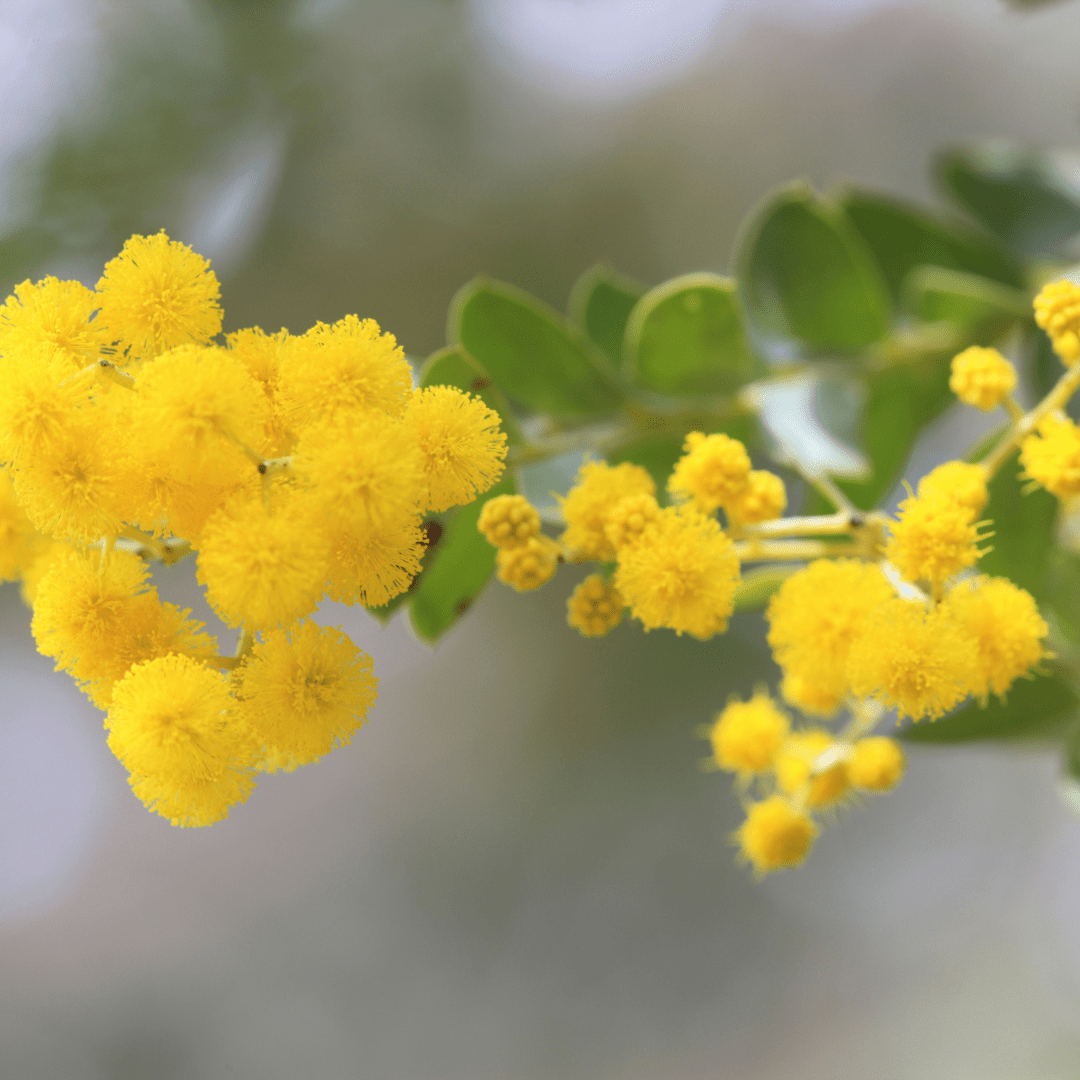


Leather Leaf Acacia
Leather Leaf Acacia
Couldn't load pickup availability
Arizona's Most Distinctive Drought-Tolerant Tree — Leatherleaf Acacia
Leatherleaf Acacia (Acacia craspedocarpa) is one of the most visually striking drought-tolerant trees you can plant in a Phoenix landscape. Its thick, round gray-green phyllodes give it a texture unlike any other desert tree — architectural, bold, and beautiful year-round. Growing 10–15 feet tall and equally wide, it's perfectly sized for modern desert yards, courtyard plantings, and low-water streetscapes across the Valley. Whether you're adding structure to a xeriscape bed in Scottsdale, creating a canopy focal point in Chandler, or designing a textural border planting in Gilbert — Leatherleaf Acacia delivers year-round drama with almost zero maintenance.
Leatherleaf Acacia Plant Details
| Attribute | Detail |
|---|---|
| Scientific Name | Acacia craspedocarpa |
| Common Names | Leatherleaf Acacia, Leather-leaf Wattle |
| Mature Height | 10–15 feet |
| Mature Width | 10–15 feet |
| Growth Rate | Moderate — 1–2 feet per year in Phoenix |
| Sun | Full sun (6+ hrs). Handles reflected heat from walls. |
| Water | Low once established. Highly drought-tolerant. |
| USDA Zones | 9–11 (Phoenix is Zone 9b–10a) |
| Soil | Well-draining. Adapts to Arizona caliche soils. |
| Foliage | Evergreen — distinctive round gray-green phyllodes year-round |
| Bloom | Small yellow flowers in late winter to spring |
Leatherleaf Acacia Uses in Phoenix Landscapes
Modern Xeriscape and Desert Design
Leatherleaf Acacia's round, coin-shaped phyllodes create one of the most distinctive silhouettes in the Phoenix plant palette. Its clean gray-green texture pairs perfectly with decomposed granite, boulders, concrete, and minimalist hardscape. Plant it as a standalone specimen or mix it with Desert Spoon, Agave, or Palo Verde for a bold, sculptural composition that thrives on almost no water.
Courtyard and Patio Focal Specimen
At 10–15 feet, Leatherleaf Acacia is perfectly scaled for courtyard plantings and shaded patios where a large tree would be overwhelming. Its rounded canopy casts dappled shade, and its evergreen structure keeps the space looking polished every season. Pair with Ruellia or Texas Sage at the base for a simple, striking composition.
Low-Water Privacy Border
Leatherleaf Acacia's dense canopy and moderate growth make it an excellent choice for privacy borders along walls and property lines. Plant 8–10 feet apart for a continuous evergreen screen that reaches 10–12 feet in 4–6 years. For a 30 ft fence — 3–4 plants / 50 ft fence — 5–6 plants. Its tolerance for reflected heat from block walls makes it one of the few trees that thrives in tight south- and west-facing fence lines.
Streetscape and Median Planting
Leatherleaf Acacia performs exceptionally well in harsh streetscape conditions — reflected asphalt heat, poor soil, limited water, and full sun exposure. Its non-invasive root system and moderate size make it a strong candidate for medians, street-side planting strips, and commercial landscapes in Scottsdale, Tempe, and Mesa that require low-maintenance, high-impact trees.
Best Time to Plant Leatherleaf Acacia in Phoenix
Fall (October–November) is the ideal planting window. Warm soil encourages deep root development while cooler air temperatures reduce transplant stress — giving the tree 6–8 months to establish before its first Phoenix summer. Spring (February–April) is the second-best option. Avoid summer planting if possible; if you must plant during peak heat, deep watering every 1–2 days is critical in the first few weeks.
How to Plant Leatherleaf Acacia
- Dig wide, not deep — 2–3x the root ball width, same depth as the container
- Check for caliche — break through any hardpan layer with a bar or pick for proper drainage
- Backfill with native soil — a light 20% organic amendment is fine but not required
- Spacing — 8–10 ft apart for privacy borders; 12–15 ft for individual specimens
- Water basin — build a 3–4 inch soil ring around the drip line to concentrate water at roots
- Mulch — 2–3 inches of gravel or bark mulch to retain moisture and keep roots cool
Watering Leatherleaf Acacia in Phoenix
First Year Watering Schedule
- Weeks 1–2: Every 1–2 days, deep and slow (20–30 min per session)
- Month 1–2: Every 3–4 days
- Month 3–6: Every 7–10 days (5–7 days in peak summer heat)
- After Year 1: Every 10–14 days in summer; every 3–4 weeks in winter
Drip Irrigation
Place drip emitters 18–24 inches from the base of the trunk, using 2–4 GPH emitters per tree. Once established, Leatherleaf Acacia is extremely drought-tolerant and will thrive on minimal supplemental water during cooler months. Deep, infrequent watering is always better than shallow, frequent irrigation — it encourages deep root development that makes the tree more resilient in Phoenix summers.
How fast does Leatherleaf Acacia grow in Phoenix?
Leatherleaf Acacia is a moderate grower, adding 1–2 feet per year under good conditions in Phoenix. It reaches a usable 8–10 foot height in 4–6 years. Its measured growth rate means it stays well-proportioned for small courtyard spaces without requiring constant pruning.
Is it drought tolerant once established?
Very much so. Leatherleaf Acacia is native to the arid interior of Western Australia, where it's adapted to hot, dry conditions extremely similar to Phoenix. Once established (typically after year one), it can survive long stretches without supplemental irrigation. Deep watering every 10–14 days in summer is all it typically needs.
How does it handle Phoenix summer heat and reflected wall heat?
Exceptionally well. Leatherleaf Acacia is rated for USDA Zones 9–11 and handles both direct summer sun and reflected wall heat with ease. Its thick phyllodes are specifically adapted to reduce moisture loss in harsh conditions — making it one of the toughest evergreen trees you can plant in the Phoenix Valley.
What makes Leatherleaf Acacia different from other acacias?
Most acacias have feathery, fern-like foliage. Leatherleaf Acacia is unique for its round, coin-shaped phyllodes — thick, stiff, and almost succulentlike. This gives it a completely different texture and silhouette in the landscape, making it immediately recognizable and highly valued for its architectural quality in modern desert design.
Does it work in small yards or tight spaces?
Yes — at 10–15 feet tall and wide, Leatherleaf Acacia is one of the more manageable acacia species for residential landscapes. It won't overwhelm a typical backyard or courtyard, and its moderate growth rate means it stays in proportion for years without major pruning.
You May Also Like
- Willow Acacia — A graceful, fast-growing acacia with weeping blue-green foliage, ideal for quick shade or privacy screening in Phoenix landscapes.
- Mulga Acacia — A slow-growing, architectural acacia with silvery gray-green foliage and strong drought tolerance — a great companion to Leatherleaf in a xeriscape design.
- Shoestring Acacia — A striking acacia with narrow, ribbon-like foliage and an elegant weeping form, perfect for modern desert landscapes.
- Blue Palo Verde — Arizona's iconic desert tree with green bark and bright yellow spring blooms, pairs beautifully with Leatherleaf Acacia in a native-inspired design.
- Desert Museum Palo Verde — The thornless, showier hybrid palo verde — an excellent shade companion to the more understated Leatherleaf Acacia.
How Many Leatherleaf Acacia Do I Need?
At 10 to 15 feet wide, Leatherleaf Acacia is spaced as an informal evergreen screen or used singly as a courtyard specimen. For a continuous low-water privacy border, plant 8 to 10 feet on center. Use this table at 9 ft spacing:
| Run Length | Trees Needed (9 ft on center) |
|---|---|
| 18 ft | 2-3 trees |
| 30 ft | 3-4 trees |
| 50 ft | 5-6 trees |
| 90 ft | 10 trees |
As a single focal specimen, give it 12 to 15 feet of clearance so the rounded canopy and unique coin-shaped foliage can be seen from all sides.
Leatherleaf Acacia Season-by-Season in Phoenix
- Spring (Feb-Apr): Small fragrant yellow flowers open from late winter into spring, drawing bees, followed by a flush of new gray-green phyllodes. Good second planting window.
- Summer (May-Sep): Built for it. Thick, moisture-conserving phyllodes shrug off full sun and reflected wall heat with minimal water. Established trees coast through the monsoon on deep, infrequent soakings.
- Fall (Oct-Nov): Prime planting season. Warm soil plus mild air lets roots establish before winter for the strongest start.
- Winter (Dec-Jan): Stays fully evergreen and structural through the cool months. Frost-hardy down to about 15°F, so it handles typical Valley winters without protection; cover only in an unusually hard freeze.
At a Glance
✔ Pollinator-Friendly ✔ Heat-Loving (Reflected-Heat Tolerant) ✔ Drought-Tolerant ✔ Evergreen ✔ Shade-Providing ✔ Low-Maintenance ✔ Cold-Hardy to 15°F
Plant It With
- Shoestring Acacia: weeping ribbon-leaf acacia that contrasts beautifully with the round coin-shaped foliage.
- Blue Palo Verde: native green-barked tree with yellow spring bloom for a desert-inspired pairing.
- Desert Museum Palo Verde: thornless showy palo verde that adds bright bloom and light shade alongside it.
- Desert Spoon: architectural native accent that echoes the gray-green palette at ground level.
Is Leatherleaf Acacia Right for Your Yard?
Leatherleaf Acacia thrives in full sun and reflected heat off block walls and pavement, in well-draining soil where the caliche has been opened up at planting. Its modest 10 to 15 foot size and non-invasive roots make it ideal for courtyards, tight fence lines, medians, and small yards where a big shade tree would overwhelm. It is not a fit if you need fast, deep shade (it is a moderate grower with a light, dappled canopy) or if your site holds water, since soggy soil works against this dry-climate species.
Share