

Lace Aloe
Lace Aloe
Couldn't load pickup availability
Arizona's Toughest Small Succulent for Pots & Rock Gardens
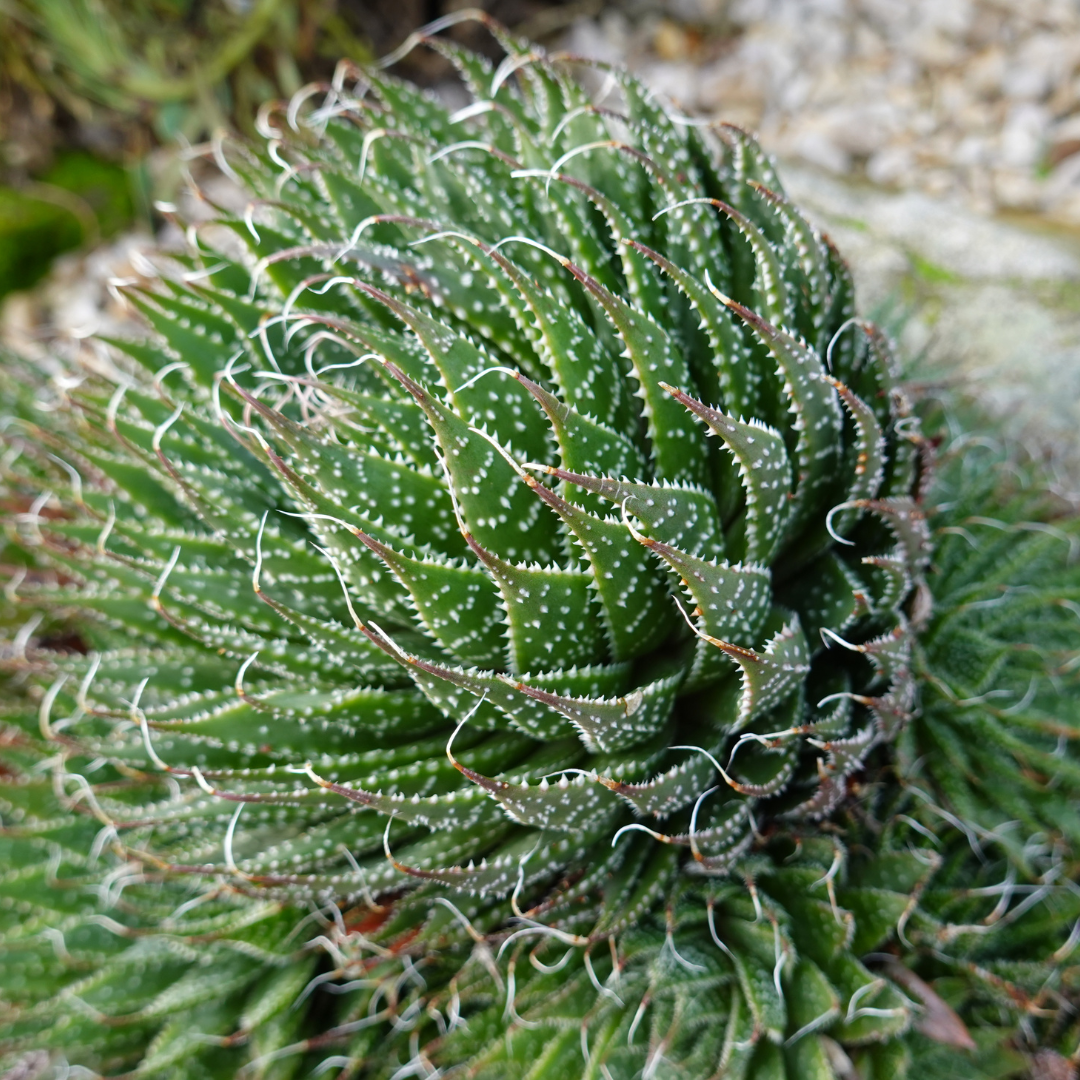
Aloe aristata, commonly known as Lace Aloe or Torch Plant, is one of the hardiest compact succulents for Phoenix Valley gardens. This dense rosette-forming aloe features dark green lance-shaped leaves decorated with white spots and delicate lace-like teeth along the margins, creating a striking ornamental texture in any setting. In spring and summer, tall spikes of red-orange tubular flowers shoot up to attract hummingbirds. Whether you're building a rock garden in Scottsdale, filling containers on a Chandler patio, or tucking accents into a xeriscape bed in Mesa — Lace Aloe thrives with almost no care.
Lace Aloe Plant Details
| Attribute | Detail |
|---|---|
| Scientific Name | Aloe aristata (syn. Aristaloe aristata) |
| Common Names | Lace Aloe, Torch Plant, Guinea Fowl Aloe |
| Mature Height | 6–12 inches |
| Mature Width | 6–12 inches |
| Growth Rate | Moderate — produces offsets freely to form clusters |
| Sun | Full sun to partial shade. Appreciates afternoon shade in peak Phoenix summer. |
| Water | Very low once established. Highly drought-tolerant. |
| USDA Zones | 7–11 (Phoenix is Zone 9b–10a) |
| Soil | Well-draining required. Thrives in sandy or gravelly soil and Arizona caliche with amended drainage. |
| Foliage | Evergreen — stays green year-round |
| Bloom Color | Red-orange tubular flowers on tall spikes, spring through summer |
Lace Aloe Uses in Phoenix Landscapes
Container & Patio Accent
Lace Aloe's compact size and striking texture make it a natural choice for container gardening. Plant in decorative pots on patios, balconies, and entryways throughout Gilbert, Tempe, and Peoria. Its slow spread and tidy rosette form mean it stays looking sharp without frequent repotting. Pair with other small succulents like Haworthia or Echeveria for a mixed succulent bowl.
Rock Garden & Xeriscape Filler
Tuck Lace Aloe between boulders and along rock garden edges for a natural desert aesthetic. Its white-spotted leaves provide visual interest even when not in bloom. Plant 8–10 inches apart in well-draining gravel beds for a dense succulent groundcover effect. Combines beautifully with Desert Spoon and small agaves for layered texture.
Hummingbird & Pollinator Garden
The tall red-orange flower spikes are magnets for hummingbirds. Plant clusters of Lace Aloe near seating areas in Scottsdale and Paradise Valley to enjoy close-up hummingbird visits from spring through summer. Pair with Chuparosa and Hummingbird Trumpet for continuous hummingbird-attracting blooms.
Best Time to Plant Lace Aloe in Phoenix
Fall (October–November) is the ideal planting window. Warm soil promotes root establishment while cooler air reduces transplant stress, giving the plant months to settle before its first Phoenix summer. Spring (February–April) is the second-best window. Avoid planting in peak summer heat if possible.
How to Plant Lace Aloe
- Dig wide, not deep — hole should be 2–3x the root ball width, same depth as the container.
- Check for caliche — break through any hardpan layer to ensure proper drainage. Lace Aloe is especially sensitive to sitting water.
- Amend with pumice or perlite — mix 30–50% pumice into backfill for excellent drainage in heavy desert soil.
- Spacing — 8–10 inches apart for grouped plantings; 12 inches if planting as individual accents.
- Do not bury the crown — keep the base of the rosette at or slightly above soil level to prevent rot.
- Top dress with gravel — 1–2 inches of decorative gravel keeps the crown dry and prevents soil splash.
Watering Lace Aloe in Phoenix
First Year Watering Schedule
Weeks 1–2: Every 3–4 days, light watering to settle roots. Month 1–3: Every 7–10 days. Month 3–6: Every 10–14 days. After Year 1: Every 2–3 weeks in summer; monthly or less in winter. Always let soil dry completely between waterings.
Drip Irrigation
Place one 0.5-GPH emitter 4–6 inches from the plant base. Lace Aloe is very drought-tolerant once established and overwatering is the most common cause of failure. In-ground plants in well-draining soil may need supplemental water only during the hottest summer months.
How fast does Lace Aloe grow?
Lace Aloe grows at a moderate pace, reaching mature size in 2–3 years. It offsets freely, so a single plant will gradually form an attractive cluster over time. Offsets can be divided and replanted to expand your collection.
Is Lace Aloe cold hardy?
Yes. Lace Aloe is one of the most cold-hardy aloes, tolerating temperatures down to about 10°F. It handles Phoenix winters with ease and even survives occasional frost events that would damage many other aloe species.
Can Lace Aloe take full Phoenix sun?
Lace Aloe handles full sun in Phoenix but appreciates some afternoon shade during peak summer, especially in south- and west-facing exposures with reflected heat. Morning sun with afternoon shade is the ideal placement for the best foliage color.
Is Lace Aloe the same as Haworthia?
No, though they look similar. Lace Aloe (Aloe aristata, recently reclassified as Aristaloe aristata) is a true aloe that produces tall flower spikes. Haworthias are a separate genus with different flowering habits. Both make excellent companion plants in mixed succulent containers.
You May Also Like
African/Tiger Aloe — Larger spotted aloe with dramatic branching flower spikes.
Golden-Tooth Aloe — Compact aloe with golden-edged leaves and bright yellow flowers.
Coral Aloe — Blue-green rosette aloe with spectacular coral-pink winter blooms.
Coast/Dune Aloe — Tall tree-form aloe perfect for Phoenix landscapes.
How Many Lace Aloe Do I Need?
Lace Aloe stays tiny at 6 to 12 inches wide and offsets into tidy clusters, so it reads as a fine-textured groundcover or rock-garden filler on about 9-inch centers. Use this guide to estimate counts by area:
| Area to Cover | Plants Needed (9-inch spacing) |
|---|---|
| 10 sq ft | 18 plants |
| 25 sq ft | 44 plants |
| 50 sq ft | 88 plants |
For accents, set single rosettes or small groups of 3 spaced about 12 inches apart and let each one pup into a cluster over two or three seasons.
Lace Aloe Season-by-Season in Phoenix
- Spring (Feb-Apr): Bloom season begins. Tall red-orange spikes rise above the spotted rosettes and pull in hummingbirds. A strong second planting window.
- Summer (May-Sep): Blooming continues into early summer. This is one aloe that appreciates afternoon shade in peak heat, especially in west-facing, reflected-heat spots, where full afternoon sun can scorch the foliage. Morning sun with afternoon shade keeps the best color. Keep water sparse.
- Fall (Oct-Nov): Prime planting season. Warm soil and mild air give fast, low-stress establishment.
- Winter (Dec-Jan): Evergreen and unbothered by cold. One of the hardiest aloes, good to about 10F, so it shrugs off Valley frosts that damage tender species, no cover needed.
At a Glance
✔ Hummingbird-Friendly ✔ Pollinator-Friendly ✔ Drought-Tolerant ✔ Evergreen ✔ Low-Maintenance ✔ Deer & Rabbit-Resistant ✔ Cold-Hardy to 10°F
Plant It With
- African / Tiger Aloe: a larger spotted aloe that echoes the lacy white markings.
- Golden-Tooth Aloe: golden-edged rosettes for a compact mixed-aloe grouping.
- Coral Aloe: smooth blue-green rosettes and coral spikes for color contrast.
- Coast / Dune Aloe: a taller tree-form aloe to give the little rosettes a backdrop.
Is Lace Aloe Right for Your Yard?
Lace Aloe is perfect for containers, rock gardens, and small xeriscape accents with sharp drainage, and it is the most frost-proof aloe on the list, good to about 10F. Give it morning sun with afternoon shade in the hottest exposures for the best foliage. It is not a fit for a baking, all-day west-facing reflected-heat wall or any spot that stays wet, since both lead to scorch or crown rot.
Share