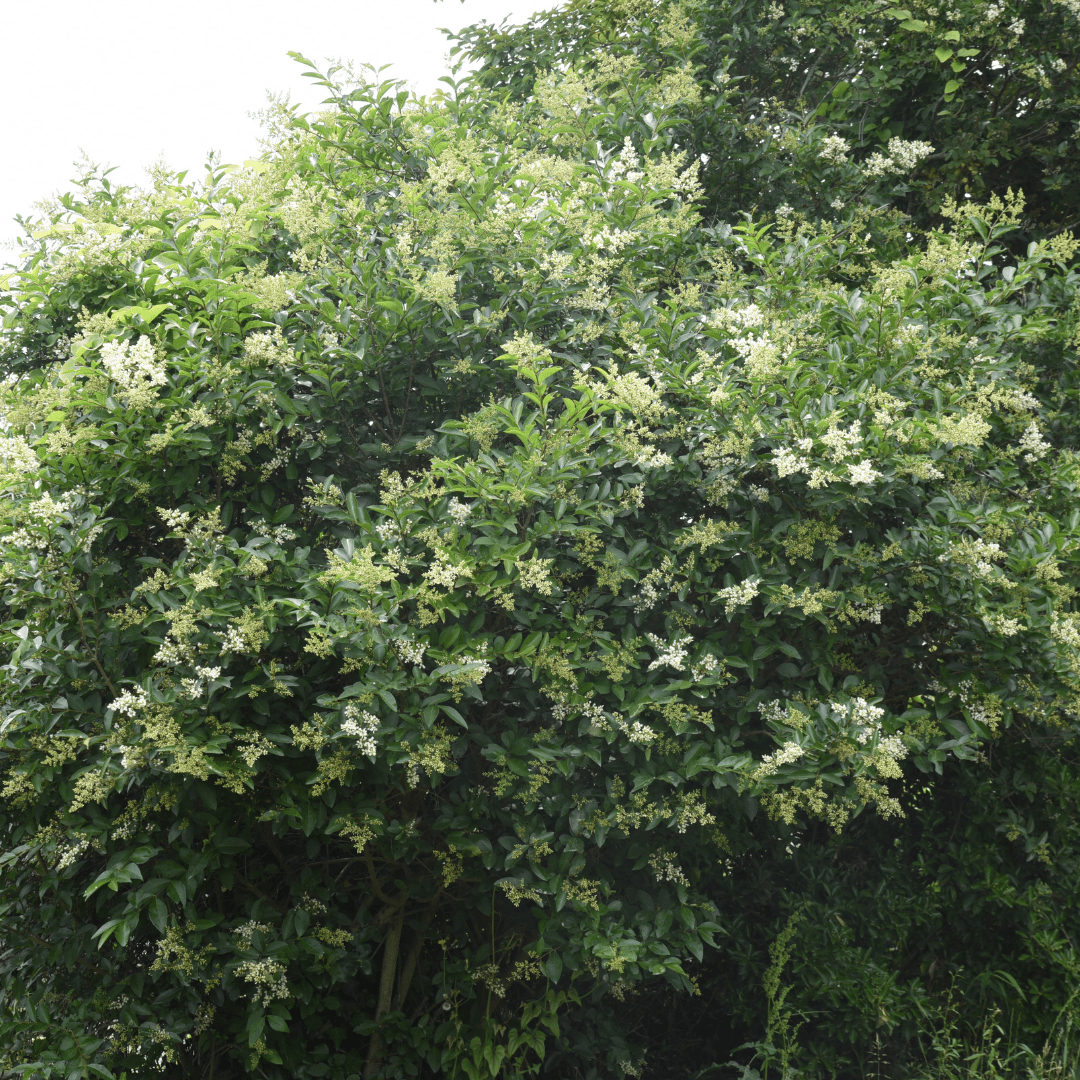

Japanese Privet Tree
Japanese Privet Tree
Couldn't load pickup availability
Phoenix's Best Compact Evergreen Privacy Tree
Japanese Privet Tree (Ligustrum japonicum) is one of the most versatile small evergreen trees for Phoenix Valley landscapes. With dense, glossy dark green foliage that stays lush year-round, it works beautifully as a privacy screen, formal hedge, or standalone ornamental accent. It grows quickly to 8–12 feet, handles both full sun and partial shade, and produces fragrant white flower clusters in spring that attract pollinators. Whether you need a compact privacy solution for a courtyard in Scottsdale, a formal hedge along a driveway in Chandler, or a low-maintenance accent tree in Mesa — Japanese Privet delivers elegant results with minimal effort.
Japanese Privet Tree Plant Details
| Attribute | Detail |
|---|---|
| Scientific Name | Ligustrum japonicum |
| Common Names | Japanese Privet, Wax Leaf Privet, Japanese Ligustrum |
| Mature Height | 8–12 feet |
| Mature Width | 6–8 feet |
| Growth Rate | Moderate to fast — 2–3 feet per year in Phoenix |
| Sun | Full sun to partial shade. Handles reflected heat from walls. |
| Water | Low to moderate once established. Drought-tolerant. |
| USDA Zones | 7–11 (Phoenix is Zone 9b–10a) |
| Soil | Well-draining. Adapts to Arizona caliche and alkaline soils. |
| Foliage | Evergreen — dense, glossy dark green leaves year-round |
| Bloom | White fragrant flower clusters in spring |
Japanese Privet Tree Uses in Phoenix Landscapes
Privacy Screening and Hedging
Japanese Privet is one of the best compact privacy trees for Phoenix properties. Its dense, year-round foliage creates an effective visual barrier from ground level to 8–12 feet. Plant 4–5 feet apart for a tight privacy hedge, or 6–8 feet apart for a more natural screen. For a 20-foot fence line, plan on 4–5 trees. It responds exceptionally well to pruning and can be shaped into formal hedges, topiary, or left to grow naturally. Pair with lower groundcovers like Lantana or Ruellia from Three Timbers for full coverage.
Courtyard and Small Space Planting
Japanese Privet's compact size makes it ideal for courtyards, patios, and smaller yards throughout Tempe, Gilbert, and Peoria. It won't overwhelm tight spaces the way larger shade trees can, yet it provides meaningful shade and privacy. Plant in decorative containers or directly in the ground near seating areas for a polished look.
Foundation and Accent Planting
Use Japanese Privet as a foundation planting along building facades or as a formal accent flanking entryways and driveways. Its clean, symmetrical form and glossy foliage complement both modern and traditional architecture styles common across the Phoenix Valley. It pairs well with Texas Sage, Yellow Bells, and Desert Spoon for a layered landscape design.
Best Time to Plant Japanese Privet in Phoenix
Fall (October–November) is the ideal planting window. Warm soil encourages root development while cooler air reduces transplant stress, giving the tree 6–8 months of establishment before its first Phoenix summer. Spring (February–April) is the second-best window. Avoid planting during peak summer heat when temperatures regularly exceed 110°F.
How to Plant Japanese Privet Tree
- Dig wide, not deep — excavate a hole 2–3× the width of the root ball, but only as deep as the root ball height. The root flare should sit at or slightly above grade.
- Check for caliche — if you hit a white hardpan layer, break through it completely for drainage. Standing water will damage the roots.
- Backfill with native soil — a light 20% organic amendment helps but isn't required. Japanese Privet adapts well to desert soils.
- Spacing — 4–5 feet apart for a formal hedge; 6–8 feet apart for individual specimens.
- Build a water basin — create a 3–4 inch berm ring around the root zone to direct irrigation water to the roots.
- Mulch — spread 2–3 inches of bark or gravel mulch over the root zone (not touching the trunk) to retain moisture and moderate soil temperature.
Watering Japanese Privet in Phoenix
First Year Watering Schedule
Weeks 1–2: Water every 1–2 days, deep and slow (20–30 minutes with a slow trickle). Month 1–2: Reduce to every 3–4 days. Month 3–6: Water every 5–7 days (every 3–5 days during peak summer heat). After Year 1: Water every 7–10 days in summer and every 2–3 weeks in winter. Established Japanese Privet is quite drought-tolerant but maintains its best appearance with regular deep watering during the hottest months.
Drip Irrigation Tips
Place emitters 12–18 inches from the trunk for new plantings, moving them outward as the canopy expands. Use 1–2 GPH emitters with 2–3 emitters per tree. For hedge plantings, a drip line running along the row works well.
How fast does Japanese Privet grow in Phoenix?
Japanese Privet grows at a moderate to fast rate of 2–3 feet per year in Phoenix with proper watering. Most trees reach their functional screening height of 8–10 feet within 3–4 years of planting from a 15-gallon container.
Can Japanese Privet handle full Phoenix summer heat?
Yes. Japanese Privet handles temperatures above 110°F and tolerates reflected heat from walls and pavement. In extremely hot exposures, it appreciates afternoon shade but isn't required. It's one of the toughest broadleaf evergreens for the low desert.
Is Japanese Privet good for hedges?
Absolutely. Japanese Privet is one of the best hedging trees available for Phoenix. Its dense growth habit responds beautifully to regular pruning and shaping. It can be maintained as a formal clipped hedge or allowed to grow into a more natural screen.
Does Japanese Privet attract bees?
Japanese Privet produces fragrant white flower clusters in spring that do attract bees and butterflies. The bloom period is relatively short (2–3 weeks), and the flowers add ornamental value. If pollinators are a concern near pool areas, the flowers can be pruned off before they fully open.
You May Also Like
Green Hopseed Bush (Dodonaea viscosa) — A fast-growing evergreen shrub perfect for privacy hedges with a more informal desert look.
Mondale Pine (Pinus eldarica) — A tall evergreen pine for larger-scale privacy screening and windbreaks.
Bottle Brush Tree (Callistemon viminalis) — An evergreen flowering tree with striking red blooms, great as a colorful privacy accent.
Texas Sage (Leucophyllum frutescens) — A drought-tough flowering shrub that pairs beautifully with Japanese Privet in layered hedges.
How Many Japanese Privet Trees Do I Need?
With a mature width of 6 to 8 feet, Japanese Privet plants tight for a solid privacy hedge. Set trees 4 feet on center for a fast, dense clipped hedge, or 6 feet on center for a softer, more natural screen. Use this table at 4 ft spacing:
| Run Length | Trees Needed (4 ft on center) |
|---|---|
| 16 ft | 4 trees |
| 24 ft | 6 trees |
| 40 ft | 10 trees |
| 60 ft | 15 trees |
For specimen or entry-accent use, give each tree 6 to 8 feet of clearance so it can develop its full rounded crown.
Japanese Privet Season-by-Season in Phoenix
- Spring (Feb-Apr): Flush of glossy new growth and fragrant white flower clusters that draw bees for a few weeks. Best second window to plant and to shear formal hedges into shape.
- Summer (May-Sep): Stays dense and green through extreme heat and reflected heat off walls and pavement. Keep first-year trees on deep, regular water; mature plants hold their look on low-to-moderate irrigation. Monsoon humidity is welcome.
- Fall (Oct-Nov): Prime planting season. Warm soil and cooling air give roots months to establish before winter, the strongest possible start.
- Winter (Dec-Jan): Fully evergreen, holding its glossy screen all winter. Cold-hardy well below freezing (USDA zone 7), so Valley frosts cause no damage and no cover is needed.
At a Glance
✔ Pollinator-Friendly ✔ Heat-Loving (Reflected-Heat Tolerant) ✔ Drought-Tolerant ✔ Evergreen ✔ Low-Maintenance ✔ Cold-Hardy to 10°F
Plant It With
- Green Hopseed Bush: fast evergreen shrub for an informal desert-look privacy layer in front of the privet.
- Texas Sage: drought-tough flowering shrub that adds silver foliage and purple bloom to a layered hedge.
- Bottlebrush Bush: evergreen flowering accent with red blooms for a colorful break in a green screen.
- Desert Spoon: architectural native accent that contrasts its spiky rosette against the privet's smooth wall.
Is Japanese Privet Right for Your Yard?
Japanese Privet thrives in full sun to part shade, takes Valley reflected heat, and adapts to caliche and alkaline desert soils as long as the planting hole drains. It is an excellent pick for a compact privacy hedge, courtyard screen, or formal foundation planting where a large tree would be too much. It is not a fit right at the pool edge or in a yard where you want zero cleanup, since it drops spring flowers and small berries (the berries are toxic if eaten and can self-seed), so shear off the bloom if that is a concern.
Share