

Japanese Privet Bush
Japanese Privet Bush
Couldn't load pickup availability
Japanese Privet Bush – Fast-Growing Evergreen Privacy Hedge for Phoenix, Mesa & Chandler
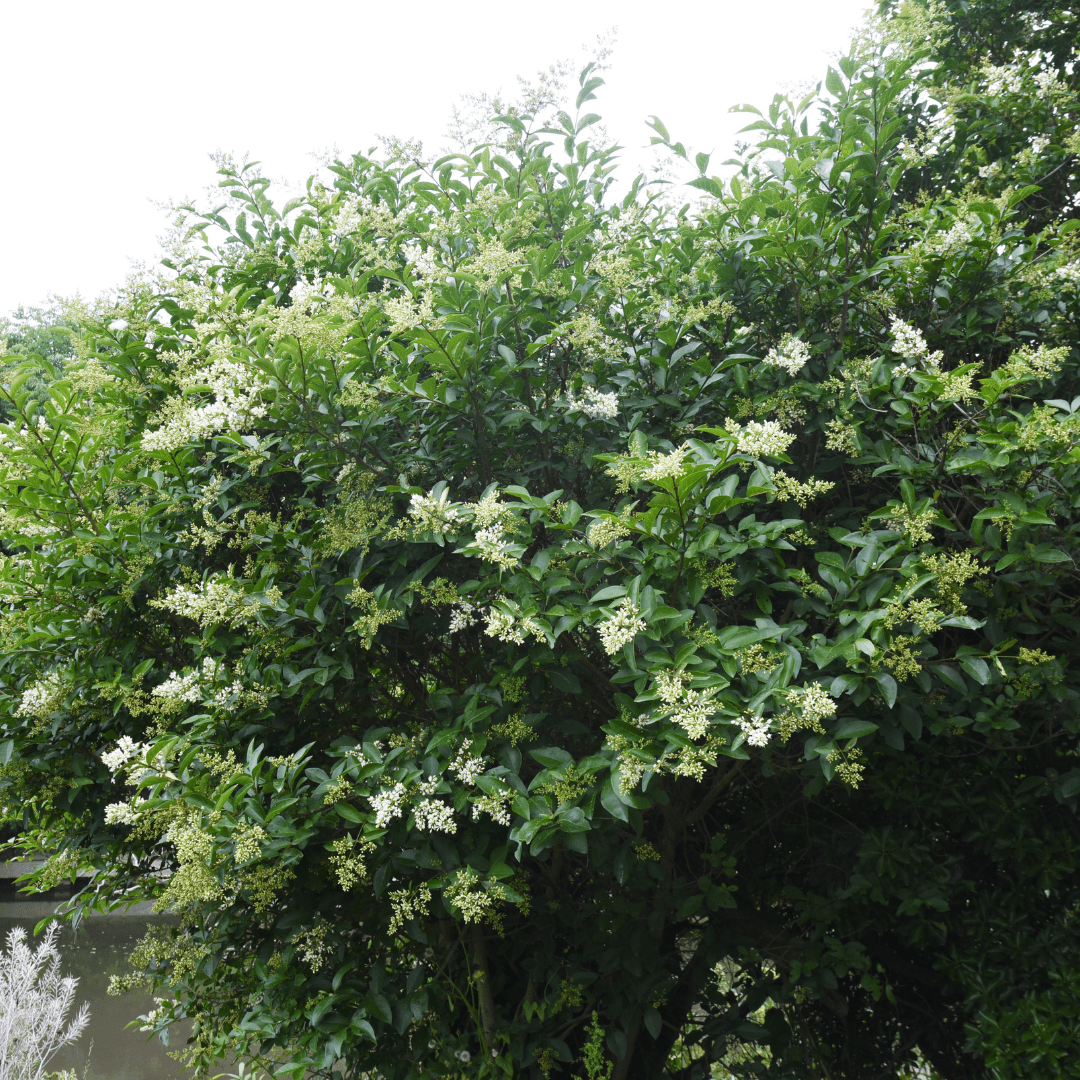
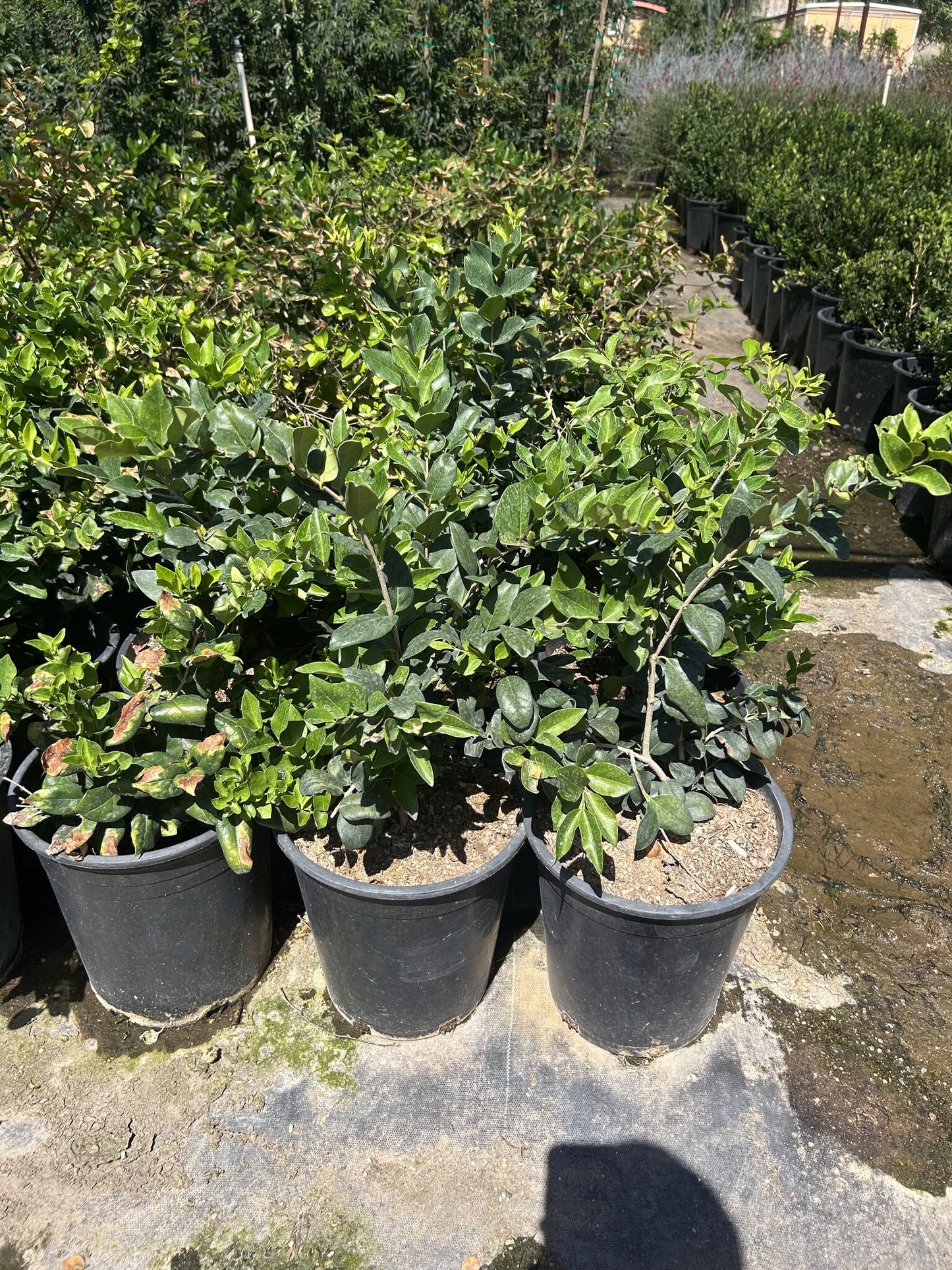
Establish a dense, fragrant privacy screen in record time with Japanese Privet Bush (Ligustrum japonicum), one of the Phoenix Valley's most proven fast-growing evergreen shrubs. Homeowners across Phoenix, Mesa, and Chandler rely on Japanese Privet for its vigorous growth, glossy dark green foliage, and showy clusters of sweetly fragrant white blooms each spring and summer. It forms a dense, impenetrable screen along fence lines, property borders, and pool surrounds, and responds readily to pruning for a refined formal hedge or left to grow naturally for a lush informal privacy wall. Available in 1 Gallon, 3/5 Gallon, and 10/15 Gallon sizes.
Plant Details
| Scientific Name | Ligustrum japonicum |
|---|---|
| Plant Type | Evergreen shrub |
| Mature Height | 8–12 ft (easily maintained at any height) |
| Spread | 6–8 ft |
| Growth Rate | Fast |
| Sun Exposure | Full sun to partial shade |
| Flower Color | White; sweetly fragrant clusters in spring–summer |
| Foliage | Glossy, dark green, leathery oval leaves |
| Hardiness Zone | Zone 9b–10a (ideal for greater Phoenix Valley) |
| Water Needs | Moderate; drought-tolerant once established |
| Soil Tolerance | Adaptable; tolerates caliche with amendment |
| Pool Friendly | Yes — low-litter, dense screening form |
| Available Sizes | 1 Gallon, 3/5 Gallon, 10/15 Gallon |
Why Phoenix Homeowners Choose Japanese Privet Bush
Fast Privacy — One of the Quickest-Screening Shrubs in the Valley
When you need privacy now, Japanese Privet delivers. Its fast growth rate—easily 2–4 feet per year under good conditions in the Phoenix area—means a new planting can reach fence-topping height within 1–2 seasons. For an effective privacy screen along a 6-foot block wall, plant 4–5 feet apart; plants will knit together into a seamless green wall quickly, blocking sight lines, reducing road noise, and creating a genuine sense of seclusion.
Fragrant White Blooms in Spring & Summer
Japanese Privet earns its keep beyond just its screening ability with showy, panicle-shaped clusters of small white flowers that carry a sweet, jasmine-like fragrance. Blooming in late spring through early summer across the Phoenix Valley, the flowers attract pollinators and fill outdoor living areas with fragrance—a bonus most purely structural hedge plants don't offer. Spent blooms are followed by small dark berries that add seasonal interest.
Year-Round Dense Evergreen Foliage
The leathery, deep green, oval leaves of Japanese Privet maintain their glossy appearance throughout Zone 9b–10a's mild winters and scorching summers. Unlike deciduous privacy plants that leave your fence line exposed in winter, Japanese Privet keeps your yard screened 365 days a year. The dense branching structure also makes it an effective wind buffer and noise barrier for properties near busy roads.
Highly Adaptable to Phoenix Valley Soils
Japanese Privet tolerates the alkaline, caliche-heavy soils common across the metro Phoenix area better than many privacy shrubs. Amend the planting hole with compost to break through hardpan and improve drainage, and the plant establishes quickly and vigorously. Once rooted in, it handles the heat and drought of a Zone 9b–10a desert climate with moderate, deep watering cycles rather than daily irrigation.
Flexible Form — Formal Hedge or Natural Screen
Japanese Privet shears cleanly into formal hedge shapes or grows with minimal intervention into a lush, natural privacy wall. For a maintained formal hedge, prune 2–3 times per year to control height and encourage density. For a natural screen, simply let it grow and prune once annually to keep it tidy. Its fast regrowth means even heavy pruning quickly results in dense new foliage.
Best Time to Plant Japanese Privet Bush in Phoenix
The optimal planting windows are late February through April and September through November. These mild-temperature periods give roots the best chance to establish before summer heat or winter cold arrives. For the 10/15 Gallon size, late fall planting (October–November) is particularly effective, allowing large root systems to anchor before the first summer. Avoid June–August planting if possible; if necessary, provide shade cloth and water daily for the first 2–3 weeks.
How to Plant Japanese Privet Bush — 6 Steps
- Choose Your Location: Select a spot with full sun to partial shade. Full sun produces the densest growth and best flowering; partial shade is tolerated but may result in slightly looser form.
- Prepare the Soil: Dig a hole 2–3× wider than the container and equal in depth. In caliche soils, break through the hardpan layer and mix in 30–40% compost to improve drainage and provide initial nutrients.
- Set the Plant: Place the plant with the crown level with or slightly above surrounding soil grade. Backfill with amended native soil and press firmly to eliminate air pockets around the root ball.
- Water Thoroughly: Soak the entire root zone deeply immediately after planting. Good initial moisture contact accelerates root establishment dramatically.
- Mulch Generously: Apply 3 inches of organic mulch around the base (2 inches clear of the trunk) to conserve moisture, suppress weeds, and moderate soil temperature during Phoenix summers.
- Begin Shaping: Tip-prune lightly in the first growing season to encourage branching and density from the base up. For a hedge, start training the desired shape early rather than waiting for the plant to reach full height.
Watering Schedule for Japanese Privet Bush
Fast-growing Japanese Privet needs consistent moisture during establishment but becomes surprisingly drought-tolerant once its deep root system is in place.
After Planting
- Weeks 1–2: Water every 2–3 days, soaking the root zone 10–12 inches deep each session.
- Weeks 3–8: Reduce to every 4–5 days as the roots begin spreading into surrounding soil.
- Months 2–4: Transition to weekly deep watering; monitor soil moisture 4 inches down before each cycle.
Once Established (3–4 Months)
- Summer (May–Sept): Deep water every 7–14 days; increase to every 5–7 days during heat spikes above 108°F.
- Winter (Oct–Apr): Water every 3–4 weeks, or as needed based on rainfall and plant size.
Drip Irrigation Setup
- Emitter Placement: 1–2 emitters positioned 12–18 inches from the base per plant.
- Flow Rate: 1–2 gallons per hour per emitter.
- Run Time (Summer): 2–3 hours per cycle for 3/5 gallon plants; 3–4 hours for 10/15 gallon plants.
- Seasonal Adjustment: Increase frequency during heat spikes; reduce to monthly in cool winter months.
Frequently Asked Questions
How fast does Japanese Privet grow in Phoenix?
Very fast — typically 2–4 feet per year under good conditions in the Phoenix Valley. With regular deep watering during establishment and adequate sun, it can fill a fence line within 1–2 growing seasons.
How tall does Japanese Privet get?
Unpruned, it can reach 8–12 feet tall and 6–8 feet wide. It responds readily to pruning and can be maintained at any height from 4 feet up with regular trimming.
Is Japanese Privet safe around pools?
Yes. Japanese Privet is pool-friendly — its dense form creates excellent screening and it produces minimal messy litter compared to flowering trees and palms.
How far apart should I plant for a privacy screen?
Space plants 4–5 feet apart for a privacy hedge that fills in quickly. For a faster screen, plant 3 feet apart; for a more open natural look, 6 feet apart.
Does it need full sun?
Full sun produces the densest, fastest growth. Japanese Privet also tolerates partial shade but may grow slightly more openly and bloom less prolifically in low-light situations.
When does it bloom?
Late spring through early summer in the Phoenix area — typically April through June. The fragrant white flower clusters are a notable seasonal feature.
You May Also Like
- Wax Leaf Privet Bush – Similar fast-growing privet with glossy foliage for Phoenix privacy hedges
- Green Euonymus – Dense evergreen alternative for privacy screens in sun or shade
- White Oleander – Heat-tough fast-growing privacy shrub with showy blooms for Phoenix landscapes
How Many Japanese Privet Bush Do I Need?
Japanese Privet matures around 6 to 8 feet wide but is planted close for fast screening. Space plants about 4 feet apart center-to-center for a quick, dense privacy wall, 3 feet for the fastest fill, or 6 feet for a looser natural look. Use this guide for a privacy screen:
| Screen Run Length | Plants Needed (4 ft spacing) |
|---|---|
| 20 ft | 5 plants |
| 40 ft | 10 plants |
| 60 ft | 15 plants |
| 80 ft | 20 plants |
Japanese Privet Bush Season-by-Season in Phoenix
- Spring (Feb–Apr): Strong flush of glossy new growth and the start of the fragrant white bloom clusters that draw bees. A prime planting and shaping window before the heat.
- Summer (May–Sep): Blooms finish into early summer, followed by small dark berries. Vigorous growth continues through the heat with deep watering, and it shrugs off reflected heat along block walls. Trim midseason to keep a formal hedge tight.
- Fall (Oct–Nov): Prime planting season, especially for larger 10/15 gallon plants that anchor before winter. Growth slows as nights cool.
- Winter (Dec–Jan): Stays fully evergreen and screened through Valley winters. Cold-hardy to roughly 5°F, so frost is a non-issue in the low desert.
At a Glance
✔ Evergreen ✔ Heat-Loving (Reflected-Heat Tolerant) ✔ Drought-Tolerant ✔ Pool-Friendly (Low-Litter) ✔ Pollinator-Friendly ✔ Low-Maintenance ✔ Cold-Hardy to 5°F
Plant It With
- Green Euonymus: a dense evergreen for a lower companion screen in sun or shade.
- Dwarf White Oleander: a heat-tough flowering shrub to layer color in front of the privet wall.
- Japanese Boxwood: a tidy low formal hedge to edge a bed below the tall screen.
- Mock Orange: a fragrant flowering evergreen that complements the privet's sweet blooms.
Is Japanese Privet Bush Right for Your Yard?
Japanese Privet is a fit when you need fast, dense, evergreen privacy along a fence or block wall with sweet spring fragrance as a bonus, and it adapts well to amended caliche soil with moderate deep watering. It is not a fit if you want a low-water plant-and-forget desert shrub or a tidy litter-free berry-free plant near patios: it grows fast and needs regular pruning, and its berries are mildly toxic if eaten, so keep it away from areas where pets or small children graze.
Share