

Japanese Boxwood
Japanese Boxwood
Couldn't load pickup availability
Phoenix's Most Versatile Low-Maintenance Hedge Shrub — Japanese Boxwood
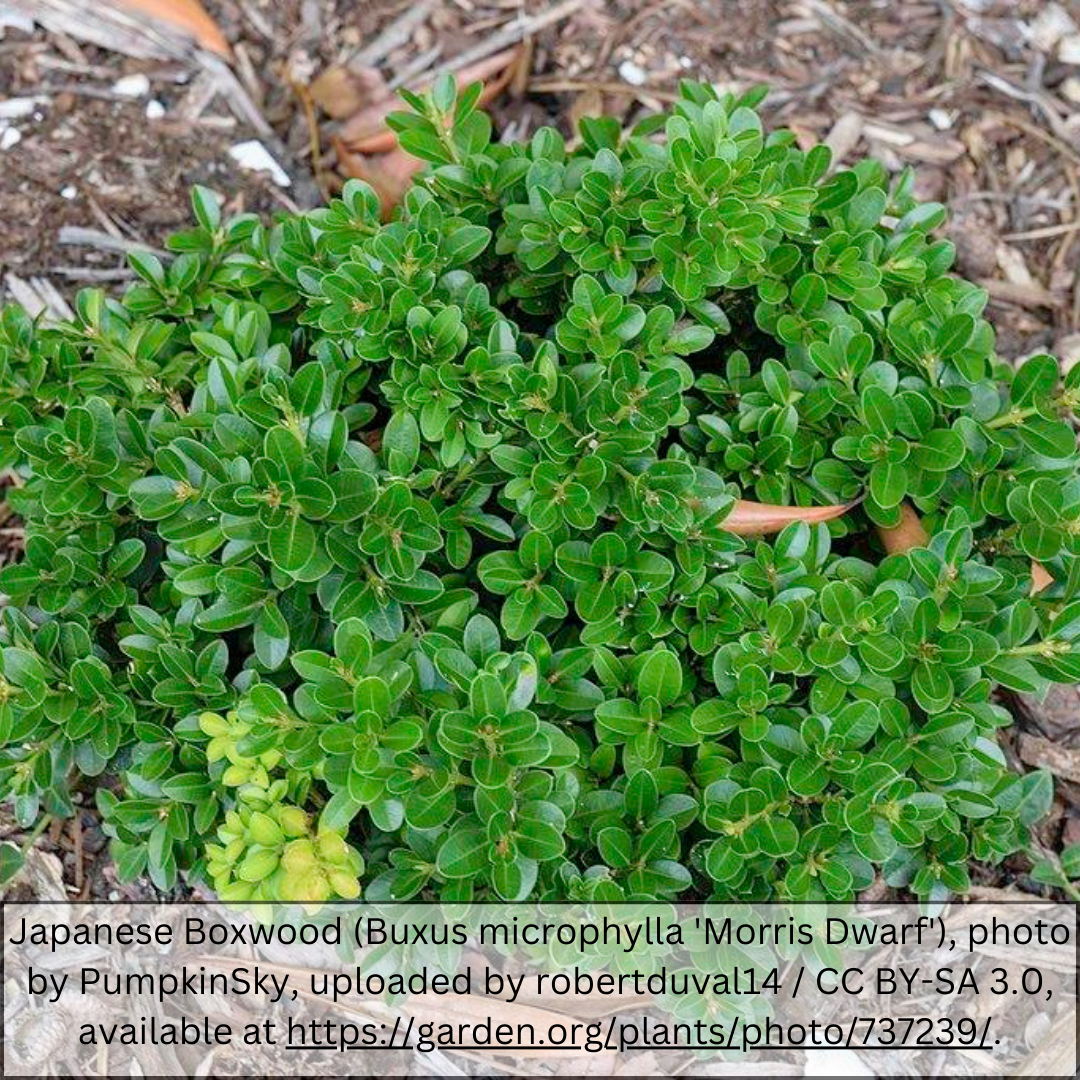
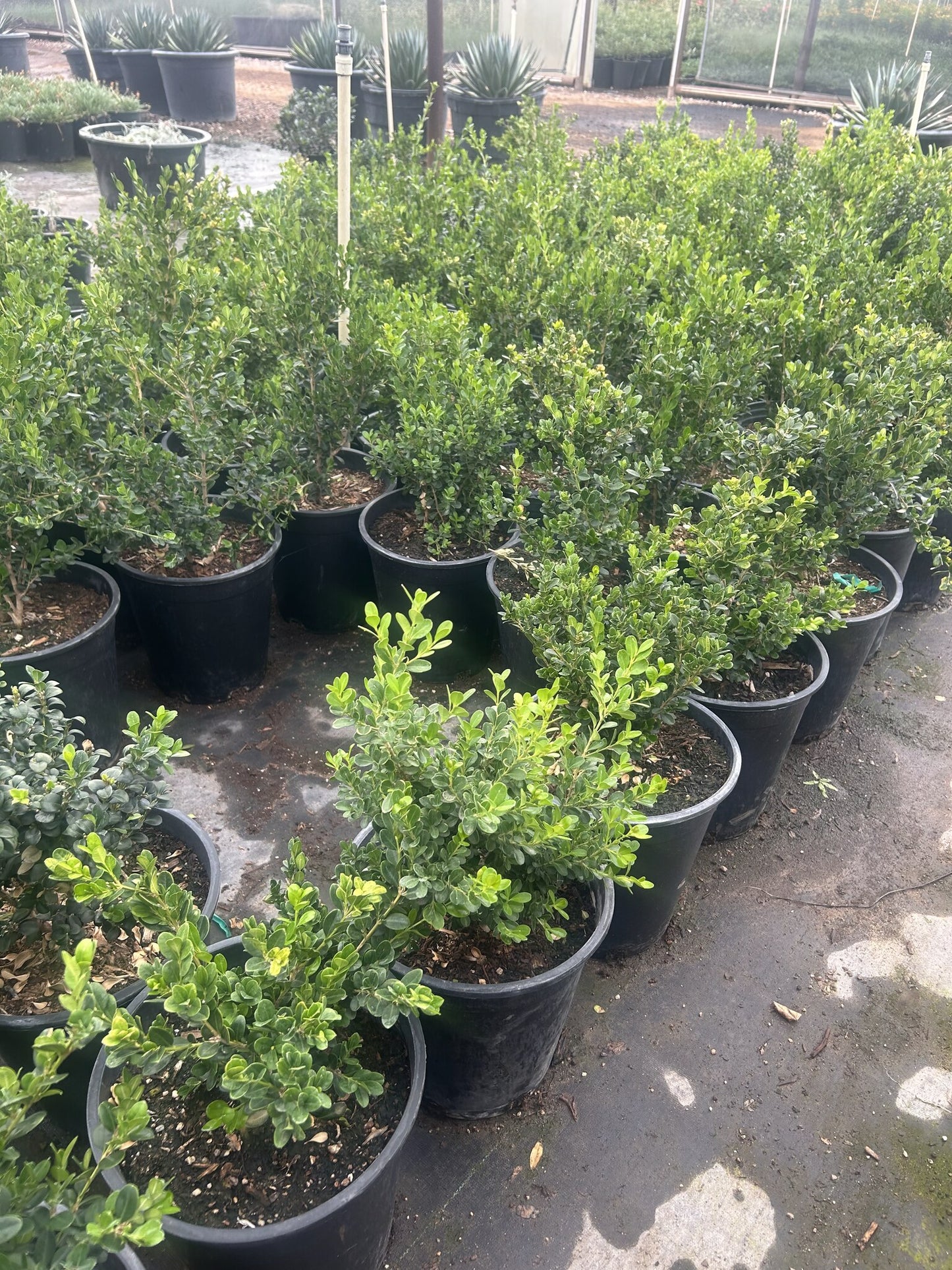
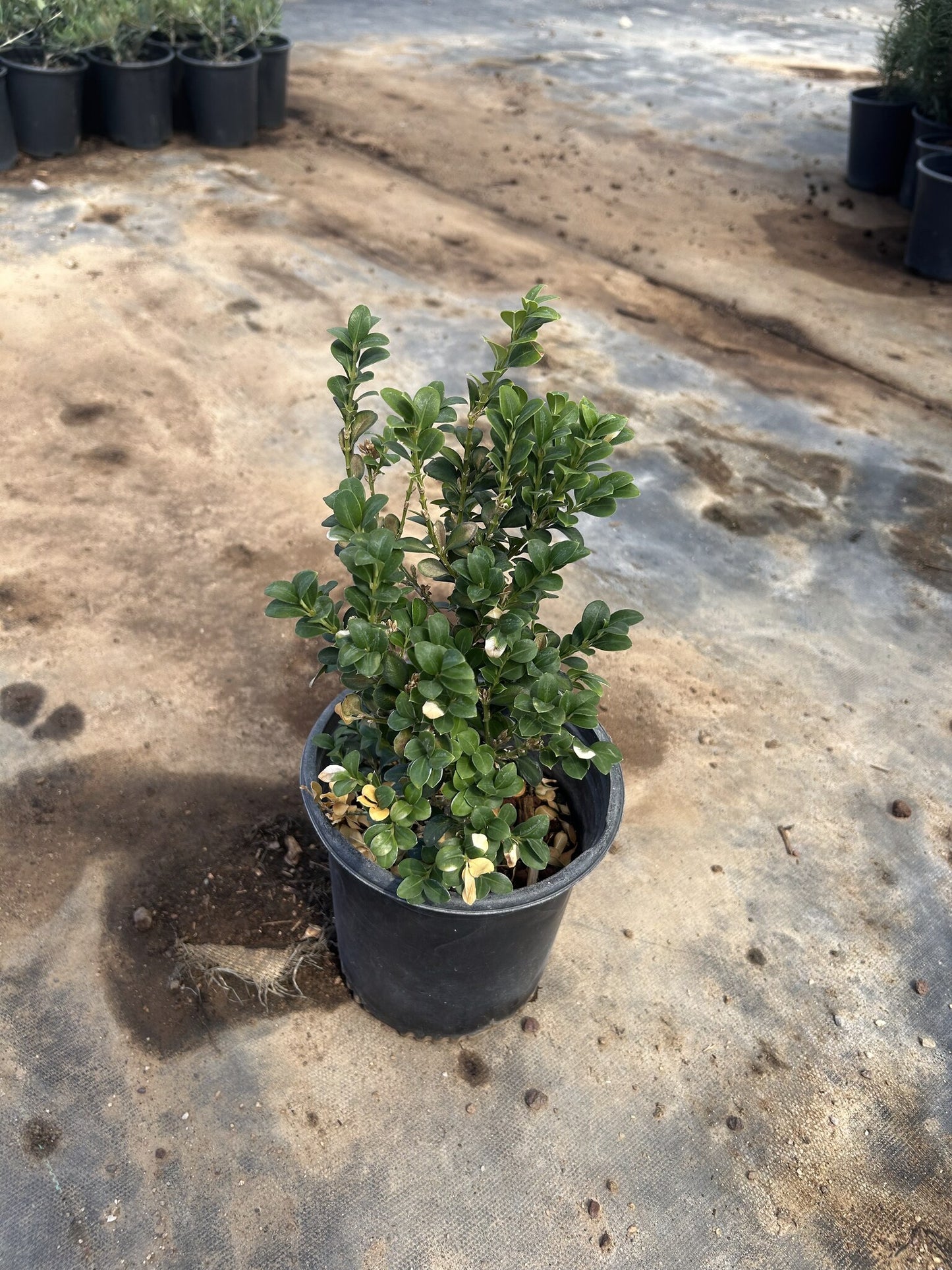
Japanese Boxwood (Buxus microphylla japonica) is the go-to hedge and border shrub for Phoenix Valley landscapes. This compact evergreen thrives in full sun, partial shade, and even full shade — making it one of the most adaptable shrubs available for Arizona gardens. Its dense, fine-textured foliage responds beautifully to shaping, making it perfect for formal hedges, topiaries, and low borders. Whether you're creating a defined hedge in Scottsdale, framing an entry in Chandler, or filling a shaded border in Mesa — Japanese Boxwood delivers crisp, clean structure year-round.
Japanese Boxwood Plant Details
| Attribute | Detail |
|---|---|
| Scientific Name | Buxus microphylla japonica |
| Common Names | Japanese Boxwood, Japanese Box, Littleleaf Boxwood |
| Mature Height | 2–6 feet (easily kept shorter with pruning) |
| Mature Width | 2–4 feet |
| Growth Rate | Moderate — 6–12 inches per year in Phoenix |
| Sun | Full sun, partial shade, or full shade. Extremely adaptable. |
| Water | Low to moderate once established. More drought-tolerant than most boxwoods. |
| USDA Zones | 6–9 (Phoenix is Zone 9b–10a — performs well in warm climates) |
| Soil | Well-draining. Adapts to Arizona caliche soils with good drainage. |
| Foliage | Evergreen — stays green year-round; small, glossy leaves |
| Flower Color | Inconspicuous (grown primarily for foliage) |
Japanese Boxwood Uses in Phoenix Landscapes
Formal Hedges and Borders
Japanese Boxwood is the classic choice for formal hedges and borders throughout Phoenix Valley landscapes. Its dense, small-leafed foliage responds beautifully to shearing, holding a crisp shape longer than almost any other hedge plant. Plant 18–24 inches apart for a continuous low hedge — for a 20 ft border, use 10–12 plants; for a 40 ft run, plan on 20–25 plants.
Topiary and Shaped Garden Forms
With its fine texture and willingness to be pruned, Japanese Boxwood is the premier topiary shrub available in Phoenix. It can be shaped into spheres, cones, spirals, and geometric forms that hold their shape for months. Used widely in formal Scottsdale and Paradise Valley gardens where sculpted green forms provide year-round structure.
Shaded and Low-Light Areas
Unlike most shrubs, Japanese Boxwood thrives in shade — making it a rare and valuable solution for north-facing walls, covered patios, and areas under large trees in Tempe or Chandler where few plants survive. Its evergreen foliage stays lush and green even without direct sunlight, providing structure in otherwise difficult planting zones.
Foundation and Entry Plantings
Japanese Boxwood is one of the most popular choices for foundation plantings along home entries and driveways throughout the Phoenix Valley. Its tidy, compact growth habit frames doorways, garages, and pathways without overgrowing the space. Pair with Desert Spoon or Blue Nolina for textural contrast in Glendale or Peoria landscapes.
Best Time to Plant Japanese Boxwood in Phoenix
Fall planting (October through November) is ideal for Japanese Boxwood in the Phoenix Valley. Warm soil temperatures support root establishment while cooler air reduces transplant stress — allowing the plant 6–8 months to establish before summer heat arrives. Spring planting (February through April) is an equally good option. Avoid planting in the peak of summer, as the intense heat requires heavy irrigation to keep new transplants alive and can stress the root system before it's established.
How to Plant Japanese Boxwood
- Dig wide, not deep — dig the hole 2–3x the width of the root ball, same depth
- Check for caliche — break through any hardpan layer to ensure proper drainage
- Backfill with native soil — a light 20% organic amendment helps in sandy or poor soils
- Spacing — 18–24 inches apart for hedges; 2–3 feet for specimen plants
- Water basin — build a 3–4 inch ring to direct water to the root zone
- Mulch — apply 2–3 inches of bark mulch to retain moisture and regulate soil temperature
Watering Japanese Boxwood in Phoenix
First Year Watering Schedule
- Weeks 1–2: Water every 1–2 days, deep and slow (20–30 minutes)
- Month 1–2: Reduce to every 3–4 days
- Month 3–6: Water every 5–7 days (every 4–5 days in peak summer)
- After Year 1: Every 7–10 days in summer; every 2–3 weeks in winter
Drip Irrigation
Use 1-GPH emitters placed 12–18 inches from the trunk. Japanese Boxwood appreciates consistent moisture — it's not as drought-tolerant as desert natives, but established plants handle Phoenix heat well with regular irrigation. Consistent deep watering is more important than frequent shallow watering for keeping roots healthy in Arizona's dry climate.
How fast does Japanese Boxwood grow in Phoenix?
Japanese Boxwood grows at a moderate pace in the Phoenix Valley — typically 6–12 inches per year. While not the fastest-growing hedge option, this moderate pace means less frequent pruning is required to maintain a clean, formal shape.
Can Japanese Boxwood handle Phoenix summer heat?
Yes — Japanese Boxwood is one of the more heat-tolerant boxwood varieties and handles Phoenix summers well with adequate irrigation. It performs best with some afternoon shade in the hottest months, particularly in low-elevation areas of Mesa and Chandler where summer temperatures regularly exceed 110°F.
How often should I prune Japanese Boxwood in Phoenix?
For a formal hedge shape, prune Japanese Boxwood 2–3 times per year in Phoenix — typically in spring (March–April), summer (June–July), and early fall (September). Its moderate growth rate means shaping is straightforward and the plant recovers quickly.
Can Japanese Boxwood grow in shade in Phoenix?
Yes — this is one of Japanese Boxwood's greatest strengths. It's one of the few shrubs that genuinely thrives in full shade in the Phoenix Valley, making it invaluable for north-facing walls, covered patios, and areas under large trees where most shrubs struggle.
What's the difference between Japanese Boxwood and other Boxwood varieties?
Japanese Boxwood (Buxus microphylla japonica) is more heat-tolerant and drought-resilient than English Boxwood (Buxus sempervirens), making it far better suited to Phoenix's climate. It also has a slightly looser, more fine-textured appearance compared to its English cousin.
You May Also Like
Dwarf Pittosporum — A similarly compact, fine-textured evergreen shrub that works beautifully alongside Japanese Boxwood in formal Phoenix landscapes.
Variegated Boxwood Beauty — A striking variegated-leaf companion that adds color contrast when paired with the solid green of Japanese Boxwood.
Mock Orange — A fragrant, flowering shrub that provides seasonal color contrast when combined with the formal structure of Japanese Boxwood hedges.
Green Euonymus — A fast-growing, low-maintenance alternative hedge shrub that complements Japanese Boxwood in Phoenix foundation plantings.
Wax Leaf Privet — A taller, faster-growing hedge option that pairs well with Japanese Boxwood in layered Phoenix privacy plantings.
How Many Japanese Boxwood Do I Need?
Japanese Boxwood matures around 2 to 4 feet wide but is almost always sheared tighter as a formal hedge. Space plants about 20 inches apart center-to-center for a dense low hedge, or 2 to 3 feet apart for specimen and topiary plants. Use this guide for a formal low hedge:
| Hedge Run Length | Plants Needed (20 in spacing) |
|---|---|
| 10 ft | 6 plants |
| 20 ft | 12 plants |
| 30 ft | 18 plants |
| 40 ft | 24 plants |
Japanese Boxwood Season-by-Season in Phoenix
- Spring (Feb–Apr): Soft green new growth flushes out. The first of two or three yearly shearings keeps the form crisp, and it is a prime planting window before the heat.
- Summer (May–Sep): Holds its color through the heat with regular irrigation, but it is not a desert native: give it afternoon shade in the hottest low-desert spots to prevent leaf scorch, and keep summer water consistent. A light midsummer trim keeps hedges tidy.
- Fall (Oct–Nov): Prime planting season and a good time for the final shaping of the year as growth slows in cooler weather.
- Winter (Dec–Jan): Fully evergreen and unbothered by Valley frosts. Cold-hardy to roughly 5°F, so it holds crisp green structure right through winter with no protection.
At a Glance
✔ Evergreen ✔ Low-Maintenance ✔ Pool-Friendly (Low-Litter) ✔ Deer & Rabbit-Resistant ✔ Cold-Hardy to 5°F
Plant It With
- Dwarf Pittosporum: a similarly compact, fine-textured evergreen for layered formal beds.
- Green Euonymus: a faster-growing evergreen for a taller backing hedge.
- Mock Orange: a fragrant flowering shrub that softens the formal boxwood structure.
- Dwarf Myrtle: another tight, shearable evergreen for low hedges and knot gardens.
Is Japanese Boxwood Right for Your Yard?
Japanese Boxwood is a fit wherever you want crisp evergreen structure: formal hedges, low borders, topiary, entries, and shaded north-side or under-tree beds where most shrubs fail. It takes full sun to full shade with good drainage and regular water. It is not a fit if you want a no-water desert shrub or a blast of flower color: it is grown for foliage and structure, needs consistent irrigation, and prefers afternoon shade in the hottest low-desert exposures.
Share