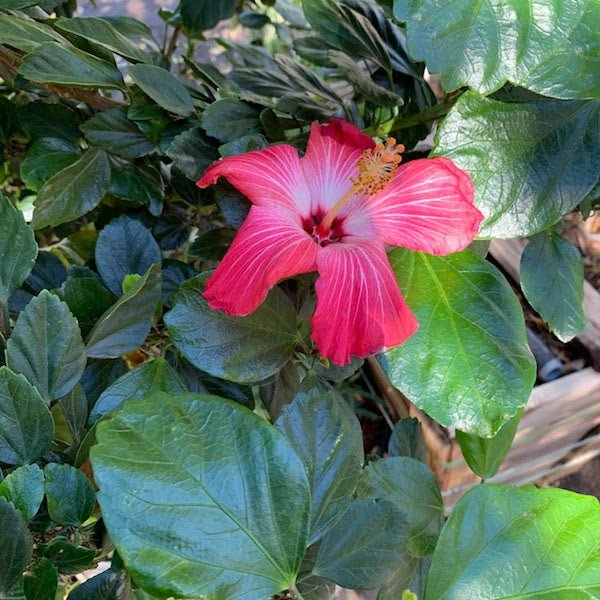

Pink Hibiscus Patio Tree
Pink Hibiscus Patio Tree
Couldn't load pickup availability
Tropical Pink Hibiscus Patio Tree for Phoenix Gardens
Pink Hibiscus Patio Tree (Hibiscus rosa-sinensis) is a stunning tropical specimen featuring a beautifully braided trunk topped with lush foliage and large, showy pink blooms. This patio-sized tree brings resort-style tropical color to Phoenix Valley outdoor living spaces — perfect for patios, pool areas, courtyards, and entryways in Scottsdale, Chandler, Gilbert, and Mesa. The braided trunk adds an artistic, sculptural element that makes this tree a conversation piece even when it's not in bloom.
Pink Hibiscus Patio Tree Plant Details
| Attribute | Detail |
|---|---|
| Scientific Name | Hibiscus rosa-sinensis |
| Common Names | Pink Hibiscus Patio Tree, Braided Hibiscus Tree, Tropical Hibiscus |
| Mature Height | 5–8 feet (patio tree form) |
| Mature Width | 3–5 feet |
| Growth Rate | Moderate to fast in Phoenix summers |
| Sun | Full sun to part shade. Morning sun with afternoon shade is ideal in extreme heat. |
| Water | Moderate. More water than desert-adapted plants. |
| USDA Zones | 9–11 (Phoenix is Zone 9b–10a) |
| Soil | Well-draining, slightly acidic to neutral. Amend with compost. |
| Foliage | Evergreen in frost-free winters — glossy dark green leaves |
| Bloom Color | Vibrant pink, up to 5–6 inches across, spring through fall |
| Form | Braided trunk patio tree — artistic, sculptural form |
Pink Hibiscus Patio Tree Uses in Phoenix Landscapes
Patio and Poolside Statement
The braided trunk form makes this hibiscus a perfect patio centerpiece. Place in a large decorative pot near seating areas, outdoor kitchens, or pool decks in Scottsdale and Gilbert for an instant tropical resort atmosphere. The continuous pink blooms create a stunning focal point all season long.
Courtyard and Entryway Accent
Flank a front door or courtyard gate with matched Pink Hibiscus Patio Trees for a welcoming tropical entrance. The braided trunk adds architectural interest while the pink blooms provide warm, inviting color from spring through fall.
Container Gardening
Pink Hibiscus Patio Trees are ideal for container culture. Grow in a large pot (18–24 inches) on balconies, rooftop patios, and covered porches. Container growing also makes it easy to move the tree to a protected spot during rare Phoenix frost events.
Best Time to Plant Pink Hibiscus in Phoenix
Spring (March–May) is the best time to plant tropical hibiscus in the Phoenix area. Fall (September–October) is also acceptable. Avoid planting in summer or winter.
How to Plant Pink Hibiscus Patio Tree
- Dig wide, not deep — 2–3x the root ball width, same depth.
- Amend the soil — mix in 30–40% compost or quality planting mix.
- Check drainage — hibiscus needs consistent moisture but no standing water.
- Mulch generously — 3–4 inches of organic mulch (not touching the trunk).
- Frost protection plan — have frost cloth ready for nights below 35°F.
Watering Pink Hibiscus Patio Tree in Phoenix
Watering Schedule
- Summer: Every 1–2 days for container plants; every 2–3 days in-ground
- Spring/Fall: Every 3–4 days container; every 4–5 days in-ground
- Winter: Every 7–10 days, reduce frequency significantly
Drip Irrigation
Place 2–3 emitters around the root zone. A 2 GPH emitter running 45–60 minutes works well. Container plants may need hand-watering during peak summer. Hibiscus prefers consistently moist (not soggy) soil.
What makes the patio tree form special?
The patio tree form features a beautifully braided trunk created through careful training during the tree's early growth. This gives the tree an artistic, sculptural quality that makes it a standout specimen even when not in bloom. The compact canopy is perfect for patio and container growing.
How big do Pink Hibiscus blooms get?
Pink Hibiscus produces large, showy blooms up to 5–6 inches across. The vibrant pink flowers bloom continuously from spring through fall in Phoenix, with each individual flower lasting 1–2 days before being replaced by fresh blooms.
Can tropical hibiscus survive Phoenix winters?
Yes, with protection. Cover plants with frost cloth on nights below 35°F. Container plants can be moved to a protected patio or garage. Established in-ground plants typically recover from light frost damage in spring.
Do hibiscus patio trees attract hummingbirds?
Yes! The large tubular pink flowers are magnets for hummingbirds and butterflies, making Pink Hibiscus Patio Trees excellent for wildlife-friendly gardens.
You May Also Like
- President's Red Hibiscus — Deep crimson-red hibiscus blooms up to 6 inches across.
- Blue Hibiscus Tree — Unique lavender-blue flowers for a cool-toned tropical accent.
- Raspberry Ice Bougainvillea — Variegated foliage with magenta bracts for tropical garden pairing.
- Alexandra Bougainvillea — Bold purple flowering vine to complement hibiscus color.
How Many Pink Hibiscus Patio Trees Do I Need?
This is a specimen patio tree, not a hedge plant, so think in focal points rather than rows. A single braided tree in a large decorative pot anchors a patio corner, entry, or poolside seating area. For a symmetrical entrance, use a matched pair flanking a door or gate. For a tropical grouping in a planting bed, set trees in odd-numbered clusters of 3, spaced 4 to 5 feet apart so each canopy has room to fill out without crowding. Keep at least 3 feet of clearance from walkways and pool coping so the canopy and dropped blooms stay off the deck.
Pink Hibiscus Patio Tree Season-by-Season in Phoenix
- Spring (Feb–Apr): Prime planting window once nights stay above the mid-40s. New growth flushes fast and the first wave of large pink blooms opens.
- Summer (May–Sep): Peak bloom season, but give the tree morning sun with afternoon shade in the low desert. Full reflected heat off west walls or pool decks will scorch leaves and drop buds. Container trees may need daily water in July and August, and the monsoon humidity is welcome.
- Fall (Oct–Nov): A strong second flush of color as the heat eases. Good secondary planting window in early fall.
- Winter (Dec–Jan): Frost-tender. Foliage holds in mild winters but the tree shows damage on nights below about 35°F. Cover with frost cloth or move container trees to a protected patio or garage on cold nights. Light frost damage usually recovers in spring.
At a Glance
✔ Pollinator-Friendly ✔ Hummingbird-Friendly ✔ Evergreen (frost-free winters)
Plant It With
- President's Red Hibiscus: Deep crimson blooms that echo the tropical look in a contrasting color.
- Blue Hibiscus Tree: Cool lavender-blue flowers for a matched-form tropical pairing.
- Raspberry Ice Bougainvillea: Variegated foliage and magenta bracts for a heat-loving backdrop.
- Alexandra Bougainvillea: Bold purple color that complements the pink blooms.
Is Pink Hibiscus Patio Tree Right for Your Yard?
This tree thrives in a bright spot with morning sun and afternoon shade, rich well-draining soil, and steady moisture, which makes it a natural fit for patios, courtyards, and poolside containers where you can pamper it a little. It rewards the extra water and frost care with months of large pink blooms and an eye-catching braided trunk. It is not a fit if you want a low-water, plant-and-forget desert specimen or a spot in unshaded full reflected heat, where it will struggle and scorch.
Share