

Halls Honeysuckle
Halls Honeysuckle
Couldn't load pickup availability
Phoenix's Fastest-Growing Fragrant Vine — Hall's Honeysuckle
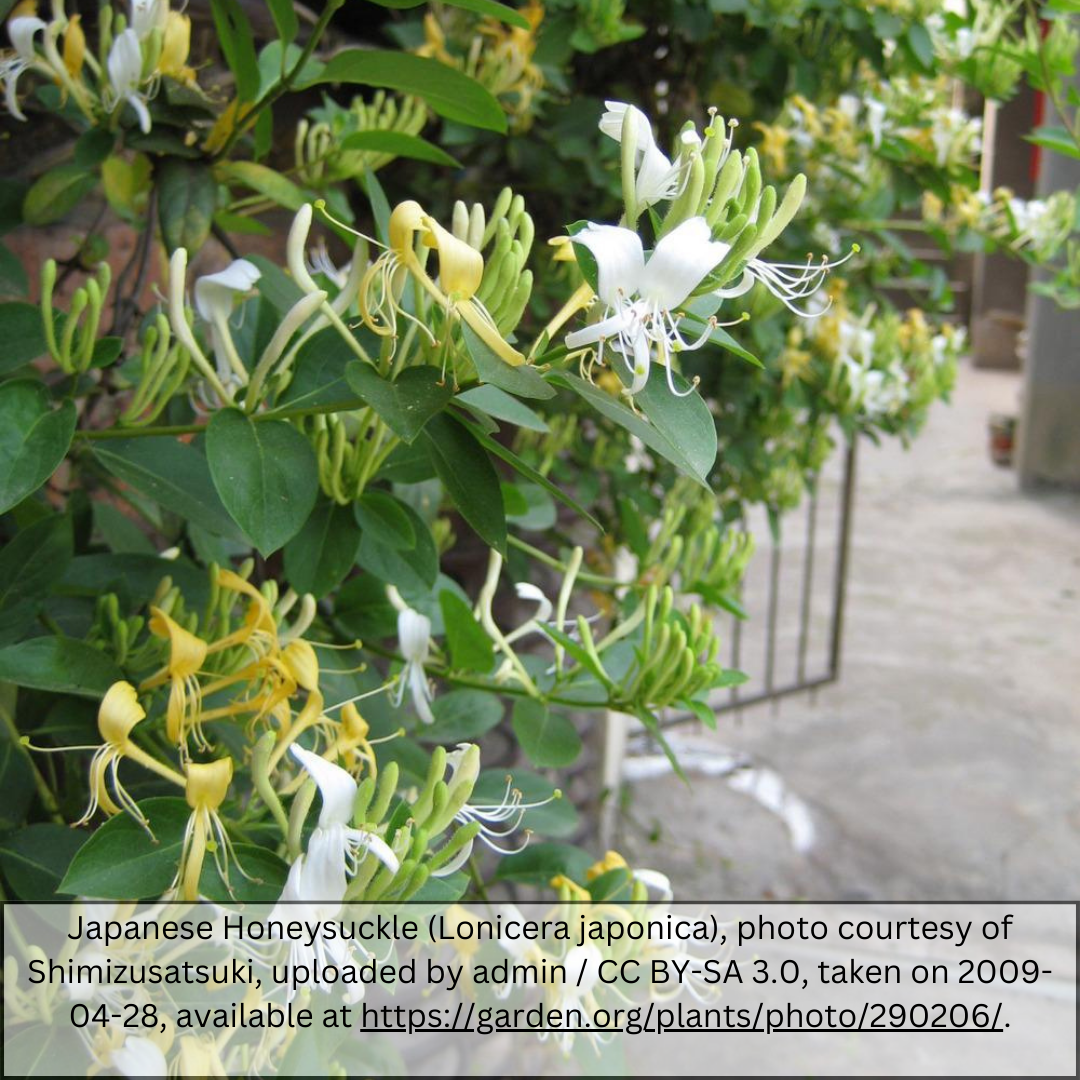
Lonicera japonica 'Halliana', commonly known as Hall's Honeysuckle, is one of the most vigorous and fragrant vines you can grow in the Phoenix Valley. This fast-climbing vine produces sweetly scented white-to-yellow flowers from spring through fall, attracting hummingbirds and butterflies to your Scottsdale, Chandler, or Mesa garden. Whether you're covering a bare fence in Gilbert, creating a shaded pergola in Tempe, or adding fragrance to an entryway in Peoria — Hall's Honeysuckle gets the job done.
Hall's Honeysuckle Plant Details
| Attribute | Detail |
|---|---|
| Scientific Name | Lonicera japonica 'Halliana' |
| Common Names | Hall's Honeysuckle, Japanese Honeysuckle, Gold and Silver Flower |
| Mature Height | 15–30 feet (as a climbing vine) |
| Mature Width | 6–15 feet spread |
| Growth Rate | Fast — 6–10 feet per year in Phoenix |
| Sun | Full sun to partial shade. Handles reflected heat from walls. |
| Water | Low to moderate once established. Tolerates drought but blooms best with regular water. |
| USDA Zones | 4–11 (Phoenix is Zone 9b–10a) |
| Soil | Highly adaptable. Thrives in Arizona caliche soils with decent drainage. |
| Foliage | Semi-evergreen — keeps foliage most of the year in Phoenix |
| Bloom Color | White aging to pale yellow, sweetly fragrant |
Hall's Honeysuckle Uses in Phoenix Landscapes
Fence and Wall Coverage
Hall's Honeysuckle is one of the fastest ways to cover a block wall or chain-link fence in the Phoenix Valley. Its twining stems grip trellises, arbors, and wire supports with ease. Plant 3–4 feet apart along a fence line for full coverage within one to two growing seasons. A 20-foot fence needs about 5–6 plants.
Shade Pergola and Patio Cover
Train Hall's Honeysuckle over a pergola or ramada to create natural shade and fill your outdoor living space with sweet fragrance. The dense foliage provides dappled shade that cools patios in Scottsdale and Mesa summers. Pair with a sturdy trellis or overhead wire system for best results.
Fragrant Garden Borders
Use Hall's Honeysuckle as a ground-trailing accent along garden edges or cascading over raised planters. The fragrant blooms attract hummingbirds and butterflies throughout the warm season. Pair with Coral Honeysuckle, Desert Honeysuckle, or Flame Honeysuckle for a layered honeysuckle collection.
Best Time to Plant Hall's Honeysuckle in Phoenix
Fall (October–November) is ideal for planting Hall's Honeysuckle in the Phoenix Valley. The warm soil promotes rapid root establishment while cooler air temperatures reduce transplant stress. Your vine gets 6–8 months of root growth before its first full Phoenix summer. Spring (February–April) is the second-best window. Avoid planting in the peak of summer heat if possible.
How to Plant Hall's Honeysuckle
- Dig wide, not deep — 2–3x the root ball width, same depth as the container.
- Check for caliche — break through any hardpan layer to ensure proper drainage.
- Backfill with native soil — a light 20% organic blend is fine for vines.
- Spacing — 3–4 feet apart for fence coverage; 6–8 feet apart for individual accent plantings.
- Water basin — build a 3–4 inch soil ring around the base to direct water to roots.
- Mulch — 2–3 inches of bark or gravel mulch to retain moisture and moderate soil temperature.
Watering Hall's Honeysuckle in Phoenix
First Year Watering Schedule
Weeks 1–2: Every 1–2 days, deep and slow (20–30 minutes). Month 1–2: Every 3–4 days. Month 3–6: Every 7–10 days (5–7 days in peak summer). After Year 1: Every 10–14 days in summer; every 3–4 weeks in winter.
Drip Irrigation
Place two 2-GPH emitters 12–18 inches from the base on opposite sides. Established vines are moderately drought-tolerant but produce more flowers with consistent deep watering during the bloom season.
How fast does Hall's Honeysuckle grow in Phoenix?
Very fast — expect 6–10 feet of new growth per year in Phoenix's warm climate. With regular water and full sun, a single plant can cover a 10-foot section of fence in one growing season.
Is Hall's Honeysuckle invasive in Arizona?
Hall's Honeysuckle can be vigorous and will spread if left unchecked. In Phoenix landscapes, regular pruning keeps it well-behaved. Trim back runners in late winter to maintain your desired shape and size.
Does Hall's Honeysuckle attract hummingbirds?
Yes. The tubular, fragrant flowers are a favorite of hummingbirds and butterflies. You'll see the most visitors during the peak bloom from spring through fall.
Can Hall's Honeysuckle handle full Phoenix summer sun?
Yes, it handles full sun including reflected heat from walls and fences. It also performs well in partial shade, making it versatile for east- or west-facing exposures.
You May Also Like
Coral Honeysuckle — Native trumpet-shaped red flowers that hummingbirds love. A well-behaved, non-invasive vine option.
Flame Honeysuckle — Compact shrub with tubular orange-red flowers, perfect for borders and low hedges.
Carolina Jessamine Vine — Bright yellow spring blooms on an evergreen vine, great for trellises and arbors.
Desert Honeysuckle — Upright native shrub with orange tubular flowers, drought-tolerant and hummingbird-friendly.
How Many Hall's Honeysuckle Do I Need?
Hall's Honeysuckle twines and grows fast, with a 6 to 15 foot spread per plant. For a solid flowering fence or wall screen, space plants 3 to 4 feet apart; for single accent plantings, allow 6 to 8 feet.
| Fence run | Plants needed (at ~3.5 ft spacing) |
|---|---|
| 10 ft | 3 plants |
| 20 ft | 5 to 6 plants |
| 30 ft | 9 plants |
| 40 ft | 11 to 12 plants |
One vine trained on a pergola or arbor will cover a 10 to 12 foot structure within a season or two. It twines, so it needs wire, lattice, or a trellis to climb.
Hall's Honeysuckle Season-by-Season in Phoenix
- Spring (Feb–Apr): Fragrant white-to-yellow flowers open and draw hummingbirds and butterflies. Strong growth flush and a good second planting window.
- Summer (May–Sep): Keeps blooming through the heat and tolerates reflected warmth off walls. Monsoon humidity fuels very fast growth, so plan to prune runners to keep it in bounds.
- Fall (Oct–Nov): Continued bloom into the cooler weeks plus prime planting season for root establishment.
- Winter (Dec–Jan): Semi-evergreen, holding most of its foliage in the Valley. Fully cold-hardy with no frost protection needed; late winter is the time to cut it back hard.
At a Glance
✔ Pollinator-Friendly ✔ Hummingbird-Friendly ✔ Heat-Loving (Reflected-Heat Tolerant) ✔ Drought-Tolerant ✔ Cold-Hardy to -20°F
Plant It With
- Coral Honeysuckle: a well-behaved native cousin with coral-red tubular blooms for a layered honeysuckle look.
- Carolina Jessamine Vine: adds bright fragrant yellow spring trumpets on a neighboring trellis.
- Mexican Honeysuckle: a shrubby orange-flowered hummingbird magnet for the bed below.
- Red Yucca: a tough drought-tolerant perennial that keeps hummingbirds fed at the base.
Is Hall's Honeysuckle Right for Your Yard?
Hall's Honeysuckle is the right pick when you want fast, fragrant coverage on a fence, wall, or pergola and you do not mind pruning to keep a vigorous vine in check. It handles full sun, reflected heat, caliche soil with drainage, and cold winters. Not a fit if you want a tidy, slow, low-care vine or a small space, since it grows fast and will spread if left unpruned.
Share