

Green Desert Spoon
Green Desert Spoon
Couldn't load pickup availability
Green Desert Spoon — Bold Architectural Accent for Phoenix Landscapes
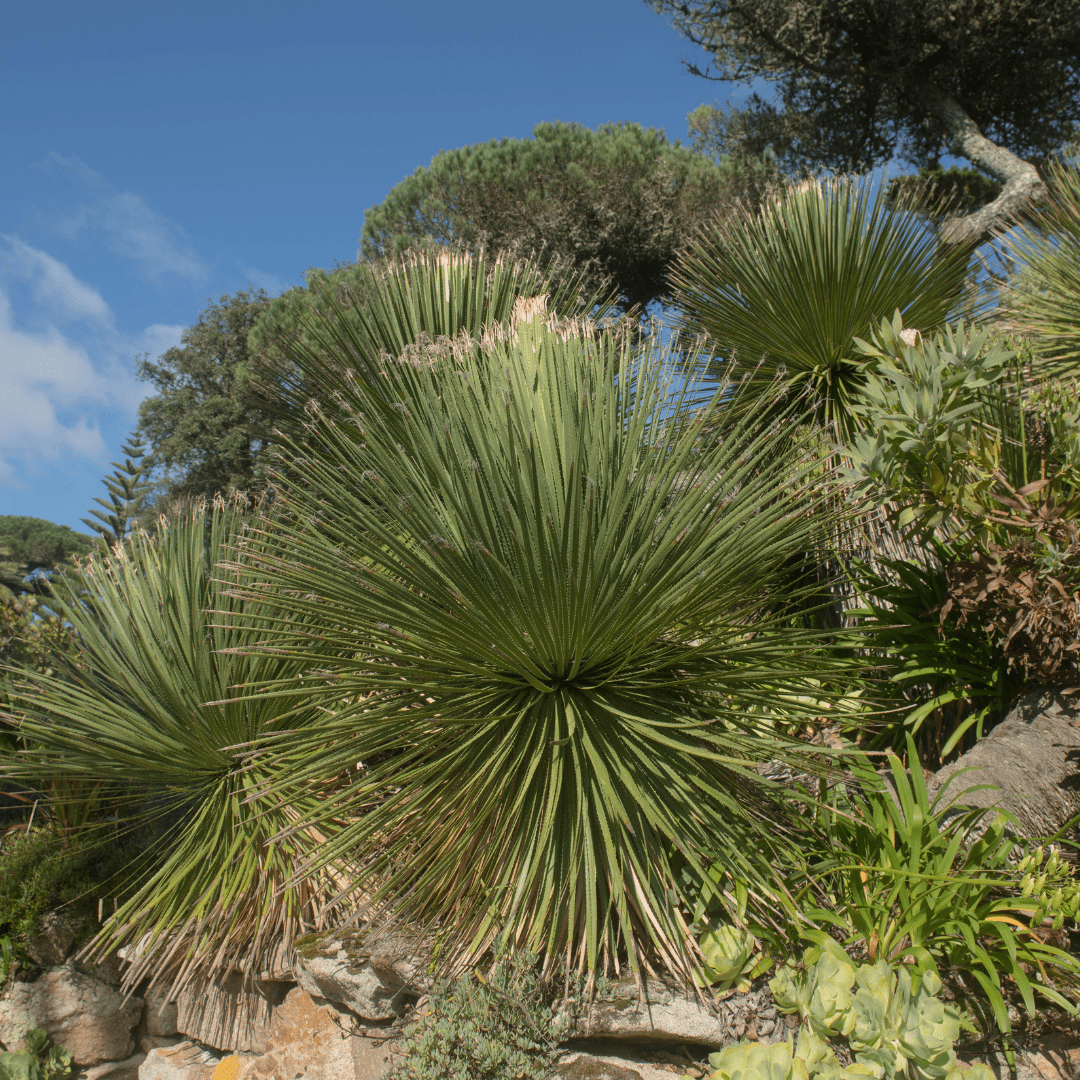
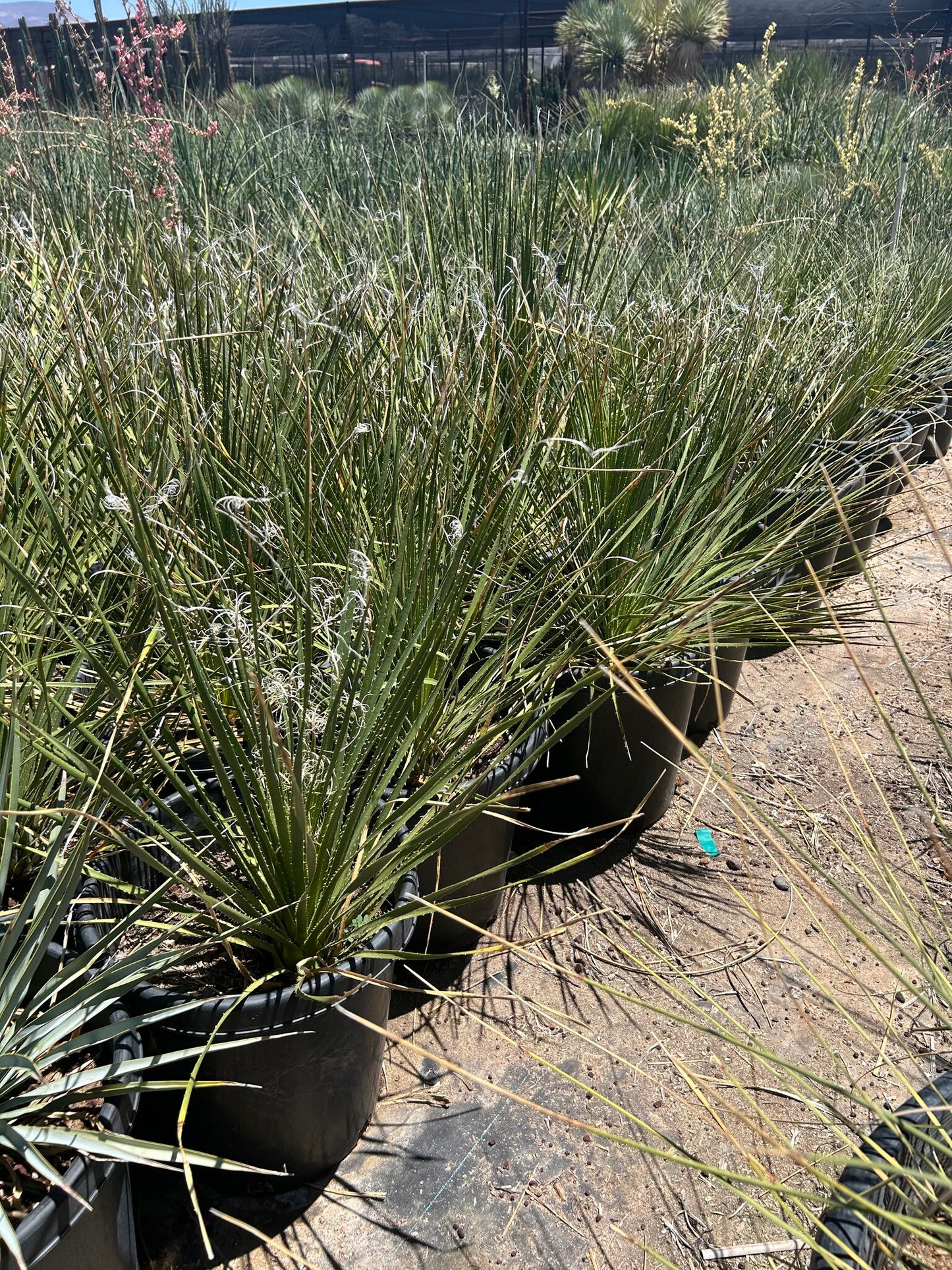
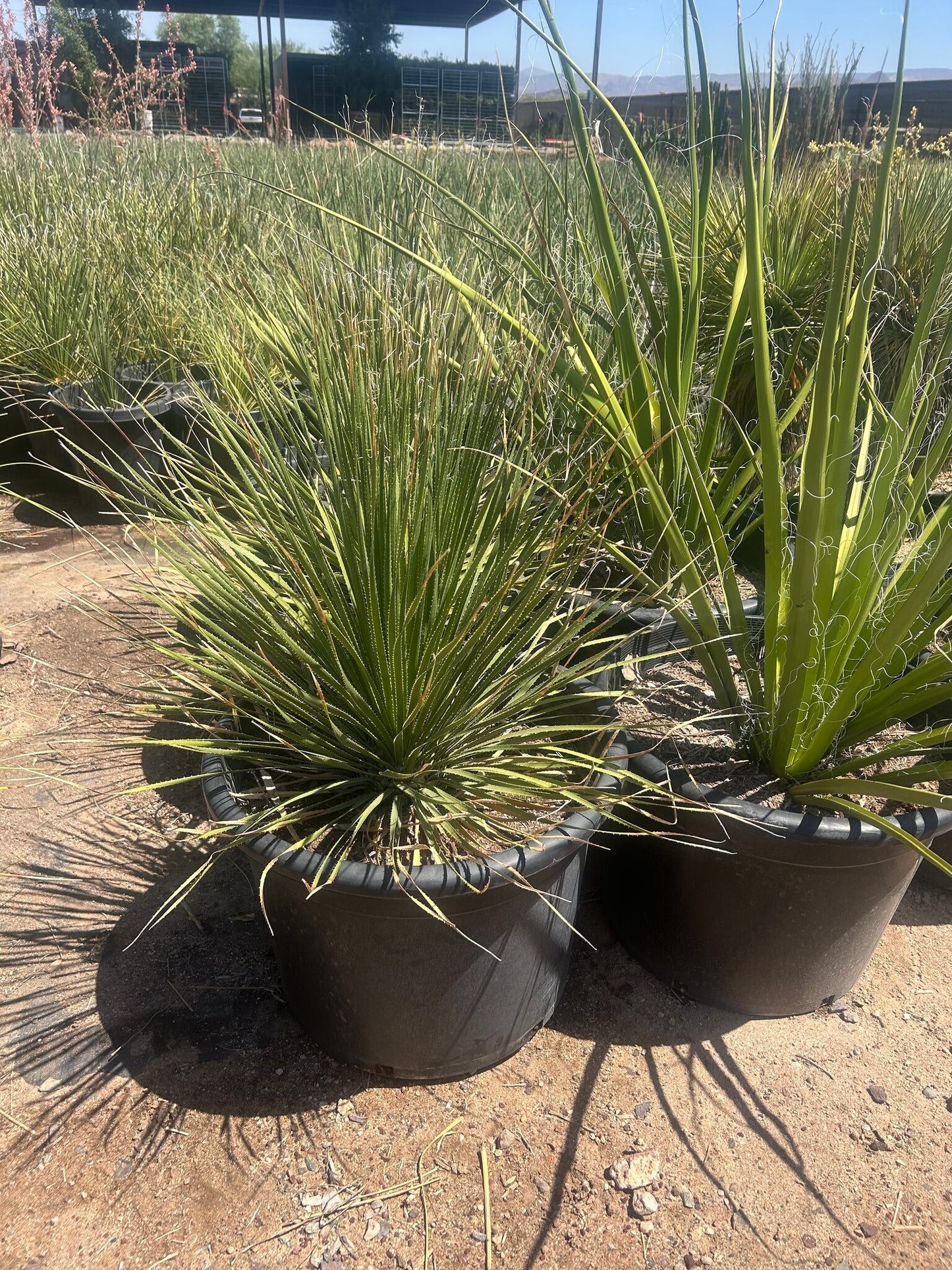
Green Desert Spoon (Dasylirion acrotrichum) is a standout architectural shrub that brings dramatic desert texture to any landscape. Its stiff, sword-like green leaves radiate outward from a central rosette in a perfectly symmetrical globe, creating a bold, sculptural focal point that looks striking year-round. A native of central Mexico, Green Desert Spoon is exceptionally adapted to the heat, drought, and alkaline soils of the Phoenix Valley — making it a low-maintenance powerhouse for homeowners and commercial landscapers in Phoenix, Scottsdale, and Gilbert who want high-impact design without high water bills.
| Common Name | Green Desert Spoon |
|---|---|
| Scientific Name | Dasylirion acrotrichum |
| Plant Type | Evergreen shrub / rosette-forming succulent |
| Mature Height | 3–6 feet (foliage); 10–15 ft with bloom stalk |
| Mature Spread | 4–6 feet |
| Flower Color | Pale green to creamy white (tall summer spike) |
| Foliage Color | Bright green |
| Sun Exposure | Full sun |
| Water Needs | Very low — drought tolerant once established |
| USDA Hardiness Zone | Zone 7b–11 (ideal for Zone 9b–10a) |
| Soil Tolerance | Rocky, sandy, caliche — excellent drainage required |
| Leaf Tips | Sharp — use caution near foot traffic areas |
| Growth Rate | Slow to moderate |
Why Green Desert Spoon Thrives in the Phoenix Valley
Phoenix's brutal summers and calcium-rich caliche soils are no obstacle for Green Desert Spoon. This plant evolved in central Mexico's high desert, where conditions mirror the Phoenix Valley's extreme heat, low rainfall, and alkaline soil chemistry. Unlike many ornamental plants that struggle through summer, Green Desert Spoon looks its best during the hottest months — its vibrant green foliage maintaining rich color through 110°F heat in Tempe, Mesa, and Chandler without supplemental fertilizer or special care.
Landscape Uses
Green Desert Spoon is one of the most versatile and impactful desert shrubs available. Use it as a bold specimen anchor in a xeriscape border, mass-plant 4–5 feet on center for a striking textural groundplane, or pair it with boulders and decomposed granite for a clean desert-modern look. Its bright green color provides excellent contrast against silvery plants like agaves and blue-toned nolinas. The natural spoon-shaped bases of its leaves make it distinctive up close — it's often used as a conversation piece in curated desert gardens.
Planting Density Guide
For specimen use, allow 5–6 feet of clearance on all sides to showcase the full symmetrical form. For mass planting in commercial or large residential landscapes, plant 4 feet on center for a bold, continuous texture. In mixed border plantings, position Green Desert Spoon 3–4 feet from other medium-size shrubs to allow for spread.
Best Time to Plant
Plant Green Desert Spoon in fall (October–November) or early spring (February–March) for best results. These cooler periods allow roots to establish before the stress of summer heat. Container plants from Three Timbers can be transplanted year-round with appropriate irrigation during the first 90 days.
How to Plant Green Desert Spoon
- Choose a full-sun location with excellent drainage — standing water causes root rot.
- Dig a hole twice as wide as the container and the same depth as the root ball.
- If caliche hardpan is present, break through it with a breaker bar to allow drainage below the root zone.
- Remove the plant from its pot; loosen any circling roots.
- Set the plant so the crown is at or slightly above grade.
- Backfill with native soil — no organic amendments needed.
- Water deeply immediately after planting.
- Apply 2–3 inches of decomposed granite mulch, keeping it away from the central rosette.
Watering Guide
Watering Schedule
During the first 90 days, water every 10–14 days with a deep, slow soak — 45–60 minutes on drip irrigation. After full establishment (one complete growing season), Green Desert Spoon thrives on Phoenix's natural rainfall with only supplemental irrigation during prolonged dry periods. Mature plants are among the most drought-tolerant plants in the Dasylirion genus — they can go months without water once established.
Drip Irrigation Setup
Place a 1 GPH emitter 12 inches from the center of the rosette. Run for 60 minutes every 10–14 days during establishment. During the monsoon season (July–September), turn off supplemental irrigation and let monsoon rains provide all moisture. In winter, water once monthly if no measurable rainfall occurs.
Frequently Asked Questions
What's the difference between Green Desert Spoon and regular Desert Spoon?
The main distinction is color: Green Desert Spoon (Dasylirion acrotrichum) has bright, vivid green foliage, while common Desert Spoon (Dasylirion wheeleri) has blue-gray to silver foliage. Both have serrated leaf edges and similar growth habits, but Green Desert Spoon provides a brighter, warmer-toned color contrast in desert landscapes.
How long until it blooms?
Green Desert Spoon typically blooms after 5–10 years, sending up a spectacular 10–15 foot spike covered in thousands of tiny pale green flowers. The plant usually survives blooming and continues growing, though some may decline afterward.
Is it safe near walkways?
Use caution — Green Desert Spoon's leaf tips are sharp and can cause injury. Place it at least 3 feet from walkways, driveways, and high-traffic areas. For a safer option near paths, consider Smooth Spoon (Dasylirion leiophyllum).
Does it need pruning?
Minimal pruning is needed. Simply remove dead outer leaves by pulling them down and away from the rosette — they detach cleanly. Never cut living green leaves, as this disrupts the natural symmetry.
Is it deer resistant?
Yes. The stiff, sharp-tipped leaves deter deer browsing effectively.
You May Also Like
Explore these complementary plants at Three Timbers: Smooth Spoon (Dasylirion leiophyllum) for a softer, spineless alternative, Blue Nolina (Nolina nelsonii) for a blue-toned fountain effect, and Giant Hesperaloe (Hesperaloe funifera) for bold flowering interest alongside your Green Desert Spoon.
How Many Green Desert Spoon Do I Need?
Green Desert Spoon is an architectural specimen, so think in terms of form and clearance rather than a hedge row. Plant it single as a sculptural focal point, or in odd-numbered groups of 3 to 5 spaced about 5 to 6 feet apart on center so each symmetrical rosette stands clear. For a bold continuous texture in larger commercial or xeriscape beds, plant 4 feet on center. Because the leaf tips are sharp, keep every plant at least 3 feet back from walkways, driveways, patios, and pool decks.
Green Desert Spoon Season-by-Season in Phoenix
- Spring (Feb–Apr): A prime planting window. Roots establish in warming soil before summer. Pull any dead outer leaves to tidy the rosette.
- Summer (May–Sep): Looks its best in extreme heat and reflected sun, holding rich green color through 110-degree days. Mature plants may send up a tall pale-green bloom spike. Cut supplemental water during the monsoon (Jul–Sep) and let the rain do the work.
- Fall (Oct–Nov): The ideal planting season in the Valley. Warm soil and mild air let new plants settle in fast.
- Winter (Dec–Jan): Stays evergreen and sculptural through the cool months. Cold-hardy down to about 10 degrees F, so normal Phoenix frost causes no damage and no cover is needed. Water only once a month if there is no rain.
At a Glance
✔ Evergreen ✔ Drought-Tolerant ✔ Heat-Loving (Reflected-Heat Tolerant) ✔ Low-Maintenance ✔ Deer & Rabbit-Resistant ✔ Cold-Hardy to 10°F
Plant It With
- Desert Spoon: the blue-gray Dasylirion wheeleri makes a striking silver-against-green pairing.
- Red Yucca: soft arching blades and coral bloom spikes soften the spiky rosette form.
- Brittlebush: a low mounding Sonoran native that adds spring yellow color at the base.
- Desert Ruellia: evergreen mound with purple flowers for a low-water companion mass.
Is Green Desert Spoon Right for Your Yard?
Green Desert Spoon thrives in full sun and reflected heat, on rocky, sandy, or caliche soil with sharp drainage, and needs almost no water once established. It is ideal as a desert-modern focal point or in clean gravel beds with boulders. It is not a fit right next to walkways, play areas, or pool steps, where the sharp leaf tips are a hazard, or in low spots that stay wet, which cause crown and root rot.
Share