

Pyracantha Staked
Pyracantha Staked
Couldn't load pickup availability
The Best Berry-Producing Evergreen Vine for Phoenix Walls & Fences
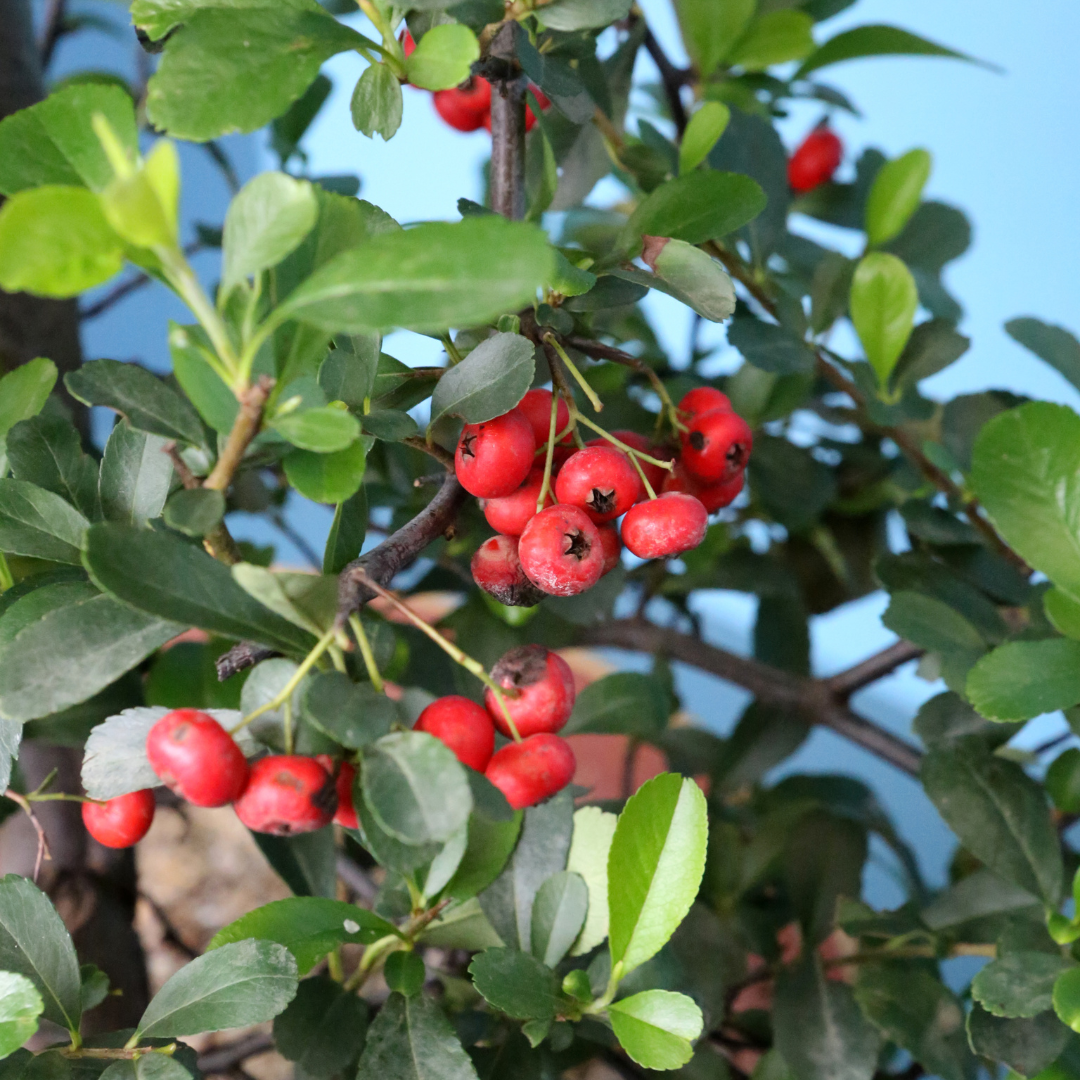
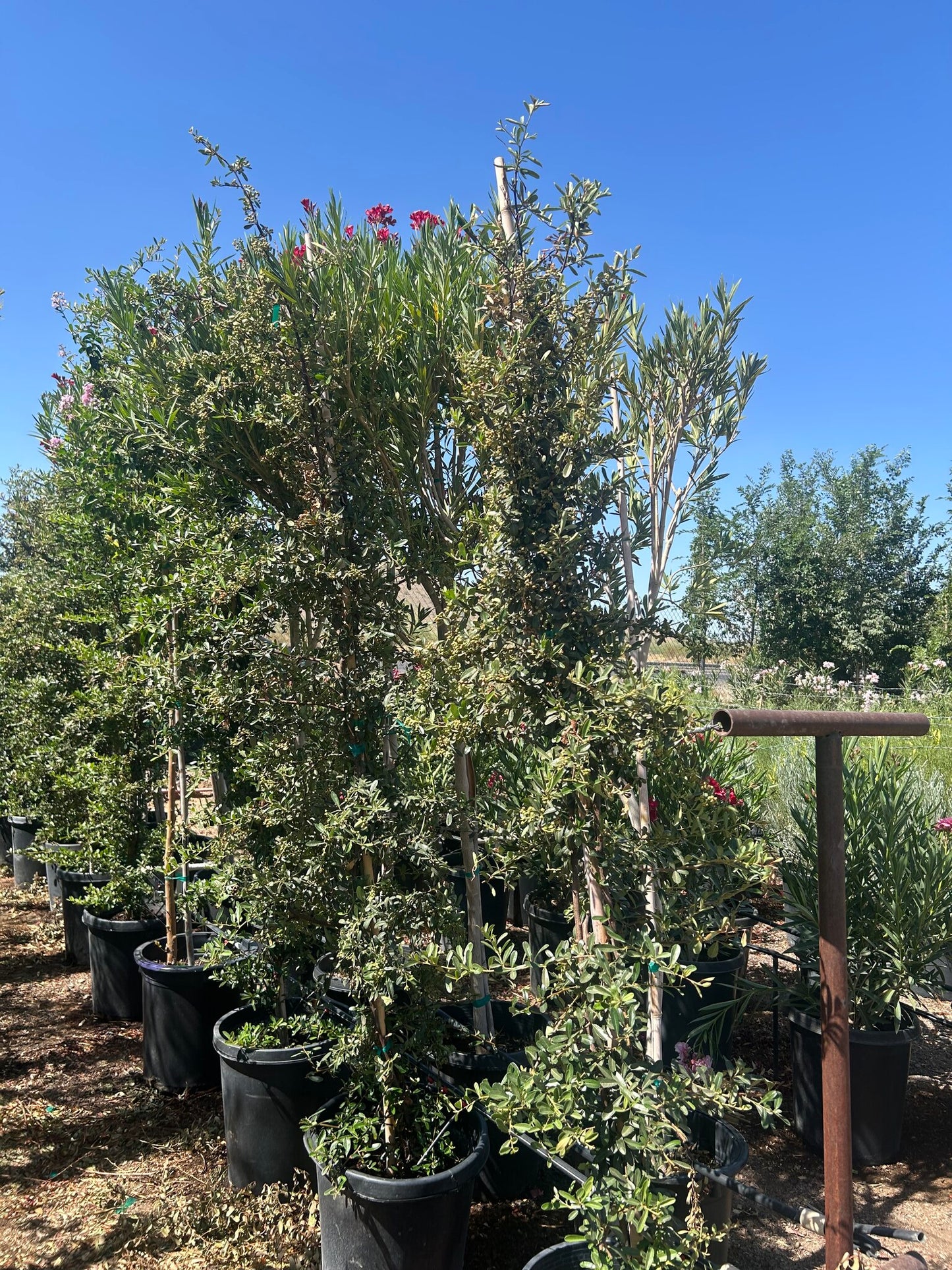
Pyracantha Staked (Pyracantha fortuneana), commonly known as Fortune's Firethorn, is a vigorous evergreen shrub-vine that delivers year-round structure and stunning seasonal color to Phoenix landscapes. Trained on a stake for easy wall or trellis attachment, this Pyracantha grows 8–12 feet tall with dense, glossy foliage, clusters of white spring flowers, and brilliant orange-red berries that light up fall and winter gardens. Whether you're covering a bare block wall in Scottsdale, creating a security barrier in Mesa, or adding wildlife habitat in Gilbert — staked Pyracantha is one of the toughest, most rewarding plants you can grow in the Phoenix Valley.
Pyracantha Staked Plant Details
| Attribute | Detail |
|---|---|
| Scientific Name | Pyracantha fortuneana |
| Common Names | Pyracantha, Firethorn, Fortune's Firethorn |
| Mature Height | 8–12 feet (trained on wall or trellis) |
| Mature Width | 6–8 feet |
| Growth Rate | Fast — 2–3 feet per year in Phoenix |
| Sun | Full sun to partial shade. Handles reflected heat from walls. |
| Water | Low to moderate once established. Drought-tolerant. |
| USDA Zones | 7–10 (Phoenix is Zone 9b–10a) |
| Soil | Well-draining. Adapts to Arizona caliche soils. |
| Foliage | Evergreen — dense, glossy dark green leaves year-round |
| Bloom Season | Spring — clusters of white flowers followed by orange-red berries in fall/winter |
Pyracantha Staked Uses in Phoenix Landscapes
Wall Cover & Espalier
Staked Pyracantha is the classic choice for training against block walls, fences, and trellises in Phoenix landscapes. The dense evergreen foliage covers unsightly walls year-round, while the spring blooms and fall berries add seasonal interest. Attach branches to a wall with plant ties and prune to create a flat, espalier pattern for a clean, formal look.
Security Barrier
Pyracantha's dense branching and sharp thorns make it one of the best natural security barriers you can plant. Train it along a fence line or below windows to deter intruders while providing year-round greenery and berry color. The thorns are formidable — this plant means business.
Wildlife Habitat & Bird Garden
The abundant orange-red berries are a favorite food source for mockingbirds, thrashers, and other desert songbirds throughout fall and winter. The dense, thorny branching also provides protected nesting habitat. Plant Pyracantha alongside native trees and shrubs for a complete wildlife-friendly Phoenix landscape.
Best Time to Plant Pyracantha in Phoenix
Fall (October–November) is the ideal planting window. Warm soil encourages rapid root establishment while cooler air reduces transplant stress. Spring (February–April) is the second-best window. Pyracantha is tough enough to plant year-round in Phoenix, but avoid the hottest weeks of June–July if possible.
How to Plant Pyracantha Staked
- Position 12–18 inches from the wall or fence to allow air circulation
- Dig wide, not deep — 2–3x the root ball width, same depth
- Check for caliche — break through any hardpan for drainage
- Backfill with native soil — Pyracantha is not picky about amendments
- Keep the stake in place until branches are secured to the wall or trellis
- Water basin — build a 3–4 inch ring to direct water to roots
- Mulch — 2–3 inches of gravel or bark mulch
Watering Pyracantha in Phoenix
First Year Watering Schedule
Weeks 1–2: Every 2–3 days, deep and slow. Month 1–2: Every 3–4 days. Month 3–6: Every 5–7 days. After Year 1: Every 7–14 days in summer; every 2–3 weeks in winter.
Drip Irrigation
Place one 2 GPH emitter 12–18 inches from the base. Established Pyracantha is quite drought-tolerant and produces better berries with slightly less water. Overwatering can lead to excessive vegetative growth at the expense of berry production.
How fast does Pyracantha grow in Phoenix?
Pyracantha is a fast grower, adding 2–3 feet per year in the Phoenix Valley. Most staked plants reach wall-covering size within 2–3 years from a 5-gallon start.
Is Pyracantha drought tolerant?
Yes. Once established, Pyracantha is one of the most drought-tolerant evergreen vines available. It handles Phoenix summer heat and reflected wall temperatures with minimal supplemental water.
Are Pyracantha berries edible?
The berries are mildly toxic if eaten raw in large quantities but are safe for birds. They're sometimes used to make jelly when cooked. The primary landscape value is ornamental — the bright orange-red berry clusters are stunning against the glossy green foliage.
How do I prune Pyracantha?
Prune after berry season (late winter/early spring) to shape and control size. Wear thick gloves — the thorns are sharp. For espalier training, tie new growth to the wall and remove branches that grow perpendicular to the flat plane.
You May Also Like
Bougainvillea — A vigorous flowering vine with brilliant color for walls and trellises.
Cat's Claw Vine — A fast-growing deciduous vine for covering large walls quickly.
Star Jasmine — A fragrant evergreen vine with white flowers for a softer wall covering.
Lady Banks Rose — A thornless climbing rose with cascading yellow or white spring flowers.
How Many Pyracantha Do I Need?
Trained flat against a wall or fence, staked Pyracantha is spaced about 6 feet on center so each plant fills in to meet its neighbors. Measure your run of wall and divide by 6 to estimate plant count.
| Wall / Fence Run | Plants Needed (6 ft spacing) |
|---|---|
| 12 linear feet | 2 plants |
| 24 linear feet | 4 plants |
| 36 linear feet | 6 plants |
| 48 linear feet | 8 plants |
For a single trellis panel or a security accent below one window, one plant is plenty. For a continuous espalier or barrier hedge, follow the table above.
Pyracantha Season-by-Season in Phoenix
- Spring (Feb to Apr): Clusters of small white flowers cover the plant and draw bees. This is a strong second planting window and the time new growth pushes hardest, so tie in shoots for espalier training.
- Summer (May to Sep): Thrives in full sun and shrugs off reflected heat from block walls. Berries develop through the season. Established plants need little water, and the summer monsoon humidity is no problem for this tough evergreen.
- Fall (Oct to Nov): Prime planting season and the show begins: berries ripen to brilliant orange-red and songbirds move in. Get plants in the ground now for the fastest establishment.
- Winter (Dec to Jan): Stays fully evergreen with berries persisting into the cold months for color and bird food. Genuinely cold-hardy in the Valley with no frost protection needed.
At a Glance
✔ Evergreen ✔ Pollinator-Friendly ✔ Heat-Loving (Reflected-Heat Tolerant) ✔ Drought-Tolerant ✔ Low-Maintenance ✔ Cold-Hardy to 10°F ✔ Deer & Rabbit-Resistant
Plant It With
- Cat Claw Vine: pairs on the same wall to cover large blank spans fast while Pyracantha builds its dense thorny structure.
- Queen's Wreath 'Pink': adds warm-season pink color against the glossy evergreen backdrop.
- Green Hopseed: a fast evergreen screen shrub to anchor the ends of a Pyracantha barrier run.
- Red Yucca: a low, spineless accent at the base that softens the thorny wall line and feeds hummingbirds.
Is Pyracantha Right for Your Yard?
Pyracantha is an excellent fit for full-sun or reflected-heat walls and fences where you want year-round evergreen cover, spring flowers, fall and winter berries, and a tough security barrier. It tolerates caliche as long as the planting hole drains and asks for very little water once established. It is not a fit right against a pool deck, a narrow walkway, or a kids-and-pets play zone: the thorns are sharp and the berries are mildly toxic if eaten, so give it room away from high-traffic, barefoot areas.
Share